
 4 hours ago
34
4 hours ago
34
Behind every lens decision is a balancing act between autofocus, portability, and excellent optical quality. It usually feels like you can only pick two. But with the introduction of Viltrox's second L-mount lens, the AF 28mm f/4.5 L, we might have just found a recipe that genuinely delivers on all three fronts by making the compromise elsewhere: a fixed, slower aperture. In this article, I will be putting this tiny lens to the test to see if it actually holds up its end of the bargain—translating a spec sheet into real-world performance.
Build Quality
Designing a pocket-sized wide angle lens that fully covers a full frame sensor is not an easy feat. This is probably why, once Viltrox found the recipe for it, they decided to replicate it and make it available for every mount possible, the latest being the L-mount, since they joined the alliance back in September 2025.
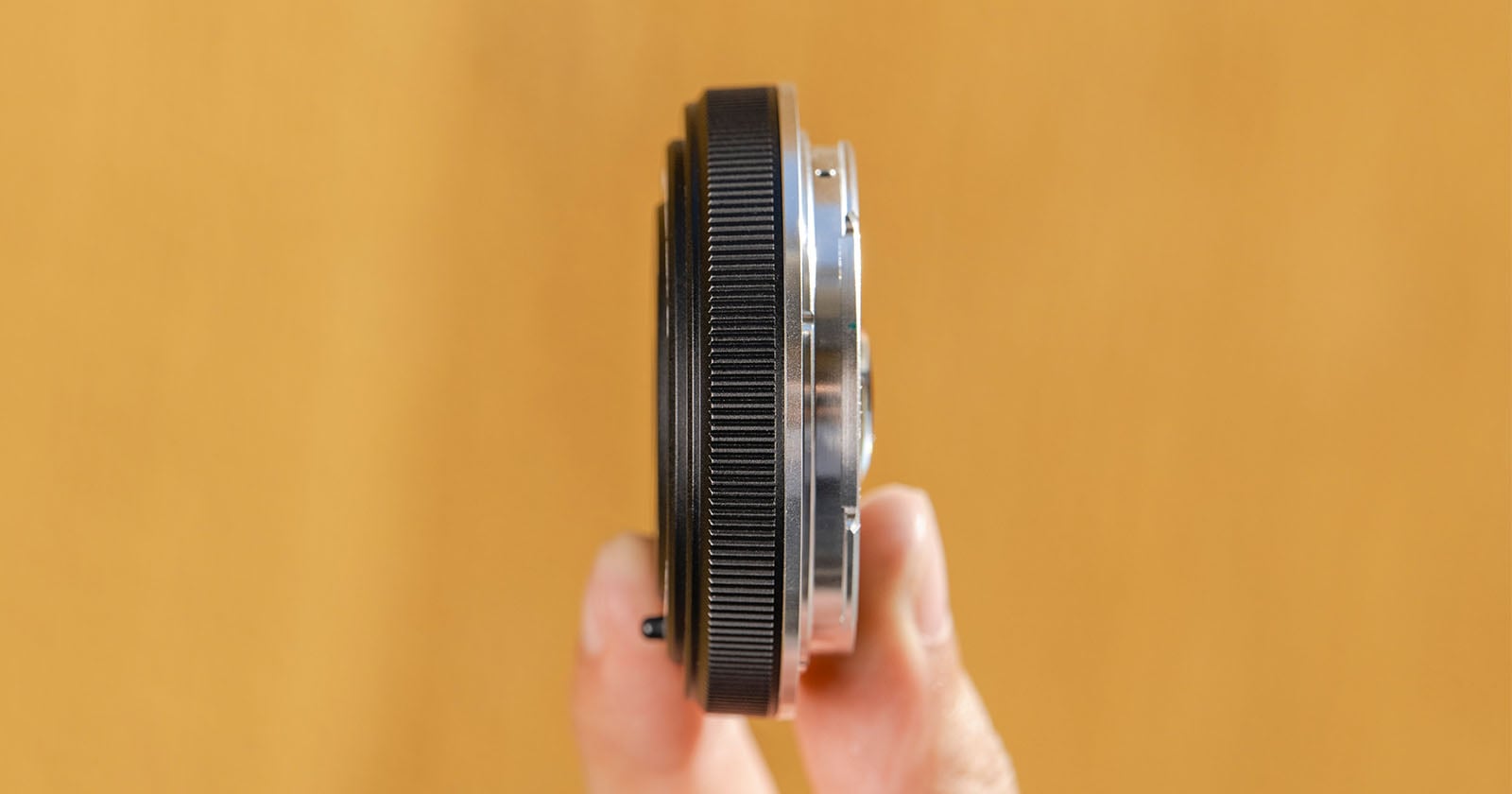
At an ultra-slim 16 mm thickness (approximately 18 mm if you include the bayonet mount) and weighing a mere 60 g, it literally looks and feels like a standard body cap, making it an ideal choice for small camera setups such as the Sigma FP, FP-L, BF, Panasonic S9, and even APS-C bodies such as the Leica CL and TL. When in use, it literally transforms your camera into a pocketable setup that you can effortlessly slip into a small bag. With such a slim profile, it barely protrudes past the handgrip if you are using a larger camera setup like the Panasonic S1 II or Leica SL3.
The outer barrel of the AF 28mm f/4.5 L is constructed from plastic to keep the entire lens weight this low. Despite that, Viltrox didn't cut corners where it matters most: the bayonet mount is still made of metal to ensure long-term durability. There is no rubber gasket on the rear mount for better sealing, nor is it built with weather sealing, so I would be cautious when using it in a rougher environment. Thankfully, the front element, as Viltrox claims, is protected by a multilayer nano-coating that helps prevent dust, oil, and water from damaging the lens. Tucked away on that rear mount, you can also find a convenient USB-C port, presumably for quick firmware compatibility updates down the road. This lens, while inexpensive, is built with the future in mind.
The exterior of the lens is unapologetically minimal because of its extreme pancake design. There are no moving parts on the barrel, not even a manual focus ring or aperture ring. The entire lens barrel is textured so you can grip the lens for mounting and unmounting. The only moving part you can find on the exterior is the built-in slide-lever lens cap on the front. Sliding it open allows you to start shooting instantly. It also serves a clever mechanical purpose, since the lens uses a VCM (voice coil motor) for autofocus. When the camera is powered off, the motor is deactivated, leaving the entire internal lens group free to rattle around. Engaging the slide-lever cap physically secures the lens group, protecting the internals when not in use.
However, Viltrox did issue a PSA warning users not to close the lens cap while using the lens, as it may cause long-term damage to the motor. Since the sliding lens cap physically secures the internal lens group when in use, it will also prevent movement of the VCM motor itself. The rear glass element also seems to protrude slightly past the metal mount. If you have a habit of taking a lens off and resting it face-up on a table, you may need to be careful here. Setting this lens down on its rear will put the glass directly in contact with the surface, and it's even worse if the sliding lens cap is closed. So always use the rear cap or place the lens facing downward.
Features
The 28mm focal length was a deliberate decision by Viltrox to make this a storytelling lens that is suitable as an everyday carry. Offering a rather balanced 73.43° viewing angle, it is highly suitable for most applications, such as street, travel, portrait, and documentary-style shooting, as it is just wide enough to not cause extreme distortion of the subjects. There are other practical limitations from the fixed f/4.5 aperture that hinder its full potential when used in the real world, which I will discuss in detail in the next section.
Being such a minimalist lens, there really isn't much exterior hardware to discuss, but Viltrox did pack some surprisingly interesting glass into the optical design of the AF 28mm f/4.5 L. To fit everything into such a tiny barrel, they used a six elements in six groups design formula, including two aspherical and two ED (extra-low dispersion) elements. Having two aspherical and two extra-low dispersion elements in the optical design signifies some degree of optical correction, which helps reduce color fringing and chromatic aberration. To further refine the image quality straight out of the camera from such a small lens, Viltrox also incorporates native in-camera profile correction.
In the autofocus department, the lens uses a voice coil motor (VCM) to drive the entire focusing system. The VCM is also a deliberate choice, as it has already proven reliable in previous generations and does support face and eye detection autofocus for both photo and video. This elevates the lens into a reliable tool for run-and-gun shooting, where you don't have time to fiddle with focusing rings—in this case, there isn't one to begin with. It also features a rather generous 0.32 m minimum focusing distance, delivering a magnification of 0.1x. While that is nowhere near sufficient for macro work, it definitely does help to get some subject separation by focusing closer.
Lastly, the AF 28mm f/4.5 L also has a unique optical party trick up its sleeve. Viltrox has incorporated a special front element design that helps naturally create distinct, eye-catching starburst effects when pointed at backlit point light sources, adding a bit of baked-in character to the resulting images.
Real-World User Experience
Thanks to its focal length, this is an exceptional context lens. As a self-proclaimed 28mm fanatic, I can find a million reasons to own different types of 28mm-equivalent lenses, and still have specific reasoning for using each of them. In the case of the AF 28mm f/4.5 L, it finds its home right away as the ultimate everyday carry, a compact full frame walkaround companion with autofocus convenience. While there is the Panasonic Lumix 26mm f/8 pancake lens launched alongside the Panasonic S9, that is actually a manual focus lens. Because of that, I don't think there are any other lenses made for L-mount cameras that are this small, support a full frame image circle, and come with native autofocus support.
Naturally, a lens this small is bound to have its own set of compromises, as it is only logical that we give up something to achieve this level of portability. Regardless of how well it sounded on paper, the question is whether these compromises will affect the performance of this lens out in the field, or hit you in ways you might not initially expect. Let's get it out first.
Having a fixed f/4.5 aperture might not sound like a dealbreaker on a spec sheet at first, but in reality, it is much more restrictive than we might hope. At first glance, f/4.5 seems like a great middle ground, but under bright daylight, the lack of an aperture diaphragm means you cannot stop the lens down for exposure control. And not having a filter thread for attaching NDs does not help either. You are forced to rely entirely on faster shutter speeds and possibly even stepping into electronic shutter speed territory to suppress the exposure. What that means is you can also forgo the thought of using this as a video lens, essentially wasting its great autofocus capabilities in bright environments. The fixed aperture also completely strips away any possibility of precise depth-of-field control when you need it.
Being a fully electronic lens with no physical focus ring also means there is no way for you to quickly override the camera's autofocus when it hunts or fails in a tricky environment. And if you happen to change your camera system, this lens will also no longer be usable. However, since there is a 4 mm flange difference between the L-mount and Z-mount, there is still a possibility of adapting, giving the lens a second life. But we may need to wait for someone to manufacture the right electronic adapter for it. In addition to that, there is also a risk that once the lens electronic board fails, you will be forced to give up the lens, as there is no way you can use it anymore. On the bright side, with electronics on the lens, you get to record accurate EXIF data and also gain the advantage of native in-camera profile correction.
As much as reality hurts, if we look past the shortcomings, the AF 28mm f/4.5 L does deliver decent enough performance to be worth your money. Contrast does remain high across the entire frame, though it drops slightly when there is a direct light source, causing the lower mid shadow areas to appear muddy. Simple post-processing will help recover this easily. The lower contrast in the mid shadow areas also converts nicely into black-and-white images, as the shadows are better preserved.
Center sharpness is decent, though it does quickly degrade toward the edges depending on your focus point, which I suspect is a result of a combination of optical limitation and the depth-of-field limitation. Close-up performance is decent at best, as it doesn't resolve an immense amount of fine detail. On the other hand, mid-distance to infinity performance is much better.
Chromatic aberration is impressively well controlled. Even when switching off the profile corrections inside Capture One, there isn't a massive, glaring difference in color fringing. Meanwhile, for bokeh, I think there is little point in over-analyzing it on such a wide lens with a slow aperture, but if you must know, it does deliver a pleasing out-of-focus transition. And if you manage to get close enough to force some background separation, you will notice a distinct "soap bubble" bokeh look featuring a bright outline and a slightly darker center. This specific effect is typically caused by over-corrected spherical aberration—a classic trade-off when a tiny pancake lens is aggressively corrected to maximize sharpness at the focal plane, resulting in hard-edged, distracting bokeh balls in the background.
Finally, the unique front design responsible for those dramatic starbursts is essentially just a fixed iris stuck to the front of the lens. That means you can't actually control whether you want the star effect or not; it is entirely dependent on the brightness and size of your light source. While it makes for great night scenes with starburst highlights, it isn't a lens I can easily recommend if you consistently shoot in low-light environments, given its narrow aperture and fixed nature. Because of that, I can't help but think there is a possibility this lens design is capable of supporting a larger aperture opening, and having some form of mechanical iris would be more helpful here.
Summary
What I Liked
- Great portability: At just 60 g and 16 mm thick, it transforms a full frame camera into a truly pocketable, everyday carry setup.
- Reliable autofocus: The VCM delivers surprisingly quiet and precise focusing, fully supporting native face and eye detection.
- Solid optics for the size: It delivers highly usable, sharp results that punch way above its toy-like footprint.
- Accurate EXIF data: Because it is a fully electronic lens, it records precise metadata to your files, making cataloging and post-production organization seamless.
- Distinct character: The special front element naturally produces eye-catching starbursts on backlit point light sources.
- Built-in USB-C port: Conveniently located directly on the metal rear mount for hassle-free firmware updates.
- Accessible pricing: An incredibly low barrier to entry for a lens that fundamentally changes how you carry your camera.
What Could Be Improved
- Fixed f/4.5 aperture: The slow speed limits low-light capabilities and depth-of-field control.
- No variable aperture: Even a mechanical, variable aperture dial would be an amazing future addition.
- Total electronic reliance: The lack of a manual focus ring or physical controls means you are 100% reliant on the camera's electronics—no power, no focus.
- No filter thread: The inability to easily attach NDs or creative mist filters is a frustrating limitation, especially for video work.
- Edge sharpness and close-up resolution: Center sharpness is decent, but it degrades quickly toward the edges depending on your focus point, and close-up performance struggles to resolve fine detail.
- Contrast drop in direct light: While contrast remains high across the frame overall, direct light sources cause a slight drop, making the lower-mid shadow areas appear muddy.
Final Thoughts
While it is probably the furthest thing from a clinically perfect optical instrument, it is an excellent, low-risk option for anyone looking for a fun, budget, and lightweight lens, or for photographers who simply want to try out the 28mm focal length without overthinking it. Priced at just $99, the Viltrox AF 28mm f/4.5 L is the ideal choice for someone who needs a setup that is exceptionally cheap, small, and light.





 English (US) ·