
 5 hours ago
5
5 hours ago
5

AMD announced EXPO Ultra Low Latency at Computex this month, promising to bring it to most AM5 motherboards as part of the EXPO 1.2 update. We've known about EXPO 1.2 since April, when it first showed up in BIOS releases, and it has already been available on 800-series motherboards for a while. Now, the first batch of 600-series motherboards have begun receiving ULL support as well.
MSI and Asus have both just pushed out new AGESA 1.3.0.1b BIOSes to various X670 products. Asus has updated the X670E Hero, X670E Gene, X670 Extreme, X670E-A Gaming Wi-Fi, X670E-E Gaming Wi-Fi, X670E-F Gaming Wi-Fi, and X670 Creator Wi-Fi. The X670E-I Gaming Wi-Fi, X670E-Plus, and X670-E Plus Wi-Fi are missing their subsequent updates for now, but they should be coming soon.
These are all beta releases, so keep in mind they're not intended for most users. We also checked a bunch of B650 support pages manually (since they don't have a dedicated thread like X670), and no Asus motherboard seems to have been updated to AGESA 1.3.0.1b yet. They're all running the AGESA 1.3.0.0 or 1.3.0.1 releases from months ago, but don't explicitly mention EXPO ULL support being added.
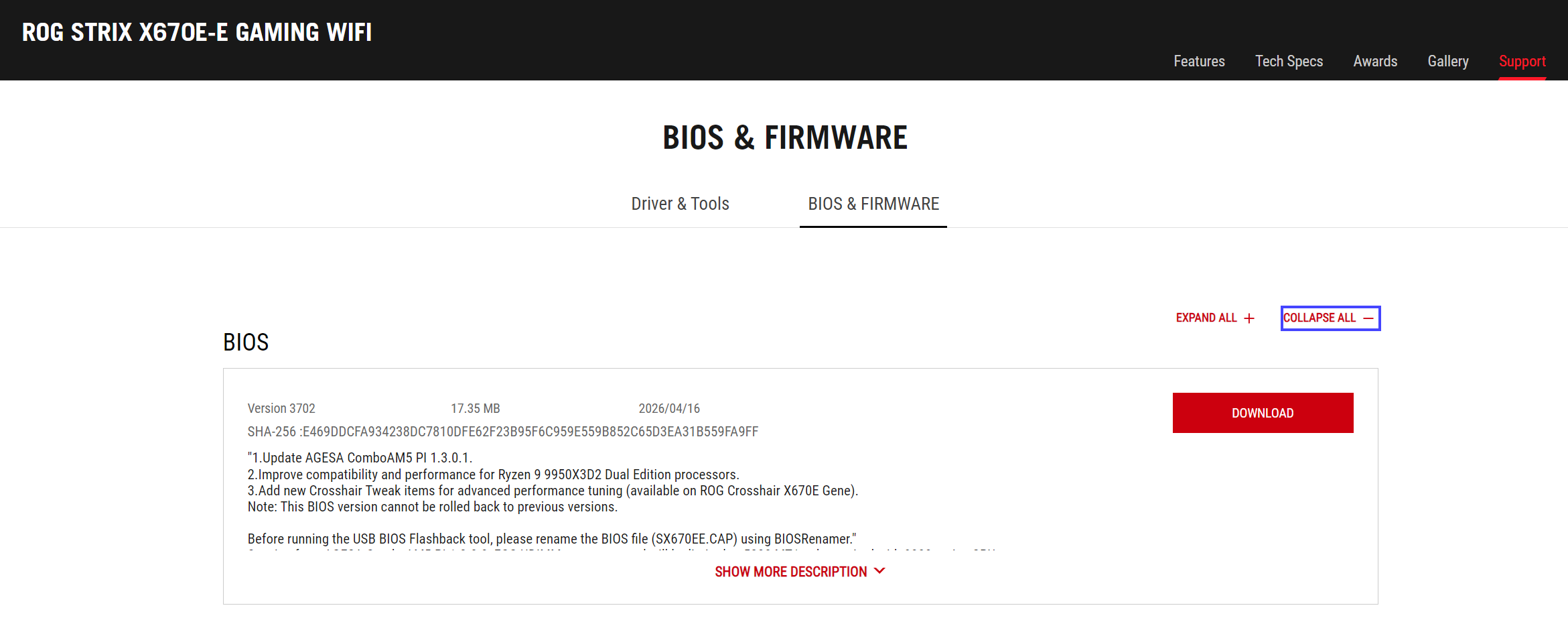
Similarly, MSI has updated its X670-E motherboards to AGESA 1.3.0.1b, and the release notes highlight EXPO ULL, while X670 (non-E) boards also received Ultra Low Latency updates with AGESA 1.3.0.1 BIOSes during this or the past week. Some models like the MAG X670-E Tomahawk Wi-Fi actually added ULL support back on May 27th when they were updated to 1.3.0.1, but that news was missed by most of the community.
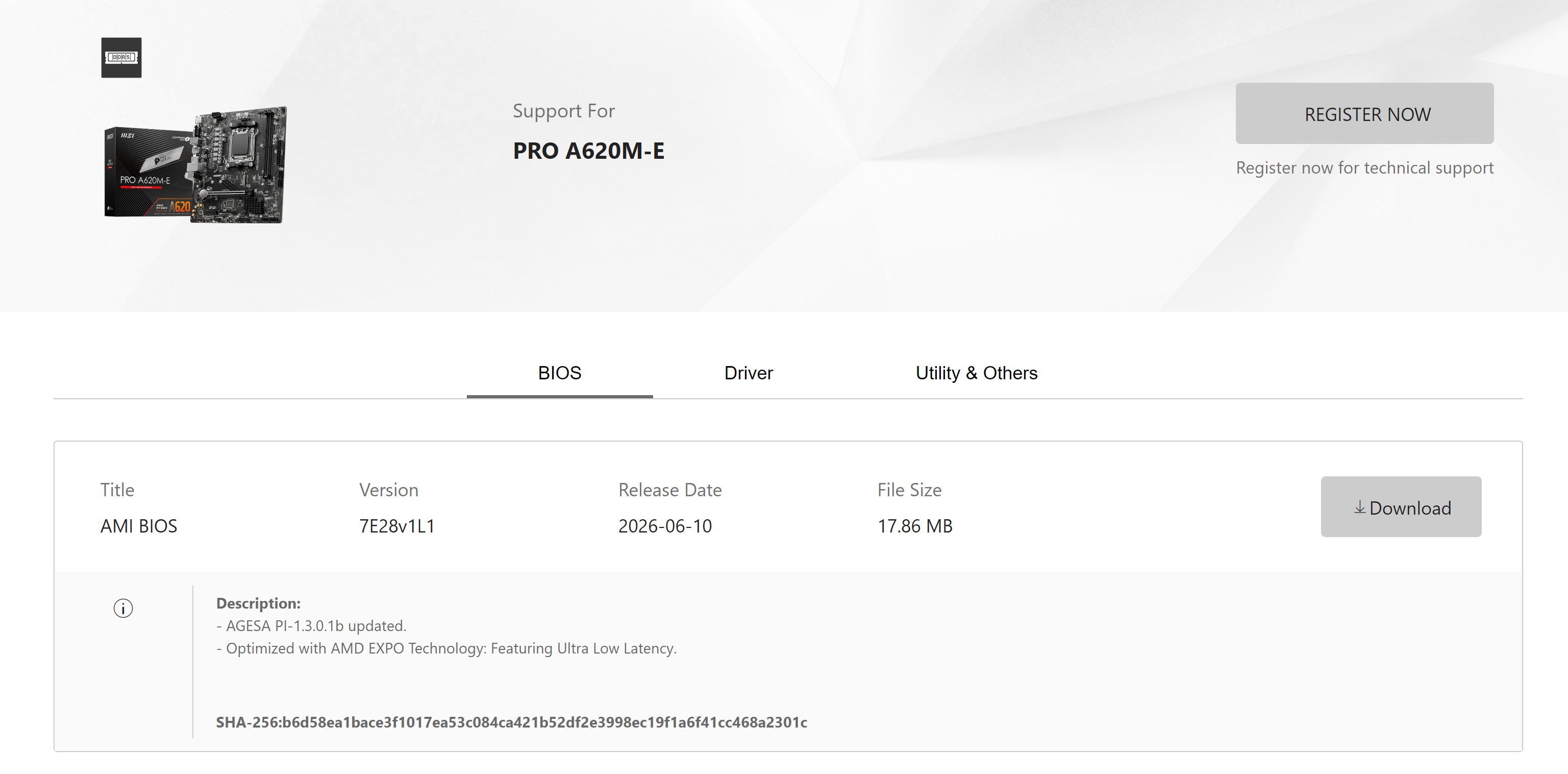
MSI has also updated their B650 lineup with AGESA 1.3.0.1b this week, with ULL support mentioned in the release notes for all models we checked, including budget A620 offerings. Gigabyte follows a similar pattern; all of its B650 and X670(E) motherboards have the latest AGESA release with Ultra Low Latency checked off in the patch notes. Lastly, we took a look at ASRock and, unfortunately, that was a bit of a confusing endeavor.
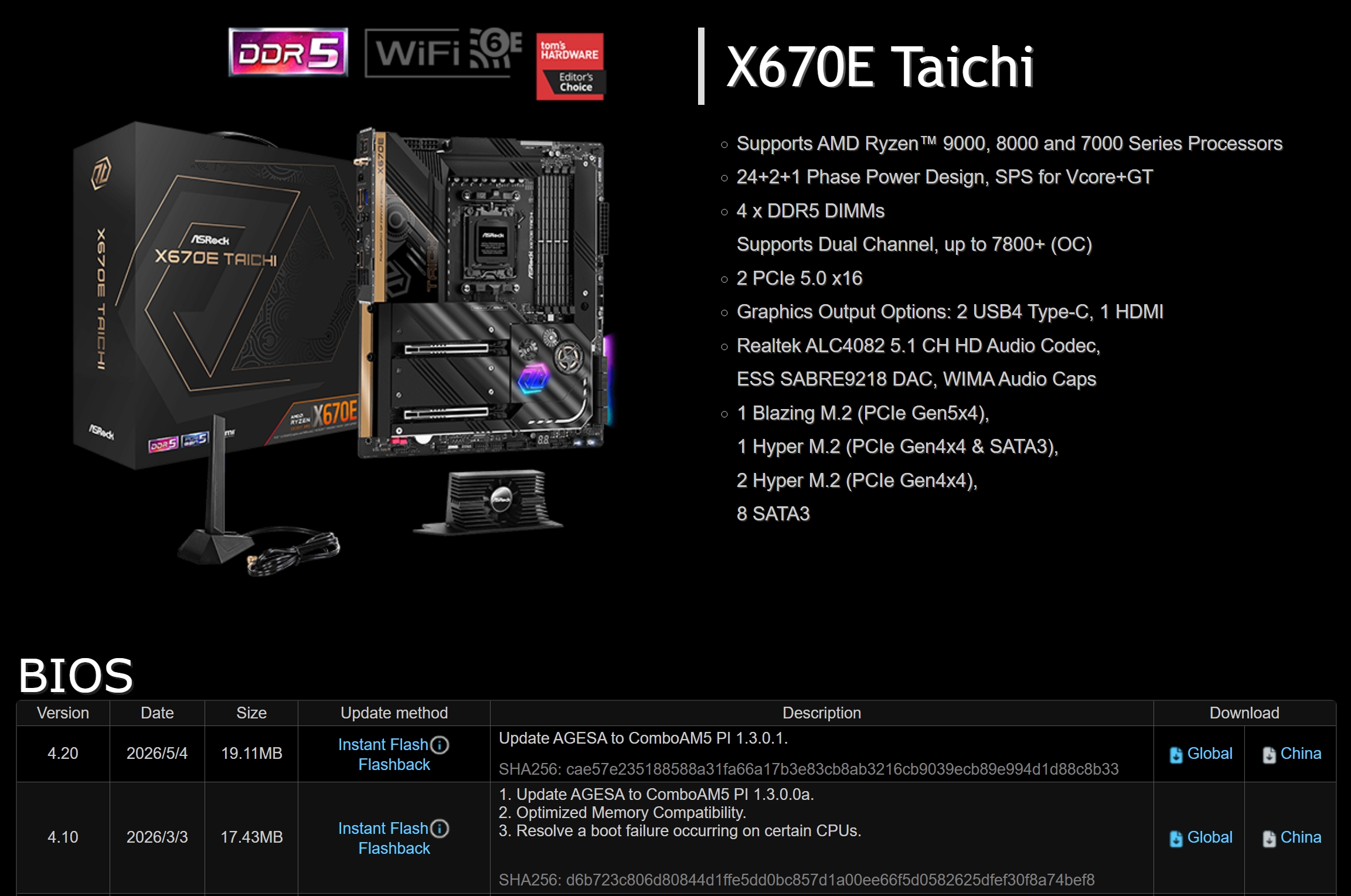
First of all, none of its motherboards, not even the highest-end X870E models, have been updated to the very recent 1.3.0.1b release; rather, they're all on 1.3.0.1. That's fine on its own, but the release notes only mention "Optimized Memory Compatibility," and we're pretty sure that doesn't refer to EXPO ULL, given the February/March release dates. At least even the entry-level units are updated with recent BIOSes, though.
The reason we dug this deep is that EXPO Ultra Low Latency can be very useful in eliminating the added latency penalty associated with modern AMD platforms. It can be particularly helpful if you're running a high-frequency kit that forces a 2:1 clock ratio, but even standard 6,000 MT/s CL30 kits can benefit. AMD says ULL profiles can help improve gaming FPS by up to 4% in non-X3D CPUs.
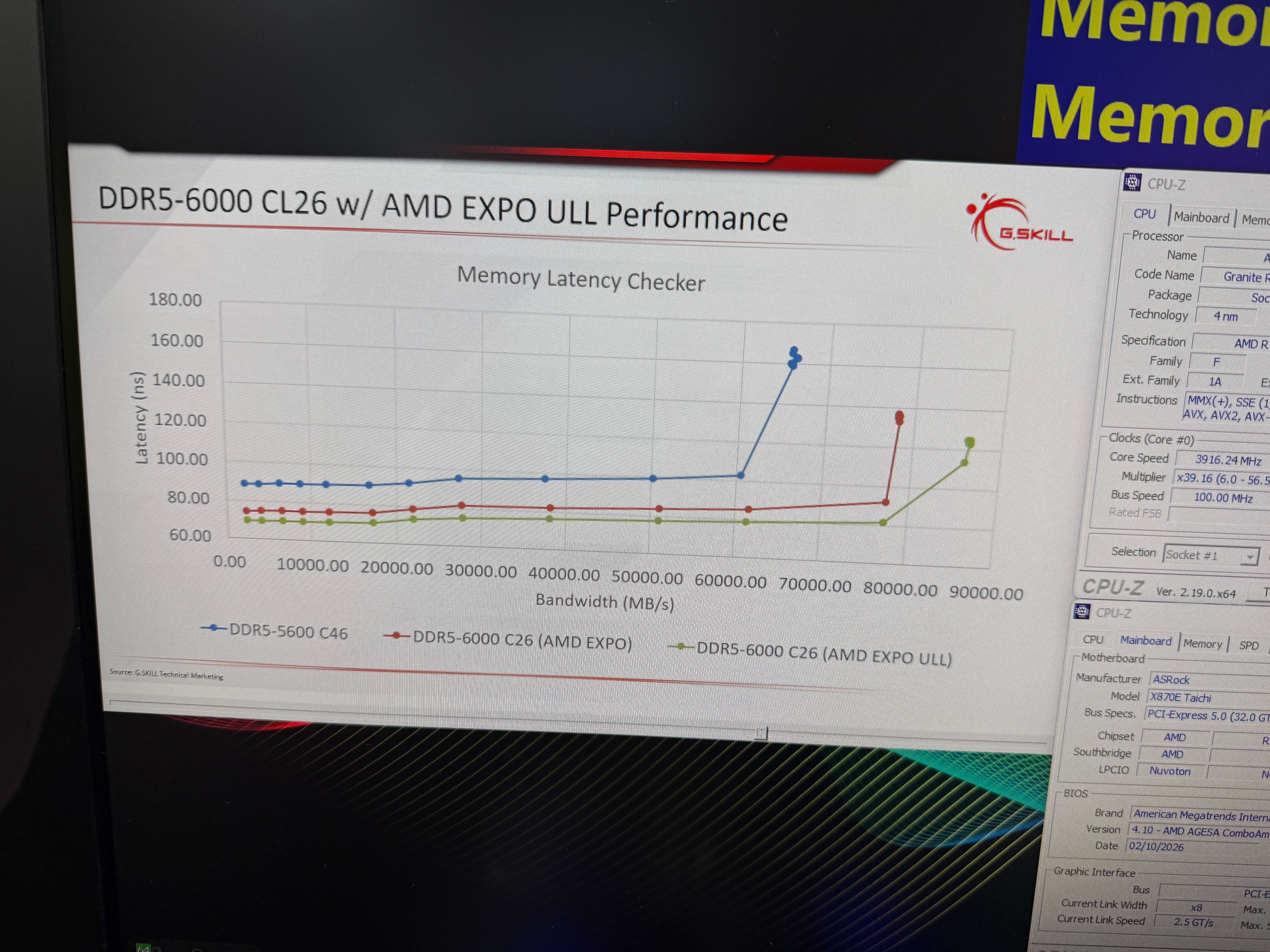
It doesn't help as much in chips equipped with 3D V-Cache because the large amount of SRAM reduces those CPUs' sensitivity to finer adjustments. Moreover, EXPO ULL is not just a software-side solution — you need new RAM kits compatible with the tech to use this feature since the tweaks are baked into the memory's physical SPD. It's not something you can update like your motherboard BIOS.
Technically speaking, AMD is simply codifying what overclockers have done manually for years into an official certification. If you don't want to buy new memory to get the one-click profile, which is understandable in the current RAMpocalypse, you can just mimic the subtimings one-by-one. Of course, going at it manually comes at the cost of potential stability issues.

Follow Tom's Hardware on Google News, or add us as a preferred source, to get our latest news, analysis, & reviews in your feeds.




 English (US) ·