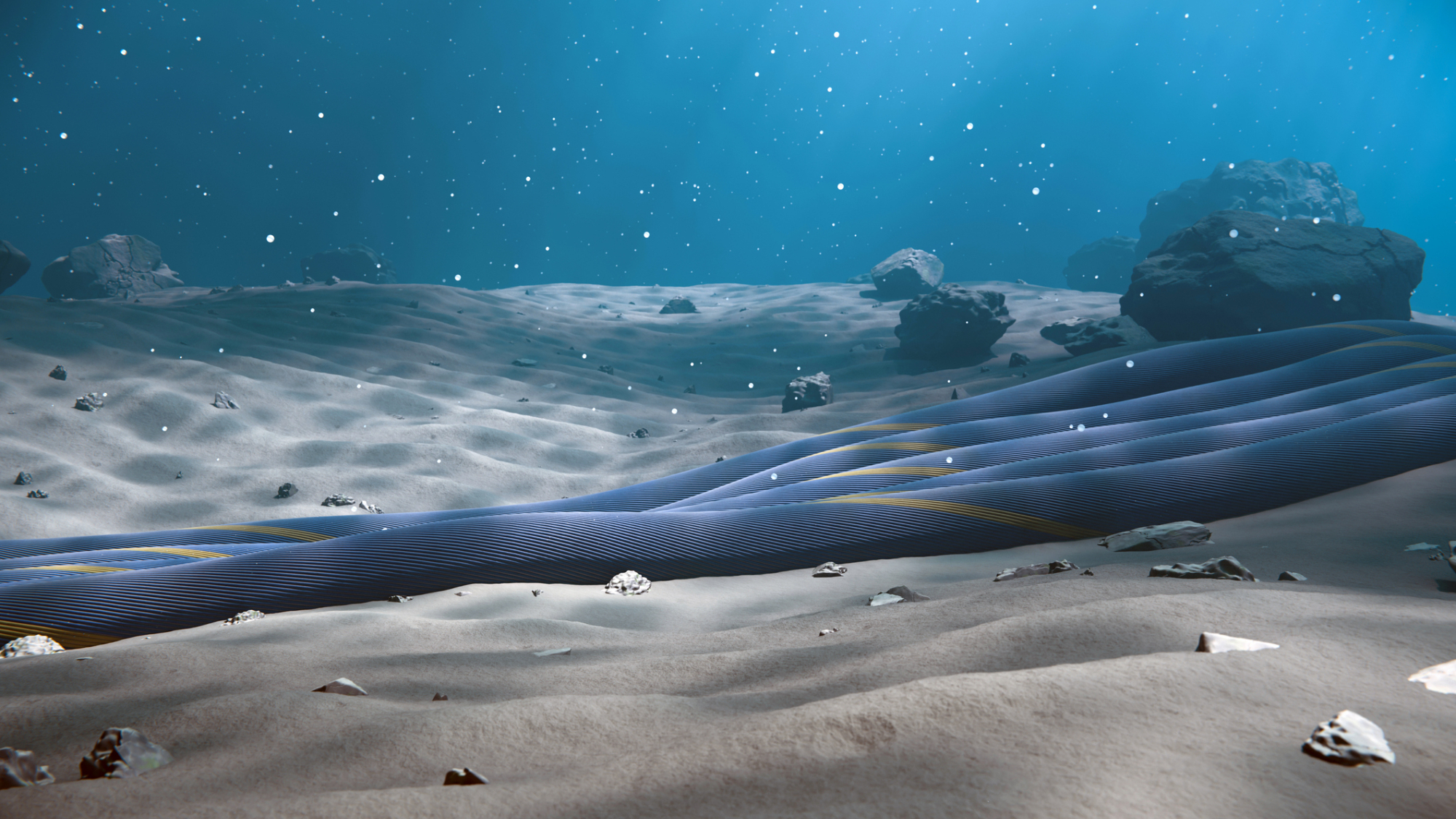
A team of around four dozen U.S. Marines is joining a NATO-led operation in the Baltic Sea to help protect undersea internet cables and gas pipelines in the area. In a press release, the U.S. Marine Corps shared its plans to deploy a "specialized team" to support NATO's Enhanced Vigilance Activity Baltic Sentry operation. The move comes amid a backdrop of growing undersea cable interest, movements of Russia's shadow fleet, and fears of sabotage.
The U.S. Marines are being sent from Marine Corps Base Camp Lejeune in North Carolina to provide "advanced expeditionary surveillance and tactical reconnaissance capabilities" to the region in support of Finnish and other NATO allies. Marines from 2nd Reconnaissance Battalion, 2nd Marine Division, and the II Marine Expeditionary Force Information Group are joining the mission.
Capt. Johan Tillander, Chief of Operations for the Finnish Navy, explained that the "experience, skills, and systems of the U.S. Marine Corps are perfectly suited" for the operation, including "monitoring of the Baltic Sea."
While the press release stresses that the Marines are serving in a "supportive, enabling capacity," with European nations taking the lead, the Marines are there to provide "highly specialized, agile force multipliers."
Maj. Gen. Daniel Shipley, Commander of U.S. Marine Corps Forces, Europe and Africa, shared that its participation shows its ability to "rapidly project specialized capabilities where they are most effective," and as a result, "ensuring we can operate seamlessly as a cohesive, lethal team to deter hybrid threats" in the area.
The U.S. deployment means that the operation will be able to "leverage... unique capabilities of Reconnaissance Marines, including small Unmanned Aerial Systems and littoral sensors, to feed vital data directly" to NATO.
Get Tom's Hardware's best news and in-depth reviews, straight to your inbox.
Russia isn't mentioned in the U.S. press release, but the authoritarian nation is one of Europe's biggest threats in the region, and has had worsening relations with European nations for several years, particularly since it went to war with Ukraine in 2022. Over 500 incidents of Russian fishing boats loitering near undersea cables in Europe have been seen in the last four and a half years, showing a persistence in mapping and identifying, if not directly interfering, with global data links in the area.
Ben Stockton is a deals writer at Tom’s Hardware. He's been writing about technology since 2018, with bylines at PCGamesN, How-To Geek, and Tom’s Guide, among others. When he’s not hunting down the best bargains, he’s busy tinkering with his homelab or watching old Star Trek episodes.

 3 hours ago
18






 English (US) ·