
 15 hours ago
3
15 hours ago
3
It'll "require a fair amount of expensive compute" out of the gate, CEO admits
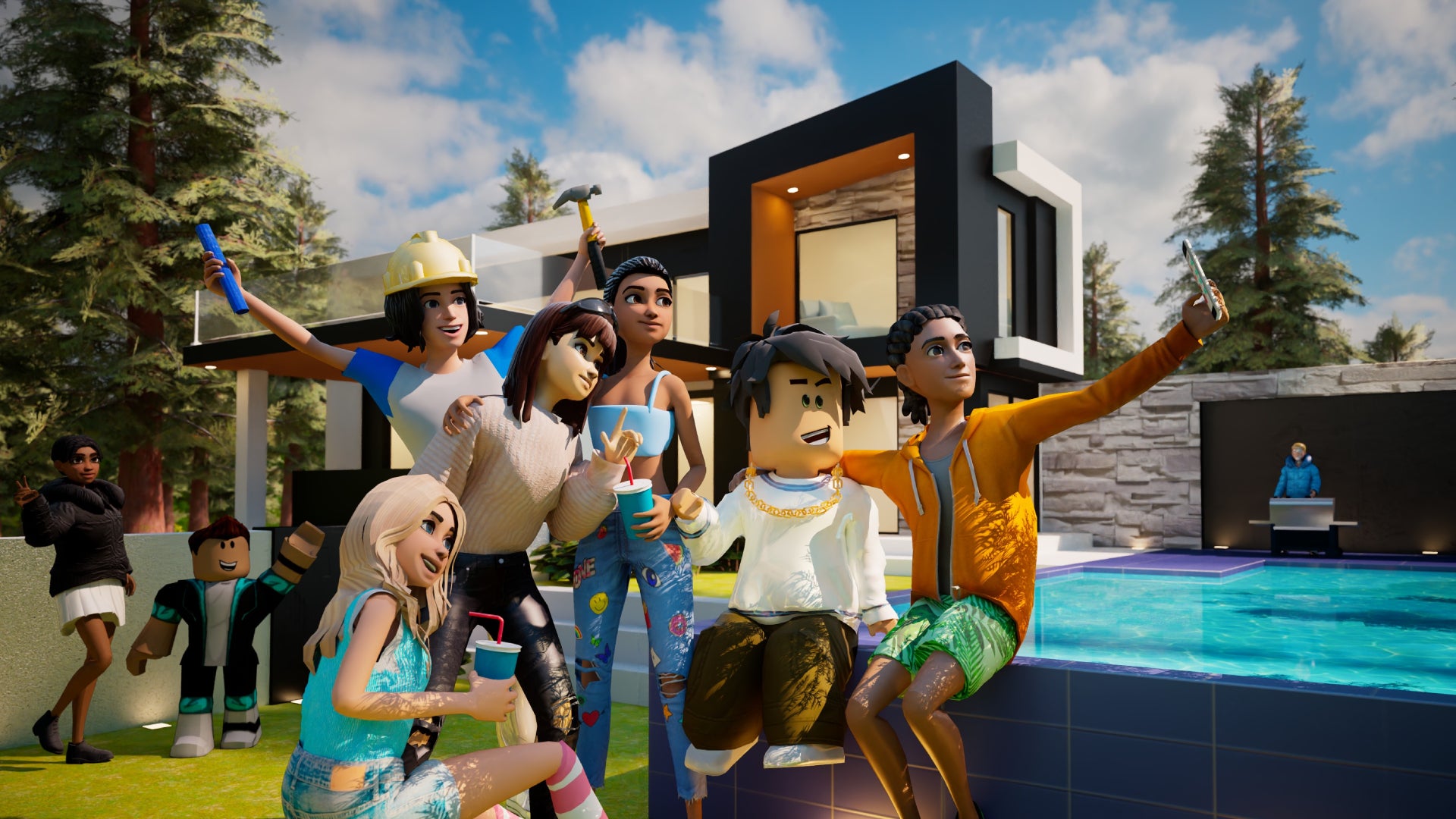
Welcome to the Roblox Reality, say the makers of Roblox. That sounds a bit terrifying, I respond. Don't worry, it's the name of some AI-powered upscaling tech we've just started showing off, the Roblox makers reassure me. It can make our game's blocky characters and environments look photorealisic, they add. Ah, I say, could you explain that to me via a blog post full of complex techno/marketing babble?
Sure, say the Roblox makers, here's one which uses the phrase "a major step in democratizing creation". It also provides the following outline of how this Roblox Reality tech works:
The Roblox Reality hybrid architecture divides responsibilities between the Roblox Game Engine and the Roblox Video World Model. The Roblox Game Engine handles the structured and logical aspects of the world, providing stable long-term memory, symbolic logic, and repeatable simulation. It is also responsible for fundamental physical operations like collision and behaviors. Primary movement of objects is managed in the engine, for example the location and velocity of a car, its wheels, shocks, and steering. Building on this, the Video World Model layers on additional visual and generative components, like the beads of water streaming along the windshield and the fluttering of leaves as the car zooms by, delivering breathtaking visuals. This approach allows the Game Engine to maintain the data model (the shared and consistent state) while the Video World Model generates the Pixels (the visual dream).I'm not quite fluent enough in this sort of chatter to discern whether the tech works exactly like Nvidia's DLSS 5, but it certainly looks to have the same mission - take a game's original visuals and plaster a more 'photorealistic' AI canvas over them. For what it's worth, Roblox do appear to be making some effort to distance themselves from the idea they're going all-in on AI-generated games.
"The interactive video models we’re seeing today are impressive, but basically vivid dreams—spectacular to look at, but fleeting and incredibly lonely," the blog post from the company's senior vice president of engineering Anupam Singh reads. "They lack interactivity, challenge, reward, and persistence—anything that makes a game a game.
"Pure neural world models alone cannot deliver on the promise of an expansive, persistent multiplayer experience. While neural world models are impressive in many ways, they fail in many critical areas. Some of these include coherence over time in a single session, long-term memory across sessions, latency, and fine-grained creator control. Less obvious gaps appear when you think about consistent multiplayer simulation, exacting competitive gameplay, highly intelligent NPCs, testing, and incremental refinement. We shouldn't ask a neural engine to become a game engine."
As for what the company are hoping this tech, an early version of which is set to roll out either later this year or early next, will eventually achieve, Roblox CEO David Baszucki has tweeted that he reckons it'll "ultimately remove barriers to high-fidelity creation, allowing a team of three people to build a narrative-driven, photorealistic masterpiece in a single week." As you might expect, it's both that and making Roblox more money. To get there, however, world model tech will have to go from requiring - in Baszucki's words - "a fair amount of expensive compute" at current, to being cheaper down the road.
I admittedly don't play Roblox, but my first instinct would be that most of its players don't care how photorealistic this cartoonishly blocky game looks. Then again, we've seen its cousin Minecraft be pushed towards realistic visuals by both modders amd Mojang over the years.



 English (US) ·