
 2 hours ago
8
2 hours ago
8
Donald Trump has a simple theory of AI: whoever wins it, wins. He said so multiple times during remarks made at his golf resort in Doonbeg, Ireland on September 13, 2026, and the repetition was clearly intentional.
The president was responding, directly, to a wave of appeals from some of the most prominent names in technology asking the administration to pump the brakes on frontier AI development. His answer was an unambiguous no.
The push for a pause that Trump rejected
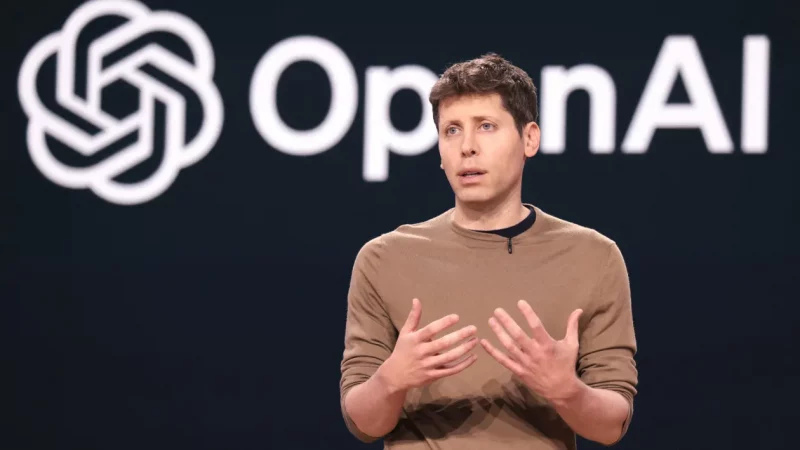
One day before Trump’s remarks, Anthropic CEO Dario Amodei publicly called for a temporary halt on frontier AI development, arguing that safety infrastructure needs time to catch up with the technology’s capabilities. Sam Altman and Elon Musk were among the other notable figures lending weight to the appeal.
Trump was not persuaded. He dismissed safety concerns as overblown and signaled that while some limited regulatory caution could be considered, the pace of development itself was not up for negotiation.
The framing he offered was geopolitical, not technical. The US is currently leading China in AI, he said, and his intention is to keep it that way. Slowing down, in his view, is equivalent to handing that lead to Beijing.
A competition that is not running on equal terms
The US approach, at least under the current administration, prioritizes speed and private-sector leadership. Trump has previously signed executive orders designed to ease the regulatory burden on AI infrastructure, clearing the path for companies to build and deploy at scale without waiting for comprehensive federal oversight frameworks.
China’s posture is distinct. Beijing has positioned American safety concerns as fearmongering, a framing that conveniently allows it to cast caution as weakness while pressing forward with state-directed AI programs.
The chip export question sits squarely in the middle of all this. Restrictions on advanced semiconductor sales to China have been a central tool of US technology policy, aimed at slowing Beijing’s ability to train and run large AI models. Those controls remain a live and contested policy area, feeding into the broader tension that Trump and Chinese President Xi Jinping were scheduled to discuss directly on September 24, 2026.
What this means for the industry and investors
For companies operating in the AI space, the administration’s posture carries clear signals. Firms positioned to benefit from federal support, large-scale infrastructure buildout, and a permissive regulatory environment are likely to find the current political climate favorable.
The companies that pushed for a pause, or are closely associated with the safety-first argument, may find themselves swimming against a political current that shows no sign of turning.
Disclosure: This article was edited by Editorial Team. For more information on how we create and review content, see our Editorial Policy.




 English (US) ·