
 2 hours ago
15
2 hours ago
15
TLDR:
- Trump Dividend proposes $5,000 per adult citizen if Republicans retain Congress, subject to congressional approval and unresolved financing.
- The estimated $1.2 trillion payout exceeds projected annual tariff revenue, prompting concerns about federal borrowing and inflation.
- CMS schedules $90 rebates for 20.8 million eligible Medicare beneficiaries, with most direct deposits expected around October 8.
- Published research estimates a 0.6% Bitcoin price increase from initial pandemic checks, without predicting effects of future payments.
The Trump Dividend proposal promises $5,000 per adult U.S. citizen if Republicans retain Congress in the November 3 elections. President Donald Trump repeated the pledge on October 3, leaving the estimated $1.2 trillion cost and its funding unresolved. Congress would need to approve funding before the administration could distribute the proposed stimulus checks.
Bitcoin traded near $84,850 on Sunday after retreating from Friday’s advance above $87,000. Separately, Medicare beneficiaries have a funded $90 rebate scheduled this month under an existing federal program. Those payments cover more than 20 million eligible people and carry no condition involving the midterm election results.
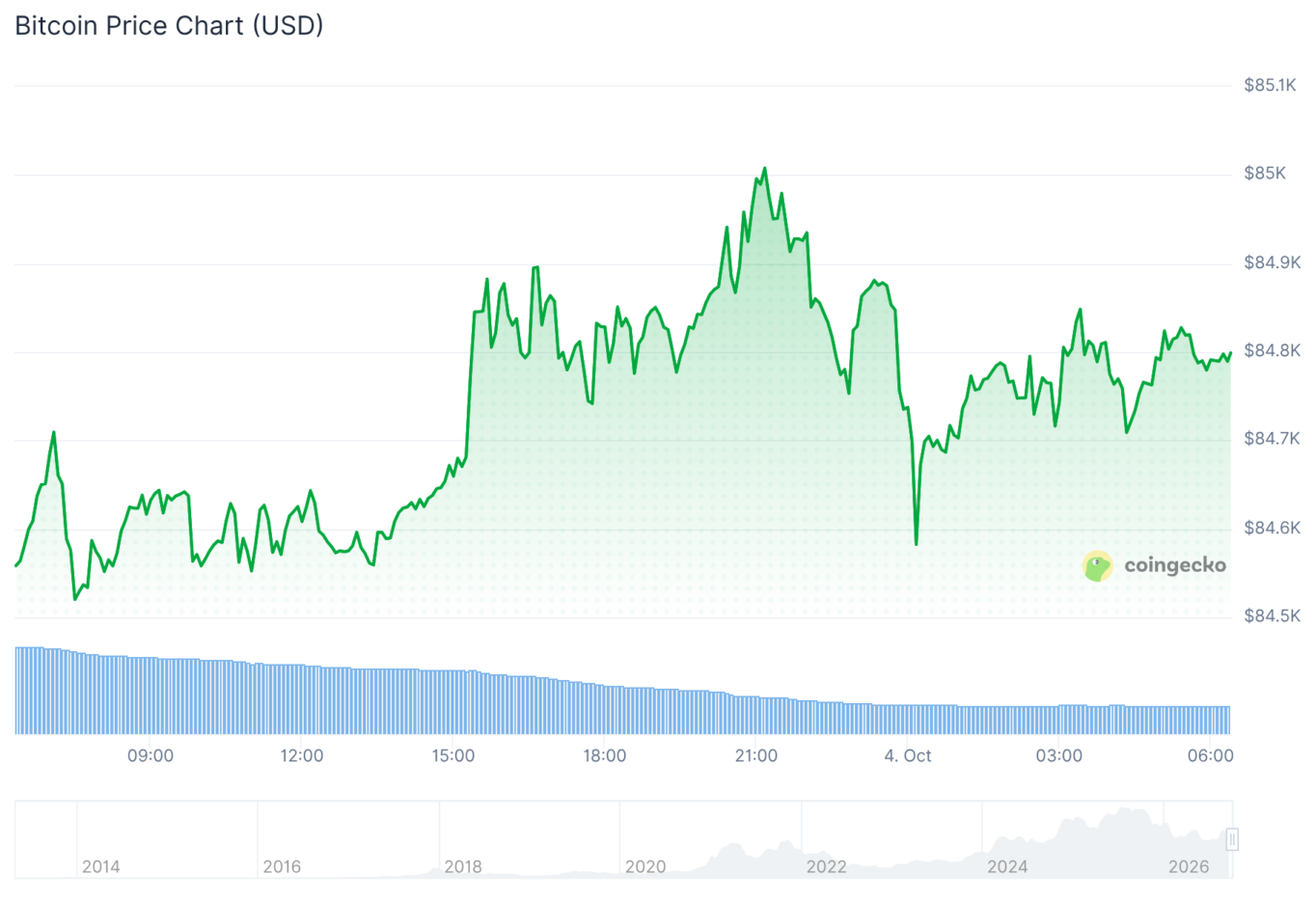 Bitcoin (BTC) Price
Trump Dividend Faces Funding Hurdles and Congressional Review
Trump first announced the Trump Dividend at a Republican convention in Dallas on September 9. He framed the payment as sharing economic gains, conditional on Republican control of the House and Senate.
Using roughly 245 million adult citizens, the proposed nationwide payout would cost approximately $1.23 trillion. That calculation assumes universal adult eligibility before any income limits reduce the recipient count.
Trump and Vice President JD Vance have pointed to tariff revenue to fund it. Private investment pledges do not automatically become federal revenue available for household payments.
Tax Foundation economist Erica York projects $125 billion in net revenue from new tariffs during 2027. That would cover one-tenth of the Trump dividend, requiring almost a decade to meet the cost.
The Committee for a Responsible Federal Budget warns that tariff revenue already appears in deficit projections. It says the payout could increase borrowing and inflation without spending cuts or additional income.
Congress controls federal spending through appropriations, so an election victory would not itself authorize the proposed stimulus checks. Ohio Senator Bernie Moreno says he intends to prepare legislation for consideration after the November 3 vote.
The election condition has drawn accusations of vote buying, although that criticism does not establish a criminal violation. Legal experts cited by PolitiFact suggest a payment benefiting all Americans could be legally permissible.
Officials have not published final eligibility rules or a payment timetable for the Trump Dividend. Earlier proposals involving DOGE savings and $2,000 tariff payments also failed to produce nationwide checks.
Medicare Rebates Advance as Bitcoin Stimulus Debate Grows
The Medicare rebate draws from the Medicare Improvement Fund, holding $2 billion authorized by Congress. CMS identifies 20.8 million eligible beneficiaries, putting total payments at approximately $1.87 billion.
Most recipients should receive direct deposits around October 8, while paper checks will arrive later in October. Eligibility covers qualifying Original Medicare Part B enrollees living in the United States.
Medicare Advantage members do not qualify, nor do people receiving Medicaid premium assistance or paying income-related premium adjustments. The rebate operates separately from the Trump Dividend and does not require Republicans to win Congress.
Past stimulus checks offer evidence about household Bitcoin purchases, although they cannot establish how recipients would invest future payments. A Management Science study estimates initial pandemic payments increased Bitcoin buying volume against the U.S. dollar by 3.8%.
The researchers estimated a 0.6% Bitcoin price increase attributable to those payments. The finding concerns the first payment round and does not explain Bitcoin gains across 2020 and 2021.
The pandemic period also included near zero interest rates and substantial Federal Reserve asset purchases. Those simultaneous policies complicate efforts to separate the influence of cash payments from broader liquidity conditions.
The Trump Dividend could send money toward digital assets if enacted, but the share households would invest remains unknown. If tariff revenue falls short, borrowing costs and monetary policy could influence Bitcoin alongside household investment.
Saturday’s trading followed losses in leveraged positions across the crypto market. Liquidations reached approximately $434 million over 24 hours, including about $322 million in long positions.
The post Trump Dividend Pledge Ties $5,000 Checks to 2026 Midterm Victory appeared first on Blockonomi.






 English (US) ·