
It sometimes feels like two out of every three new games announced are remasters or remakes. Hurry now to buy the Gold Edition! It’s hard not to roll your eyes. But every now and then someone does it right. Every now and then it makes sense. I’m never going to tell you that the remakes of Trails in the Sky and its sequel are better than the originals. But with the release of the second chapter’s remake, which improves on a few key mistakes that the first half let slide, I do think they make sense. Falcom has extended its hand in invitation. You’d be a fool not to take it.
Of course, some of you accepted the invitation ages ago. The Trails series has been around for over 20 years, weaving a meticulous and constantly evolving story packed with great characters and what I’d suggest is flat-out the best world-building in all of video games. The fictional world of Zemuria isn’t simply appealing and vibrant. It is also solid as a rock and as knowable as that scar on your left hand you got fishing when you were twelve. No one else is doing it quite like Falcom, which had the juice right from the start. That explains why these remakes make sense.
Trails in the Sky SC’s remake doesn’t radically change too much from the first game’s remake which was released last year. There are no real shifts to the gameplay or grand twists to the proceedings. It’s simply the continuation of a story. Trails in the Sky ends in one of the most famous cliffhangers in the genre’s history. It would be weird if Falcom only released a remake of the first half! And so, just as it’s nearly impossible to separate protagonists Estelle and Joshua Bright from each other, you can’t entirely disentangle Trails in the Sky SC from the first game.
Trails In The Sky 2nd Chapter
-
Back-of-the-box quote:
“What Do Ouroboros Want Anyway?”
-
Type of Game:
“Joshua Get Your Shit Together” Simulator
-
Liked:
Vibrant art style shows Liberl from a fresh angle, localization fixes are a welcome improvement from the first game, these games make it really easy to leap into an amazing series
-
Disliked:
Combat lacks some of the current story arc’s fun extras, sometimes there’s a bit of hand holding, needed even more Kevin Graham
-
Developer:
Nihon Falcom
-
Platforms:
PC (Steam), PS5, Nintendo Switch, and Nintendo Switch 2
-
Release date:
September 17, 2026
-
Played:
Final playtime was about 80 hours with some mira to spare. My bracer rank was B+
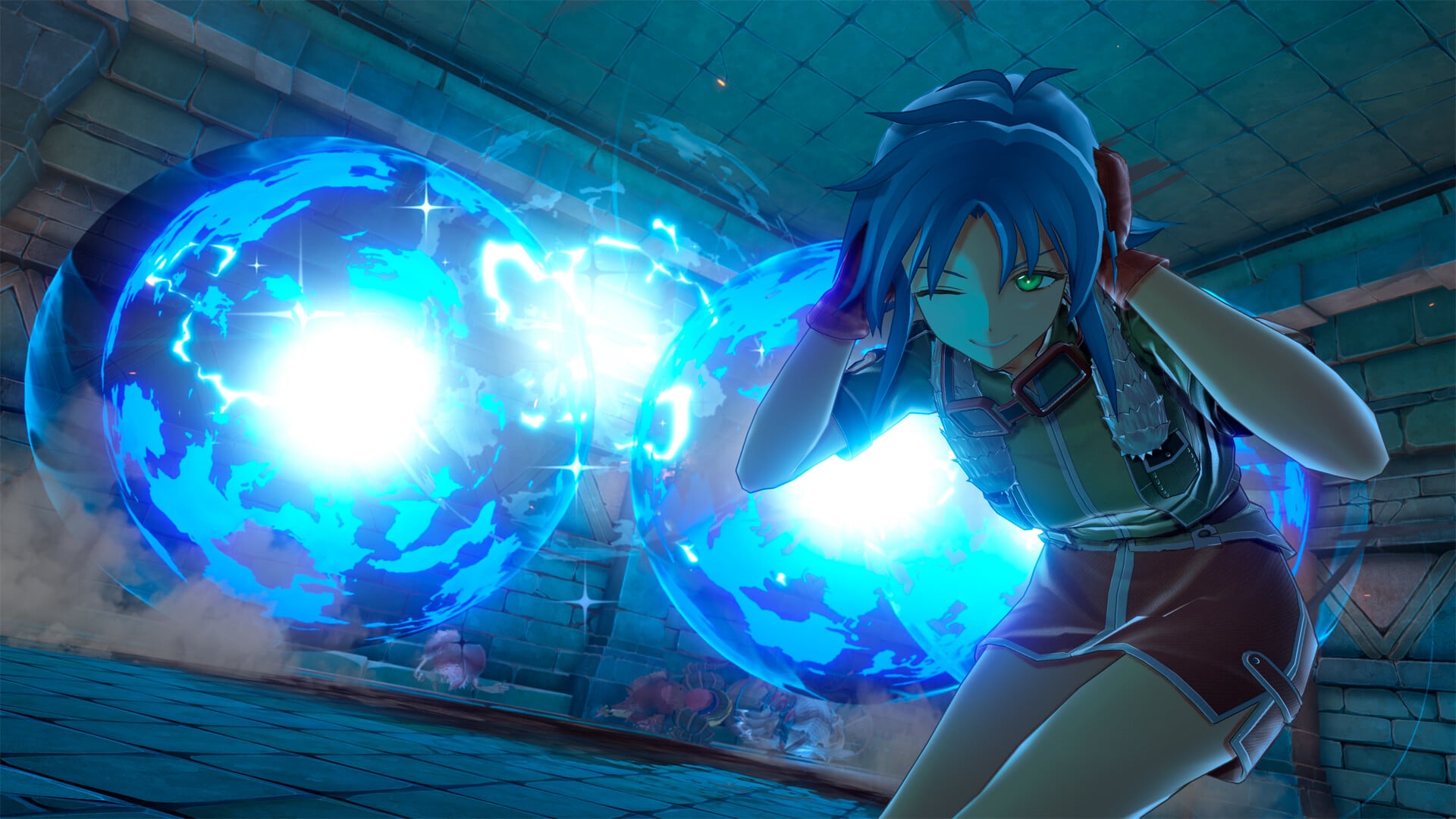
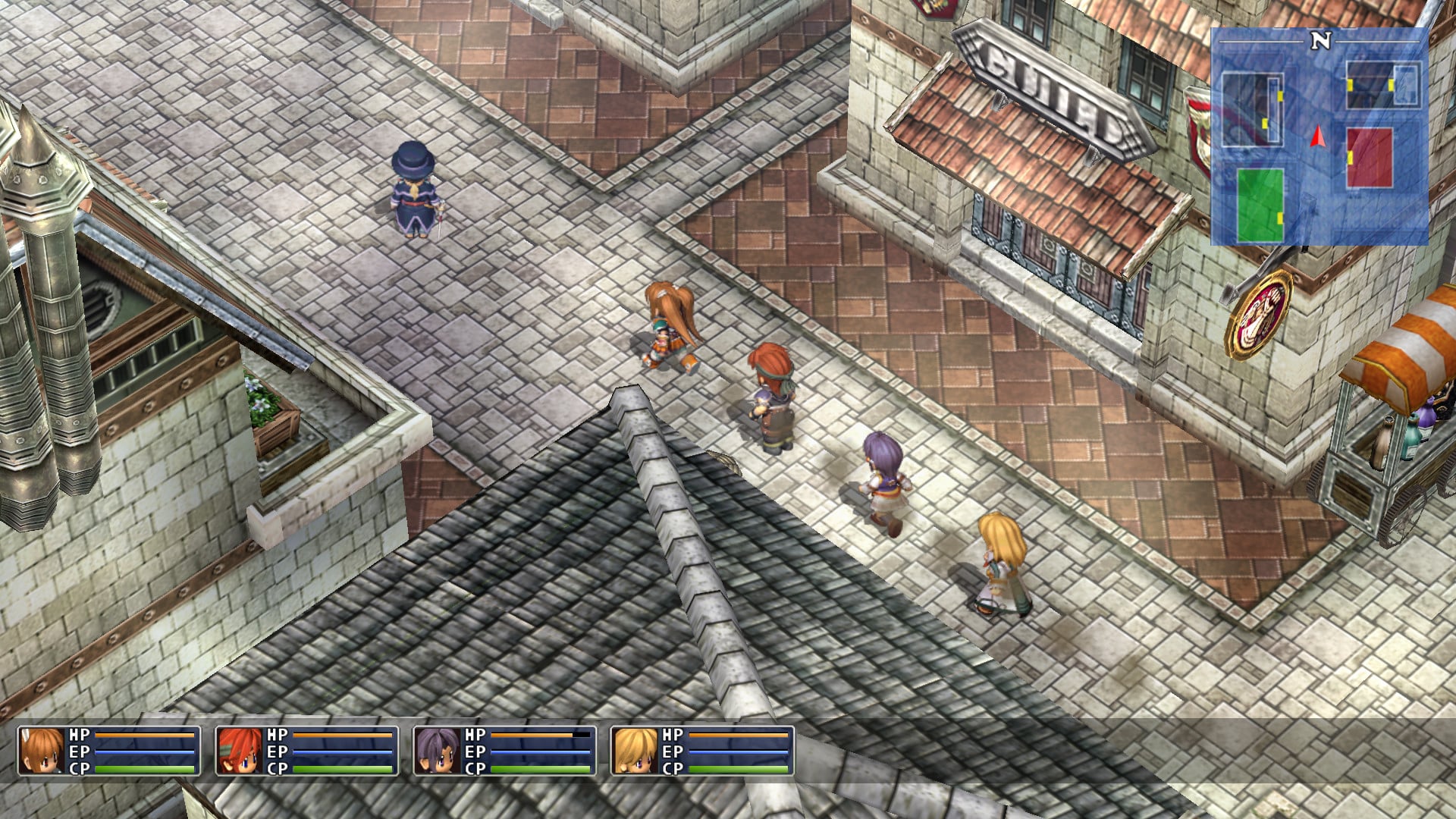
That’s not to say there’s no difference here. These games are made on tight budgets and at a fast pace, and the first remake had problems, some of which were actually a real bitch. It played well, taking the original 2004 game’s turn-based battles and making them align more with the hybrid action system that the series’ modern titles use. That worked out nicely and made for a game that was snappy to play and whose bright, cel-shaded world was a delight to explore. However, this came side-by-side with localization woes and other misfires that left a bad taste in my mouth. In a series where story is everything, the first remake stumbled over important terminology and sometimes didn’t quite get character voices right. Things were a little off.
Trails in the Sky SC hasn’t rid itself of all problems, but there’s been a great effort to make sure that prior issues, particularly localization mistakes, have been dealt with. As a result, when updates to address the first game’s issues are also taken into account, Falcom has produced a pair of remakes that fulfill two important criteria. The first is that they respect their world. These remakes are in conversation with the original games. Their adjustments and changes are transformational without snidely suggesting that the source material is something to be “fixed.” They feel largely respectful.
More importantly, especially with the completion of Sky SC’s remake, these games provide an easy onramp to the wider series. For people who have slept on these games or not really known the best way to start, here’s your answer. Old fans might groan and insist that the original games never really went anywhere, and that is true enough. However, you can catch more flies with honey than with vinegar. The Trails in the Sky remakes operate on that principle more than anything else. Yes, these games are meant to please old fans, but they are also laser-focused on newbies. And the good news is that this story is so eclectic that if someone makes it this far, the chances that they’re going to immediately rush to see the rest of the story are pretty damn high.
 Nihon Falcom
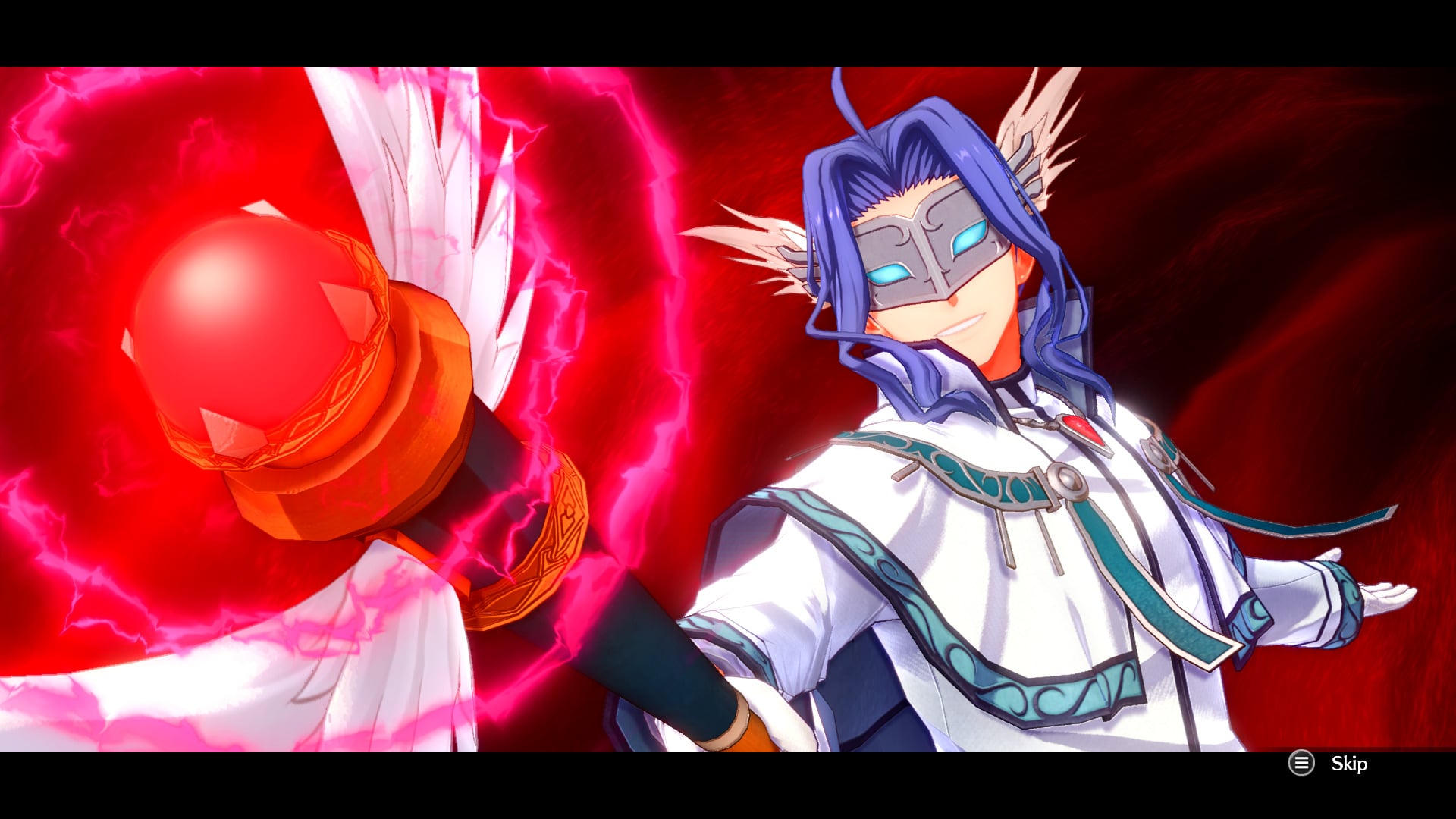
If you’re not in the know, the Trails games are broken into a few different “arcs,” each led by their own protagonist and set in a different nation of the world. In the over twenty years that the series has existed, slightly less than a fictional decade has passed from the events of Trails in the Sky to those of the most recent modern title, Trails Beyond the Horizon. The appeal of the series is in getting to watch the world and characters grow. That all starts here in the nation of Liberl with the young adventurer Estelle Bright. And at the end of Trails in the Sky, she was in quite a predicament. After helping to thwart a coup, her partner Joshua revealed that he used to be part of a mysterious secret society called Ouroboros. With a parting kiss (secretly poisoned), he knocks out Estelle and runs off to confront his past. Roll credits!
In Trails in the Sky SC, Estelle is on the hunt for answers and the resulting journey leads her around Liberl once more, culminating in a clash against Ouroboros that will spell life or death for the nation and maybe the world. The world stakes are higher but so are the personal ones. I know this story already and playing through it once more, I often found myself moved to tears, cheering wildly, laughing like a fool. It’s simply that damn good. Seriously!
More importantly, this story is both the knockout strike of an astoundingly confident one-two punch but also greatly expands the scope of the world. The first Trails in the Sky is relatively modest. There’s some adventuring and helping out with local problems. Eventually, there’s some political intrigue as well! But the sequel expands outward and starts to explain so much more about the world that, even as you’re enjoying a great action romp and touching romance, you’re constantly learning about the world, too. Which is why remaking the first two games is so important.
If you already know where this is all leading, it’s wonderful to get a reminder of just how much has changed since the events of Trails in the Sky and its sequel. Some of the characters grow into very different people over the course of the following games! It all starts here. For someone like me, playing Trails in the Sky SC wasn’t just a matter of nostalgia but one of perspective as well. Having walked down the path as far as it currently leads, turning around reminded me how much I’ve grown and how much these characters have also grown since we took our first steps together. For someone new to the series, experiencing the sequel and its devotion to pulling back the curtain and showing the true forces behind much of the setting’s plots and events will feel like opening a third eye.
 Nihon Falcom
Words, Words, Words!
It helps that those localization issues have been properly addressed. There are still some quirks here but many of the largest problems that held back the first game’s remake are gone. A shift in publisher has resulted in a fresh team of localizers and producers being brought in. That’s understandable for a series juggling both constantly releasing mainline entries as well as fresh remakes, but it did lead to a great deal of inconsistent terminology and out-of-step vocal performances that left the first remake feeling askew. The term “archaism,” for example, which refers to a specific kind of machine-like foe and has been used in the series for decades, suddenly became the dully rendered “orbal golem.” Liberl’s ancient towers, important locations for the sequel, had their names changed—for instance, the Esmelas Tower became the much more direct Jade Tower—and the result was a world that, while still worth exploring, lacked some of the specificity it was famous for. It also didn’t help that voice direction couldn’t decide how certain words were pronounced. Liberl (lib-erl) sometimes became Liberl (liber-ral) and the names of important characters were often botched. It wasn’t a great vibe.
It might seem odd to focus on issues like these first instead of delving into combat mechanics or side activities, but the improvements to the script and voice performances might be the most important adjustment made for the sequel. These issues have mostly been fixed—while the first remake often felt, in the accumulation of dozens of small mistakes, a little more shoddy and less lovingly furnished than this world and these characters deserved, here I caught just one stray mispronunciation of the name “Loewe.” (The previous game has also received a patch that fixed a great deal of its script and voice acting errors.)
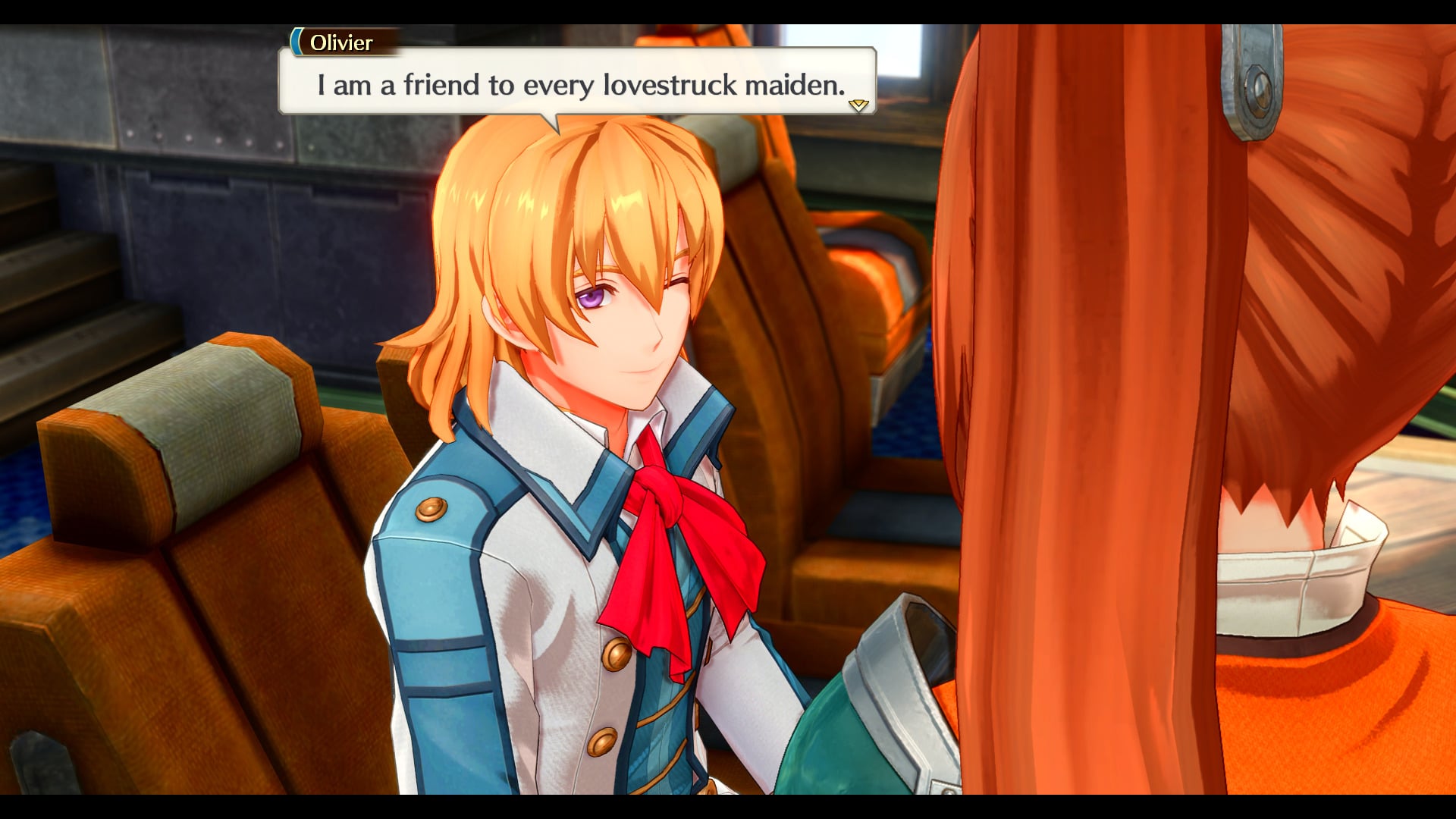
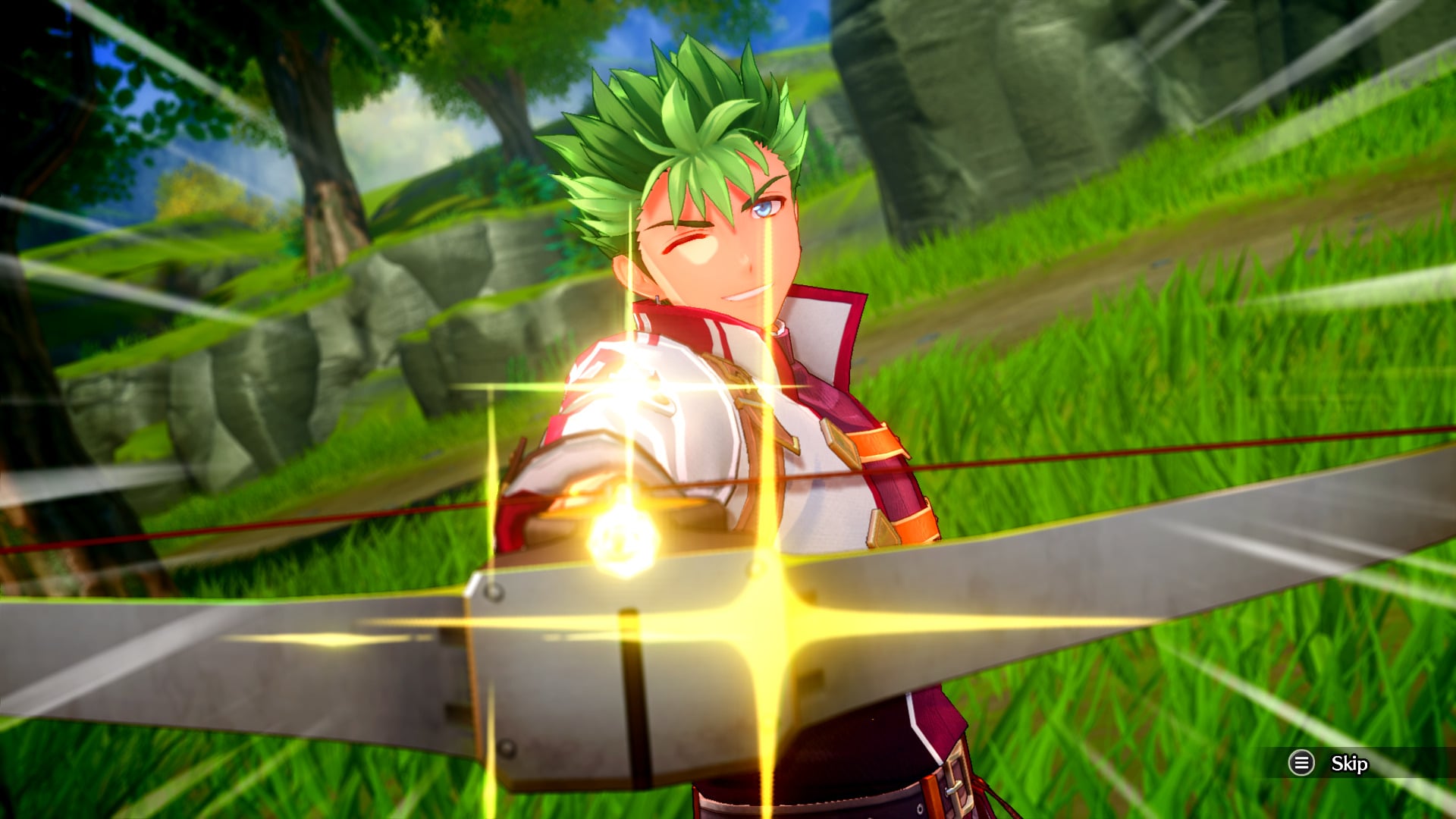
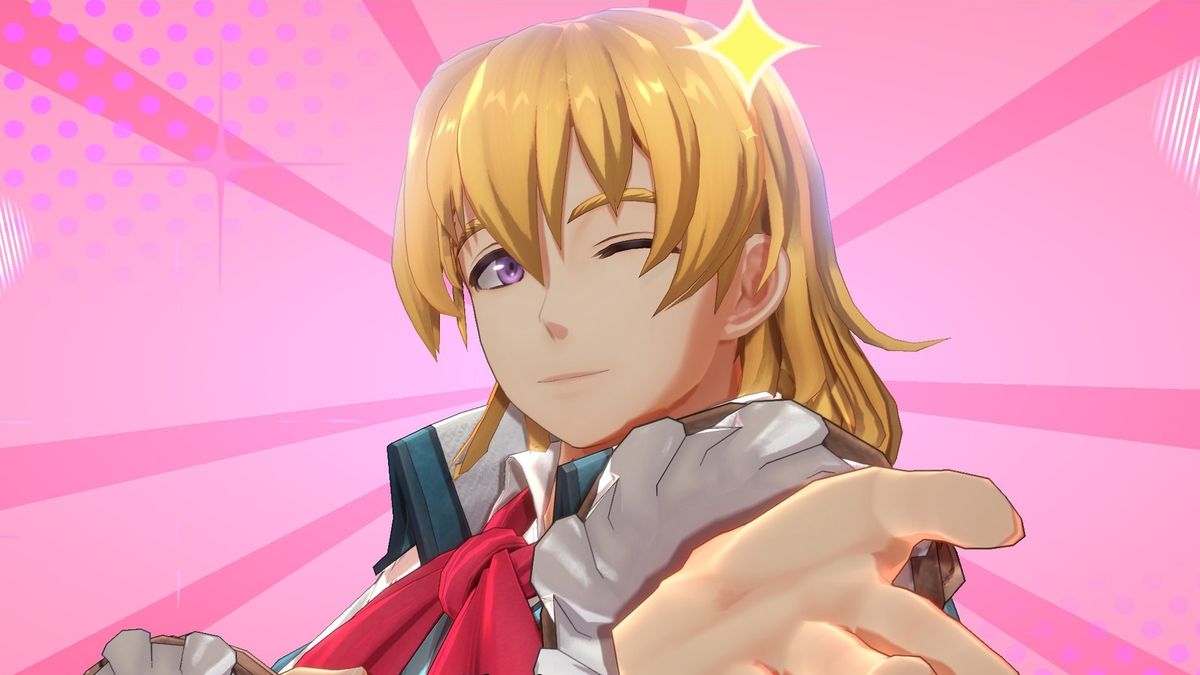
Trails in the Sky SC’s script also helps align some characterization choices between games, bringing characters into life much more successfully than the first remake. One of the largest casualties of the first game’s foibles, if you ask a die-hard like me, was Estelle herself. Trails in the Sky SC breathes a bit more panache into our heroine and it is deeply appreciated. Similarly, efforts have been taken to help some standout characters sound right on the money. For instance, Trails Beyond the Horizon’s localization opted to give traveling priest Kevin Graham a Bostonian accent in English in order to capture the Kansai dialect he uses in Japanese. That decision has been carried over to Trails in the Sky SC and the result is a character that, while handled a bit differently than in the original translation, is full of life and wonderful eccentricity where it counts.
The removal of terminology issues and a more unified vocal direction across the board uplifts the entire production. The first remake was fine but those obvious slip-ups sometimes made playing it feel like picking up a knock-off toy at the Dollar Store. Now, things feel much more in-line with everything else in the series. It’s not quite as characterful as the original game but it is no longer trading in distracting inferiorities. This is a good story and this script captures it quite well.
 Nihon Falcom
A Less Sophisticated Fight
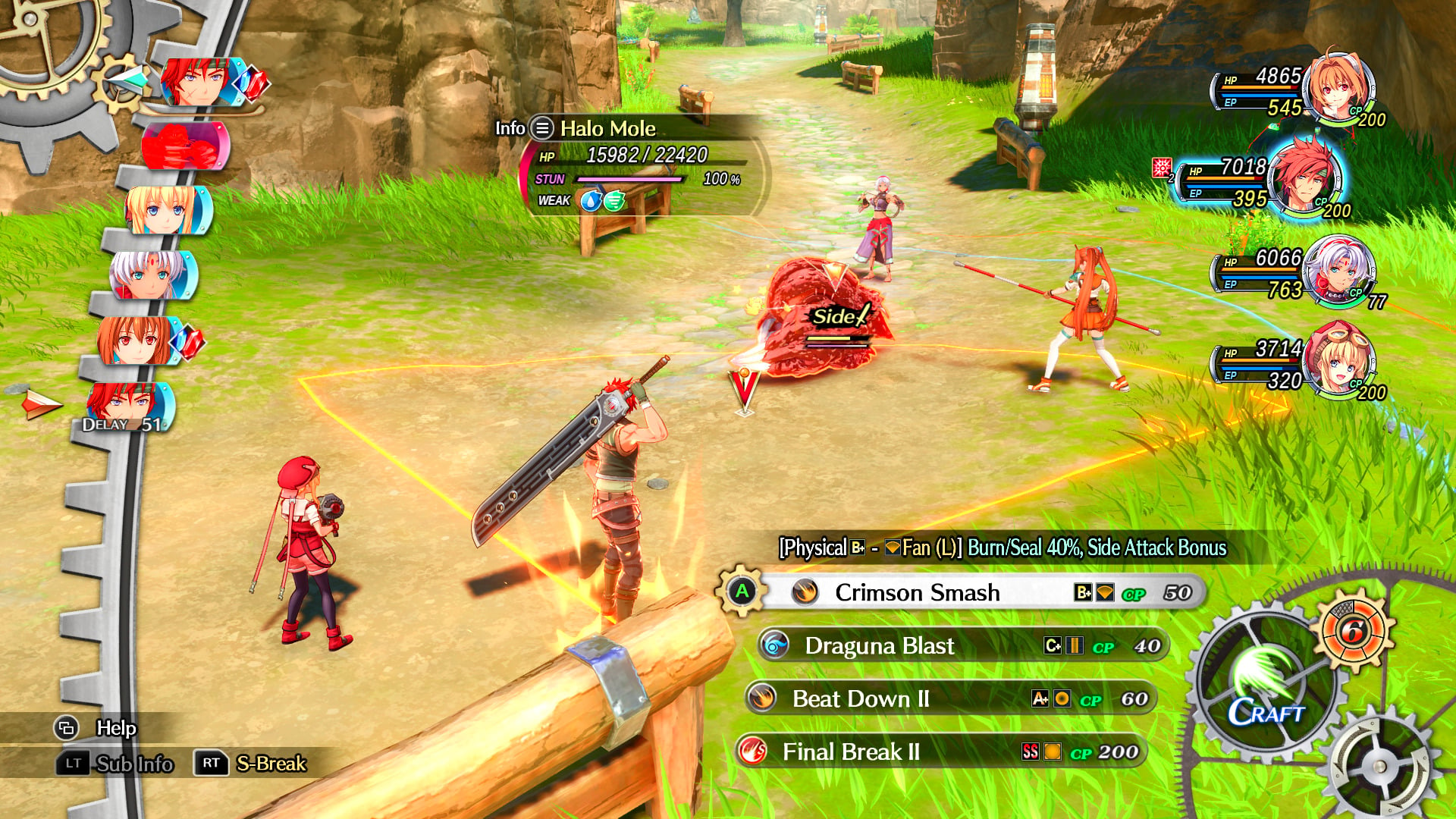
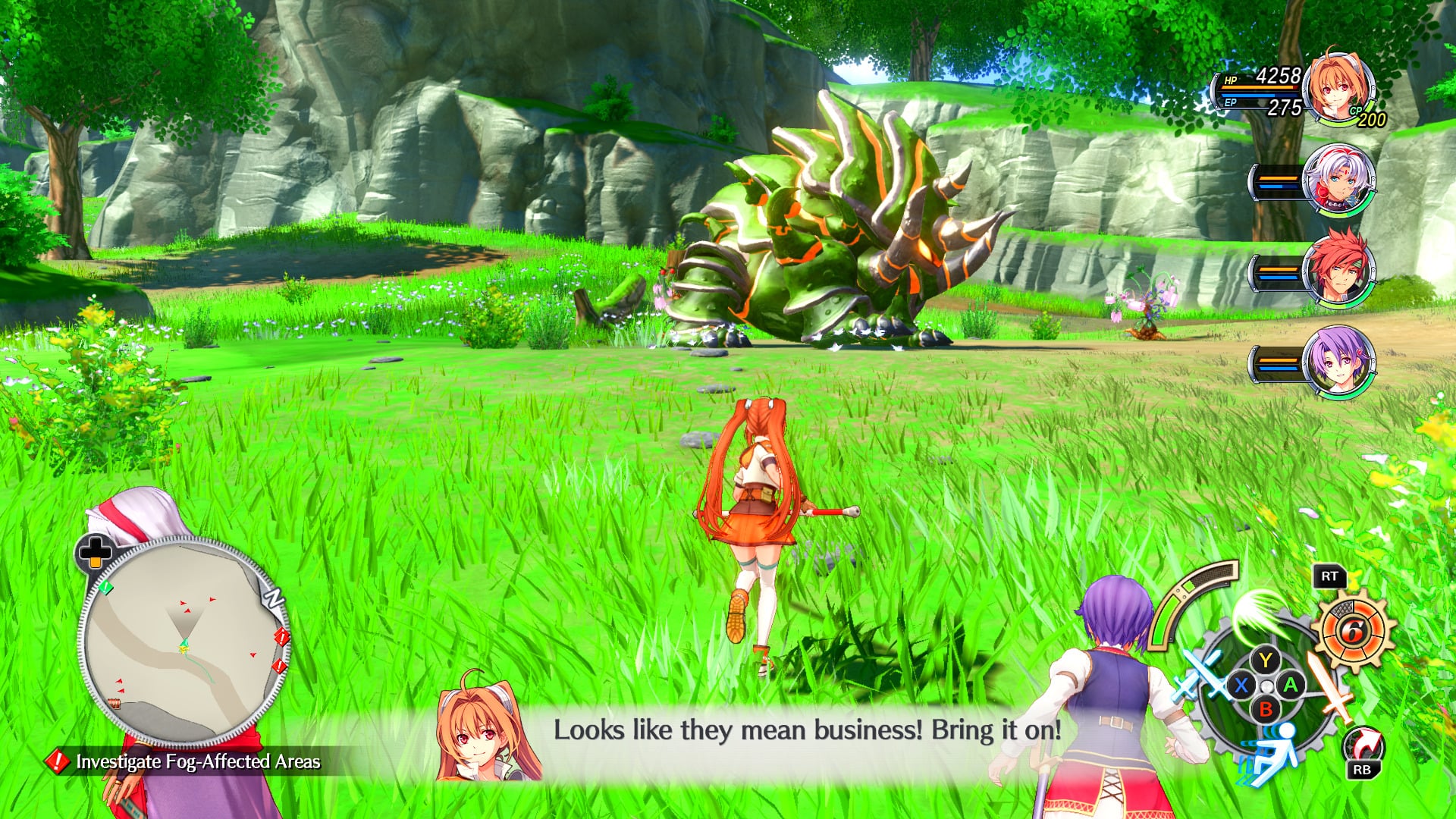
On the combat side of things, Trails in the Sky SC retains the adjustments and changes the first remake brought. When the series shifted over to the “Calvard arc” in 2021’s The Legend of Heroes: Trails Through Daybreak, there was a broad overhaul in combat. The result was the hybrid system that you’ll find in Trails in the Sky SC. The implementation here is mixed; this is a snappy and enjoyable system but it lacks some of the extra flourishes that current games, particularly Trails Beyond the Horizon, eventually added. The basic thrust is this: enemies are present on the overworld and can be attacked like you’re playing a normal action game. At any point, with extra advantage granted if they’re stunned, you can swap to turn-based combat and kick off a traditional RPG battle. In theory, it’s a “best of both worlds” situation.
In practice, and without many of the extra systems that the Calvard games eventually draped over this format, fights can be a little too straightforward. That isn’t to say that combat is bad! It’s not! While in combat, you can freely move your character anywhere in their movement range during their turn. Many abilities have advantages and extra benefits when used from different angles and this means you’re always making small, micro-tactical decisions. That said, compared to how this same combat system is handled currently in the mainline series, this version can feel a bit less complete. There’s just not as much spice on the burger.
In the Daybreak games and Trails Beyond the Horizon, there are extra decisions to make. Pairing characters next to each other can lead to special boosts or follow-up attacks. Sometimes you have to choose between hitting your backstab or staying side by side with another character. The boost gauge, a special meter that builds over time and, in Calvard, has a number of exciting tactical applications, here can only be spent on massive field-clearing team attacks. Trails in the Sky SC’s combat is snappy and gets the basics right, but without some of the extra considerations present in the current mainline games, the possibility space and the pool of interesting decisions available are much smaller.
In some ways, this makes sense! The Liberl games are characterized by a very earnest and quaint sensibility. It’s downright rustic. This is the world of Zemuria as it existed prior to the development of the technological gains present in the current games. Many of those extra skills are explicitly justified within the games as being the result of new innovations. Estelle Bright, fighting in the year 1202, should feel a little different than Van Arkride, fighting in the midst of 1209’s grand tech boom. Even so, if you’re a current series fan who likes where the Calvard games managed to take this hybrid system (or if you’re just a battle-junkie eager for a bit more tactical depth), you might end up a little disappointed.
 Nihon Falcom
Side-Questing As “The Supporting Gauntlet”
While the combat and story presentation are updated, there’s plenty of things that are exactly as they were over twenty years ago. (If it ain’t broke, don’t fix it.) The Trails games have adhered to a pretty consistent questing format since Trails in the Sky. The justifications might change but the pace and structure has been largely immutable from the start. Every protagonist in the series has a different profession: police officer, private detective, military student. No matter the job, their work invariably requires public service that warrants side questing. Estelle is a “bracer,” which is a mixture of a monster-hunting adventurer and all-purpose handyman. They’re called upon to deal with beasts and dangers but also sometimes deliver letters, teach Sunday School classes, or help out in a local restaurant’s kitchen. And so even as the main plot kicks up the intrigue, much of your time in this game is spent doing odd jobs and meeting minor characters.
Then again, calling the people you meet along the journey “minor” gives the wrong impression. Pretty much everyone you meet in the game, from quest giver to local schmuck in the town alleyway, has reams of unique dialogue and an ongoing personal story. Many of these span multiple games, expressed over the course of multiple bracer jobs or a constantly updating collection of conversations. The goal of the game’s quest structure is to corral players into spending time with all these people and learning everything they can about the nation of Liberl.
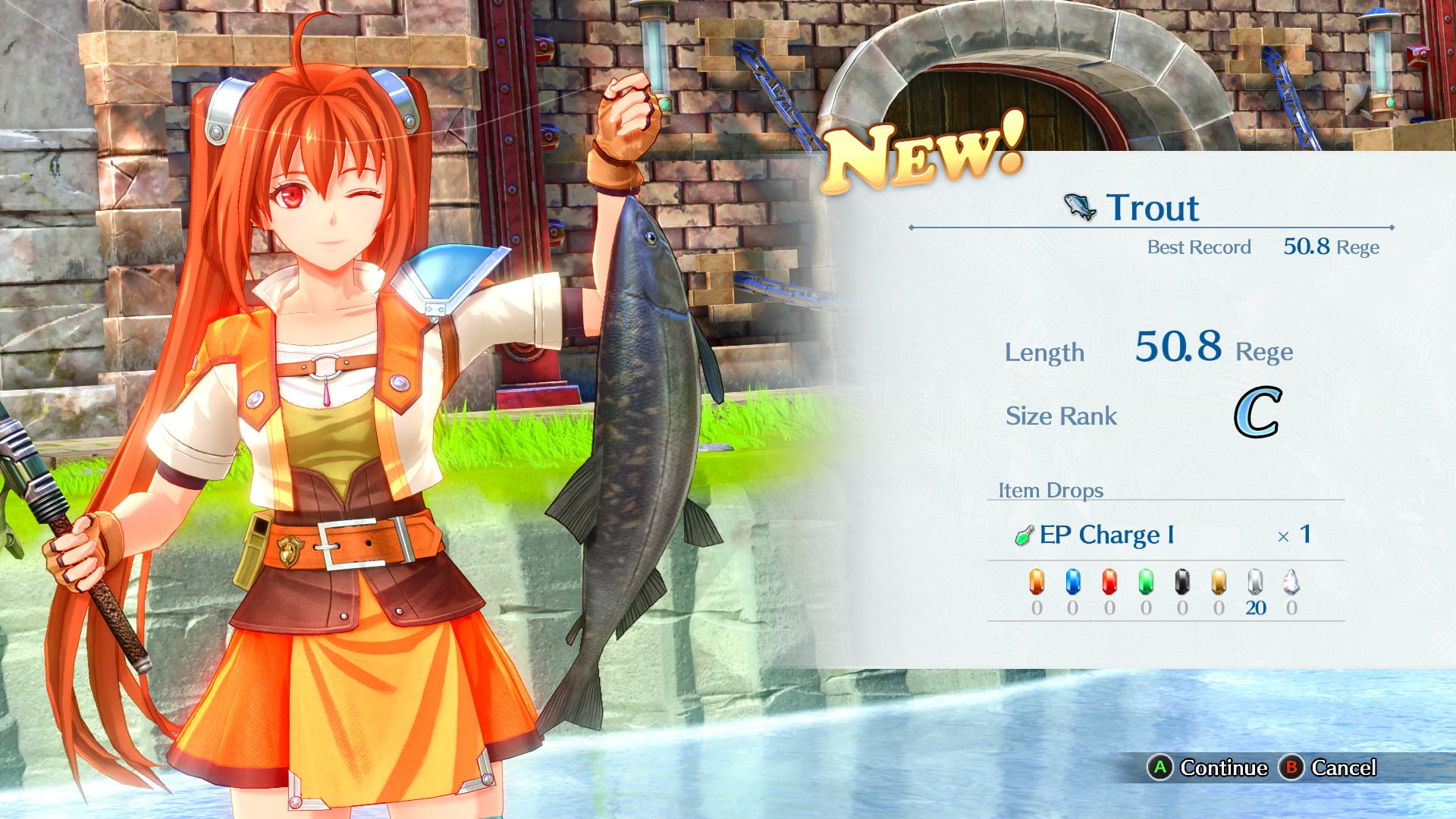
Take fishing, for instance. As is often the case, there’s a fishing mini-game here that can yield treasure and crafting ingredients. Skillfully angling requires exploring the world to find all the fishing spots. Once you do that and catch fish, all those ingredients feed back into the game’s cooking system. Which isn’t just a chance to get healing items; every new meal you cook grants a permanent stat boost as well as a useful healing item. If you want to cook all the recipes, you’ll need to taste local cuisine to learn recipes. So the quest structure pushes you to take on every odd job you can while the side activities make you find the hidden corners of the world, stop at local taverns, learn local customs and taste cuisine, and really immerse yourself in the setting.
The presentation of these activities is simpler here in Liberl. Fishing doesn’t have, as later games will add, dramatic character-laden subplots tied to your angling adventures. In the current Calvard arc, cooking and finding recipes now comes with more context: protagonist Van Arkride runs a food blog on the side of his private investigation work. Trails in the Sky SC’s relative simplicity works better here than it does in combat. The lack of extra tactical options in combat leaves battles fun but a little undercooked. Meanwhile, the lack of extra story or presentation gimmicks for the side activities helps Estelle’s adventure in Liberl maintain a charmingly humble tone.
This, even more than combat or dungeoneering, is the real experiential joy of any Trails game. Completing jobs increases your bracer rank, netting rewards. To survive tough battles, you’ll want to cook and earn stat boosts. To have the ingredients you need, you’ll want to explore and fish. All the while, after every new story beat, the world reacts. You’ll stumble on hidden storylines, develop opinions on local politics, and definitely end up with favorite NPCs.
 Nihon Falcom
There are moments when not everything works so cleanly, though. From time to time, modernity slips into this remake in ways that actually undercut some of the original design decisions. For an example of a good change, consider the new visuals—brightly, shaded with thick lines—and how they give the remakes a clear identity. Different from the originals, arguably less inherently charming that the pixels are, but still complementary with the old game’s ethos. Meanwhile, changes to quest markers, fast travel, and a tendency for characters to offer extra quips in battle take away from the original game’s quiet confidence that you can handle things yourself.
This is particularly noticeable in an ongoing scavenger hunt questline where a villain pesters the heroes with clues and has them look for hidden treasures and special locations in the world. While the game doesn’t flat out tell you exactly where these things are, a small radar will still guide you to the general area and get you pretty damn close. These games are all about paying attention to the world and really learning the ins and outs of whatever country you’re traveling through. Adding extra hints to these quests might make them less frustrating, but the result is that you need to think a little less actively about the town you’re in and where to look next.
Likewise, a mysterious dream sequence with a navigational twist was pretty much instantly solved for me by another character the moment I took an accidental wrong turn down the path. This turned a dreamy and somewhat tense scenario into a very anti-climactic letdown.
Hints also happen occasionally in battles. While not nearly as bad as the instant help you might get in, say, a modern God of War puzzle room, there are moments when characters might flat-out tell you the solution to a battle’s gimmick with a speed that’s a little too hasty. Trails games don’t really have too many puzzle bosses, operating more on positioning and elemental weaknesses, so the few times you have an encounter with genuine brain-teasing, it’s very exciting. I like to think players are not idiots even in the modern age and if people could figure this stuff out in 2004, there’s no reason they need all this extra hand-holding here in 2026.
 Nihon Falcom
He Was A Boy, She Was A Girl
For many people, these little distinctions won’t matter. For many people, I think they shouldn’t matter. The story is the draw here. The first game allowed people to bask in the world and get to know the basics. The second makes a promise: stay here and you will see incredible things and meet incredible people. Estelle Bright is the most incredible of them all.
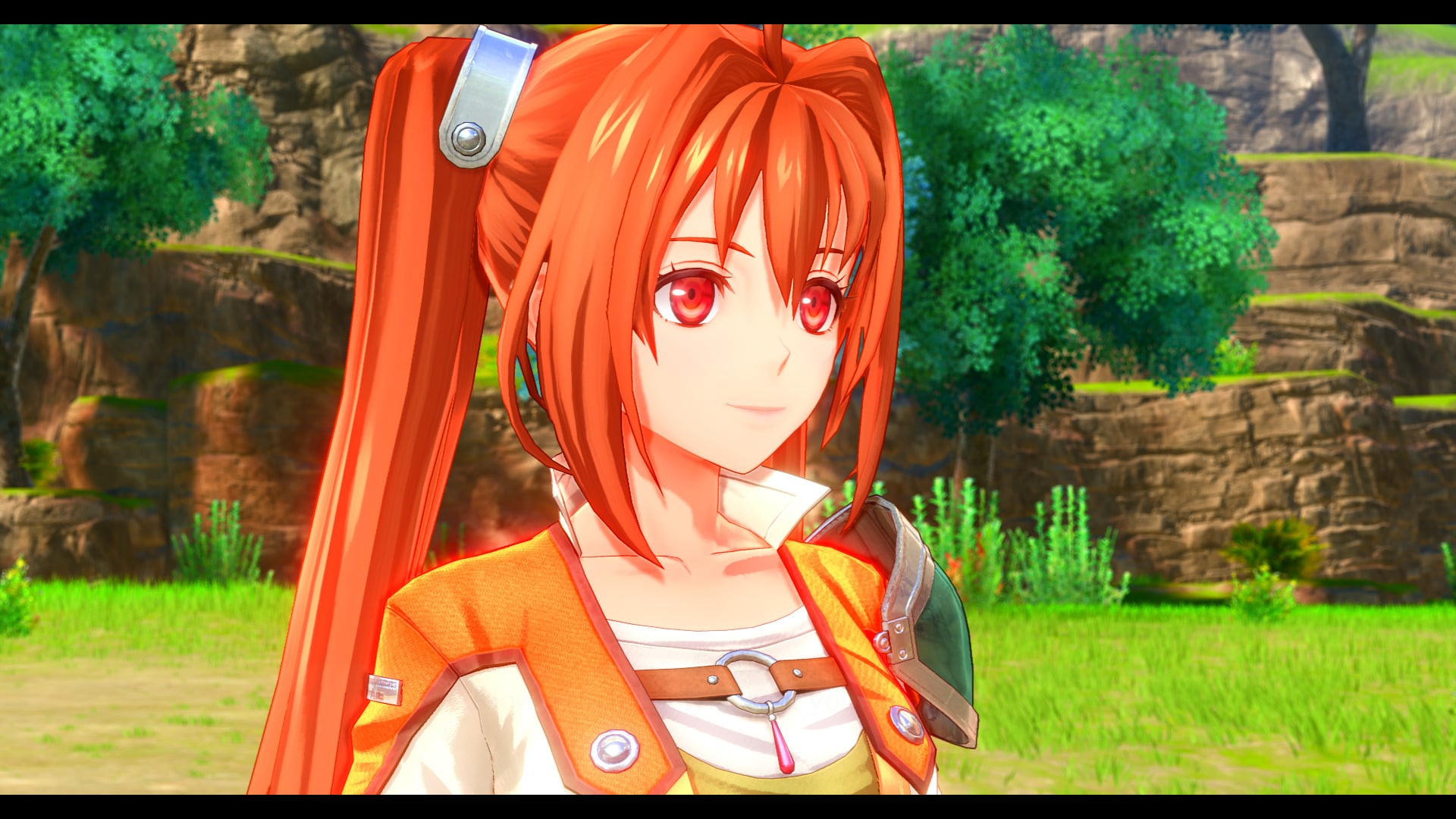
Estelle is very easy to like. She’s brave while still feeling like a normal young teenager. We’re not dealing with some perfect anime powerhouse even if she rises to that level by the end of things. For all her cheer and pluck, she makes earnest mistakes. She hides information from allies, stumbles over words, and picks fights too easily. There are more compelling heroes and parties in this series (Lloyd Banning and the Special Support Section say hi) but Liberl’s cast is a damn good gang. Optimistic without being simplistic, full of inner turmoil without getting bogged in the mud. They’re the perfect introductory group for learning about this setting.
Earnestness can feel like a crime in this day and age. Game discourse and conversation is a mire plagued by reactionary weirdos and players with unreasonable demands. Few people know how to explain the downside of a work or voice their disagreements without spiraling into a tornado of invective filth. Yet, from time to time, there are heroes in our stories that embody the proper path. Trails is packed with those earnest heroes, and spending time with them kicks so much ass.
The accumulation of two decades’ worth of story can be intimidating. If you want to enjoy the astounding cliffhanger of Trails Beyond the Horizon, it can be tough knowing how to start. These remakes provide a good on-ramp and the story here in Liberl, sweeping and light but still full of hard truths and political snarls, remains as good as ever. These games are the kind of thing you desperately want to talk to your friends about.
 Nihon Falcom
Even so, some fans can’t see the value in these remakes. If the old games exist and the changes here don’t radically improve anything—streamlining more than elevating—what’s the point? Do we need another pair of remakes right now? I can empathize. There are many remakes and remasters out there that don’t really “get it.” On this very site, I’ve noted that Metal Gear Solid Delta: Snake Eater frankly disgusts me. It prioritizes chasing fidelity over caring about why certain artistic choices were made. Meanwhile the recently revealed Ocarina of Time remake looks—puppetry inspirations aside—excessively lush to my own eyes.
I think Trails in the Sky and Trails in the Sky SC mostly “get it,” but some folks? Well…
You Have To Start Somewhere. It’s Fine To Start Here.
Trails fans are snobs. I’m allowed to say this because I am a Trails fan and also a snob. We are incapable of hiding our more reactionary urges when it comes to these games. I would never play anything but the original translation! What they did to the old art style is a crime! What is this fucking slop!? What have they done!? Look how they massacred my dear Estelle Bright!
These reactions do contain an important truth: these remakes cannot ever replicate, in full, the charm of the originals. In this way, that does make them “lesser.” They have less expressive translations. Their modern presentation loses much of the character the old art styles held. They are a little bit easier to play, and undercooked compared to the current series’ standard.
 Nihon Falcom
That doesn’t mean these games are bad. Anyone making the argument that these remakes disrespect the sanctity of the originals or some such nonsense needs to understand that time has this unfortunate thing it does called “passing.” The clock ticks. People die, your back starts to hurt. New generations come along. Which means that a remake is not really for the snobs, even if it might try to assuage them. It is for the people who missed the moment. We might ask, “Why can’t these people just pinch their noses and play the original game?” and that’s a fair question! People should play old games. You can throw a dart at a board of old games and easily get something better than modern AAA work. More focused, more respectful of your time.
However, particularly in retro spaces—which I inhabit more now that I’m in my thirties—some people do need to learn to grow the hell up. The remakes lack many of the eccentricities that initially enchanted us, but they’re not “for” us either. Besides, the original games are right there! This didn’t replace them and the goal of a remake like this can’t be only to please stuffy forty-year-olds chatting in private Discords. That is not how any of this should work.
Why don’t you just put the whole world in a bottle, Superman?
If the goal of these remakes has been to help people enter Zemuria and enjoy one of the genre’s most well-maintained RPG series, these games have been undeniably successful. Anecdotally, I can say tons of peers within the fields of games writing and development have finally leapt in thanks to the opportunity these games provide. College friends I talk to once or twice a year are asking me about the series and a former partner finally feels able to start. This is a good thing. Those people deserved a helping hand.
I want people to meet Estelle and Joshua. I want them to meet Lloyd Bannings, too. I want them to upgrade their orbments. I want them to learn the bracer code, attend Thors Academy, and walk around the streets of Calvard. I believe this series is very special. They should see it! If someone wants to start with these remakes, that’s fine. They took the leap and that counts.
If these games made it possible for you to finally try the series? Welcome aboard. I am so very happy you are here. Hopefully, your time in Liberl made you hungry to see what’s next.
Keep going! Don’t even wait for another remake. You have no idea the journey you’re in for.


 English (US) ·