

TP-Link has patched 15 vulnerabilities in the zero-touch provisioning (ZTP) mechanism of its Omada network devices that could be chained with previously disclosed flaws to achieve remote code execution (RCE).
The flaws were uncovered by Forescout’s Vedere Labs researchers, who published the full details at the Black Hat USA security conference earlier today.
Omada is TP-Link’s business networking product line that includes Wi-Fi access points, Ethernet and PoE switches, internet gateways, and VPN routers.

They are typically used by small to medium-sized businesses, although TP-Link also markets pro-grade deployments for enterprises.
ZTP is a way to deploy network devices without manually configuring each one on-site, allowing an IT team or managed service provider (MSP) to prepare everything remotely based on a predetermined configuration.
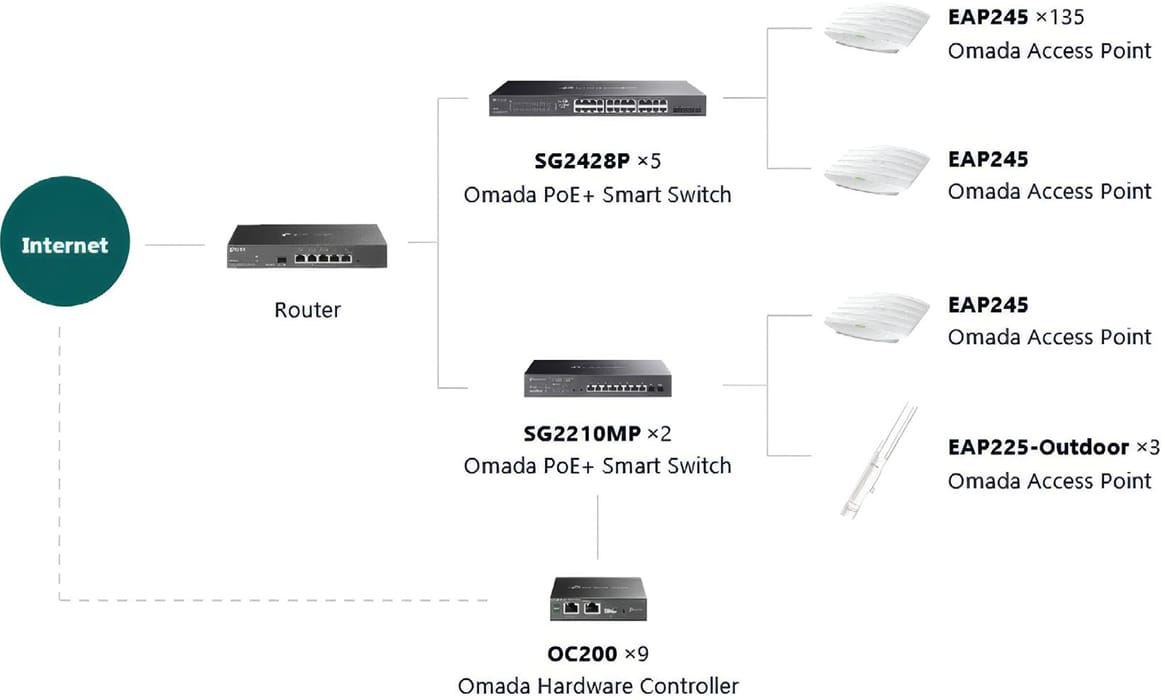 Omada deployment diagram
Source: Forescout
Some of the 15 flaws Forescout discovered also impact various TP-Link products and services, such as IP cameras, smart home IoT devices, mobile applications, and cloud accounts.
The issues include hard-coded cryptographic keys, information disclosure, remote code execution, device hijacking and spoofing, client-side code execution, and interception or compromise of encrypted communications.
Forescout says attackers could combine the new flaws with two previously disclosed command-injection vulnerabilities to compromise Omada’s chain of trust and infiltrate networks.
“The vulnerabilities fall into four impact categories: client-side code execution, information disclosure, device hijacking and spoofing, and compromise of encrypted communications,” Forescout explains.
“Combined with two previously disclosed CVEs (CVE-2025-7850 and CVE-2025-7851), these flaws enable concrete attacks that let attackers infiltrate networks through controllers and client devices.”
TP-Link’s advisory lists 15 newly disclosed flaws, of which 11 received the following identifiers:
- CVE-2025-9289 through CVE-2025-9293
- CVE-2025-15544
- CVE-2025-15627 through CVE-2025-15631
The remaining four findings did not receive a tracking number. They concern device adoption based only on knowing the serial number, default credentials used during initial adoption, predictable serial numbers, and files made available via unauthenticated temporary download links.
In one attack scenario Forescout described, a remote attacker could enumerate predictable device serial numbers to obtain MAC addresses and identify devices awaiting adoption.
The attacker could then impersonate one of those devices, exploit a race condition during cloud adoption, and authenticate using default credentials.
This would cause the controller to disclose the device configuration, including a cleartext username, an unsalted MD5 password hash, and potentially VPN keys.
The attacker could also inject JavaScript into the controller’s administrative interface to phish an administrator and steal their cloud-controller credentials.
Having stolen the credentials, the attacker can then reconfigure managed devices, create VPN tunnels into the internal network, and exploit previously disclosed command-injection flaws to compromise network equipment.
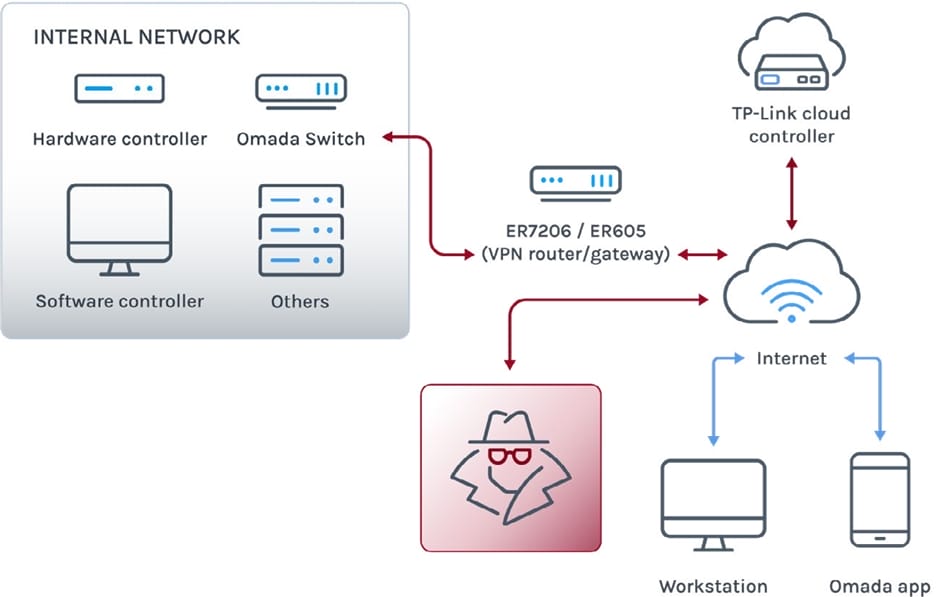 Overview of the race condition attack
Source: Forescout
The flaws affect Omada Controllers, Gateways, Switches, Access Points, OLT platforms, Cloud services, and TP-Link mobile applications.
Forescout reports identifying over 1,800 internet-accessible Omada controllers, despite such deployments generally not being intended for direct internet exposure.
As for the Android applications, Omada and Omada Guard have 1.1 downloads on Google Play, while TP-Link apps collectively have 3 to 7 million active accounts.
Users are advised to visit TP-Link’s Omada download portal to source the latest firmware images for their device model.
Additionally, it is recommended to use strong, unique administrator credentials, enable multi-factor authentication (MFA), rotate all secrets when compromise is suspected, update mobile apps, and monitor network traffic for suspicious activity.

Test every layer before attackers do
Security teams log 54% of successful attacks and alert on just 14%. The rest move through your environment unseen.
The Picus whitepaper shows how breach and attack simulation tests your SIEM and EDR rules so threats stop slipping by detection.








 English (US) ·