
 1 month ago
47
1 month ago
47

Published Sep 2, 2026, 12:01 PM EDT
We have an exclusive look at a new movie, Tom and Jerry: Forbidden Compass

In just a few days, Tom and Jerry are returning home after years as international movie stars. The pair's new 3D animated feature, Tom and Jerry: Forbidden Compass, tells the story of the famous cartoon cat and mouse entering a world of Chinese mythology, which they stumble into after some classic cat-and-mouse antics in a museum. You may not even realize it's out in theaters this Friday. That's because it wasn't really made for U.S. audiences.
Released in China last August, the movie was co-produced by Warner Bros. Pictures and China’s state-owned film company, China Film Group, and directed by Chinese director Zhang Gang. This all makes sense when you consider the history of the characters. But first: Polygon has an exclusive clip from the movie ahead of its release on Sept. 4 to give you a taste of just how different this looks than Tom and Jerry's mostly forgotten 2021 live-action movie.
How Tom and Jerry became Chinese movie stars
If you’re wondering how we got here, well, it makes more sense than you might think.
Tom and Jerry were created by William Hanna and Joseph Barbera way back in 1940 for MGM, during a period when MGM's animation studio was lagging behind the likes of Disney's shorts division and Warner Bros.’ Looney Tunes cartoons. So Tom and Jerry were created and they quickly became a bona fide hit. From 1940 until 1957, 161 animated shorts of the duo were made. These were not made for television. They ran before feature films in theaters, just like Looney Tunes and Disney’s shorts.
Those 161 shorts are generally what is considered to be the “classic” run of Tom and Jerry cartoons, which ceased production in 1957 due to budget cuts at MGM, as the rise of television was taking a chunk out of the movie business. Then in 1961, MGM revived Tom and Jerry, but to keep the budget down, they animated the shorts in Soviet-aligned Czechoslovakia. MGM even Americanized the names in the credits of the cartoons so as not to advertise the fact that it was making cartoons with a country that was allies with America’s biggest international enemy at the time, Russia.
These cartoons were still made for Americans and played before American movies. Overseas animation was just a way to keep the production costs down (a practice that later became standard for television animation). To Tom and Jerry fans, this era became known as the “Gene Deitch Era,” named for the animator who directed all 13 of the shorts. And while the run wasn’t very successful thanks to its limited animation, it was the start of Tom and Jerry’s journey overseas.
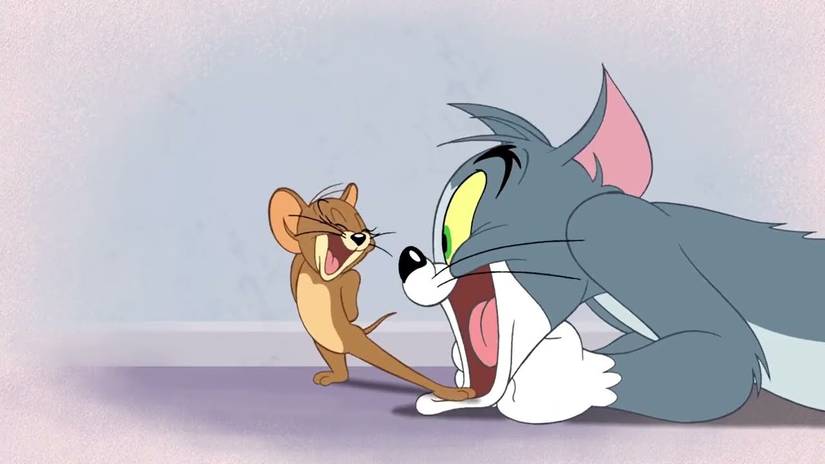
In the late 1950s and into the 1960s, theatrical animated shorts began to be repurposed for television. Usually three shorts would be packaged together to fill a half hour of television. Tom and Jerry got into the game in 1965 and soon after that, they made the leap to international television markets too.
Tom and Jerry go global
This kind of thing was standard practice for cartoons. Disney and Warner Bros. redubbed their stuff and shipped it across the world, but Tom and Jerry were especially successful because their main characters did not talk and their physical comedy was more universal. A lot of Disney shorts were very musical, and the Looney Tunes brand of humor was often quite verbal (with the obvious exception of the Coyote and Road Runner shorts). But Jerry hitting Tom in the head defied language barriers; they didn’t need to be dubbed over and few jokes were lost in translation. And so their antics caught on quickly in other countries.
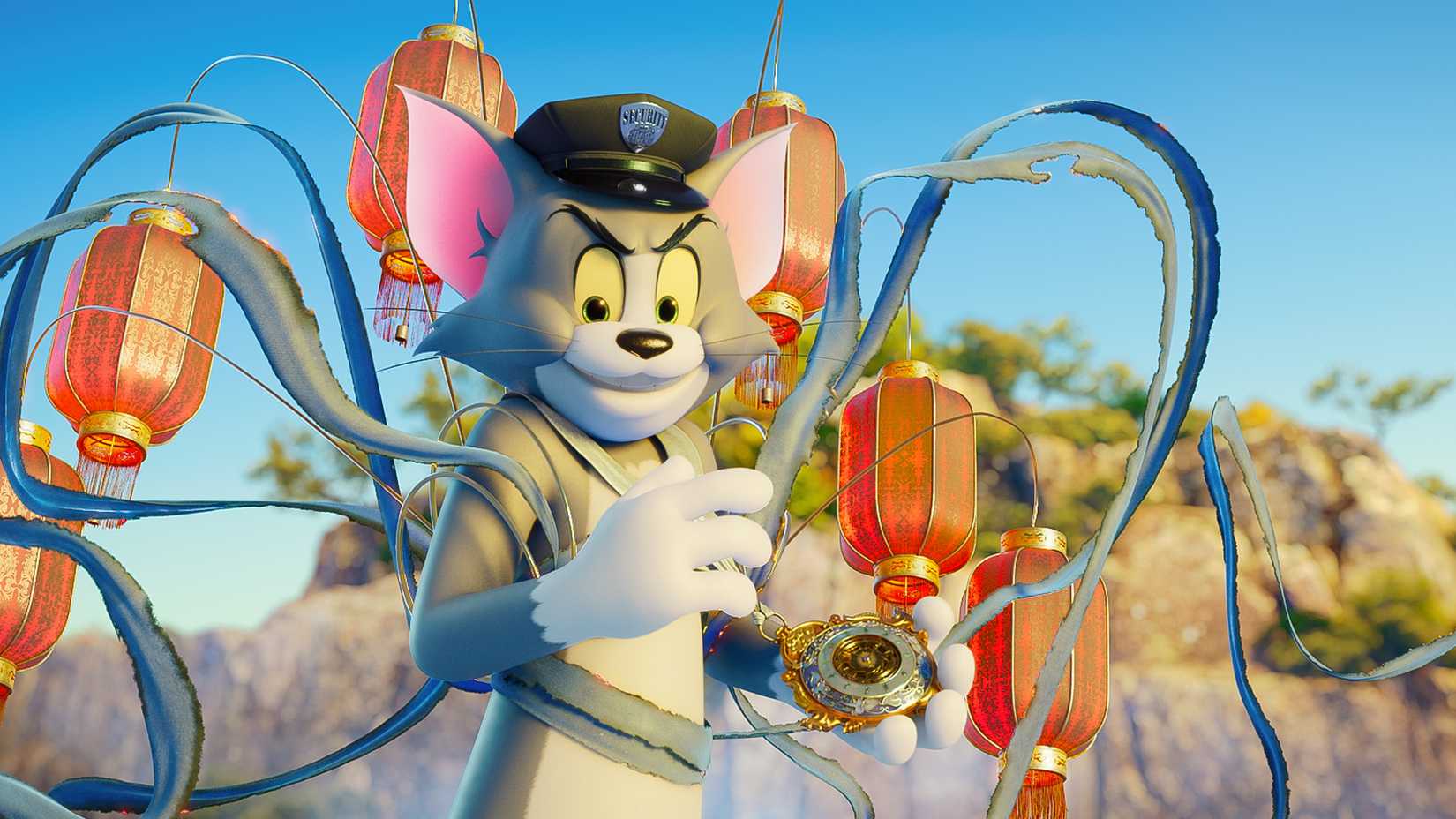 Image: China Film Co., Ltd./Warner Bros. Pictures
T&J arrived on Japanese television in 1965, then jumped to the Philippines in 1966. China would get a later start, as America didn't normalize relations with China until the 1970s, so Tom and Jerry didn't arrive there until the 1980s. All over the world, Tom and Jerry became television staples, particularly in Asian countries.
In an interview with Cartoon Brew, Warner Bros. producer and Singapore native Charlene Tan said, “I’m sure that it was the same for kids my age all around the world – Tom and Jerry was something that was just always there growing up. What we all loved about the show was that it also made our parents and even our grandparents laugh. It’s truly multi-generational. Living in Singapore, when you were waiting at the dentist, waiting to collect your passport, or at the hairdresser, it was on the screens. Everybody watched it, and everybody enjoyed it. With such a simple premise, what’s not to love? It’s definitely not just an American brand of humor. Physical comedy works well across all cultures, so it’s not surprising Tom and Jerry travels so well. Whether the audience is Chinese, Korean, Japanese, or Indian, slapstick makes everyone laugh. It’s universal.”
 Image: China Film Co., Ltd./Warner Bros. Pictures
Starting in the 1970s here in America, various Tom and Jerry content specifically began to be made for TV (instead of just shorts repurposed for TV), and they’ve enjoyed varying levels of success. The same can be said for various movies and specials that have been made with the characters, including two theatrical films and various straight-to-streaming programs and specials.
All the while, Tom and Jerry have remained popular in Asian countries, so it was only a matter of time before Warner Bros., who acquired Tom and Jerry in 2006 thanks to a corporate merger, began to market straight to the people who have shown Tom and Jerry the most love. In 2022, the Japanese series Tom and Jerry Gokko premiered on November 11. The next year, Singapore released its own locally produced series of shorts simply named Tom and Jerry, though usually referred to in America as Tom and Jerry Singapore.
Tom and Jerry: Forbidden Compass is the most ambitious effort yet, as it's a feature-length film as opposed to a series of shorts. So far the reviews for the film haven’t been that great. Even in China, when it debuted last August, its run was unspectacular. Still, even if Tom and Jerry: Forbidden Compass fails to impress both American and Asian audiences, you can pretty much guarantee it won’t hurt the popularity of Tom and Jerry overseas, as that cat and mouse are unstoppable.







 English (US) ·