
 3 weeks ago
24
3 weeks ago
24
The supremely portable dimensions of the humble credit card have been a persistent miniaturization goal for tech device makers for a very long time. Earlier this week krauseler on GitHub shared details of “a fully working computer that is literally the size of a credit card,” dubbed the Muxcard. This ISO/IEC 7810 ID‑1 credit card-sized computer includes an ESP32-C3 microcontroller, an ePaper display, NFC, sensors, and a battery.
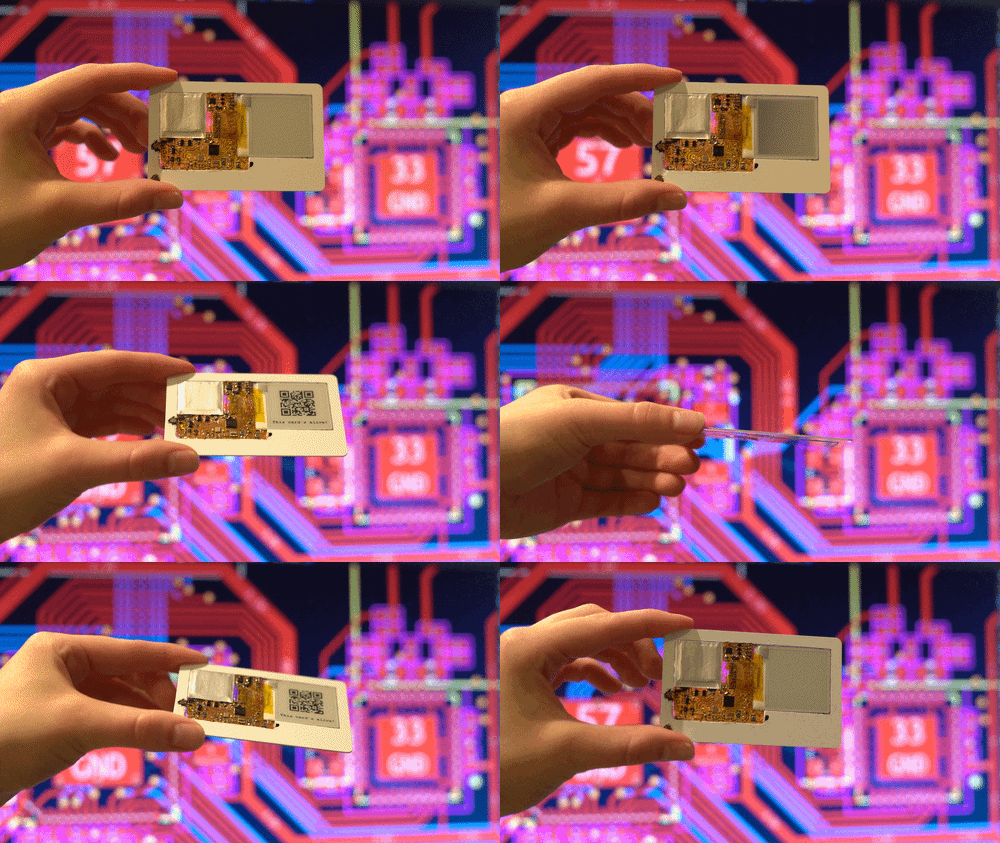
I remember buying a credit card-sized calculator in the previous century, and the iconic and now almost omnipresent Raspberry Pi began as a credit card-sized barebones computer dream – made real . However, those gizmos kind of ignored the important third dimension of a credit card, which makes it so portable, the thickness. This isn’t a mistake repeated by krauseler. Well, almost.
The maker admits the Muxcard prototype is 1mm thick as it now stands. The official ISO/IEC 7810 ID‑1 is for a card of 0.76mm thickness, “but many real-world cards slightly exceed this in practice,” writes krauseler on the GitHub project page. Underlining the adherence to the credit card size, krauseler even uses an old plastic NFC card with most of its volume cut away as the Muxcard chassis.
It is admitted that the current prototype is rather fragile, and there are a number of things that need to be done to bring the project in line with the ultimate goals.
Right now the prototype specs are as follows:
- MCU: ESP32‑C3, a RISC-V CPU architecture, Wi‑Fi capable microcontroller with 320KB of usable SRAM and 384KB ROM. But future versions could use a more powerful ESP32‑S3 or nRF52/53.
- Display: 1.54-inch 200x200 pixel flex ePaper screen with partial update support.
- NFC: RC522 read/write module (not just a passive tag).
- IMU: LIS2DW12 accelerometer for wake triggers and motion sensing.
- Power: 30mAh, 1mm thick rechargeable LiPo battery.
What still has to be done to complete te Muxcard project includes the addition of USB Type-C, a microSD card slot, touch button controls, and krauseler is considering a slimmer LiPo rechargeable battery cell. When all the tech specs are up to the desired level some hard work will remain in strengthening and ruggedizing the design.
Completing all these plans won’t be easy in the limits imposed by a credit card's standard thickness. However, the maker will continue with this quest and remain positive and enchanted with the device, even in this prototype stage. “Even after months of staring at this thing, it still feels slightly absurd every time the display updates while holding what basically feels like a normal card,” they say.
As with most GitHub project makers, krauseler would be happy to get offers of third-party collaboration and contributions. The maker is also curious about how people foresee using the Muxcard. Their own ideas include use as a smart-home dashboard, offline storage for 2FA, backup keys and passwords, and so on.

Follow Tom's Hardware on Google News, or add us as a preferred source, to get our latest news, analysis, & reviews in your feeds.




 English (US) ·