
 6 hours ago
5
6 hours ago
5
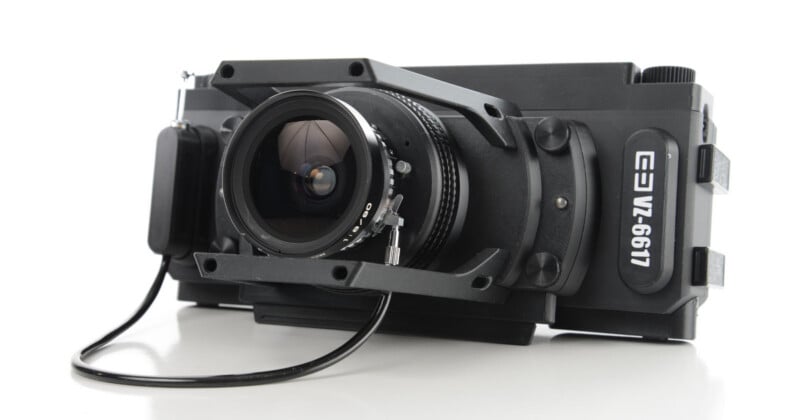
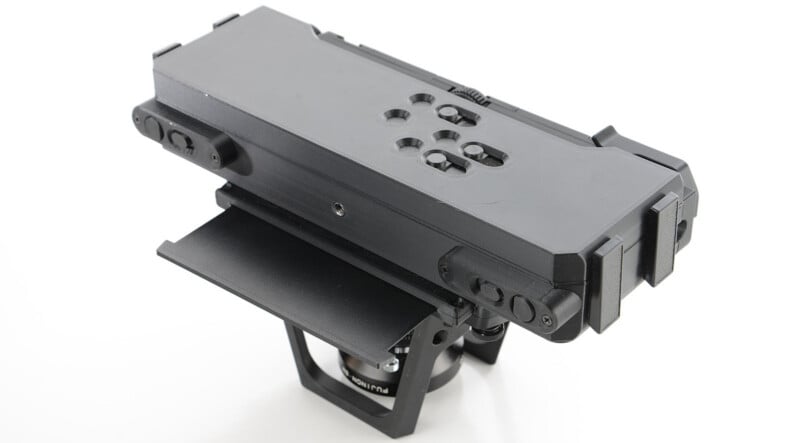
Exposing Engineering has announced the VZ-6617, a medium format film camera that allows photographers to swap between 6×6 and 6×17 aspect ratios mid-roll, breathing some additional innovation into a space that has seen a resurgence in the last year.
The VZ-6617 aims to differentiate itself from classic panoramic camera options like the Fujifilm G617 and more modern options like those from Custom Camera Building (CCB) or Sasquatch by giving photographers more choice. Most medium-format film cameras lock photographers into a single aspect ratio for an entire roll of film.
“If a photographer loads a 6×6 camera, every frame must be square. If they choose a panoramic camera, every frame must be panoramic. If they want both, they must carry multiple camera bodies with them. The VZ-6617 removes that limitation by allowing photographers to change the image area between exposures. A single roll of film can contain square portraits and panoramic landscapes,” Exposing Engineering says.
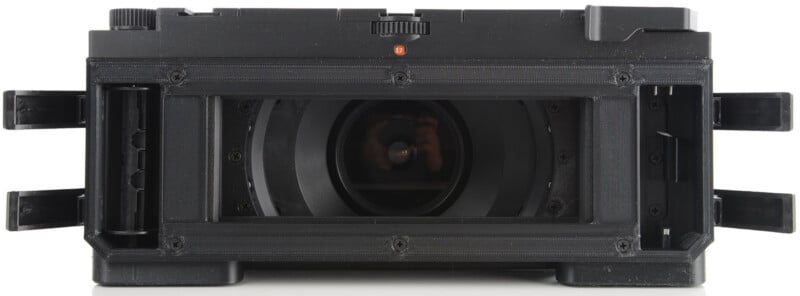
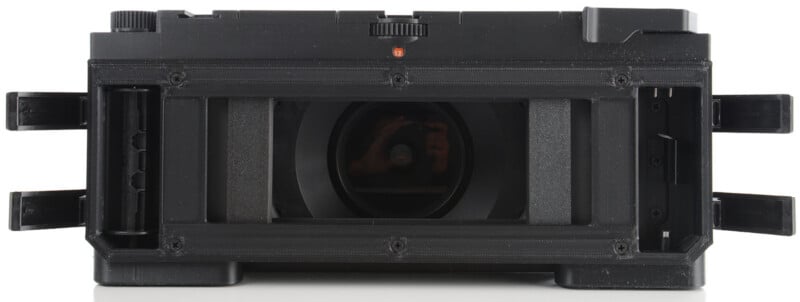
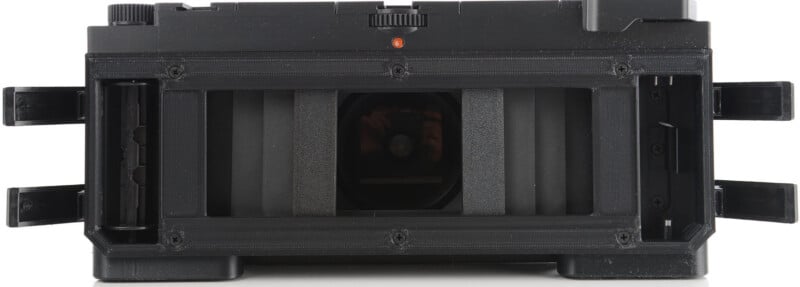
To facilitate this, Exposing Engineering created what it calls the Variable Zone Film Gate, which is a 3D-printed articulating mask mechanism that allows symmetric masking of the exposure area by turning a knob. The company describes it as a series of sliding panels that move in sync to create film gate sizes from 6×6 up to 6×17 in stepless increments, with the goal being to make this as seamless as possible — akin to changing the shutter speed or aperture. Everything is self-contained, so there is no need to remove a film back or attach separate plates.
The camera body is 3D printed, which makes it lightweight and what the company characterizes as “affordable,” although final pricing wasn’t shared at the time of publication.
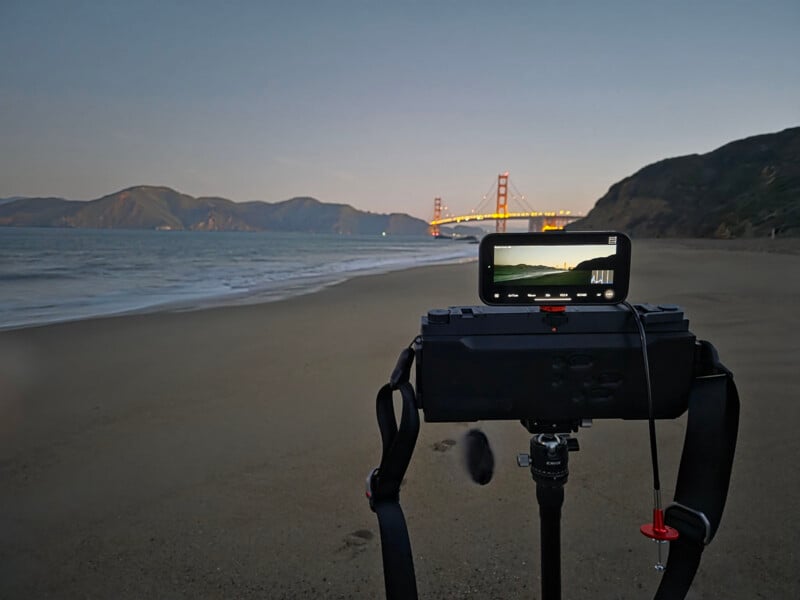
The VZ-6617 is compatible with most large format view camera lenses with integrated shutters, and Garing has field-tested six: the Fujifilm Fujinon-SW 90mm f/8, the Schneider Kreuznach Super Angulon 90mm f/8 and 75mm f/8, as well as the Symmar 135mm f/5.6 and 150mm f/5.6, and the Nikon Nikkor-SW 65mm f/4.
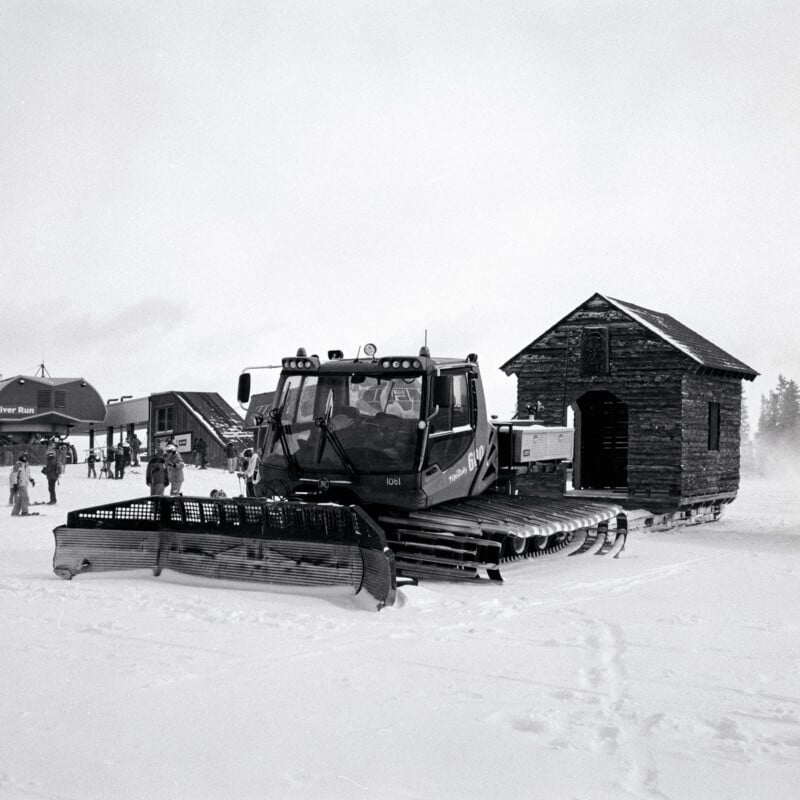
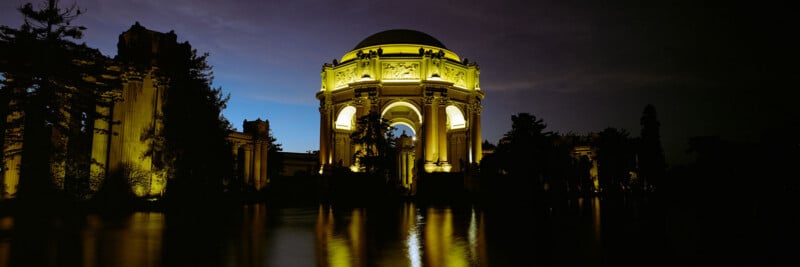
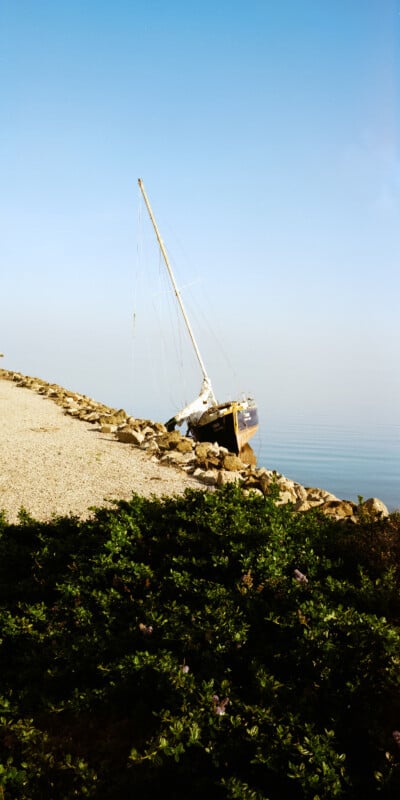
 Captured on the VZ-6617
The camera features quick-release film spool holders, a backing frame counter that supports multiple series of film aspect ratios, works with an optical viewfinder or a phone-based viewfinder app, magnetically detachable cable releases, body-mounted bubble levels, and three cold shoe mounts.
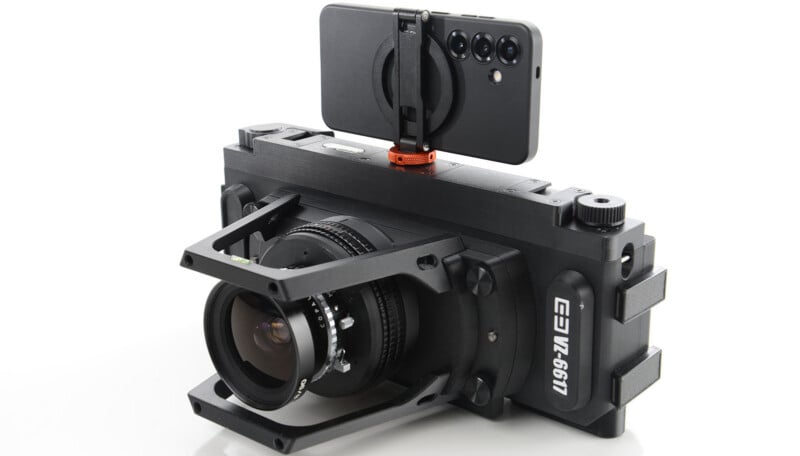
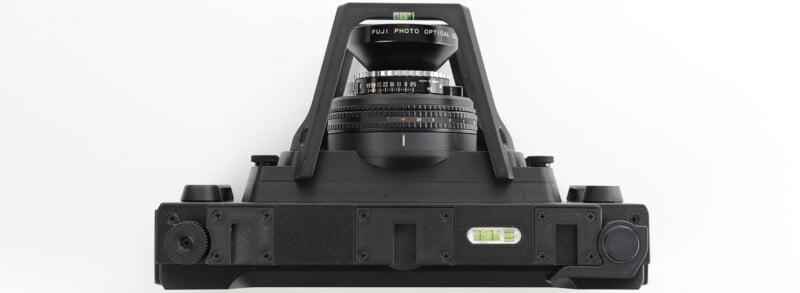
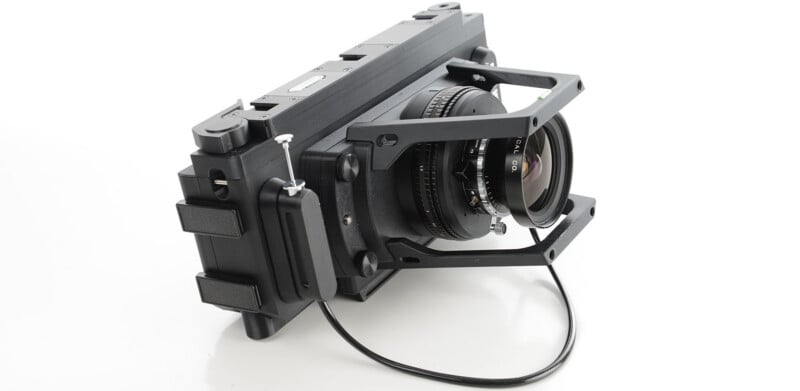
A 3D Printed Panoramic Renaissance
As mentioned, there have now been three panoramic medium format film cameras announced or launched in the last year: the CCB system, Sasquatch, and now the VZ-6617. Exposing Engineering’s founder, Francis Garing, says that his camera was inspired by those first two, but he had a vision of something more.


“Both the CCB 617 and Sasquatch 617 do panoramic formats great, and their use of 3D printing definitely makes the cameras more accessible relative to legacy systems like the Fujifilm GX617 or Linhof Technorama. I wanted to take a similar approach to making the camera accessible while adding features I’ve come to value in my photography process. The most important feature was the Variable Zone Film Gate mechanism,” he tells PetaPixel.


“As I was getting back into photography, I had a hard time settling on a camera format that I wanted to have with me all the time — it was hard to commit to 6×6, 6×7, 6×4.5, etc. If I wanted to shoot more than one, I ended up bringing two different cameras with two different operating procedures. When I first tried 6×17, I knew I wanted that format available for travel photography.”
Garing says he had never seen a single camera that could cover a range of medium format film sizes before. While film backs with masking panels or similar mechanisms existed, they were typically for large format cameras, and switching formats, to him, seemed cumbersome with those film-back-based approaches.

“I wanted to build everything into one body and one system: shooting 6×6 to 6×17, adjusting on the fly, and mixing different aspect ratios on the same roll of film to make the most of it,” he explains.
“On top of that, I iterated through many prototypes to get more quality-of-life features: single-handed quick-release film spool holders, a robust magnetically dockable cable release, an impact-resistant cage to protect the lens when the camera is slung over your shoulder, and a compact dark slide system to allow lenses to be changed mid-roll.”
The Exposing Engineering VZ-6617 camera is currently in the Beta phase — with a small group of testers providing feedback for the final design — and will launch on Kickstarter starting April 14. Until then, the company’s website and Instagram are the best ways to keep track of the project’s progress as well as to see other sample images captured with the VZ-6617.
Image credits: Exposing Engineering





 English (US) ·