
 4 weeks ago
23
4 weeks ago
23
In all my time reviewing cameras, I’ve come across some hidden gems, but also some real dogs. Today we are going to be talking about the latter. I want to give some dishonorable mentions to some of the worst-designed cameras throughout history.
However, I recognize that this is a highly subjective matter, and I hope only that you’ll be entertained, if not necessarily convinced of the assertions about to be made. I want to stick to cameras that I have personally used and tested as well, so as to keep things fair to my own experiences.
At a Glance
Canon XC10
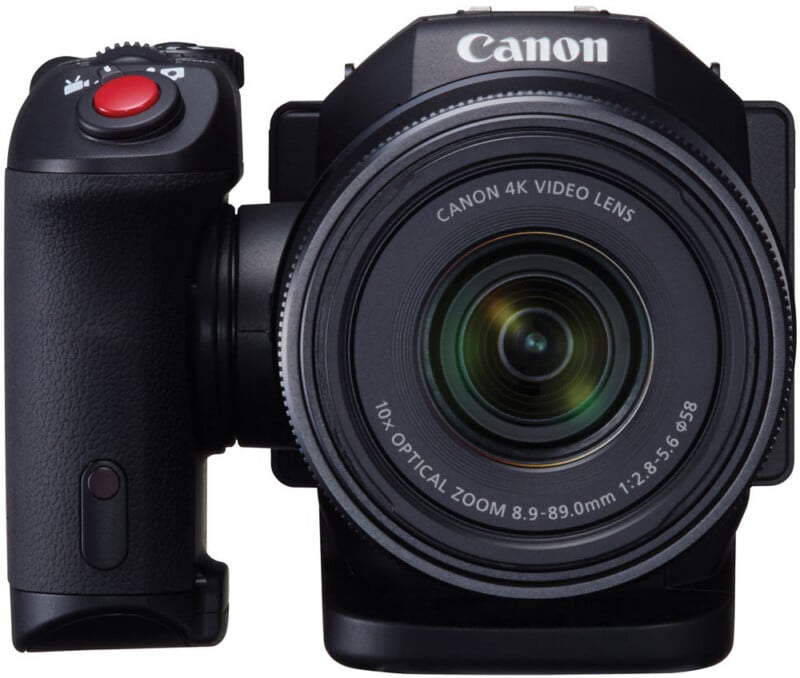 This ungainly camera was both ugly and awful to use.
The Canon XC10 was intended to be a grab-and-go bridge camera with an incorporated 24-240mm zoom lens and highly capable video record modes. However, that lens was very slow, the camera lacked of an electronic viewfinder, and soft-looking JPEGs really held it back as a do-it-all camera. It was top-heavy and an overall poor focuser, and I immediately disliked it from the very first touch. Although the video capabilities were decent, the lack of any RAW shooting combined with the relatively small sensor really turned me off to this camera. It easily earned our worst camera of the year award in the year of its release.
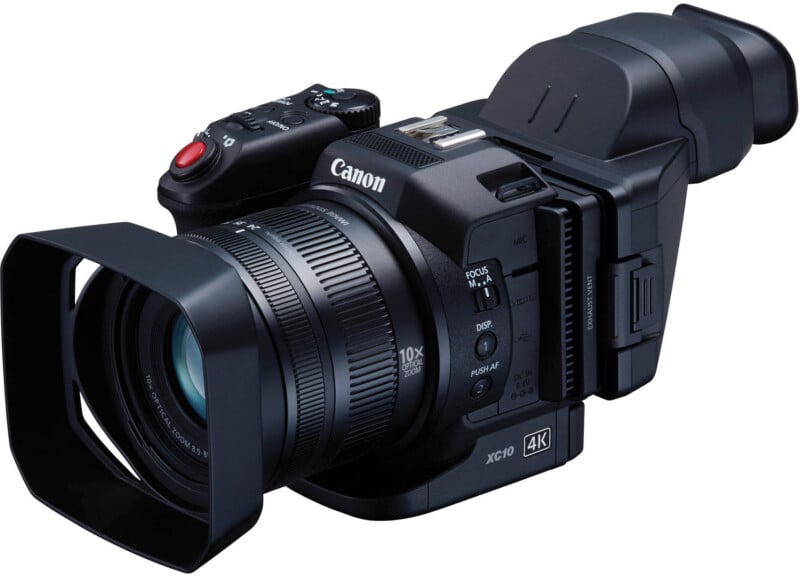 There was nothing compact or sophisticated about the ergonomics of the XC10.
Panasonic GF2
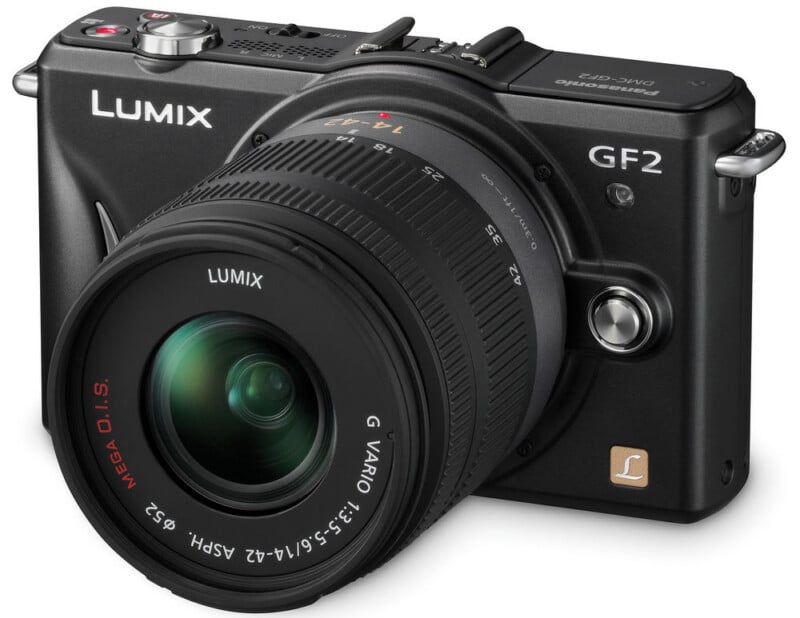 This dumbed-down version of an excellent camera appealed to the beginner.
Let me go on record as saying that I loved all of the Panasonic tiny Micro Four Thirds cameras. Well, almost all of them.
The Panasonic GF2 took everything great about the GF1, like the mode dial and manual control dials, and threw them in the trash. The idea was to make a simplified version that would appeal to beginner crowds, but the implementation turned out to be dumb. Several sexy color schemes could not save the GF2 from being a deeply inconvenient tool.
The touch-screen did all the heavy lifting to allow for some manual overrides, but things like the flash exposure couldn’t be adjusted, and the camera operation was rather slow. Perhaps the fault also lies in the GF1 being such a well-regarded camera, but the GF2 was not designed well.
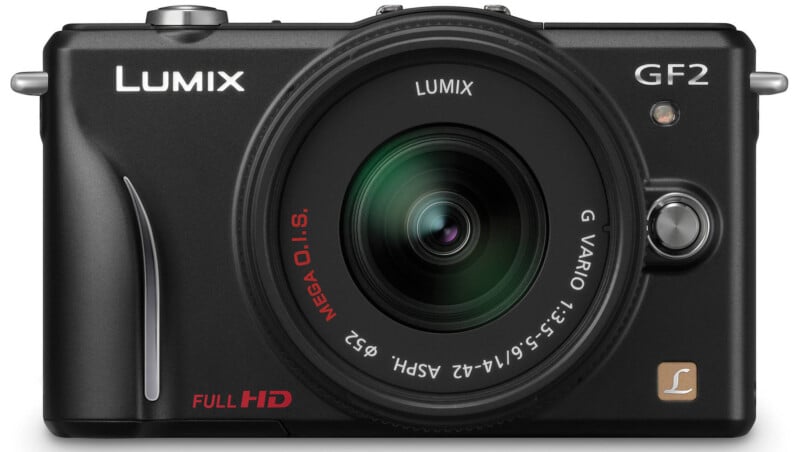 Unfortunately, everything we liked about the earlier GF1 was stripped away.
Sony FS100/700
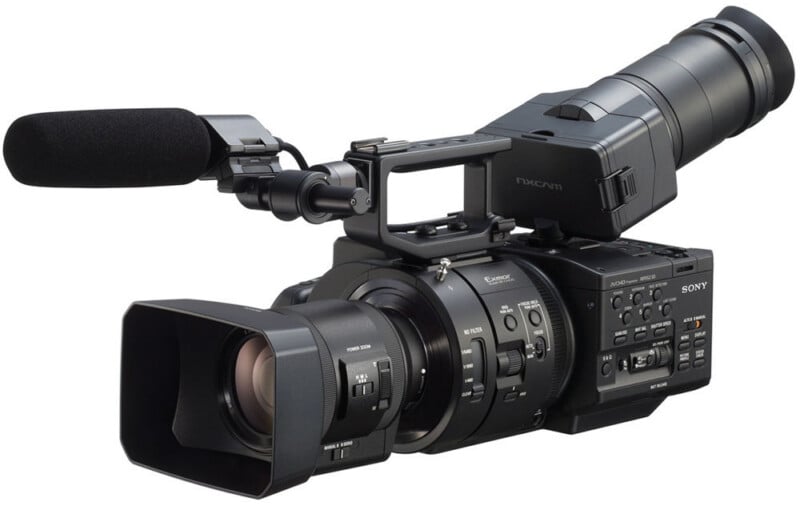 The image quality was great, but the strange attachments coming out of the camera were easy to break and ungainly to use.
Both Jordan and I were contributing to the list of cameras that we felt were poorly designed, and he felt strongly that the RX100 series of Sony cameras were too fiddly and too compact to be operated effectively. I disagree, being charmed by the ultra-compact nature of the RX100 cameras, but there is no denying that smaller fingers and hands will find the cameras easier to use.
However, we could both agree that the Sony FS100/700 series of serious video cameras suffered from atrocious design. On paper, the cameras had some amazing features, including excellent image quality for the time, XLR audio inputs, and an innovative rotating ND filter assembly.

But in practice, the camera was easy to damage, with the rotating filter array often failing and jamming. There was no electronic viewfinder, but instead a bulky magnified loupe was clipped to the LCD screen. This put strain on the rotating screen mounts and often broke, plus you couldn’t use the touch screen functions with the loupe attached (the same problem the Canon XC-10 had). The articulation of the LCD screen was limited and could only be mounted on the top of the camera, which limited how the camera could be held and often resulted in camera angles well below eye level.
Olympus OMD E-M1X
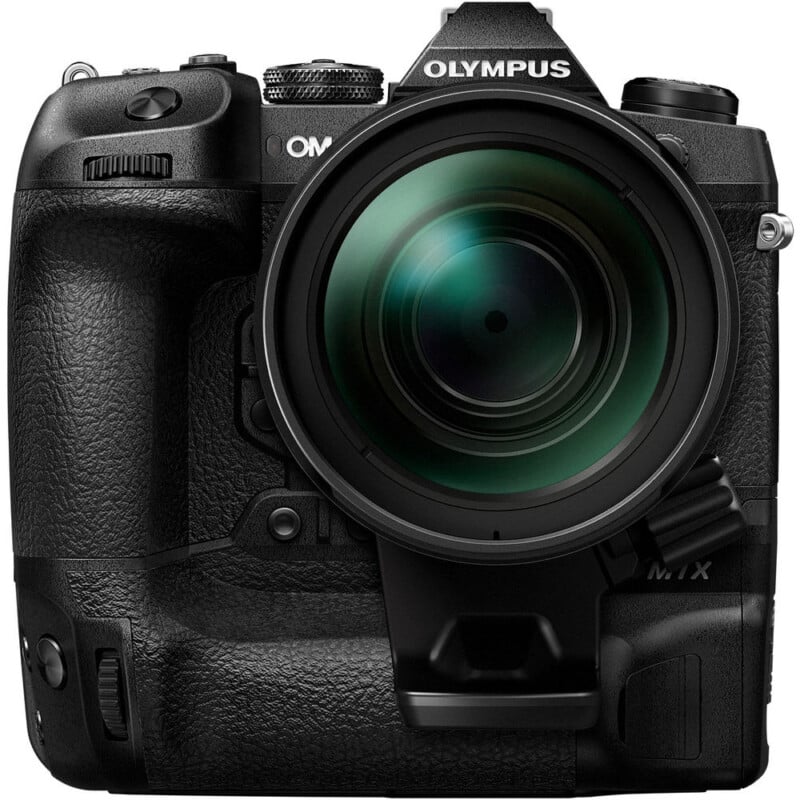 This was a great camera but the oversized build did not play to Micro Four Thirds’ strengths.
This is a great camera with excellent controls and a rugged exterior. It made full use of the many computational photo modes that we still love on the OM System cameras to this day. It also had excellent IBIS and decently fast autofocus for the time, and was intended to be the ultimate sports and wildlife camera. So why did we vote it as poorly designed?
The E-M1X went against everything that made the Micro Four Thirds mount appealing. It had an integrated vertical battery grip, which made it bulky and heavy for a camera with such a small sensor. Although it could balance heavy glass more effectively, most telephoto lenses from Olympus weren’t that heavy to begin with, rendering this benefit largely moot.
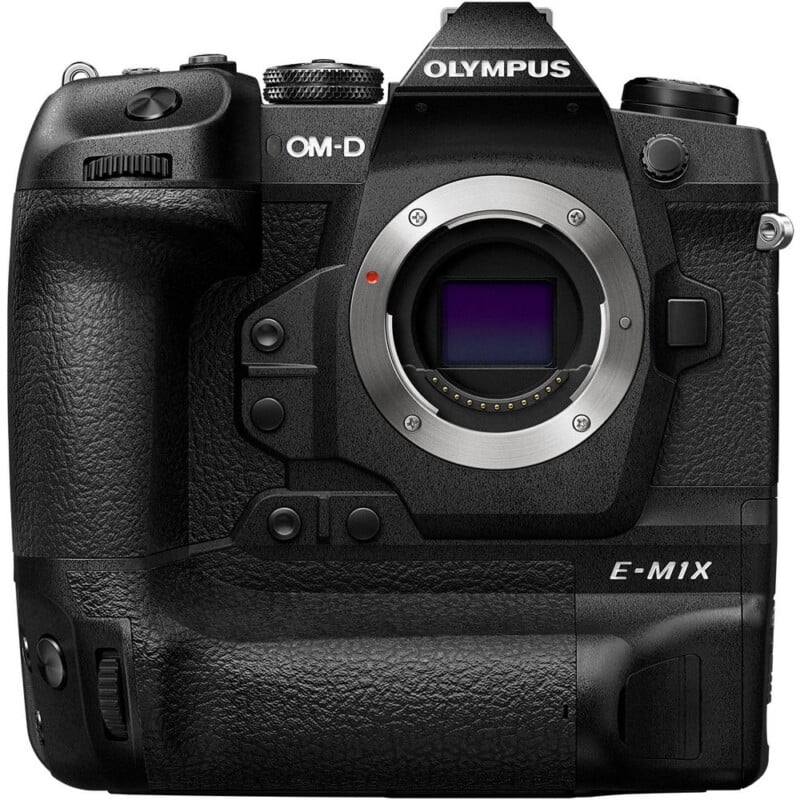 The failure of the E-M1X was largely due to poor timing.
The E-M1X is really more a victim of timing, as the Olympus brand was going through a transition to OM System, and full-frame cameras were becoming insanely popular. OM System very smartly redesigned the camera in a more compact OM-1 body design, which quickly found success after the E-M1X floundered.
Sigma DP-series Quattro
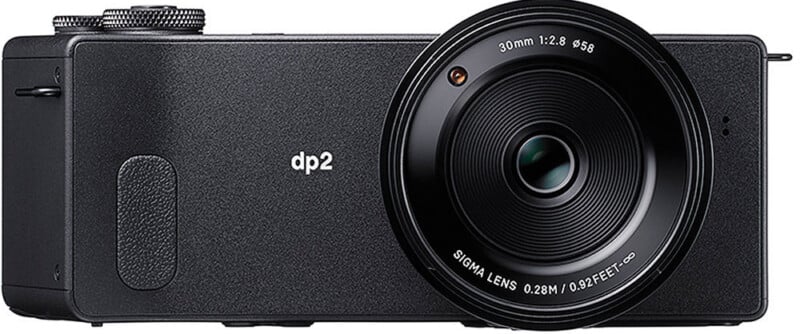 This awkward slab of a camera also showcased the poorly-aging Foveon sensor.
Not to be confused with the earlier DP Merrill cameras or the SD Quattro SLR, the DP Quattro cameras were a hideous system with uncomfortable ergonomics. These were similar to the idea of the older Merrill cameras, featuring fixed prime lenses and Foveon sensors, but where the older Merrill cameras were uninspiring bricks, the DP Quattro cameras featured insanely wide body designs and one of the strangest grips ever invented.
The sensation of having one’s arms so far apart to hold the camera, and the incredibly unbalanced feel of it when holding it by the grip, made no sense to me.
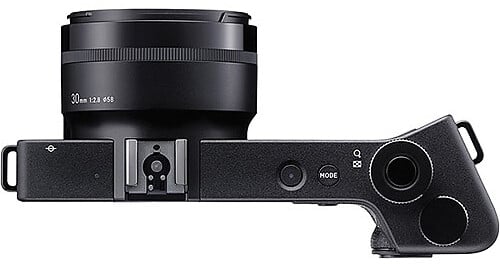 I’ve never met a grip that I disliked more than the one on the Quattro.
A big part of the downfall of the Quattros was also due to the lack of practicality when using the slow and battery-hungry Foveon sensors at a time when the cheap and effective full-frame chips were booming.
Pentax K-01
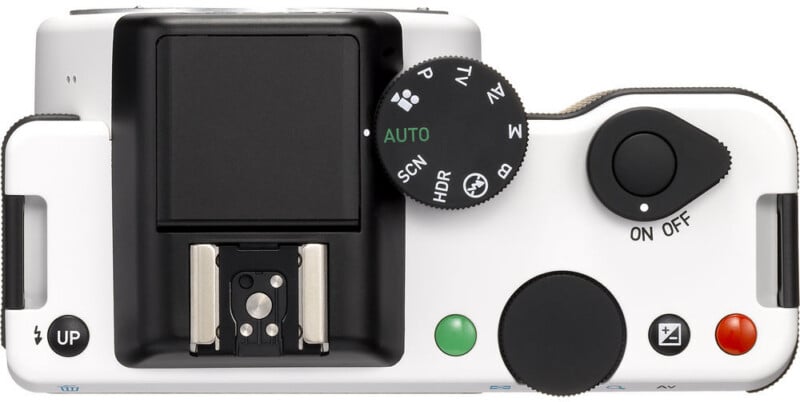 Weird colors and funky textures do not make a camera effective.
I remember hating everything about the K-01 when I reviewed it. I hated the ugly yellow color, the cheap-looking glued-on rubber grip pieces, the awful rubber port covers, and the lack of any optical viewfinder.
Pentax did not have dedicated mirrorless lenses, so they had to use SLR glass mounted to a mirrorless camera that still had to accommodate the flange distance of an SLR. This meant that the K-01 was boxy and thick for no good reason, and no amount of ultra-modern Marc Newson design could cover it up. It had an anemic 16-megapixel APS-C sensor and was awful to hold and use. The chunky dials and tacky color schemes made this a fashion-forward camera with nothing underneath to redeem it. I don’t know if I can recall a more awful camera from the major manufacturers across my career.
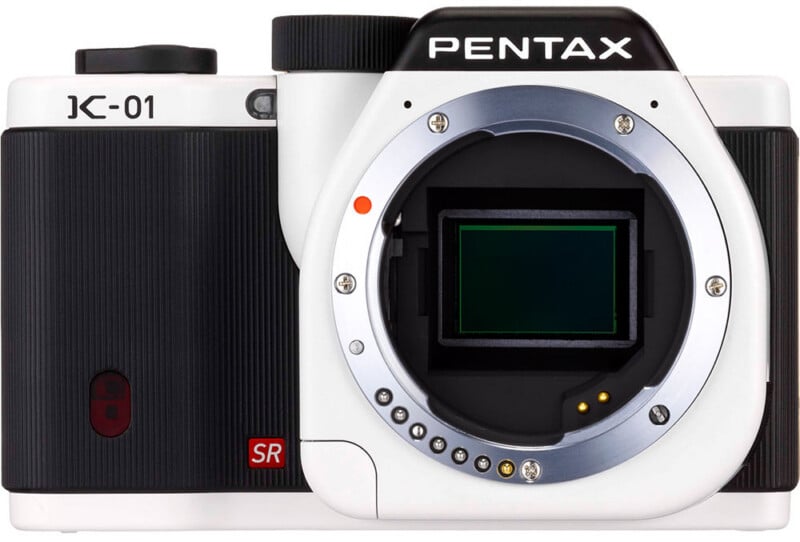 The sensor is placed as if at the end of a deep tunnel because the lack of a mirror box meant tons of wasted space.
Fujifilm X-Pro3
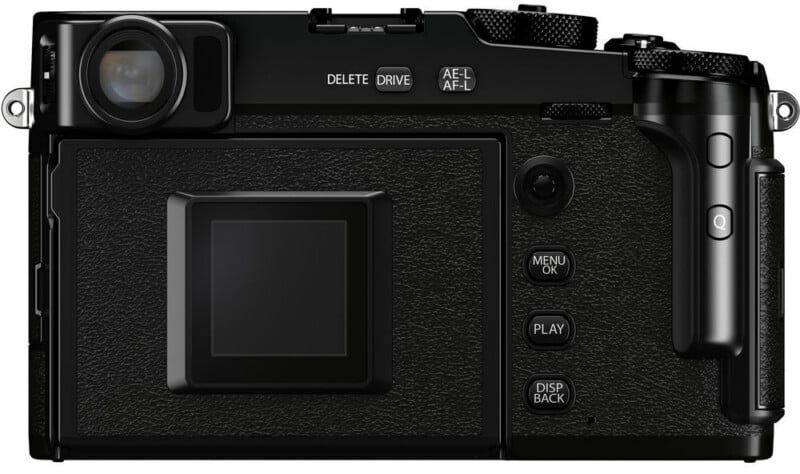 The back sub panel is adorable but it is also superfluous.
I’ve never shared the broad appeal of the X-Pro series of cameras. The rangefinder styling looks fine, but the hybrid optical/electronic viewfinder is of dubious utility in my opinion, and the camera itself was overly bulky in the hand. Otherwise, it’s a perfectly serviceable travel companion camera, but Jordan did not like the third version of the X-Pro line due to some superfluous design choices.
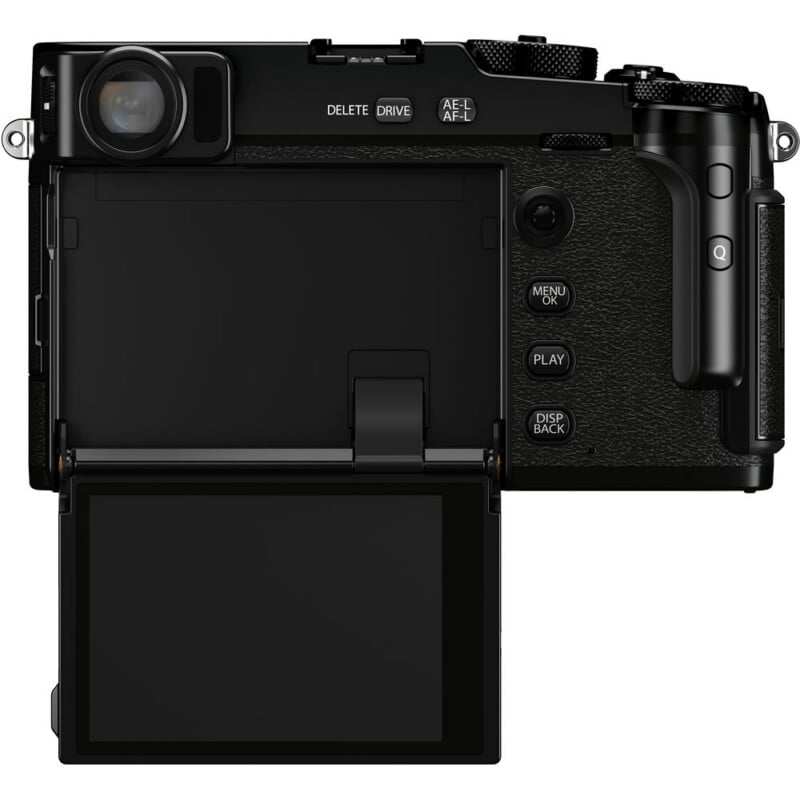 Fujifilm tried to teach users to shoot from the viewfinder by making the back panel as awful to use as possible.
The back LCD panel showed a charming film graphic representing the chosen film simulation mode. Flip this down, and you would get a proper LCD panel, but it only worked in a waist-level orientation or hanging down below the body. If it sounds cumbersome, that is because it was. Fujifilm wanted to encourage X-Pro 3 users to try shooting more from the viewfinder and to treat the camera like an analog experience, but the gamble backfired, especially since the exposed cable that connected the camera to the display would easily break.
Hasselblad Lunar
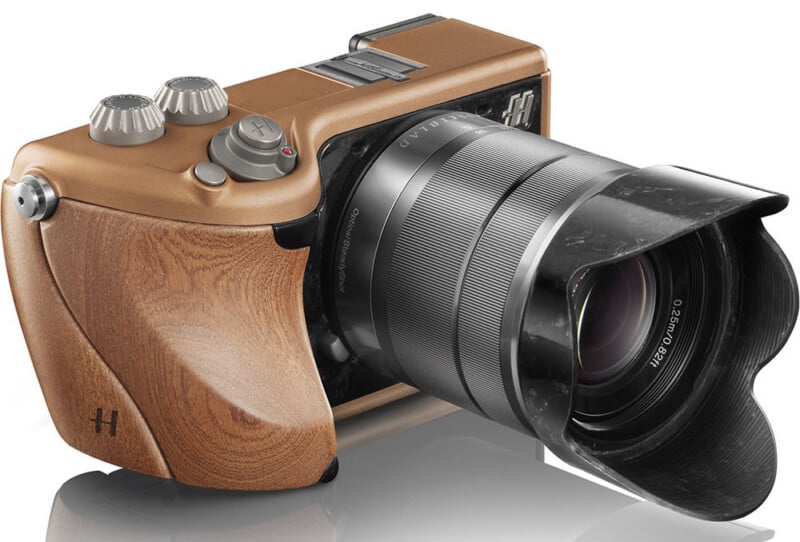 This rebranded Sony NEX 7 was tacky, overpriced, and bulky for no reason.
The Lunar is a perfect example of bad design choices in the name of luxury. Essentially a rehoused Sony NEX 7, the Lunar carried the Hasselblad branding, which made it vastly more expensive. This would at least have been justified if the camera looked luxurious and prestigious, but it just ended up looking tacky. The control dials were ugly coned-shaped knobs, the customizable back button had a tacky garnet installed into it, and the grip swept forward in an unnecessarily aggressive manner.
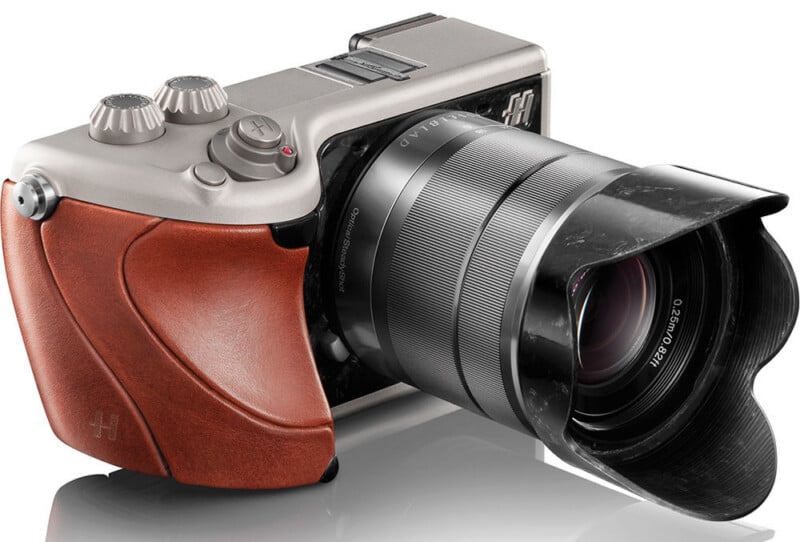 The dials looked strange for the sake of being unique but ultimately took away from the experience.
Every color combination that Hasselblad attempted looked garish and alien, and appeared as though they belonged more appropriately in a store selling reproduction gold-painted Pharaoh sarcophagi than in a camera bag. It was ugly and expensive for no good reason, and became a perfect example of hubris, resulting in a tacky work of art rather than a luxury product.
Leica CL
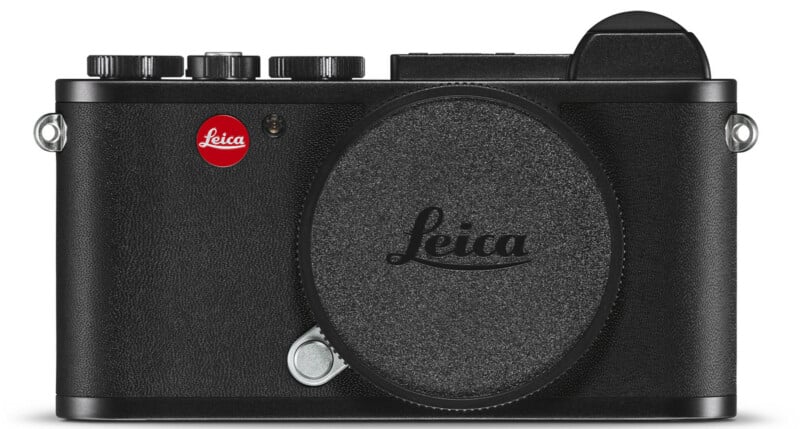 The Leica CL is cute and compact. I just didn’t get along with it.
A lot of photographers loved the 2014 Leica CL. It had a nice vintage look and had access to many lenses from the Leica L-mount. It had a 24-megapixel APS-C sensor at the heart of it, and a brilliant viewfinder.
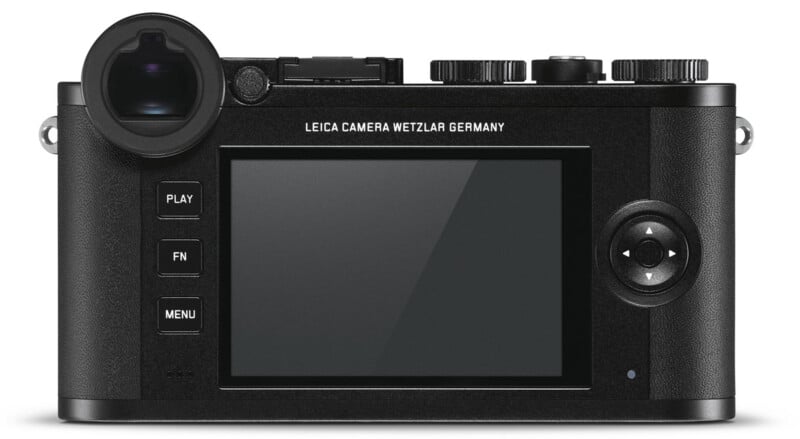 I loved the electronic viewfinder but hated the twin thumb dials.
However, it also had an odd control scheme and simply did not feel right to me. The Leica CL is a perfect example of a camera that might be great for one user and poor for another. The twin control dials on the back meant that you had to use your thumb for both, and the touch screen interface had an annoying swipe function that rarely worked. But in the end, it was a usable device, and I simply have to chalk the Leica CL experience up to a matter of just not feeling right in my hands.
Nikon DF
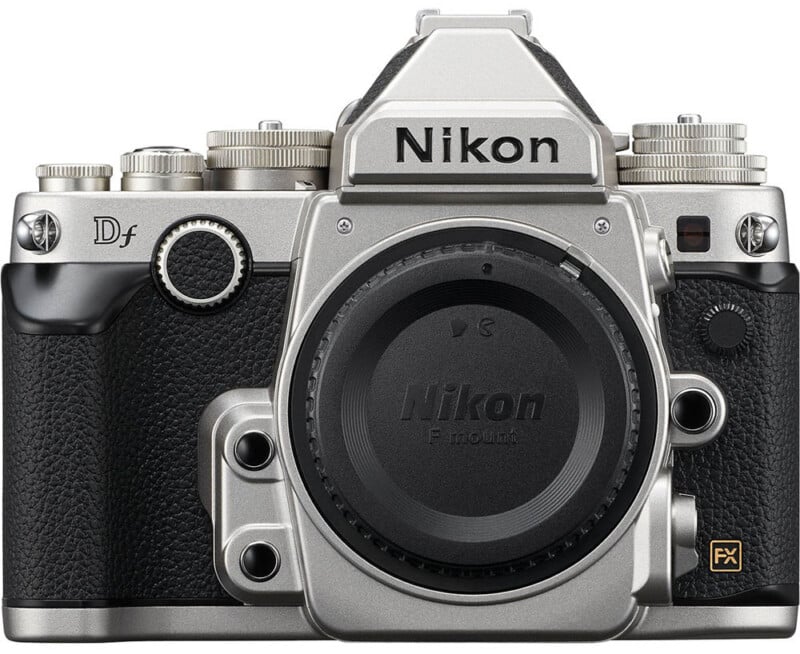 From a distance the Nikon DF looked awesome. Up close it looked toy-like.
The Nikon DF was a very strange camera. When I first heard about the DF, I was extremely excited. A vintage-inspired DSLR seemed right up my alley. However, upon closer inspection, the DF body felt like a cheaper D600 with a vintage skin. It lacked the classiness and compact size of the original FE/FM series of cameras, and Nikon would not rectify this until the much later Nikon ZFC launch.
 The control scheme wasn’t terrible but the use of the specialized D4 sensor was an odd choice.
It also had a strange series of dials, with some being overly large and others being way too small. The mode dial is a perfect example of this. Nikon also chose to put the D4 16-megapixel sensor into the DF, which turned off many more general-purpose users. The D4 sensor was excellent in low-light situations, but it lacked resolution and ended up only appealing to wedding photographers who admired the vintage styling and preferred the specific quirks of the sensor.
Camera Design is Hard
Undoubtedly, we’ve offended some people out there who love the above cameras and would defend them to the end. Photography is all about finding the right tool for the right job and beauty is ultimately in the eye of the beholder. Sometimes cameras fail because the manufacturer took too big a risk, or not a big enough risk to begin with. Other times handling will work well for one persons way of shooting and feel completely horrible to another. In the end the best camera is the one you have with you, but ideally, you should really enjoy using that camera, too.







 English (US) ·