
 Image via Warner Bros.

Published Feb 16, 2026, 5:22 PM EST
Anja Djuricic was born in Belgrade, Serbia, in 1992. Her first interest in film started very early, as she learned to speak English by watching Disney animated movies (and many, many reruns). Anja soon became inspired to learn more foreign languages to understand more movies, so she entered the Japanese language and literature Bachelor Studies at the University of Belgrade.
Anja is also one of the founders of the DJ duo Vazda Garant, specializing in underground electronic music influenced by various electronic genres.
Anja loves to do puzzles in her spare time, pet cats wherever she meets them, and play The Sims. Anja's Letterboxd four includes Memories of Murder, Parasite, Nope, and The Road to El Dorado.
Sign in to your Collider account
Thrillers are some of the best movies out there because they can often achieve something no other movie can: continuous suspense. The ability to thrill is an art form because it can be really difficult to achieve tension throughout a film's runtime, especially if it's a feature that's over 90 minutes. Only a great filmmaking team can make that happen, and luckily, we've had some genius creatives who could.
The great part about thrillers is that they can either consist of a constant rush or be deceptively slow burns where a sense of dread is achieved through performances, atmosphere, and music. The best thrillers have one or both of these qualities, maintaining tension and anticipation. These ten thrillers are a masterclass in suspense, in one or both of these ways.
'Victoria' (2015)
.jpg?q=49&fit=crop&w=825&dpr=2) Image via MonkeyBoy
Image via MonkeyBoyVictoria is a German film from 2015 that was completely filmed in one take, and it's disappointing how fast it was forgotten, considering the praise and adoration it got when it first came out. With this movie, nothing is as it seems, and yet we see its protagonists in such a transparent display of emotions that they pull us in and make us feel for them, or even like them. If you were in your 20s during the 2010s, this movie felt like it saw you with its most magnetic, emotional moments. Yet, the suspense Victoria achieves is complex and takes viewers on a roller coaster of intensity, changing the pace and genres halfway through.
Victoria follows a 20-something Spanish girl named Victoria (Laia Costa), who has recently moved to Berlin and is living her life to the fullest. After leaving a nightclub, Victoria meets the charming Sonne (Frederick Lau) and his three friends, and they invite her to come drink with them; Victoria and Sonne especially have a flirty vibe. Suddenly, Sonne's friends become panicked, and the situation turns sour when Victoria becomes involved in one of their criminal activities, turning what should have been an average night out into a hellscape she will never forget. The movie is considered a psychological thriller and a heist movie, but it's also a romance and an action flick; watching a one-take like this one will feel like a rush of blood to the head.
'Boiling Point' (2021)
 Image via Vertigo Releasing
You might wonder how a movie about chefs is a thriller, but Boiling Point is so relentless and unwavering in its achievement of suspense that there's no way it can be anything other than that. Philip Barantini and Stephen Graham worked on Boiling Point and four years later made Adolescence, a show that swept the world with the same kind of intensity. The 2021 film stayed under the radar, but it deserves another mention since it's truly a masterclass in suspense and stress.
Boiling Point follows one evening at the Jones & Sons restaurant during an overbooked night. The head chef is Andy Jones (Graham), who also runs the operations. His sous chef, Carly (Vinette Robinson), is on edge the entire time, and the rest of the kitchen staff seems terribly distressed, too, making grave errors in prepping the food. Things start to go terribly wrong after Andy gets distraught by a food inspector's sudden arrival, who knocks down food safety points; for Carly, the front of house manager Beth (Alice Feetham) is the main issue, while in the back, pastry chef Emily (Hannah Walters) struggles to reach out to her junior, who seems depressed. Boiling Point is dramatic and condenses a lot of stress into a single night, but many former kitchen workers described it as realistic and even trauma-inducing at times.
'Prisoners' (2013)
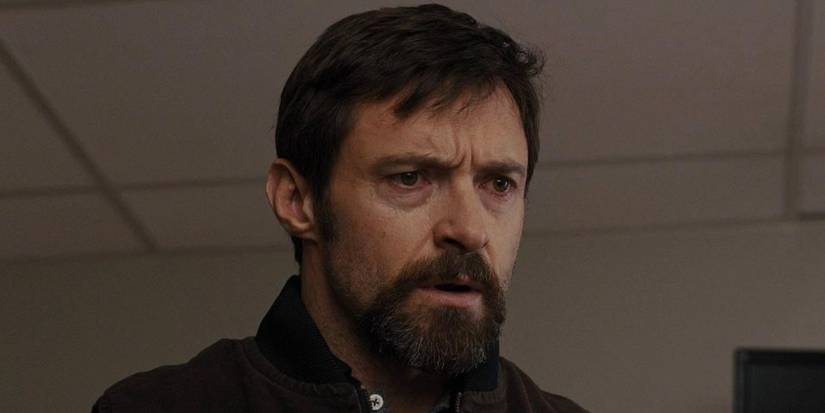 Image via Warner Bros.
Prisoners is the perfect example of a thrilling movie that is also a slow burn. Directed, performed, edited, and scored to perfection, Prisoners feels like Denis Villeneuve's best movie, until we watch anything else he's made. It's interesting how well he achieves suspense with just framing and pacing, showing a deep understanding of unease and distress in his actors. It also helps that the script is tight and that all the actors give it their best. The ending is just as unnerving as the rest of the film, extending the suspense and discomfort for as long as possible.
Prisoners follows Keller Dover (Hugh Jackman), whose daughter disappears together with her best friend after a Thanksgiving dinner. Impatient and angry, Keller decides to track down the perpetrator, with clues from the police leading him to Alex Jones (Paul Dano), a solitary man who is slightly odd and antisocial. In the meantime, detective Loki (Jake Gyllenhaal) investigates the case and suspects Keller is up to no good. The film becomes a race to see who will get to the culprit and the girls out of the two first. Prisoners is a dark psychological thriller that will keep you on edge without making it too obvious.
'Cure' (1997)
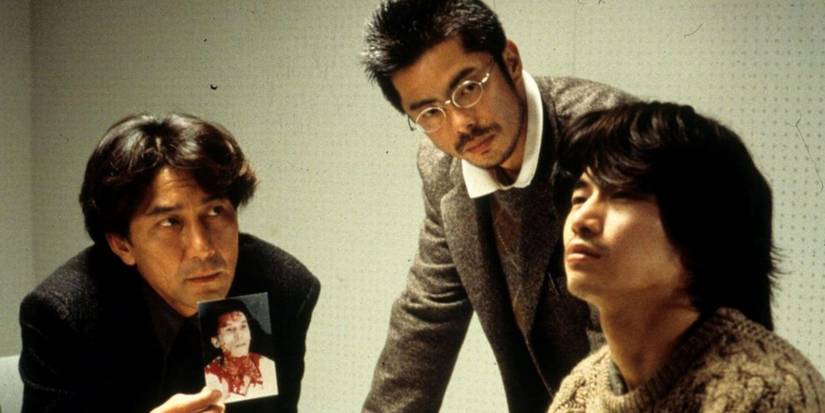 Image via Daiei Film
Kiyoshi Kurosawa is a unique master of suspense, and his movies aren't all that hopeful by the time the end credits roll. In fact, he reflects on the human condition realistically and quite depressingly, helping his movies achieve a certain sense of existential dread. With Pulse, he predicted people would increasingly become isolated with the appearance of the Internet; with Cure, he expressed how social pressures, bottled-up emotions, and liable, innocent minds are susceptible to manipulation and influences. From the first to the final moment, Cure is intense and uneasy, promising to really stick around in your mind.
Cure follows detective Takabe (Koji Yakusho), frustrated by a serial killer case that keeps leading him to different places. In each instance of murder, the culprit admits to committing it but lacks the memory to corroborate how they actually did it. Every crime has one thing in common: a large red X painted nearby, prompting Takabe to believe it's all the work of one man. His investigation soon leads him to Kunio Mamiya (Masato Hagiwara), and their cat-and-mouse chase ensues. It's hard to discern what's real and what isn't in Cure, which makes the film very rewatchable; still, its unease isn't quite simple to get over, so maybe wait a bit before that rewatch.
'Se7en' (1995)
 Image via New Line Cinema
David Fincher is another brilliant master of suspense, but his movies often deal with greatly uncomfortable things, reflections of timely concerns. For example, The Social Network felt like a warning about the people we help become rich and famous, while Zodiac helped truly depict the gravity of the obsession with true crime, which got its resurgence in the 2000s. Se7en captured a sentiment of the 1990s, when people started noticing increased moral deprivation, social decay, and a steady rise in apathy; because this message feels painfully obvious at times, Seven is a deeply uncomfortable and intense thriller.
Se7en follows newcomer detective Mills (Brad Pitt), who is assigned as a partner to the nearly retired and disillusioned detective Somerset (Morgan Freeman). Mills and Somerset work on a series of gruesome murders, which soon become obviously connected to the seven deadly sins. As each case happens, both detectives become pressure cookers, exploding by the end with frustration and stress. The existential suspense in Se7en is palpable, and it's hard to shake off when you're done watching, especially after witnessing that ending. The good part is that Se7en is literally everything you want out of a thriller, so there's no worry that you've made the right choice.
'The Silence of the Lambs' (1991)
There's a great debate about whether The Silence of the Lambs is a horror or a thriller, but this masterpiece is both. Its incredible tension and suspense make it a thriller, but the dark themes of a troubled serial killer and the shadow of looming death make it horror-like. It is one of the few thrillers that has won the Best Picture Oscar, and Jodie Foster and Anthony Hopkins both won Oscars for their performances. So, it's not just a movie that maintains suspense—it's a testament to the genre as something long-lasting and worthy of awards for excellence.
The Silence of the Lambs follows the FBI rookie Clarice Starling (Foster), assigned to interview the serial killer and expert psychologist Hannibal Lecter (Hopkins). Her conversations with Lecter are meant to help the ongoing investigation into another serial killer, Buffalo Bill (Ted Levine), which could help Clarice finally catch him. Lecter notes Clarice to be a "blank slate," trying to manipulate her; she fights back but is lastingly unnerved by his attempts. Extreme close-ups emphasize the feeling of dread, and the atmosphere becomes heavier with each new scene. Something doesn't feel right, and the movie easily gets under your skin.
'Parasite' (2019)
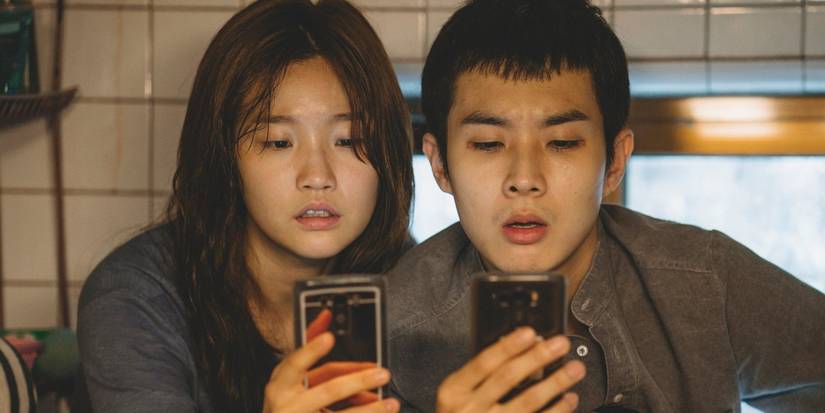 Image via NEON
Admittedly, Parasite may not have the constant intensity of Boiling Point or the continuous fear-inducing dread of The Silence of the Lambs, but it establishes tension pretty early on and doesn't let go. Each new scene builds upon the previous one, adding another layer of thrills. Parasite is a social satire and critique of class constructs, disguised in a story about greed and apathy. It is the first non-English-speaking film to win a Best Picture Oscar, transcending language barriers and genres; its director, Bong Joon-ho, is a masterful visionary who succeeded in making Parasite a difficult yet darkly comical take on life under capitalism.
Parasite follows the poor Kim family—parents and two young adult children—who get the opportunity to earn more money in the household of the wealthy and affluent Park family. Each of the Kims infiltrates as an "expert" who can help the Parks' needs, especially by manipulating the simplistic matriarch Yeon-gyo (Cho Yeo-jeong). There's dread in the actions of the Kim family, a worry that they'll be uncovered and what the consequences might be. Later, the suspense comes from other places and a sudden change of pace, making the film a psychological thriller that bites hard. The unease is constant, and the tension builds up perfectly.
'Vertigo' (1958)
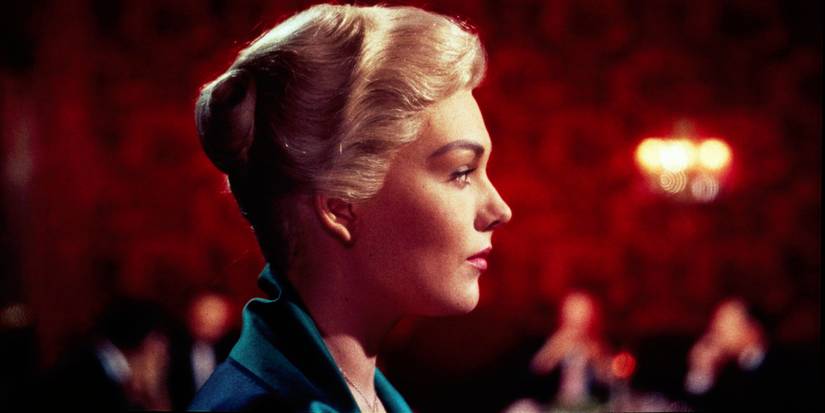 Image via Paramount Pictures
If you like identity-based thrillers and stories laced with paranoia, Alfred Hitchcock's Vertigo is pretty much the perfect movie. Many critics, filmmakers, and viewers often name Vertigo the greatest movie ever made because of its layers, themes, and technical precision. Hitchcock used a metronome to establish a certain rhythm in the actors' movements across the film, which is why Vertigo is the ultimate masterclass of suspense. It will surely win you over with its beauty, but it'll crawl into the back of your mind because of how unsettling it is throughout.
Vertigo follows former police officer Scottie Montgomery (James Stewart), who loses his partner during a rooftop pursuit, developing vertigo and PTSD from the incident. In his spare time, he's asked by an old friend to follow his wife, Madeleine (Kim Novak), who displays increasingly concerning behavior. Suspicious of cheating too, Scottie follows Madeleine but soon becomes enamored with her. The movie goes from a classic detective tale to a story about manipulation, obsession, control, and aggression. The further the film goes, the more intense and unpredictable it becomes, showing us a side of Scottie we never expected. They don't call Vertigo a masterpiece for no reason—it's the ultimate thriller.
'The Night of the Hunter' (1955)
 Image via United Artists
Imagine a man serving time, when another man is imprisoned, and they start talking and befriending each other. The man who was already serving time mentions stealing a stash of money and hiding it somewhere only he and his young kids know. When the man is hanged, the newcomer is released and decides to pursue the stash by traveling across the country, finding the kids, and terrorizing them repeatedly with threats of murder until they tell him about the money. That sounds like a total, terrifying nightmare, right? That's also the premise of The Night of the Hunter, a 1955 psychological thriller starring Robert Mitchum.
Mitchum delivers one of the best roles of his life, making The Night of the Hunter the quintessential psychological thriller that we still remember and speak fondly of so many decades later. It was the only directorial effort by English actor Charles Laughton, and some of the frames and camerawork are so ahead of their time that watching it today feels like a modern take on a classic. Mitchum is terrifying and intense, and his looming presence and the fear the children act out flawlessly are just a couple of ways The Night of the Hunter maintains suspense and terror. For a truly haunting experience, watch it with all the lights off, volume up high, and while you're alone. It's not a jumpscare fest, but it will shock you.
'Chinatown' (1974)
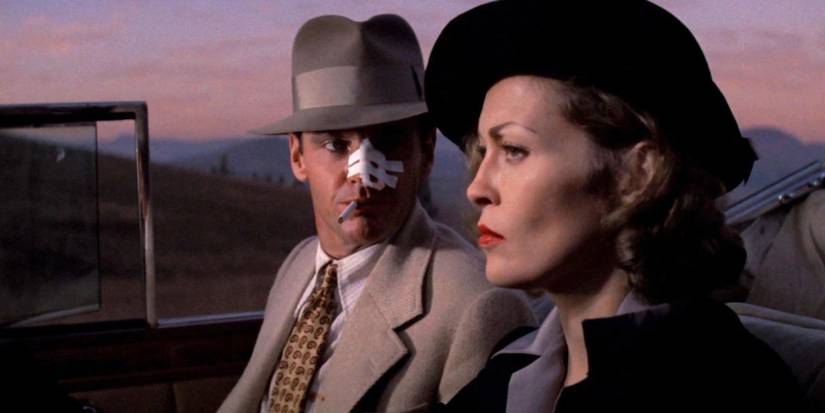 Image via Paramount Pictures
You know when you just feel something is wrong, but can't put your finger on it? Like your brain is preparing you for danger, but there is no apparent threat, and you're left feeling bare in an open space. Chinatown genuinely feels like that in certain moments, and it doesn't prepare you for it or hold your hand throughout. Jack Nicholson gives it his all and his best as a man who continuously soaks in information without being given much time to process it, showing that the world in which he plays detective is much bigger than him. Chinatown is a masterful psychological thriller that doesn't subside even in its final moments, carrying a defeatist, pessimistic message.
Chinatown is set in 1930s Los Angeles and follows private detective Jake Gittes (Nicholson). It was based on a real period when California struggled with a water shortage, showing a monopoly over the precious resource. Jake gets a case to follow the chief engineer of the Department of Water and Power, during which he meets Evelyn Mulwray (Faye Dunaway), the daughter of wealthy and influential Noah Cross (John Huston). As Jake and Evelyn bond, he tries to get to the bottom of the engineer's disappearance, realizing that Cross, the city, and the department are playing a big and dangerous game. It's rare to find a movie like Chinatown: suspenseful, thrilling, and ultimately distressing, and yet beautiful and mesmerizing.






 English (US) ·