
 Image via FX
Published Aug 9, 2026, 2:33 PM EDT
Abby Meyers is a reality TV features writer at Collider. In school, her college majors in creative writing and gender studies prepared her well to watch and write about reality television. She has been an avid viewer of reality shows for as long as she can remember, starting with marathoning seasons of America’s Next Top Model with her mom as a kid. She and her friends would gather around the television every Thursday to watch Jersey Shore together. But she truly became obsessed when she was introduced to Vanderpump Rules during its first season. Reality TV is not at all a guilty pleasure for her; she believes these shows have countless insights to offer as they reflect and inform the culture we live in. She enjoys watching and analyzing reality TV through the lens of critical media theory, looking for what unscripted shows can teach us about gender, race, and class.
When she’s not watching or writing about reality TV, Abby is a multimedia artist, an award-winning short filmmaker, a self-taught poet, and a floral designer. She is part of a collaborative street art practice that has found audiences in galleries, restaurants, and on the streets of New Orleans, Nashville, and Memphis. Most importantly, she is the proud owner of a perfect one-eyed, three-legged pitbull basset hound mix named Fetty.
Sign in to your Collider account
The best mystery shows don't just ask who committed the crime—they probe further to ask why, or what happens in its wake. These shows blend hair-raising suspense with rich character depth, keen social commentary, and moral dilemmas that reach deeper than your nerves. This combination of a thrilling plot and intriguing mystery can keep audiences on the edge of their seat for an entire series.
What makes certain mystery shows stand out from the rest is not only their initial impact but the desire to revisit the story again. From violent visual feasts like Too Old to Die Young, to pitch black comedies like Fargo and Search Party, to classic, genre-defining masterworks, this list offers a little bit of everything, and it's certain to leave you ready for a rewatch.
'The Night Of' (2016)
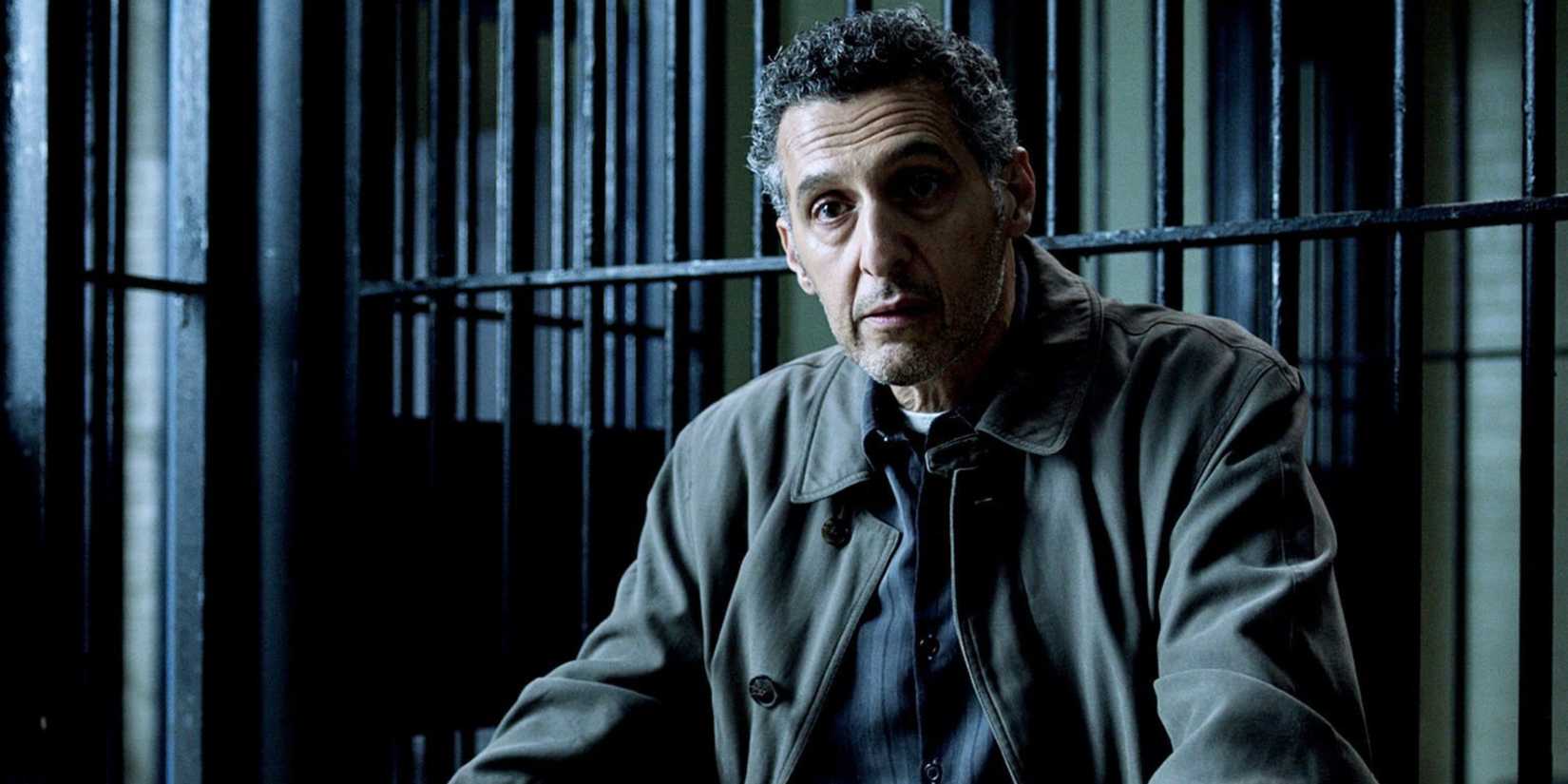 Image via HBO
The Night Of, at its core, is an indictment of the dehumanizing effects of the US criminal justice system. In a star-making role, Riz Ahmed plays Naz, a shy, rule-following young Muslim man who becomes the central suspect in a murder case, and is sent to Riker's to await trial. He begins to internalize and mirror the expectations of his moral arbiters, which calls into question how we process the ideas of guilt and innocence.
As the series unfolds, it becomes less about solving the crime than it is about what it looks like to be charged with one. The Night Of is a gritty, gripping look at the sinkhole that is the US carceral system—laying out very plainly that more often than not, it's about punishment, not justice. Though it begins as a whodunit, The Night Of quickly becomes something much more complex. Don't expect this show to hand you any solid answers—that's work you'll have to do yourself.
'Unbelievable' (2019)
 Image via Netflix
Speaking of the deeply flawed U.S. justice system, Unbelievable tells the story of a teenage girl who reports a rape to the authorities and is accused of lying. Two detectives spend the ensuing years going above and beyond to uncover the truth. The series is based on a true story, one that is all too common, but it tackles the matter with care and realism.
Movies and TV series about the process of seeking justice for sexual violence often run the risk of trying so hard to wrap things up neatly and find a Hollywood happy ending, that they completely diverge from what the experience is like in real life. But no worries here, Unbelievable ends on a somber note, where justice is delivered only to the extent that our culture allows—a consolation prize, a brief glimpse at the truth, and a long process of healing from what happened unfurling in front of her.
'Sharp Objects' (2018)
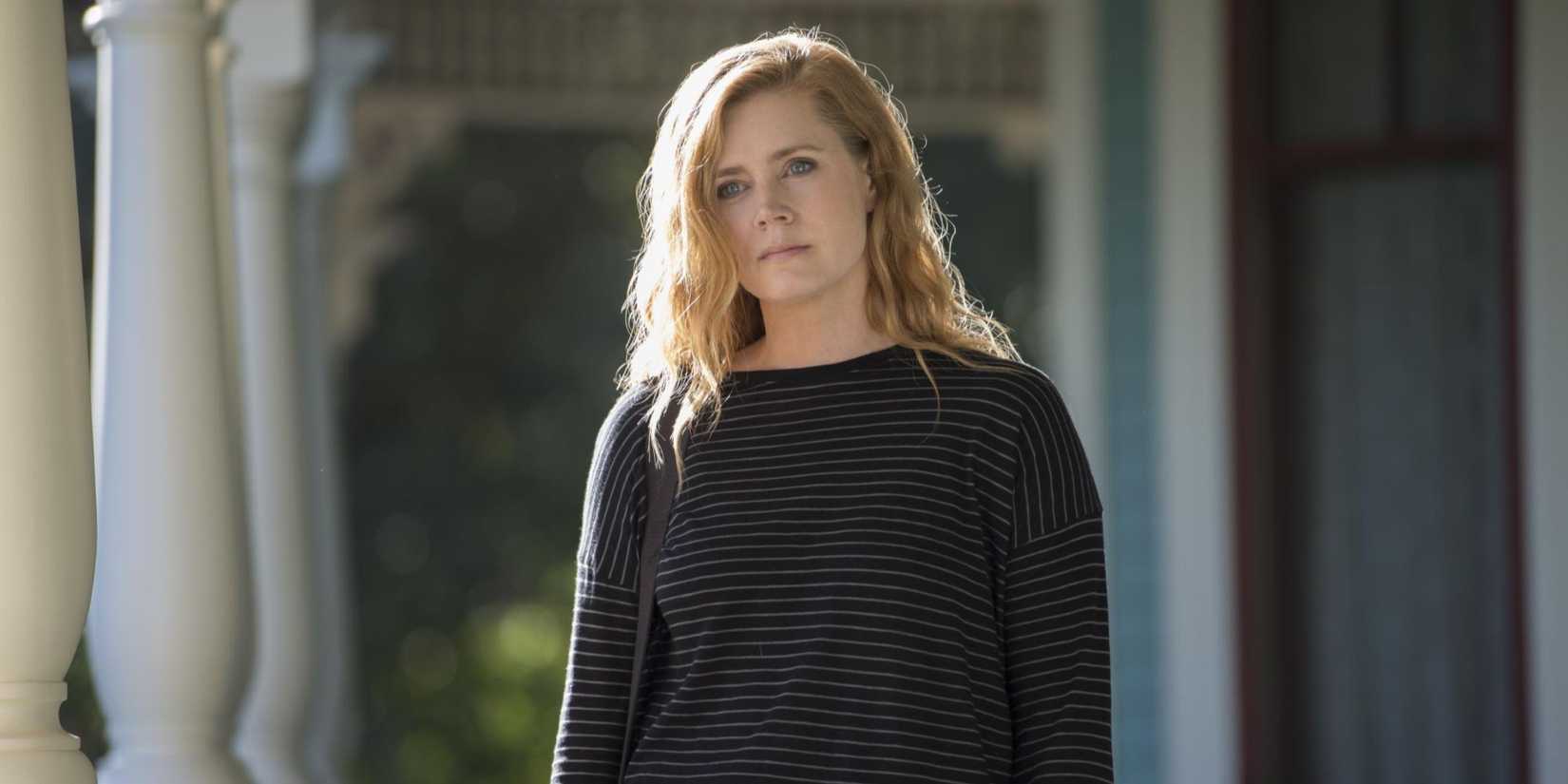 Image via HBO
Sharp Objects follows troubled journalist Camille Preaker (Amy Adams) as she returns to her fictional hometown of Wind Gap, Missouri, to report on a string of brutal murders of young girls. Like many of Gillian Flynn's literary works and their film and television adaptations, it's sharp, psychological, and twisted, digging deep into Camille's internal world as she works to unravel this mystery. It's an obsessive exploration of the complexities of womanhood, generational trauma, and leans into memory and intoxication to tell its story in a way that is dreamlike and haunting.
As soon as the credits roll, you'll want to start from the beginning to search for subtle clues that come before the shocking twist ending. Amy Adams is unsurprisingly remarkable in the lead role, and Patricia Clarkson's bone-chilling performance earned her a Golden Globe. Sharp Objects features uniquely immersive music choices, enveloping Southern Gothic atmosphere, and mystery so tense you'll be plucking out your eyelashes.
'The Third Day' (2020)
 Image via HBO
Set on a remote British island called Osea, The Third Day is a folk horror miniseries which features six episodes and one 12-hour live theatrical event. Jude Law stars as Sam, a man tormented by profound grief who is mysteriously drawn to the island. His visit turns into a nightmare as he becomes entangled with the island's secretive, cult-like populace and descends into a complete psychological collapse. The islanders are deeply devoted to a pagan belief system, ruled by ancient mythology, rituals, and seasonal rites.
The show is grounded in themes of fertility, sacrifice, and cycles—tides and seasons, as well as birth, death, and rebirth. Sam dives into this dangerous and seductive ideology as a way to make sense of his grief, at great cost to his family. Many of the twists are evident early on, but somehow, they still land with surprising force. The Third Day is a visually stunning, deeply surreal exploration of grief, belief, and the natural cycles of life.
Collider Exclusive · Universe Personality Quiz Which Iconic Universe Do You Belong in the Most? Star Wars · Lord of the Rings · Harry Potter · Game of Thrones · Star Trek
Five legendary universes. Five completely different visions of what the world could be — or already was. One of them is the world your instincts, your values, and your particular way of existing were built for. Eight questions will tell you which one.
🚀Star Wars
💍Lord of the Rings
🧙Harry Potter
👑Game of Thrones
🖖Star Trek
FIND YOUR UNIVERSE →
01
What gives your life its deepest sense of meaning? Every universe is built around a different answer to this question.
ABeing part of something larger than myself — a cause, a rebellion, a fight for freedom that outlasts me. BThe journey itself — the places I'll go, the companions beside me, the world I'll discover on the way. CLearning — unlocking what I'm capable of, understanding the world's hidden mechanics, growing into something more. DLegacy — the name I leave behind, the power I build, the mark I make before the world moves on without me. EUnderstanding — exploring what exists beyond the horizon and asking what it means to be alive in a universe this vast.
NEXT QUESTION →
02
Which kind of world do you most want to inhabit? The environment shapes who you become. Choose carefully.
AA galaxy of planets, each with its own culture — connected by conflict, trade, and the Force. BAncient lands of breathtaking beauty, deep history, and a creeping darkness at the edges. CA world hidden inside our own — full of wonder, community, and magic waiting to be learned. DA brutal, beautiful continent where power is everything and every alliance is a calculation. EA future where humanity has reached the stars — and must decide what kind of species it wants to be.
NEXT QUESTION →
03
How do you prefer your conflicts resolved? The shape of a world's conflicts tells you everything about its soul.
AThrough sacrifice and courage — someone has to make the impossible choice so others don't have to. BThrough fellowship — the impossible becomes possible when the right people walk the same road. CThrough growth — confronting what you fear, understanding what you lack, and becoming equal to the challenge. DThrough strategy — outthinking, outmaneuvering, positioning yourself so the outcome was never in doubt. EThrough dialogue — finding the third option, the peaceful resolution, the answer that doesn't require a body count.
NEXT QUESTION →
04
Who do you want beside you when things get difficult? Your ideal companions reveal the world you were made for.
AA small crew — a pilot, a rogue, a warrior — each broken in their own way, unbeatable together. BA fellowship of different kinds of people, bound by purpose and deepened by the long road. CFriends who grew up alongside me — who knew me before I knew myself, and stayed anyway. DAllies whose loyalty I've earned — and tested — and whose ambitions align with mine, for now. EA crew of brilliant, curious, principled people from every corner of known space.
NEXT QUESTION →
05
What is your relationship with power? How you seek, wield, or resist power is the map of who you are.
AI want to use it to protect — and I'm terrified of what I might become if I'm not careful. BI distrust it. The most important power in this story is the courage to give it up. CI want to earn it — through knowledge, through effort, through becoming someone worthy of it. DI want to wield it. Preferably before someone else decides to wield it against me. EI want to understand it — its structures, its limits, its ethical dimensions. Power without accountability is the real threat.
NEXT QUESTION →
06
How does your universe treat good and evil? A world's moral architecture tells you more about it than any map.
AThere is a dark side and a light side — and the choice between them is always present, always personal. BEvil is real and ancient and patient — and goodness, however small, is the only thing that can undo it. CGood and evil are real, but they live inside people — and people are complicated, always capable of both. DGood and evil are mostly a matter of perspective and proximity. Power is the only honest currency. EEvil is usually the result of ignorance, fear, or broken systems — and understanding it is the first step to solving it.
NEXT QUESTION →
07
What role would you naturally fall into? Every universe has archetypes. Which one fits you without trying?
AThe reluctant hero — ordinary origins, extraordinary moment, changed forever by the choice to act. BThe unlikely carrier — the one nobody expected to matter most, quietly bearing the weight of everything. CThe student — not yet who I'll become, learning through every mistake, growing into something the world needs. DThe player — sharp enough to see the game for what it is, ambitious enough to try to win it. EThe explorer — drawn to the unknown, driven by curiosity, most alive when standing somewhere no one has stood before.
NEXT QUESTION →
08
What do you ultimately believe about the future? The answer to this is the clearest window into which universe already lives inside you.
AThat hope is real — that even in the darkest galaxy, a new hope is always possible. CThat even the smallest person can change the course of the future, if they have the courage to try. CThat love and friendship and doing what's right will matter in the end, even when everything says otherwise. DThat the wheel keeps turning — that power shifts, winters end, and what endures is those willing to fight for it. EThat humanity — or whatever we become — is capable of extraordinary things, if we choose to be.
REVEAL MY UNIVERSE →
Your Universe Has Been Chosen You Belong In…
Your answers point to the iconic universe your values, your instincts, and your particular way of seeing the world were built for. This is where you would find your people — and your purpose.
Star Wars
You believe in the cause — in the idea that freedom is worth fighting for even when the odds are impossible and the empire is vast.
- You are drawn to the moral clarity of a universe where hope itself is a form of resistance.
- You'd find your people in the Rebellion — a ragtag coalition of true believers held together by conviction more than resources.
- Star Wars is fundamentally a story about ordinary people choosing to matter in an extraordinary conflict — and that is exactly your kind of story.
- The Force may or may not be with you. But the will to use it for something larger than yourself certainly is.
Lord of the Rings
You understand, in the deepest part of yourself, that the journey matters as much as the destination — and that the world's beauty is worth protecting even at great cost.
- Middle-earth is a world of ancient wonder, deep friendship, and a darkness that only retreats when enough small acts of courage accumulate.
- You would thrive here because you value the fellowship more than the glory — the road more than the arrival.
- Tolkien's universe rewards patience, loyalty, and the willingness to carry something heavy across a very long distance.
- Those are not burdens to you. They are simply how you move through the world.
Harry Potter
You believe that love, loyalty, and doing what's right are not naive sentiments — they are the most powerful forces in any world, magical or otherwise.
- The Wizarding World is a place of wonder hidden in plain sight, where learning is transformative and the bonds you form at school follow you into every battle.
- You would flourish here because you take both the magic and the friendships seriously — and you understand that one without the other is incomplete.
- Harry Potter's universe ultimately rewards those who choose to stand for something even when standing is terrifying.
- That choice — made quietly, without guarantee — is something you understand completely.
Game of Thrones
You see the world clearly — its power structures, its hypocrisies, its brutal arithmetic — and you are not paralysed by that clarity. You use it.
- Westeros is a world that rewards intelligence, adaptability, and the willingness to understand that every alliance is also a negotiation.
- You would survive here — possibly thrive here — because you don't confuse the world as it is with the world as you'd like it to be.
- Game of Thrones is a story about what happens when the idealists and the realists collide. You are sharp enough to know which one lasts longer.
- Winter always comes. You are already prepared.
Star Trek
You believe the future is worth building — that curiosity, cooperation, and the expansion of understanding are not just ideals but the most practical path forward for any civilisation.
- Star Trek is a universe where the questions matter as much as the answers, and where encountering something utterly alien is cause for wonder rather than fear.
- You would belong here because you are fundamentally optimistic about what intelligence and decency can achieve — while being honest about how hard that achievement is.
- The Federation is the universe's most ambitious thought experiment: what if we actually got better?
- You don't just hope that's possible. You think it's the only thing worth working toward.
↻ RETAKE THE QUIZ
'Mare of Easttown' (2021)
 Image via HBO
Mare of Easttown follows a detective in Easttown, Pennsylvania, a community so small that everyone knows everyone, and there's no such thing as a secret. Her own personal traumas are deeply intertwined with the crimes she investigates. The series is anchored by Kate Winslet, who was decorated with an Emmy, a Golden Globe, and a SAG award for her lived-in performance (and her spot on Delco accent).
While Mare of Easttown is littered with twists and turns, what sets the show apart is its careful attention to character and empathy for the victims. The crimes aren't handled as shock-value plot points, but real human tragedies that ripple through the community. A whodunit, sure, but also an exploration of grief, family, motherhood, and community.
'Too Old to Die Young' (2019)
 Image via Prime Video
Created by Halley Gross, Ed Brubaker and Nicolas Winding Refn—the director of Drive, Neon Demon, and Only God Forgives—Too Old to Die Young holds true to Refn's signature aesthetics and thematic fascinations. It's a slow burn that asks its audience to sit in silence, discomfort, and ambiguity. A neo-noir crime drama and psychological thriller, the series, like everything Refn makes, is soaked in neon lights.
Set in the seedy underbelly of Los Angeles, Too Old to Die Young is anchored by Martin (Miles Teller), a disillusioned and morally compromised cop, but gradually shifts perspectives between a chorus of characters whose paths eventually collide. With each new episode, the story spirals into a philosophical fever dream, meditating on violence, guilt, masculinity, power, and spiritual bankruptcy. This one might not be for everybody—Too Old to Die Young can be tedious at times, and it's unflinchingly graphic as it is visually stunning. Every frame is meticulously composed, and the synth-heavy soundtrack is as haunting and hypnotic as the show itself.
'Fargo' (2014–2024)
Fargo, based on the 1996 Coen brothers film of the same name, is an anthology crime drama that introduces a new sprawling, all-star lineup each season, as well as a fresh crime to be investigated, all set across various time periods and snowy, small-town backdrops. What unites all five self-contained seasons? Pitch black comedy, idiosyncratic charm, morally murky characters, and a distinctly Midwestern atmosphere.
Over the years, the show has been showered with nominations, awards, and critical acclaim. The Coen brothers, who were initially uninvolved with the series, came on as executive producers for Season 3. Fargo is beloved for its razor-sharp writing and directing, and standout performances by illustrious actors like Kirsten Dunst and Jesse Plemons (who, it's worth noting, met and fell in love on the set of Season 2), as well as Chris Rock, Carrie Coon, Jean Smart, Jon Hamm, and many more.
 Image via FX on Hulu
For anyone as obsessed with Mormon-centric media as I am, this might be the mystery miniseries for you. Under the Banner of Heaven is an adaptation of Jon Krakauer's 2003 nonfiction book, Under the Banner of Heaven: A Story of Violent Faith. Set in 1980s Utah, the show follows Detective Jeb Pyre (Andrew Garfield), a devout Mormon who begins to question his faith as he investigates the horrific double murder of Brenda Lafferty (Daisy Edgar-Jones) and her infant daughter Erica. He discovers disturbing truths about the Laffertys, a once respected Mormon family whose descent into fundamentalist extremism leads them to embrace patriarchy, polygamy, and divinely-sanctioned violence (particularly against women willing to challenge them).
The show is driven by its central murder-mystery storyline, but it's made richer by Pyre's unraveling beliefs as he wades deeper into the world of the radical Lafferty brothers. Andrew Garfield gives a quiet, nuanced performance as Pyre, but Wyatt Russell steals the show as the magnetic and menacing Dan Lafferty. It's a slow burn, but the gruesome final episode will have you watching through parted fingers.
'Twin Peaks' (1990–2017)
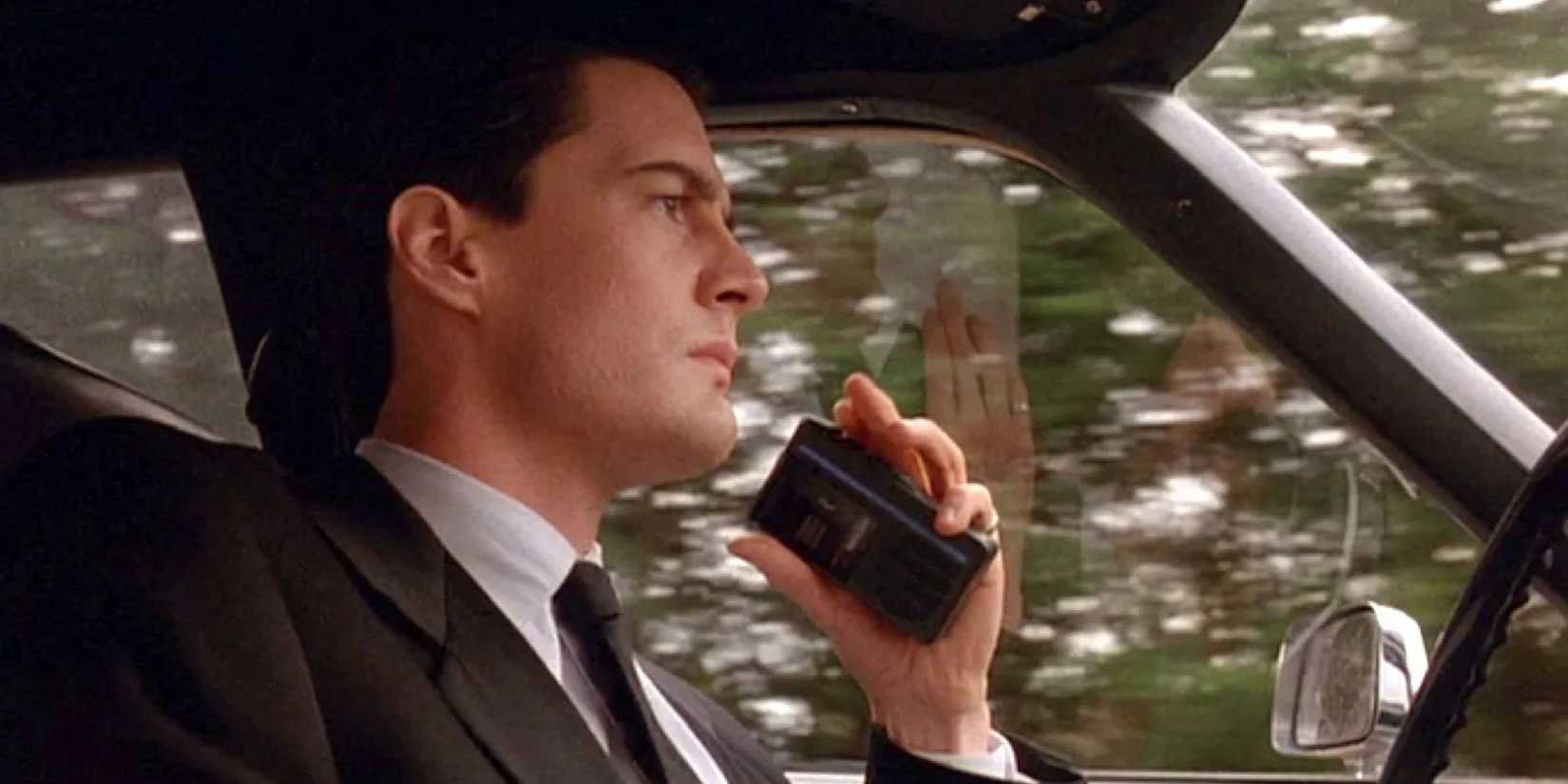 Image via ABC
Twin Peaks is widely regarded as the greatest mystery series of all time, and may arguably be one of the best television shows ever made. It's the blueprint for the modern mystery genre, and it changed the way we watch TV. The original series begins when the body of high school homecoming queen Laura Palmer (Sheryl Lee) is found wrapped in plastic on the banks of Black Lake. FBI Agent Dale Cooper (Kyle MacLachlan) soon arrives to solve the crime, and his investigation uncovers the dark and uncanny undercurrents of the seemingly cozy small town.
David Lynch's genius direction imbues every detail with meaning, coaxes off-kilter performances from his stellar ensemble, and casts a bizarre, dreamlike haze over every scene. Twin Peaks is a singular experience in which absurd comedy, heartfelt sincerity, and pure horror all coexist, often within the same moment. As with all of Lynch's work, a second, third, tenth watch is required, and even then, some answers will remain just out of reach.
'Search Party' (2016–2022)
 Image via TBS
Search Party is a genre-bending dark comedy that begins with a simple mystery: a missing college classmate. From there, it spirals into an absurd and surreal exploration of identity, privilege, self-obsession, and performance. Dory Seif (Alia Shawkat) becomes obsessed with solving the case, but not necessarily out of morality—it's more about solving her own inner turmoil with distraction, chaos, and a developing hero complex. The missing-person puzzle sets the stage, and each subsequent season builds on the fallout, which naturally leads to new mysteries and moral dilemmas.
The show reinvents itself with each new installment: a courtroom drama one season and a dystopian zombie horror the next. Search Party has one of the most honed-in ensembles in TV history, and the list of standout supporting performances is endless. The vapid, disaffected millennial freaks at the center drive its sharp satire and seek to answer a crucial question: What's the difference between wanting to be seen as a good person and actually being one?











 English (US) ·