

Published Feb 13, 2026, 2:40 PM EST
William Smith is a flesh and blood writer who hasn't seen natural sunlight in months. He spends every waking hour at his laptop producing content to satisfy the cruel algorithm and to give those who spend their time in the comments section something to criticize.
Mystery movies are, by their very nature, filled with intrigue. They take audiences on a journey through a labyrinthine plot, unraveling and revealing information in a manner meant to keep them engaged and guessing. The element of mystery can be used for comedic purposes, emotional catharsis, or to unsettle the viewer's sense of reality. What it does best, though, is keep them in suspense.
Not all mysteries are built the same, and not all of them find the need to twist their plots into pretzel shape in order to keep the audience's stomach in knots, but some of the absolute best of the subgenre do just that. They keep us on edge by only giving us pieces of the puzzle, and the more pieces we're given, the more the full image comes into view and the more unsettled we become. Mystery movies can be tremendous at suspense, and these ten are masterclasses in it.
'Rear Window' (1954)
 Image via Paramount Pictures
No director is more synonymous with suspense than Alfred Hitchcock, being the proclaimed master of it. The director often revels in dramatic irony, giving the audience more information than the characters and letting them squirm in their seats as they are helpless to prevent the inevitable conflict playing out on screen. When he does hold back, it is with perfect purpose. Nowhere is the marriage of mystery and suspense more evident in Hitchcock's filmography than in his thriller masterpiece, Rear Window.
Starring James Stewart as a photojournalist, laid up with a broken leg, whose voyeuristic tendencies learn him something far more sinister about one of his neighbors than he ever intended, Rear Window is one of the cleanest examples where its limitations only amplify its suspense. Set in a single location and shot on an impressive set that encompasses the entire apartment complex, Hitchcock uses the stage-bound nature of the story to intensify how helpless the protagonist is. We watch as he does, trapped in our seats, incapable, and with our pulses racing.
'Blow Out' (1981)
 Image via Filmways Pictures
If there's any director most directly, and plainly, influenced by Hitchcock, it's Brian De Palma. His films Obsession, Dressed to Kill, and Body Double all directly or indirectly reference the master director, and while they all vary in suspense, it's the Michelangelo Antonioni-inspired Blow Out that is De Palma's mystery magnum opus. Inspired by Antonioni's Blowup, De Palma's version makes modern updates and pulls additional influence from Hitchcock and giallo films to turn it into a sordid, suspenseful mystery thriller.
John Travolta plays a sound technician who specializes in low-budget horror movies. He gets his dose of real-life horror when he inadvertently records an assassination, which puts a target on his back and pulls him into a deep political conspiracy. With some of the same themes of voyeurism as Rear Window, the film has a lurid atmosphere that is all De Palma's. Blow Out is arguably his definitive film, a technical masterpiece with terrific performances and a mystery that unfolds with twisted terror.
'The Fugitive' (1993)
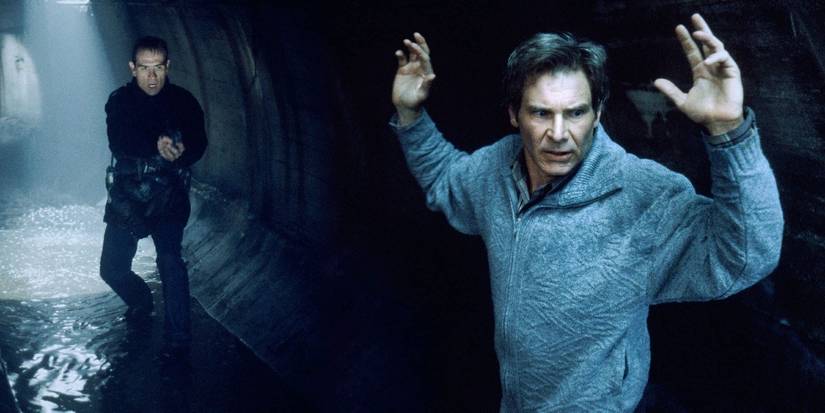 Image via Warner Bros. Pictures
A mystery thriller doesn't need to be wicked and disturbing to be suspenseful. Some of the greatest mystery movies have made pulses race while also being wickedly entertaining. Many of these fall into the classic category of the wrongfully accused protagonist trying desperately to clear their name, and no film has pulled off that plot with such a perfect mix of pure entertainment and slick suspense as the blockbuster thrill-ride, The Fugitive.
Based on the '60s television series of the same name, this '90s action classic streamlines the plot and strips it to its essentials. Harrison Ford brings his grit and intelligence to the role of Richard Kimble, an affluent doctor convicted of the murder of his wife. After a show-stopping escape sequence, he sets off to solve the mystery of who really murdered his beloved. All the while, Tommy Lee Jones, in an Oscar-winning performance, is hot on his heels as a dedicated U.S. marshal. The Fugitive is an action-packed mystery that keeps you on the edge from beginning to end.
'Memento' (2001)
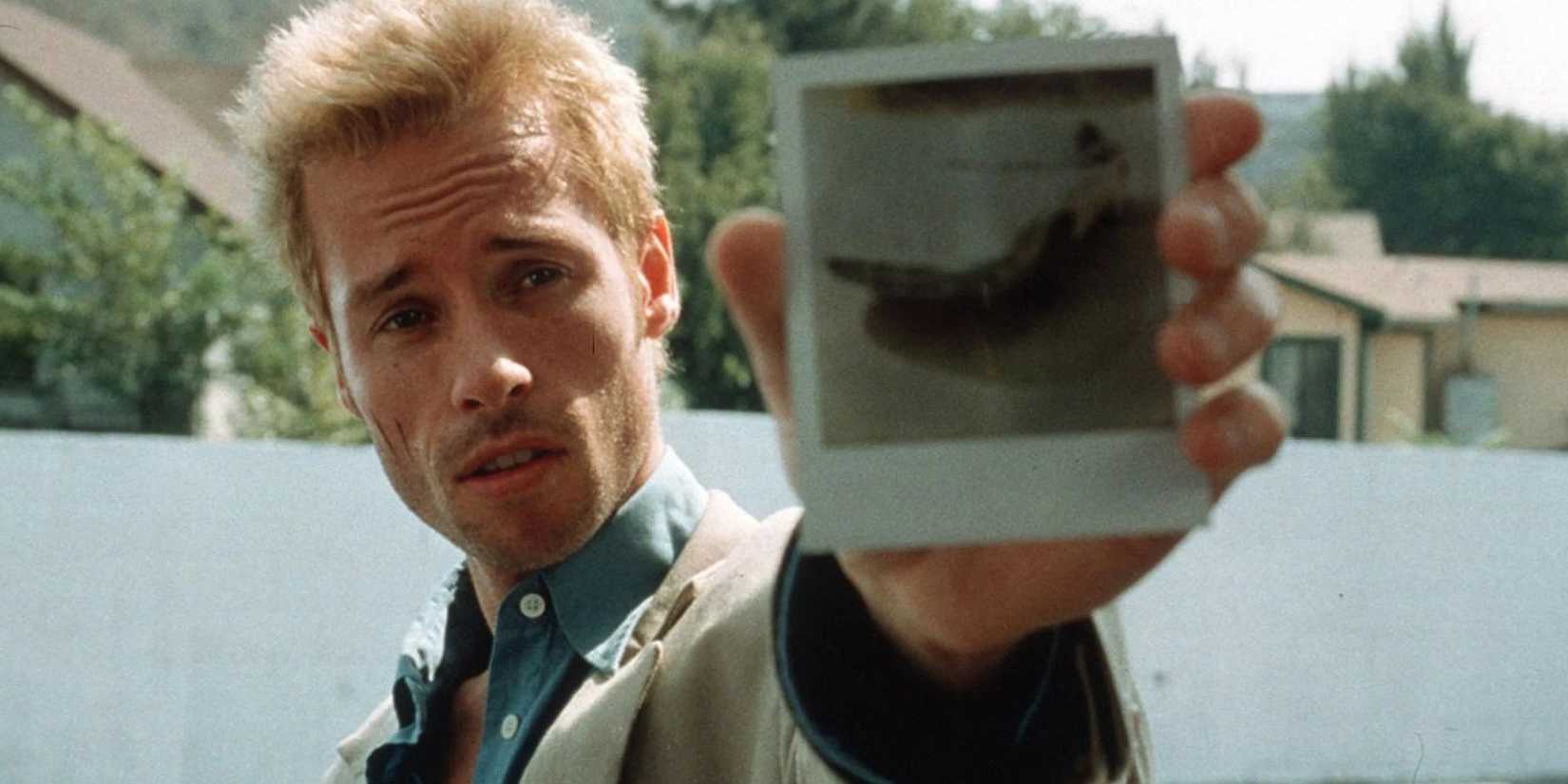 Image via Newmarket Films
Christopher Nolan loves a good mystery just as much as he loves keeping audiences in suspense. Many of the director's most iconic films have utilized puzzlebox narratives and non-linear structures to keep audiences guessing right up until the end. The Prestige, Tenet, and Insomnia all show off the director's talents for next-level suspense and managing a mystery plot, but there's something truly special in the suspense of his second film, Memento. With a hairpin plot structure that alternates between chronologies running on a collision course in forward and in reverse, it keeps the audience guessing in every single scene.
Guy Pearce plays Leonard Shelby, a man suffering from anterograde amnesia that leaves him unable to create new memories, making it all the more difficult for him to solve the mystery of his wife's murder. Unlike Richard Kimble, Leonard can't trust his mind, relying on tattoos and polaroids to help him piece together the truth. The film's unique structure forces us to experience the world through Leonard's eyes, unsure of what has just occurred before each scene and leaving us skeptical of everything and everyone. It's a masterclass in using mystery to maintain suspense.
'Mulholland Drive' (2001)
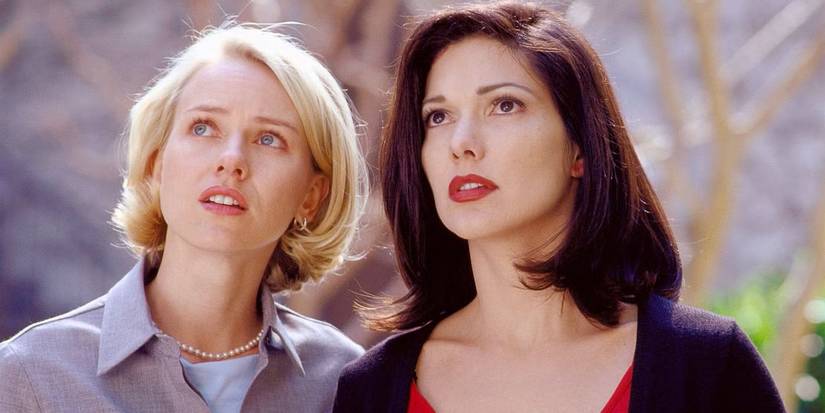 Image via Universal Pictures
While Memento leaves the audience constantly questioning Leonard's reality, David Lynch's Mulholland Drive will leave them questioning their own. As a surrealist in a category all his own, Lynch has given multiple masterclasses on mystery and suspense in both films like Blue Velvet and television series like Twin Peaks. Mulholland Drive began life as a pilot for an unproduced television series, with Lynch later picking up the pieces to create an endlessly mysterious feature film that offers no easy explanations or tidy resolution.
A dark Hollywood melodrama, the film stars Naomi Watts and Laura Harring as two women whose lives intersect at a pivotal moment, beginning a twisted journey of self-discovery and identity that is intercut with the various existences of other lost souls of Tinseltown. Mulholland Drive has been subject to myriad interpretations, as has so much of the late Lynch's work, but the devil in this case is not in the details, but in the experience. It's a waking nightmare of a movie that will fill you with an undying dread.
'Memories of Murder' (2003)
While the lack of details is where Mulholland Drive finds its suspense, the mystery thriller Memories of Murder finds it in every single excruciating individual one. From director Bong Joon Ho, who has mastered the craft of subverting expectations and melding genres to mine unexpected emotions, this slow burn serial killer thriller uses the minutiae of a police procedural to elicit frustration and fear.
Inspired by a series of real murders and sexual assaults that plagued South Korea through the '80s and into the early '90s, and were still unsolved at the time of the film's release, Memories of Murder tracks the investigation led by two detectives with clashing methodologies. The mystery remains intact at the end of the film, and despite the resolution that would eventually be found in real life, it still lingers in the movie and gives it a chilling effect. Combining disparate tones and a slow build of tension that is never given a proper release, Bong Joon Ho's cult classic offers suspense that truly unnerves.
'Zodiac' (2007)
 Image via Paramount Pictures
When it comes to real-life unsolved crimes, few loom as large in American culture as the Zodiac killings that cut across the Bay Area in the '60s and '70s. Theories abound around the true identity of the killer, and the obsessive drive behind those theories forms the core of David Fincher's true crime masterpiece, Zodiac. As devoted to detail and procedure as Memories of Murder, Fincher's film is immaculately designed and as slavishly devoted to the facts as its central characters are.
Based primarily on the novel by Robert Graysmith, who also serves as the film's principal character as played by Jake Gyllenhaal, Zodiac details, from multiple perspectives, the investigation of the notorious killer who taunted police with his coded messages. As expected from the notoriously meticulous Fincher, the film is forensic in its approach and disturbingly realistic, but never lets cold analysis override suspense, as evidenced in several scenes depicting the killer's crimes and one incredible late sequence involving a basement. Fear is a killer in Zodiac, and one that can never be caught in or outside the frame.
'Prisoners' (2013)
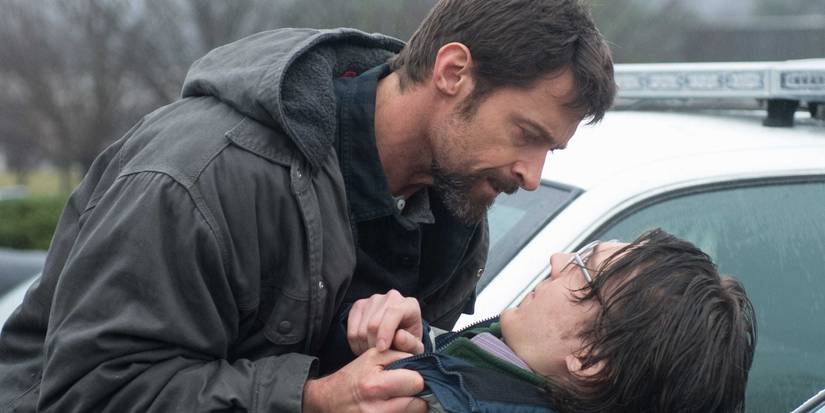 Image via Warner Bros.
Obsession is also at the center of Denis Villeneuve's Prisoners, but unlike the analytical mind that drives Zodiac, this film is driven by a vengeful heart. Prisoners is a wearying, emotionally draining experience that begins down a dark path and only turns more twisted as its mystery becomes ever more complex. Leading it is Hugh Jackman in one of his most blistering performances alongside solid support from Jake Gyllenhaal and Paul Dano.
Jackman plays a desperate father driven to fury after his daughter goes missing. He abducts Dano, a suspect released by police for lack of evidence, and subjects him to intense torture. Paralleling Jackman's scorched-earth crusade for justice is Gyllenhaal as an enigmatic detective who peels back the layers of the mystery to expose a deeper, darker conspiracy. A somber, sobering thriller, Prisoners finds its suspense not in action or procedure, but in the violence it plunges the audience into.
'10 Cloverfield Lane' (2016)
 Image via Paramount Pictures
Before Dan Trachtenberg became the guardian of the Predator franchise, he proved his skill at suspense with his debut film, 10 Cloverfield Lane. A genre-splicing thriller set in a contained location, the film began development as an original story, but was later tangentially connected to the extended Cloverfield cinematic universe. While the fourth act takes the film into overblown action territory, the rest of the runtime is devoted to a chilling thriller of paranoia that owes more to classic episodes of The Twilight Zone.
Mary Elizabeth Winstead plays a young woman who awakens after an accident to find herself seemingly captive in the underground bunker of a doomsday prepper, played by John Goodman. While he insists the world outside has become a toxic environment after some sort of widespread attack, the woman never fully trusts his word, and the film only amplifies the intensity as she tries to find answers. 10 Cloverfield Lane is a masterclass in tension and pacing that succeeds thanks to Trachtenberg's tight direction and the key performances from Winstead and Goodman.
'Get Out' (2017)
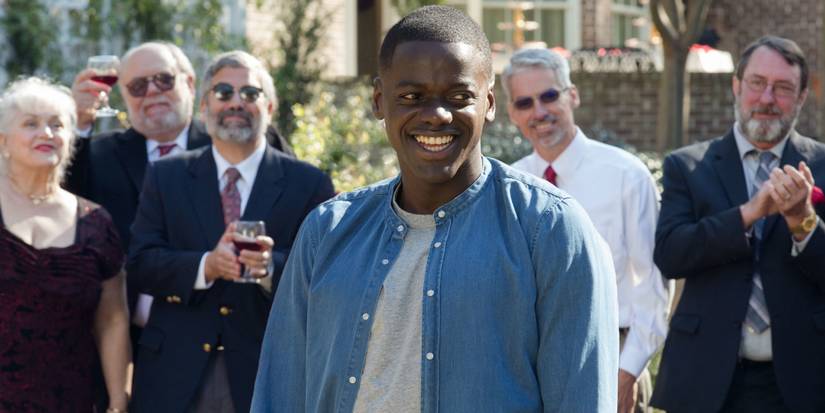 Image via Universal Pictures
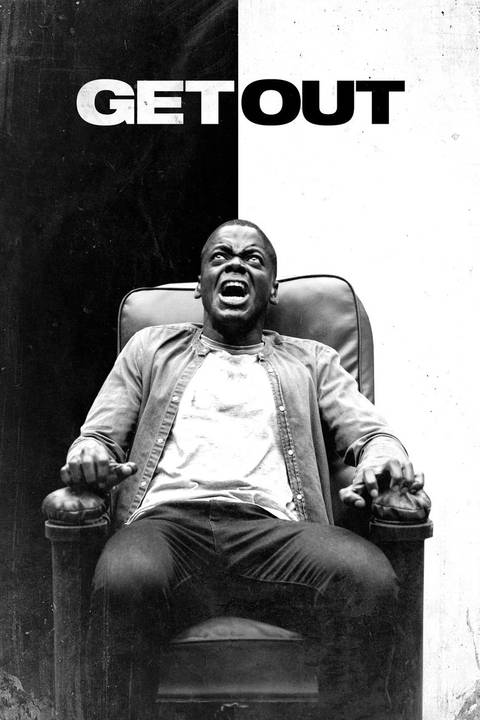
Jordan Peele's sharp horror satire of affluent liberal racism, Get Out, comes front-loaded with social commentary, as a black man finds himself lost and filled with fear in a wealthy white neighborhood. The suspense builds until he is abducted in a scene that feels only more relevant to the current political climate. From there, Peele's Oscar-winning film becomes a suburban nightmare whose central mystery rips away a false-friendly face of progressiveness to expose an ugly core of marginalization and commodification underneath.
Daniel Kaluuya plays Chris, a black man who accompanies his white girlfriend to meet her parents. What begins with awkward conversations and racially charged microaggressions soon devolves into something more sinister as Chris suspects his hosts are harboring darker secrets. With a razor-sharp script filled with clever symbolism and foreshadowing, Peele's modern horror masterpiece burrows deep into America's underbelly of race relations and delivers a stomach-churning mystery that bubbles with suspense.
Get Out
Release Date February 24, 2017






 English (US) ·