
 1 hour ago
10
Just saying, Jensen, this probably doesn't happen if you stick to gaming GPUs

Ostensible graphics card company and definite AI giants Nvidia have commissioned an independent investigation into themselves, amid reports that CEO Jensen Huang had an extramarital affair with a suspected Chinese spy.
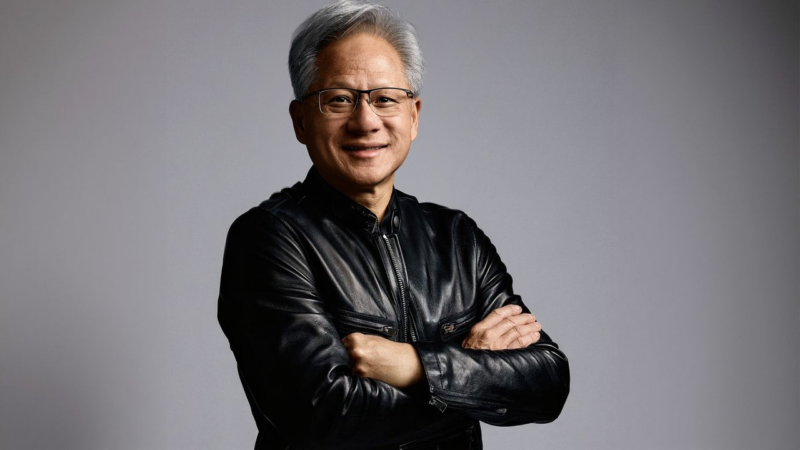
Per both the New York Times and Nvidia themselves, Nvidia offered to go under the microscope after US intelligence organisations elected to investigate Huang’s paramour, Chinese national Alice Huang (no, uh, relation, and also known as Huang Le), on suspicion of sharing sensitive information with Beijing. The Nvidia-running, leather-jacketed Huang has thus far only copped to an unspecified affair, admitting in an extraordinary public statement that he was "unfaithful to my wife." Still, the two investigations are likely to start a bizarre new leg in the alread-messy AI arms race that the US and China have been indulging in for years.
See, the basis for Huang and Huang’s relationship appears to be the same thing that’s been fucking us as PC owners: data centres and AI hardware. Alice Huang is a former managing director of Megaspeed, a Singapore-based data centre company who’ve bought billions of US dollars’ worth of Nvidia chips – and have been investigated for allegedly getting some of them into the hands of Chinese companies, in defiance of US trade restrictions on goods that might threaten the States’ AI dominance. Possibly also, given both countries’ increasing interest in the technology’s military uses, their perception of national security.
Many of these embargo-dodging accusations originate from after Alice Huang left Megaspeed, though she is now under that separate investigation for intelligence-sharing, and the prospect of any high-tech pillow talk from the lips of someone like Jensen Huang would be very disturbing to the feds indeed. Both Nvidia and their "deeply sorry" CEO deny that he shared sensitive information beyond that required for routine customer/client discussions.
"While the Board has no reason to believe that either national security or Nvidia secrets were compromised, the Board's inquiry will examine all available information," the company’s statement reads. "Jensen fully supports the review and has committed to cooperating with it. The Board has confidence in Jensen and his leadership team and will provide further updates as appropriate."
In the US-Sino battle of artificial intelligence, Jensen Huang has – as with his marriage – played both sides. He’s undoubtedly been a, perhaps the driving force behind reinventing Nvidia from beloved makers of gaming gear to the US’ number-one purveyors of environment-ruining, brain-polluting slop technology. But after the Biden administration banned American-made GPU exports to China over fears they’d be used to boost the latter’s military capabilities, Huang successfully lobbied Donald Trump into relaxing those restrictions, allowing Nvidia to flog their wares – including their crème de la crème AI GPU, the H200 – to cash-rich Chinese companies.
In a further twist, many of those chips have got mysteriously stuck in Hong Kong import facilities, suggesting the Chinese government in fact wants AI companies to stick to Chinese-made parts. But then, the Hangzhou-based DeepSeek reportedly trained their latest AI model on illicitly-gained Nvidia tech, so there’s either a healthy black market in operation, or the CCP is willing to tolerate the occasional bit of decadent Western silicone if it helps them catch up to the burger-chomping likes of ChatGPT and Claude. Maybe both, and either way, one can see how a well-placed honeypot could prove useful. Allegedly.
Without wanting to pick sides, in a race where I hope both teams lose, it’s also China who have more work to do. The People’s Republic produces a greater proportion of successful 'open' AI models, where the inner workings and even source code is made public, and mines more of the crucial minerals needed to build components and infrastructure. However, US-produced 'closed' models dominate global AI usage, and despite the lack of minerals, its existing data centres are estimated to wield 40 times the combined compute power of China’s. Probably because they just get all the RAM they need from Best Buy instead of digging it up themselves.




 English (US) ·