

Published Jul 16, 2026, 9:00 AM EDT
Chris is a Gaming Editor at ScreenRant. He has been a professional writer since 2009, and has written for top TV, comics, movie, and video game outlets like Engadget, Polygon, Destructoid, and more. He brings with him an expertise in every game genre, no matter how niche or mainstream.
You may know him as the former Managing/Reviews Editor of Destructoid, where he published hundreds of game reviews across every genre, including MMOs, sports games, and Metroidvanias.
Find Chris on Twitter @_SRChris.
With humble beginnings in 2003 as a comic book, The Walking Dead was catapulted into stardom once the AMC TV series became a massive hit in 2010, and the rest is history. That initial cast was so strong that it drew in casual viewers, and many of them didn't stop watching until Season 8, when viewership began to drop.
At its absolute peak in Season 7, the show commanded 17 million weekly viewers. It truly was a juggernaut in the TV space, and it's still going with multiple continuation projects. Now there are so many spinoffs that even fans have trouble keeping track at times, and there have been countless adaptations of the series, including beloved iterations like Telltale's The Walking Dead.
Those adaptations have spilled into games, including The Walking Dead: Aftermath. While it has all the makings of a decent romp through The Walking Dead universe, there are some key things that severely hold it back.
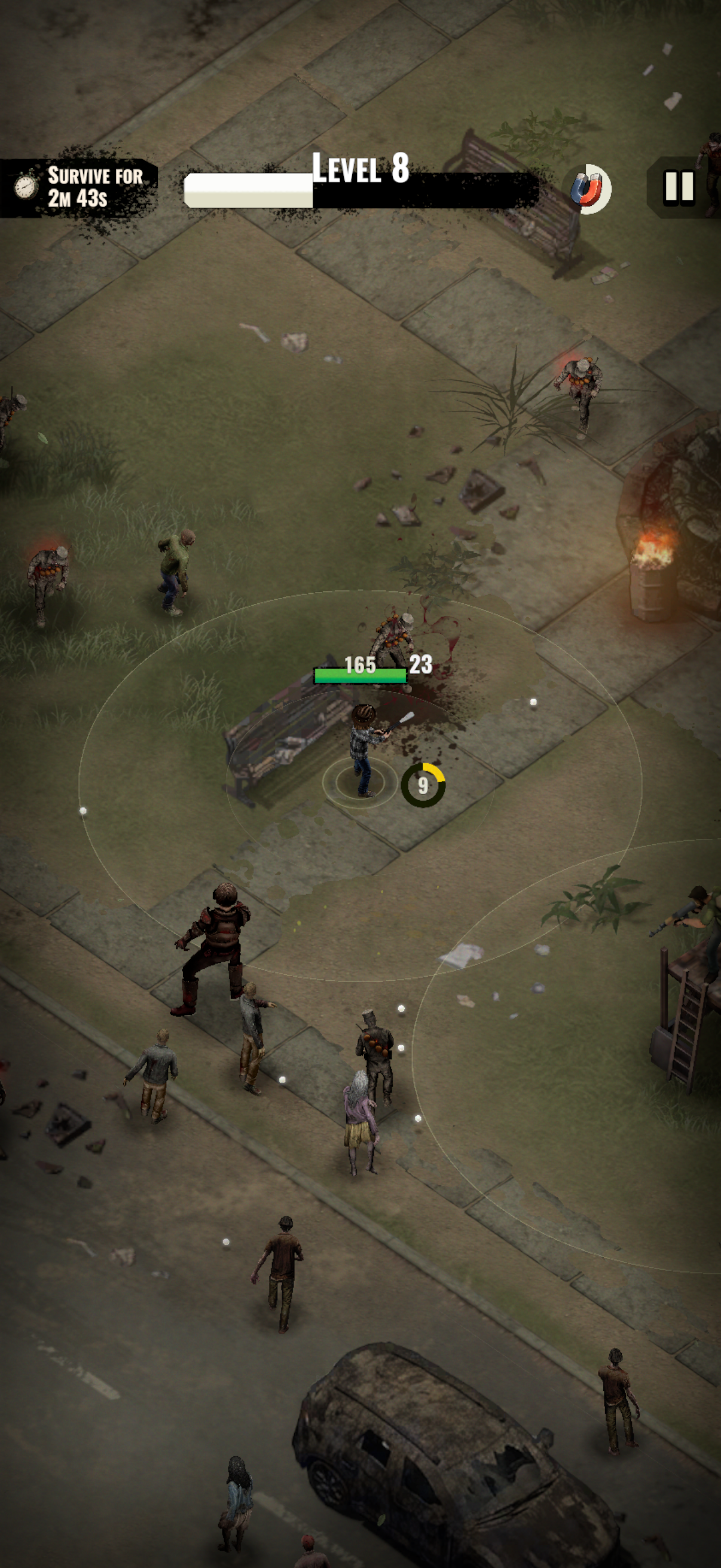
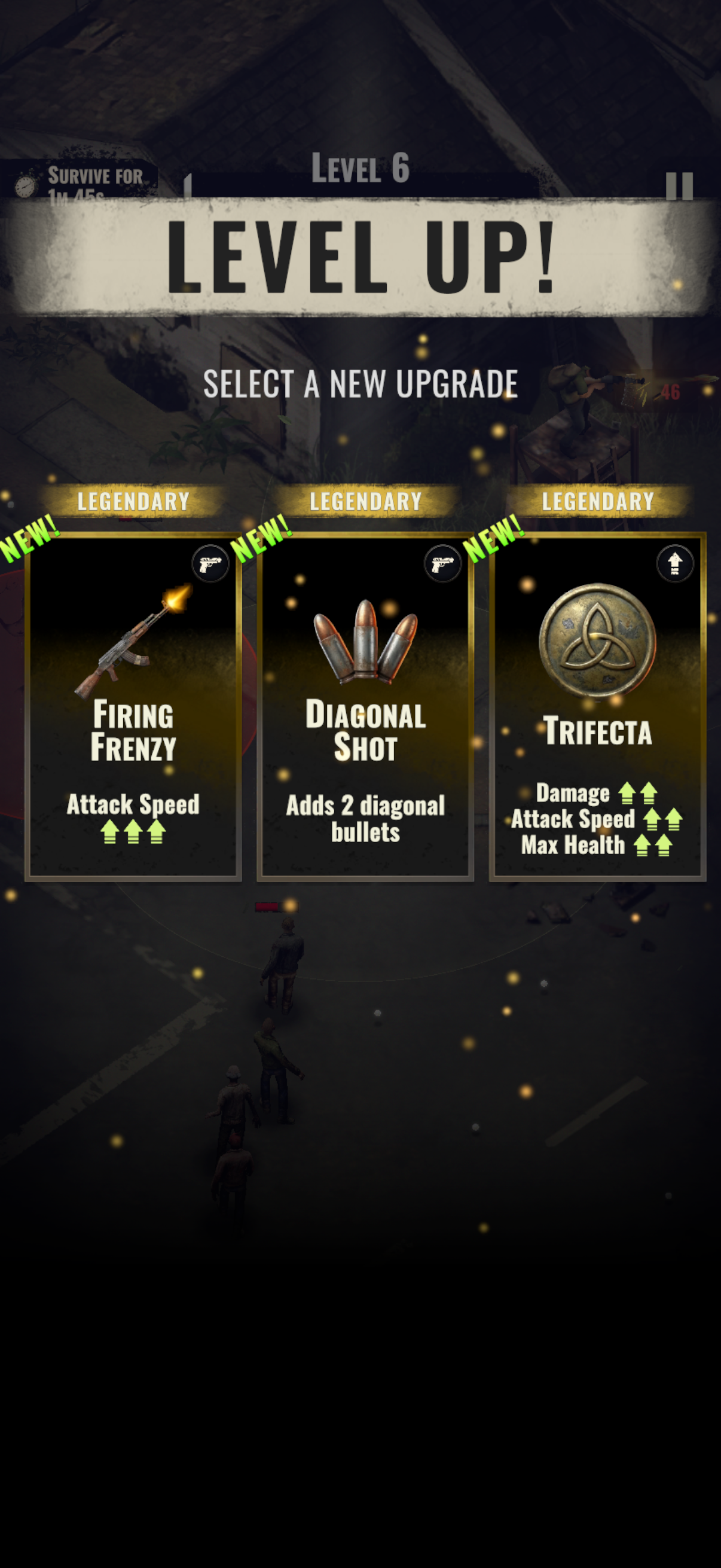
The Walking Dead: Aftermath is a mishmash of many different mobile game systems (more on that later), but at its core, it feels a lot like Vampire Survivors. In each chapter, you'll partake in either a single battle or a series of brawls (some of which culminate in a boss fight), using a single control scheme: a virtual joystick.
You'll move your character around the map to build objects like defensive towers and barbed-wire fences as hundreds of enemies flood it. Each enemy drops an XP kernel that can be picked up (or magnetized with the proper item), and leveling grants the player different rarity upgrades.
Similar to other bullet heaven games like Vampire Survivors, this is where the game shines. There are tons of builds to choose from in Aftermath, along with many advanced abilities that synergize with them. For instance, you can go with a throwing-knife build early, then transform it completely with upgrades and attack-frequency boosts.
What starts off as a slow-going build turns into a slaughterhouse ability later on in the run, which is exactly how these games should go. Runs start at roughly five minutes, which is just enough to introduce a bit of tension while keeping things light for a mobile game. You can fit in a run before or after your plans, which is typically how I played Aftermath throughout the review period.

After a few stages, you're given tougher enemies to manage, including armed humans, larger zombies, and arcadey concepts like explosive enemies. It's a very fun loop. After each run, you'll return to base, potentially earn gear, and unlock new perks that gradually increase your power level for future runs.
Unlocking new characters can be a blast too. If you've seen the entire show as I have, random characters from old and new seasons will pop up unexpectedly, some of whom offer up a completely different playstyle. Carl wields his father's revolver, while T-Dawg smashes enemies with a melee-style pipe.
Despite being framed around the AMC show, Aftermath will throw you some curveballs, mostly framed around rescuing or returning a member of Rick's crew. It kind of jumps around eras, but fans will enjoy pointing out all the references. The game starts to falter after a few chapters.
Once you've acclimated yourself to the core game, the free-to-play elements will start to come out in full force. At first, it's small time. During a run, you'll have the chance to re-roll an upgrade offer when leveling up by watching a video (or paying a premium currency, gems). Then, after the run, you'll be given a similar prompt for increasing rewards. The more you play, the more systems you unlock, which aren't always fun to deal with.
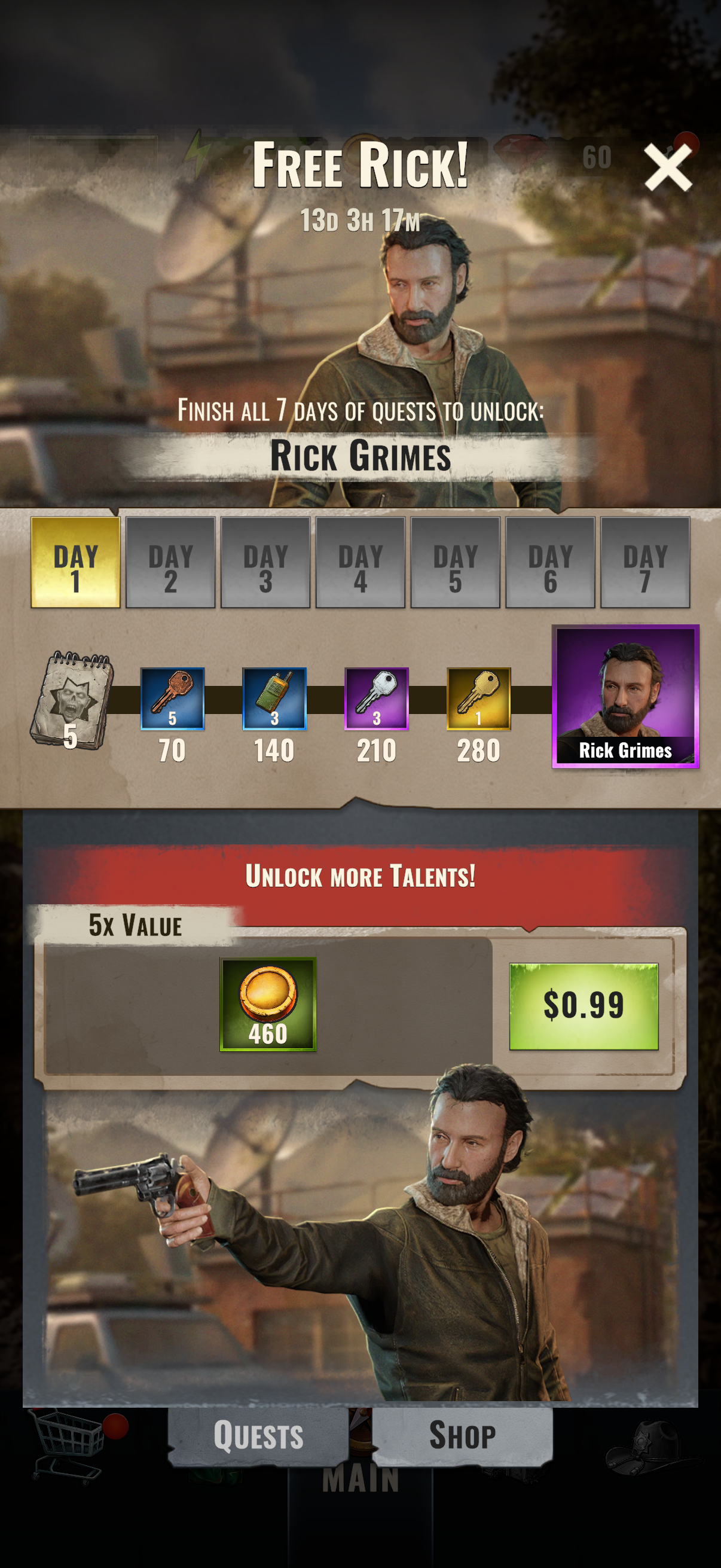
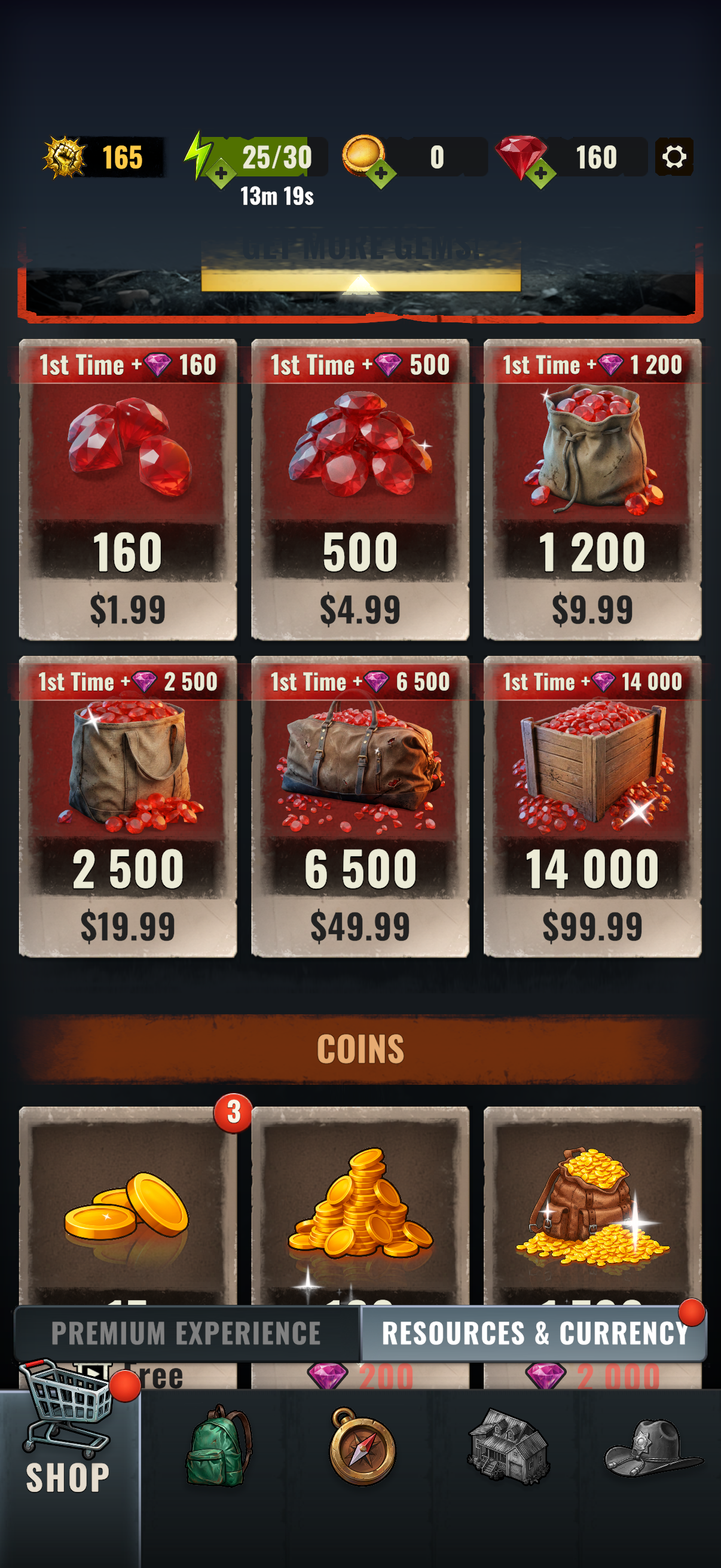
So where's the bad news? Well, The Walking Dead: Aftermath is stuffed with just about every mobile monetization scheme known to man since the early 2010s, and then some. Eventually, you're completely inundated with prompts and pop-ups for different game concepts, which really cut down on the time you spend playing the actual game. Given that the formula is actually pretty fun, that's a massive problem, especially for a horde-based zombie arcade game.
Here are a few of them:
- Multiple starter packs
- Gems
- Video-watching for rewards (including mid-run or after a run)
- Gear crates
- Pop-ups for currency (in menus)
- An energy system
- Gacha
Even just a few of these are a dealbreaker for some mobile gamers. With all of them, it's simply too much. I can get over a few of the free-to-play elements Aftermath employs, but when they all work in concert, it gets so annoying that I want to quit.
For instance, during a particularly fun run, I was asked right after if I wanted to double my earnings by watching a video. Then a new tutorial popped up for recruiting Michonne, which works just like a banner in a gacha game. Then my screen was interrupted by a currency pop-up. It's ads on top of ads on top of ads, and even if you go for the "premium experience" to skip all video ads, it's only a 30-day activation for $9.99.
This is a perfect opportunity for a complete Apple Arcade makeover. If the game were offered on the Arcade without microtransactions, I would play it for weeks on end. If that ever happens, I'll be there to check it out. In the meantime, it's hard to even play the game with all the visual clutter.
When you're actually in the game, blasting zombies and moving from locale to locale, Aftermath is fun. But then the monetization scheme pops up again, or my energy runs out, and it's time to either stop playing, wait, or pay.
If there were a way to buy The Walking Dead: Aftermath outright, I would do it. The developers have created a neat little take on the bullet heaven formula, and although it could use a little polish, it's no match for the substantial changes needed to make the monetization system less intimidating.

Systems

Released July 14, 2026
Developer(s) Swift Games
Publisher(s) Ares Interactive
Number of Players Single-player
Pros & Cons
- Interesting bullet heaven gameplay.
- Lots of references and characters for fans.
- Too many monetization elements.
- Energy brings the entire adventure down due to limiting play.
- Not enough forward motion to keep players interested long term.







 English (US) ·