
 4 weeks ago
20
4 weeks ago
20
Experts say it's worth getting your home's electrical systems checked first.
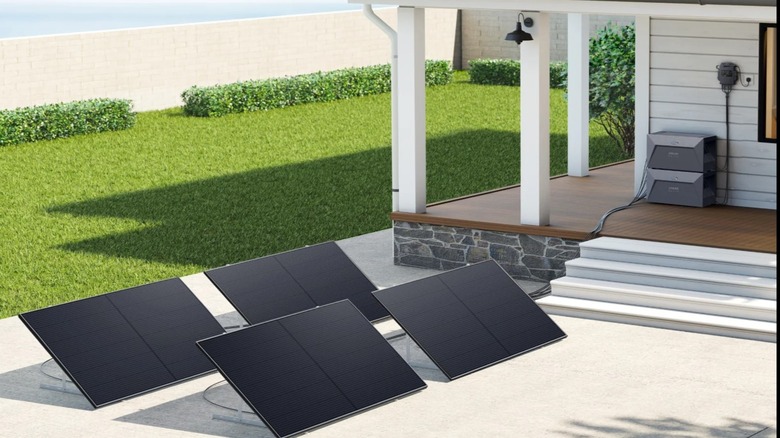
Anker Solix
In March, the UK announced it would end its longstanding ban on the sale and use of plug-in solar panels. And today, August 27, is the date that the various laws and regulations have changed, making it legal to buy and install a small solar setup yourself. The move has been in the works for a while as part of a raft of initiatives to reduce the nation's dependence on fossil fuels. It's a big move, and one that could help countless households reduce the cost of their power bills. Here's what you need to understand and, crucially, a note not to rush into this too soon for plenty of sensible reasons.
What is plug-in solar?
Unlike professionally installed systems, plug-in solar gear can be plugged into a standard wall socket. Rather than generating vast amounts of power, the idea is to use one or two panels, connected to your home via microinverter, for a trickle of extra juice. You won't be able to live off-grid with them, but might be able to cut some of the costs of your power bill. The modest cost of the hardware and the fact you don't need to pay a professional to install it should encourage adoption. Given how expensive energy is in the UK, even a small cost saving should be meaningful over time. And it may be the first chance many of the 5.4 million people living in apartments in the UK get to embrace the solar revolution.
Is it used anywhere else?
Plug-in solar is widely used in other European nations, but the most obvious example is Germany. Around half the German population rent their homes, a barrier to the widespread adoption of solar power. In 2019, Germany implemented Balkonkraftwerk (literally "balcony power plant") to allow renters to hang plug-in panels from their balconies. It added legal protections to this right in 2024, preventing landlords from objecting to their use. According to Germany's plug-in solar association, more than 1.2 million people have already installed systems.
What are the specs?
A legally-compliant plug-in solar system comes in two parts: solar panels and a microinverter. The former is like any other solar panel, but they'll be easier to install on balconies and other DIY-able areas. The latter, if you're unaware, is a unit converting DC electricity to AC, making it suitable to be connected to your home's electrical system.
The UK is aping Germany's example, limiting the size of these plug-in solar systems to avoid overwhelming its power grid. Inverter output is capped at 800 watts, which is the maximum amount of power that can be pushed into a home's electrical system. Depending on if you get one or two panels, there will be a higher upper limit on generation, but 800W is all you'll be able to use at one time. And it's worth knowing that even if a panel promises to generate 450W, you may not actually get that much depending on a number of factors.
When did things start to change?
When the Labour government won the 2024 election, it promised to supercharge domestic clean energy production. With the rationale of creating "energy independence from dictators like Putin," it committed to tripling solar generation by 2030. In June 2025, it outlined its solar roadmap, where it pledged to "explore [the] potential" of plug-in solar installations. One month later, it commissioned a safety study to look into the feasibility of widespread use. Then, on March 24, 2026, the government said it would make plug-in solar available to buy "within months." The government said it would work with regulators and infrastructure providers to update the relevant rules.
Why did the UK resist plug-in for so long?
The UK's rules around solar power are so strict that only professionally installed systems are legal. But successive administrations have held back on even looking at changing the rules for plug-in systems. When asked by Engadget earlier this year, a government spokesperson refused to answer the question directly but it appears the concern was around safety. A report from electrical industry website efixx suggests it's the way the UK's system was set up that there were more risks than for European plugs.
Wait, are our homes unsafe?
The Institution of Engineering and Technology (IET) is the body which is the authority on electrical installation. In partnership with the British Standards Institute (BSI), it maintains and publishes the British Standard focusing on electrical installations. Earlier this year, it carried out research into the electrical safety of British homes and how confident homeowners were. The results were concerning, with fewer than a third running the required annual check to ensure their systems were safe.
More importantly, it revealed a number of bad habits which are commonly the cause of major electrical fires in homes. This included a cavalier attitude to leaving chargers running for extended periods of time and using visibly-damaged sockets. Alarmingly, almost 20 percent of respondents said they daisy-chained extension cords, a serious fire risk. It pointed to data from charity Electrical Safety First, which said more than half of all house fires are caused by misused or faulty electrical equipment.
Are there any other technical hurdles?
According to the IET's Mark Coles, there aren't just hurdles to overcome, but issues so vast as to potentially derail the entire concept of plug-in solar in the UK. Coles is the IET's head of technical regulations who has been developing standards for more than two decades. He said it "was a surprise to hear the announcement from the government," and shared grave misgivings about the implementation of the program. In fact, the same day the government announced its plan to open up plug-in solar, the IET issued a warning. As well as reminding consumers that the systems aren't yet legal, it urged people to get their home's wiring checked out by a professional. "What may be safe in one home may pose a significant risk in another," it said, "professional verification is the only way to be sure."
For instance, the UK standards around Residual Current Devices (RCDs) were designed for one-way electrical traffic. "Think about your circuit breaker, your fusebox, you've got an electrical supply coming in, and cables going out to feed your appliances," he said. When you put electricity on the final circuit, traveling in the opposite direction, you "can burn out the device because it's not designed to take an electrical supply on that side." It was only a few years ago that the UK opened up to bi-directional RCDs which can take two-way traffic, but even now, the older hardware is still "for sale now, still being installed now." This isn't just about an inconvenience to your wiring, either, since if an RCD fails, it could be fatal.
Coles added that, as much as Germany's system has been lauded, it was able to launch on the basis of decisions made several decades prior. The wiring, plugs and consumer units in Germany are two-pole which is overall less safe than the British version, but much easier to accept power in from both ends. By comparison, "the plugs and sockets in the UK are not suitable for plugging an electrical source in," said Coles. He added the rules covering British plugs "very clearly says you shall not plug in a low-voltage generating set [which is what a plug-in solar system is]." He also expressed concerns that as there was no universal standard for plug-in solar units, it would be impossible to offer certainty to regulators and consumers. And, as an additional risk, insurers may not pay out in the event of a fire given using such a system would break the rules around safe plug use.
If someone is still interested in getting a plug-in system, Coles advises them to get their wiring checked out by a qualified electrician. And, crucially, to brace themselves for the potential that they won't be able to use it unless they have some or all of their home's electrical systems re-wired at significant cost. "It isn't just as simple as going to buy this unit and plugging it in," he said.
Luke Osborne, technical director at Electrical Safety First, added his concerns around the issue of new technology coming into contact with older wiring. "Plug-in solar panels may negatively impact protective devices such as RCDs, which protect against electric shock," he said. He also called for the government to "give clarity on how it will address these concerns," to ensure "the UK boasts the best and safest solar panel roll out in Europe."
Hang on, what about this website I've found...
In the months between the initial announcement and the implementation date, there has been a lot of uncertainty. And some people have done their best to take advantage of that ambiguity. For instance, there were retailers already using phrases like "Plug in Solar" in their product descriptions. In some instances, the detail that those systems cannot actually be installed yourself is nestled in a separate tab. On reseller platforms like Facebook Marketplace, Engadget found a listing for kits on sale claiming that these systems were legal before today's changeover. This listing dangerously suggests that all a user does not need to use a qualified electrician if they know how to wire in a cable to a plug socket. On eBay, there are listings with product renders of microinverters plugged into power sockets, with the claim "No electrician needed from July 2026" in the description.
So, what do I do? I wanted to do my bit and save some money!
Fortunately, the government has teamed up with major UK retailers who will be selling legally compliant kits. That includes Argos, Currys and Wickes, and we'll likely see systems emerging from major manufacturers like EcoFlow and Anker Solix in the coming months.
Given the data from the IET, it's likely your home's electrical systems haven't been checked in a while anyway. So it would make sense to get someone to check your wiring to make sure you're safe, and then to wait for these legitimate systems to become available. Being patient now may save you an expensive call with your home insurers should you choose to sprint ahead.






 English (US) ·