

Published Mar 9, 2026, 2:00 PM EDT
Jazmin Kylene is a Miami-bred writer and editor with a decade-long career that spans all editorial genres, though she has a particular passion for music journalism. Upon graduating Florida Atlantic University with a degree in Multimedia Journalism, she went on to write dozens for outlets and interview counless artists.
When Jazmin isn't typing the day away, she enjoys exploring nature, taking dance classes, going to the movies, and hanging out with her besties (mom and dog.) You can find her on Instagram @JazminKylene.
At one point in time, Bob Dylan was one of the most important voices in music. He was demanded from every crevice of the world, his music moving the masses. However, like many others who have risen to the great heights of fame, tragedy struck at the exact moment in which things seemingly couldn’t have gotten any better.
On July 29, 1966, near his home in Woodstock, New York, Dylan was involved in a motorcycle crash that halted his career. At only 25 years old, Dylan was at the absolute peak of his global fame, having just released the iconic double album, Blonde on Blonde. Suffering from neck injuries and breaking several vertebrae before vanishing for some time, here’s a deeper look into the accident that changed everything, and why there still remains speculation around the truth.
The Story Behind Bob Dylan’s Motorcycle Crash
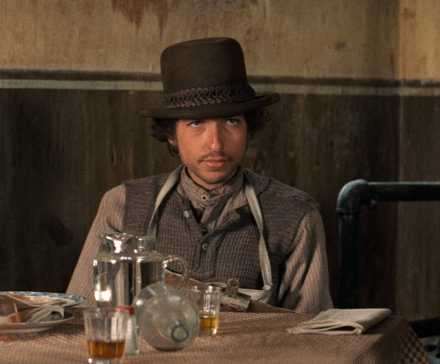
 Image via PBS
Through the ‘60s, Bob Dylan was an unstoppable force. The rock industry was particularly demanding, and Dylan was willing to give himself entirely to it. However, when he crashed his Triumph Tiger 100 motorcycle on some twisty roads near his Woodstock home, that momentum came to a screeching halt. Many wondered if he was dead, as there was little to no communication from him for some time following the incident. After the accident, Dylan canceled all scheduled shows, made very few public appearances, and stopped touring for nearly eight years, until he returned to the stage in 1974.
However, to many theorists, Dylan may not have shared the whole truth regarding what truly happened. Using the lack of any official medical records as fuel, some argue that it was staged to escape the pressures of fame or to detox from drugs, given the intensity of Dylan's lifestyle at the time. The crash gave him an opportunity to vanish from the public eye for some time, allowing him to collect himself and recalibrate. During this time period, he was being demanded by the entire world without pause. After nearly five years of nonstop touring, Dylan was visibly physically and mentally exhausted.
Related
Bob Dylan's Greatest 1970s Album Contains Some of His Most Ruthless Lyrics
This Bob Dylan album remains one of his most honest and raw works to date.
The accident also happened just a couple of months after he concluded the rigorous 1966 world tour, which was its own source of stress. Dylan had shifted from acoustic folk to electric rock, and this wasn’t a unanimously supported decision. It would make sense that he desired to step away, especially after being hailed “the voice of a generation,” which was something he deeply resented. He was arguably the most scrutinized musician in the world, and the motorcycle accident (staged or not staged) gave him permission to just be human. He was able to focus his attention on his wife, Sara Lownds, and their young, blooming family.
A New Creative Era
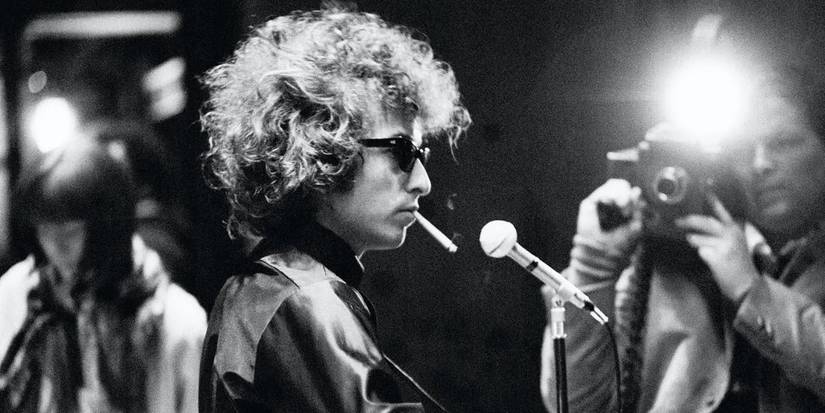 Image via Leacock-Pennebaker, Inc.
Of course, according to Dylan, the conspiracy theories were blatant lies. The incident was a traumatic experience and nothing to theorize about. Yet, the forced time away allowed for some creative exploration that served as a blessing in disguise. During his retreat from the chaos of the spotlight, he musically returned to the rootsy folk and Americana that he controversially had strayed from after experimenting with electric instruments. This era produced influential songs like “I Shall Be Released” and “This Wheel’s on Fire,” as well as the stripped-down 1967 album John Wesley Harding. Many critics call the crash “the pivot of Dylan’s career,” with more quiet giving him the opportunity to return inward and hear the music his spirit was longing to create. He began to stray away from his protest-singer era and instead center himself on work much more vulnerable.
While the world suffered from his absence, Dylan wrote in his own words that the crash helped him escape the pressures of fame. “Truth was that I wanted to get out of the rat race,” he noted in his 2004 autobiography Chronicles. Without it, many historians suggest that Dylan would have burned out under the relentless pace of the 1960s rock industry.
So did the crash really happen? Or were the injuries truly as exaggerated as fans assumed, prompting Dylan to use the incident as an excuse to escape from the torturous demand of fame, drugs, and touring pressure? Biographers argue that the truth likely lies somewhere in the middle. There’s little doubt that the crash truly did happen, though Dylan seemingly seized the opportunity as a chance to withdraw from everything overwhelming him and come back home to himself. Looking back at the art that emerged from the era, it certainly worked out for the best.






 English (US) ·