
 3 days ago
6
3 days ago
6
Pick up a Sony a7 V. Now pick up a Canon EOS R6 Mark III. Now a Nikon Z6 III. All three cameras launched in 2025. All three hit roughly the same resolution. All three offer comparable autofocus performance, similar video capabilities, equivalent build quality, and nearly identical ergonomics. They are, for most practical purposes, the same camera wearing different logos.
This is the dead end the camera industry has been speeding toward for years. When every full frame mirrorless body delivers 90 percent of the same features at 90 percent of the same price, what remains to compete on? Brand loyalty and marginal spec advantages, neither of which constitutes a sustainable business strategy in a market that has contracted by two-thirds since its 2012 peak. About 6.61 million interchangeable-lens digital cameras shipped in 2024. The casual buyers are gone, absorbed by smartphones. What remains is a concentrated pool of enthusiasts and professionals who increasingly cannot tell the major systems apart. Of course, lenses remain a differentiator, but even those are reaching a point of extreme competency for all but the most devoted enthusiasts and professionals.
The logical response to this situation is not to build a better spec sheet. It is to stop competing on the spec sheet entirely. The most interesting cameras of the last 18 months understood this. They did not try to win the feature war. They opted out of the war altogether, choosing to compete on axes where they would face no real competition. The results were some of the strangest and most compelling cameras we have seen in years.
Competing on Format, Not Features
If you cannot beat Sony and Canon at their own game, change the game. Fujifilm understood this better than anyone in 2025, and their answer was not to build a better full frame camera. Their answer was to make full frame irrelevant.
The Fujifilm GFX100RF is a 102-megapixel medium format camera with a fixed 35mm f/4 lens and a body that weighs just 735 grams. That weight is lighter than Fujifilm's own GFX 50R body without any lens attached. For $5,599, you get a sensor 1.7 times larger than full frame, a leaf shutter that syncs with flash at any speed, a dedicated Aspect Ratio Dial offering nine different frame shapes, including panoramic formats like 65:24, and machined aluminum construction that feels like it belongs in a museum case. What you do not get is a lens mount, autofocus points scattered across the frame for subject tracking, or 8K video. The GFX100RF is not trying to do everything. It is trying to do one thing: deliver medium format image quality in a body you can carry all day, and it does that thing better than anything else on the market.
The strategic brilliance here is that you cannot compare the GFX100RF to an a7 V. They are not playing the same game. Sony's camera wins on versatility, autofocus sophistication, and video capability. Fujifilm's camera wins on sensor size, portability relative to its format, and the intangible pleasure of using a purpose-built tool. These are different products for different photographers, which means Fujifilm carved out a market segment where Sony cannot follow without building their own medium format system from scratch.
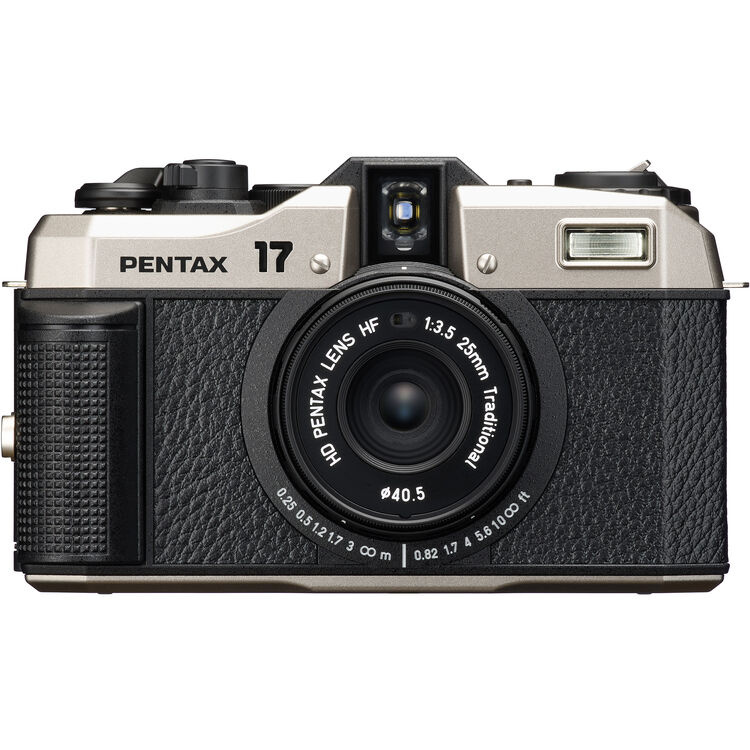 Ricoh took this logic even further with the Pentax 17. Where Fujifilm changed the sensor size, Ricoh changed the entire medium. The Pentax 17 is a brand-new 35mm half-frame film camera, not a reissue or a rebrand but a genuinely new product developed from the ground up. Film represents a rounding error in the overall camera market. Half-frame is an even smaller niche within that already tiny segment. On paper, the Pentax 17 should not exist. In practice, initial demand outstripped supply, and it was difficult to buy for months, generating more positive press for the Pentax brand than anything the company had done in a decade.
The Pentax 17 competes with nothing because nothing else occupies its category. There is no spec sheet to lose on when your competitors are used cameras from the 1970s and expired film stocks. Ricoh identified an audience that the digital arms race had completely abandoned: photographers who wanted to slow down, who found creative liberation in constraints, who were tired of chimping and pixel-peeping and endless post-processing. That audience turned out to be larger than anyone expected.
Competing on Experience, Not Capability
Format changes are one escape route from the spec war. Another is to reject the premise that more capability equals a better camera. Two of 2025's most divisive releases took this approach, building cameras that were deliberately less capable than their competitors and positioning those limitations as features.
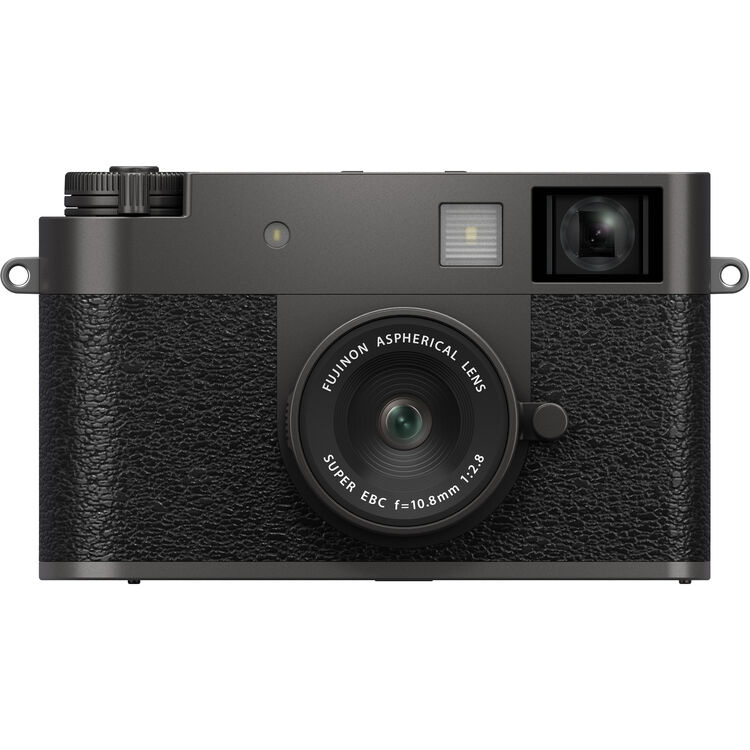
The Fujifilm X Half uses a Type 1 sensor, smaller than Micro Four Thirds, with a 3:4 vertical aspect ratio inspired by half-frame shooting. In an era when smartphone manufacturers brag about computational photography and camera companies trumpet 40-megapixel resolutions, Fujifilm shipped a product optimized for Instagram stories. The X Half does not shoot raw files. The resolution is modest. The controls are simplified to the point of being rudimentary. By every conventional metric, this is a worse camera than options costing half as much.
That assessment misses the point entirely. The X Half is not competing on image quality. It is competing on feeling. The target buyer is not a photographer looking for the best tool. It is someone who wants to enjoy taking pictures again, someone who has been ground down by the endless optimization of modern camera systems and wants permission to stop caring about sharpness and dynamic range. The X Half hit number one on Japan retailer Map Camera's monthly rankings and stayed there, succeeding not despite its limitations but because of them. Fujifilm understood that "fun" is a product attribute that does not appear on spec sheets but nonetheless drives purchasing decisions. You can count me as one of those users who has a blast using the camera.
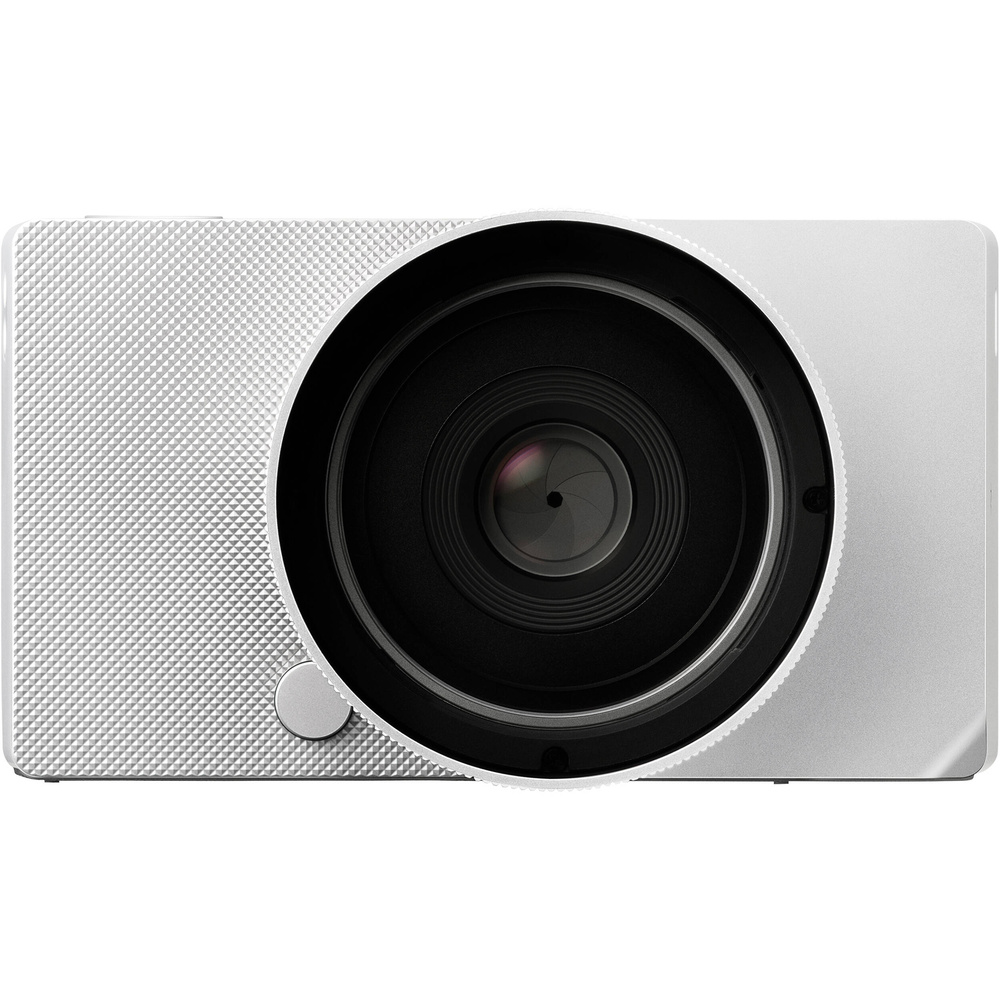
 The Sigma BF pushed this philosophy even further. The camera operates with a single dial and no optical viewfinder. It is styled in a way that bears almost no resemblance to conventional camera design, embodying what CEO Kazuto Yamaki once called "Beautiful Foolishness." The sensor choice makes flash synchronization impractical. By the standards of the spec-sheet competition, the BF fails before it even starts.
But Sigma was not building for the spec-sheet audience. They were building for people who find modern cameras intimidating, people who want fewer menu options rather than more, people who believe that constraints breed creativity. This is a small audience, but it is an audience that Sigma has cultivated across multiple generations of unconventional products like the fp and SD Quattro series. The BF will never sell in volume. It exists to signal what Sigma stands for and to build brand equity that pays dividends when those same shooters consider Sigma lenses for their main systems.
What This Means for the Market
The camera industry is fragmenting, and that fragmentation is healthy. For years, the major manufacturers converged on a single template: full frame sensor, DSLR-derived ergonomics, ever-expanding feature sets, prices climbing toward $3,000 and beyond. This template served professionals and serious enthusiasts well, but it left enormous gaps in the market. Photographers who wanted simplicity had nowhere to go. Photographers who valued character over clinical sharpness were told to adapt. Photographers who found joy in constraints were treated as eccentrics.
 The cameras of 2025 proved that these audiences exist and that they have money to spend. The Fujifilm X100 series provides the precedent. When the original X100 launched in 2011, it was a weird camera: a fixed-lens compact with a hybrid viewfinder at a time when everyone assumed the future belonged to interchangeable-lens systems. That weird camera found an audience, that audience grew with each generation, and by 2024, the X100VI had become arguably the most important camera in Fujifilm's lineup, generating demand so intense that units sell above retail on secondary markets. What started as a niche experiment became a flagship product.
The path forward for the industry is not better specs. It is better segmentation. Canon has been rumored to be developing a retro-styled body paying tribute to the AE-1 era. Ricoh has announced that the GR IV Monochrome is in development. The manufacturers who thrive will be the ones who understand that a camera trying to please everyone ends up pleasing no one, while a camera built for a specific vision attracts passionate buyers who do not cross-shop on price.
Finding Your Axis
The question for photographers is no longer "which camera has the best specs?" The specs have converged to the point of irrelevance for most shooting scenarios. The question is now "what kind of photographer am I, and who is building for me?"
If you want medium format portability, Fujifilm built the GFX100RF. If you want to rediscover film, Ricoh built the Pentax 17. If you want to remember why photography is fun, Fujifilm built the X Half. If you want radical simplicity, Sigma built the BF. None of these cameras will win a specification comparison against a Sony a7 V. All of them offer something the a7 V cannot provide.
The shrinking market forced this reckoning. When you cannot grow the pie, you carve out defensible slices.








 English (US) ·