
Sony Inzone E9: Two-minute review
Sony makes it very clear who the Inzone E9 in-ear gaming headphones are for. Developed in partnership with eSports team Fnatic, these wired in-ear monitor (IEM) style earbuds are squarely aimed at competitive first-person shooter (FPS) players or those with a generous budget aspiring to become one.
The Sony Inzone E9 headphones are highly comfortable to wear and come with a superb carrying case, but the unapologetically flat sound is not going to help cutscenes or action sequences sound their best. The GameBuds, or even Sony’s own but more expensive Inzone Buds, are clearly better choices, but it's hard to fault the Inzone E9 in-ear gaming headphones for that, as that’s obviously not what they’re for.
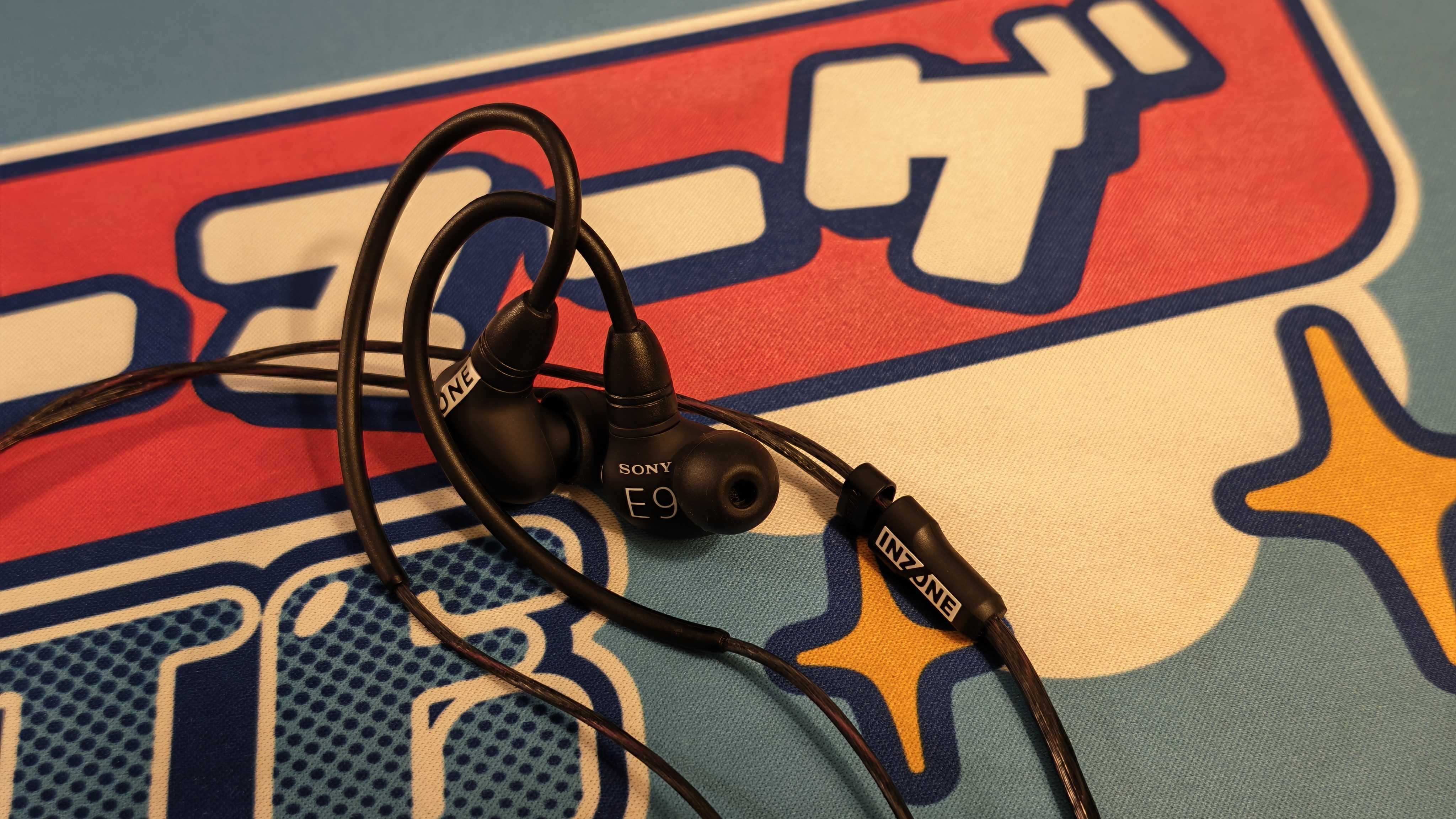
They really come into their own in a competitive first-person shooter (FPS) setting, pairing well with games like Counter-Strike 2, Valorant, and Call of Duty: Black Ops 7. Here, the lack of bass prevents explosion and gunfire sound effects from overwhelming your senses, allowing you to focus on the impressive directional reproduction instead. The direction of key audio cues like footsteps is crystal clear and remarkably easy to discern, potentially giving you an advantage over those without such specialised audio gear.
The noise isolation is exquisite, thanks in no small part to the excellent seal of the headphones in your ears. A plethora of ear tips is included in the box to make it easy to find the perfect fit, and the included USB-C audio box stores EQ profile settings to make for a hassle-free setup every time - ideal if you’re competing in tournaments and need to access the same settings on a new machine.
Sony Inzone E9: Price and availability
- $149.99 / £129 / AU$209
- Available directly via Sony
- Also at a range of retailers including Amazon
The Sony Inzone E9 in-ear gaming headphones are priced at $149.99 / £129 / AU$209. This is a significant investment for a pair of wired gaming earbuds, with top wireless options like the SteelSeries Arctis GameBuds costing not much more at $159.99 / £159.99 / AU$359.
In addition to traditional gaming options, the Sony Inzone E9 in-ear gaming headphones are also competing with the pricey in-ear monitor (IEM) earbuds favored by some FPS players. Here they come in at a very similar price to relatively affordable models from other big brands, such as the $149.99 / £129.99 Sennheiser IE 200. The Sony Inzone E9 in-ear gaming headphones are made specifically for gaming, however, setting them apart from most of the market and helping to justify the price.
The Sony Inzone E9 in-ear gaming headphones are available directly via Sony in the US and UK. They can also be found at a wide range of retailers, such as Best Buy in the US or Amazon in the UK. In Australia they’re in stock at both JB Hi-Fi and Harvey Norman.
Sony Inzone E9: Specs
Swipe to scroll horizontally
Price | $149.99 / £129 / AU$209 |
Weight | 0.16oz / 4.7g |
Compatibility | PS5, PS4, Xbox Series X and Series S, Xbox One, PC, Nintendo Switch, Nintendo Switch 2, mobile |
Connection type | Wired (3.5mm / USB-C with audio box) |
Battery life | N/A |
Features | USB-C audio box, spatial audio |
Software | Inzone Hub (PC) |
Sony Inzone E9: Design and features
- IEM style design
- Included USB-C audio box stores settings
- Fantastic carrying case
The Sony Inzone E9 in-ear gaming headphones will have a familiar design if you’ve used a pair of IEM earbuds before.
They’re lightweight, with rounded earbuds connected to a rigid section of cable that hooks around the top of your ears. Two colorways are available: black and white. Both are rather plain, but the abundance of Inzone logo branding printed on the earbuds does give them some character.
Sony has definitely made some smart decisions when it comes to practicality, particularly with the length of the headphone’s cable. At 5.9ft / 1.8m, I found that it was more than long enough to comfortably reach my ears directly from my gaming PC’s 3.5mm headphone jack without the need for a cable extender. If you play on a console, you won’t have any issues hooking it up to your controller.
I also appreciate the clear left / right marking that’s printed on each earbud, with the latter presented in a bright red that makes it easy to spot at a glance.
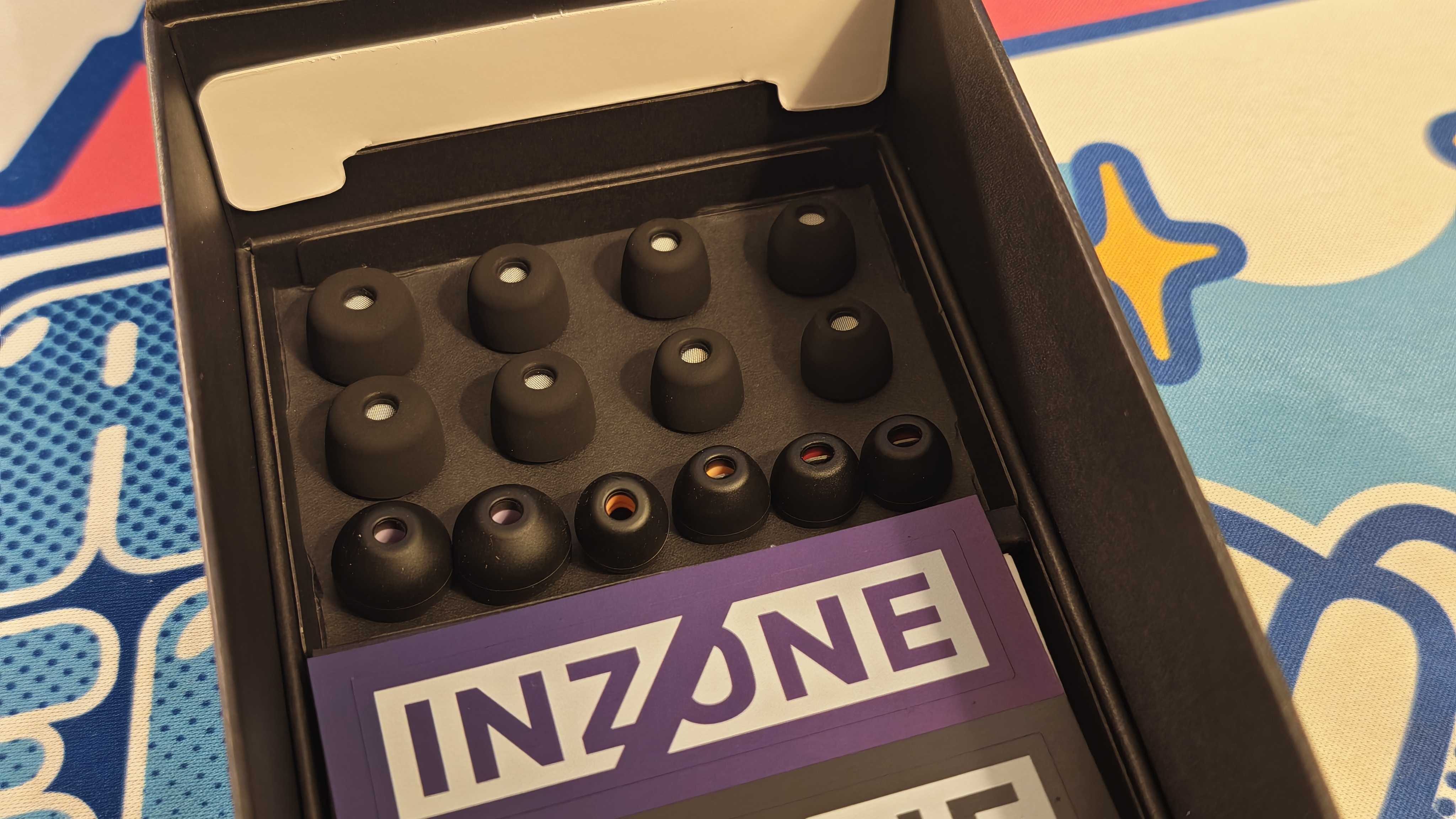
A wealth of alternate ear tips come in the box, with a total of eight pairs to choose from. This includes standard silicone rubber ear tips and more foamy noise isolation earbud tips, both in four sizes (ranging from extra small to extra large). These are Sony’s widespread EP-EX10A and EP-NI1010 series tips - so replacements are easy to find if you need them later down the line.
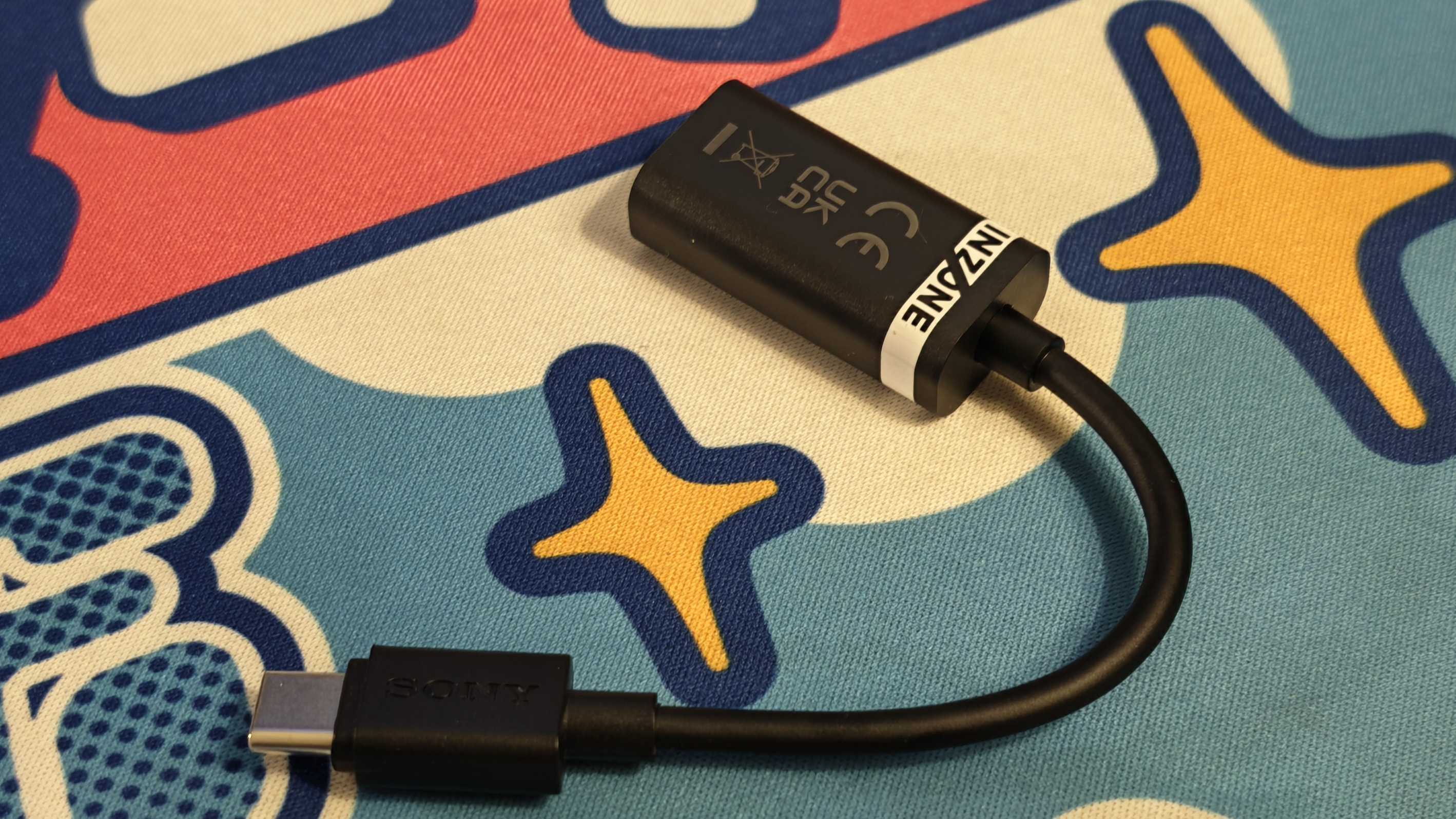
You get a USB-C audio box for use with PCs, too. This can be used to store settings from the compatible Inzone Hub software, like your desired equalizer pre-sets or custom profiles. It also lets you use a dedicated spatial sound mode, giving a good impression of sound in a 3D space, albeit at the cost of some overall fidelity.
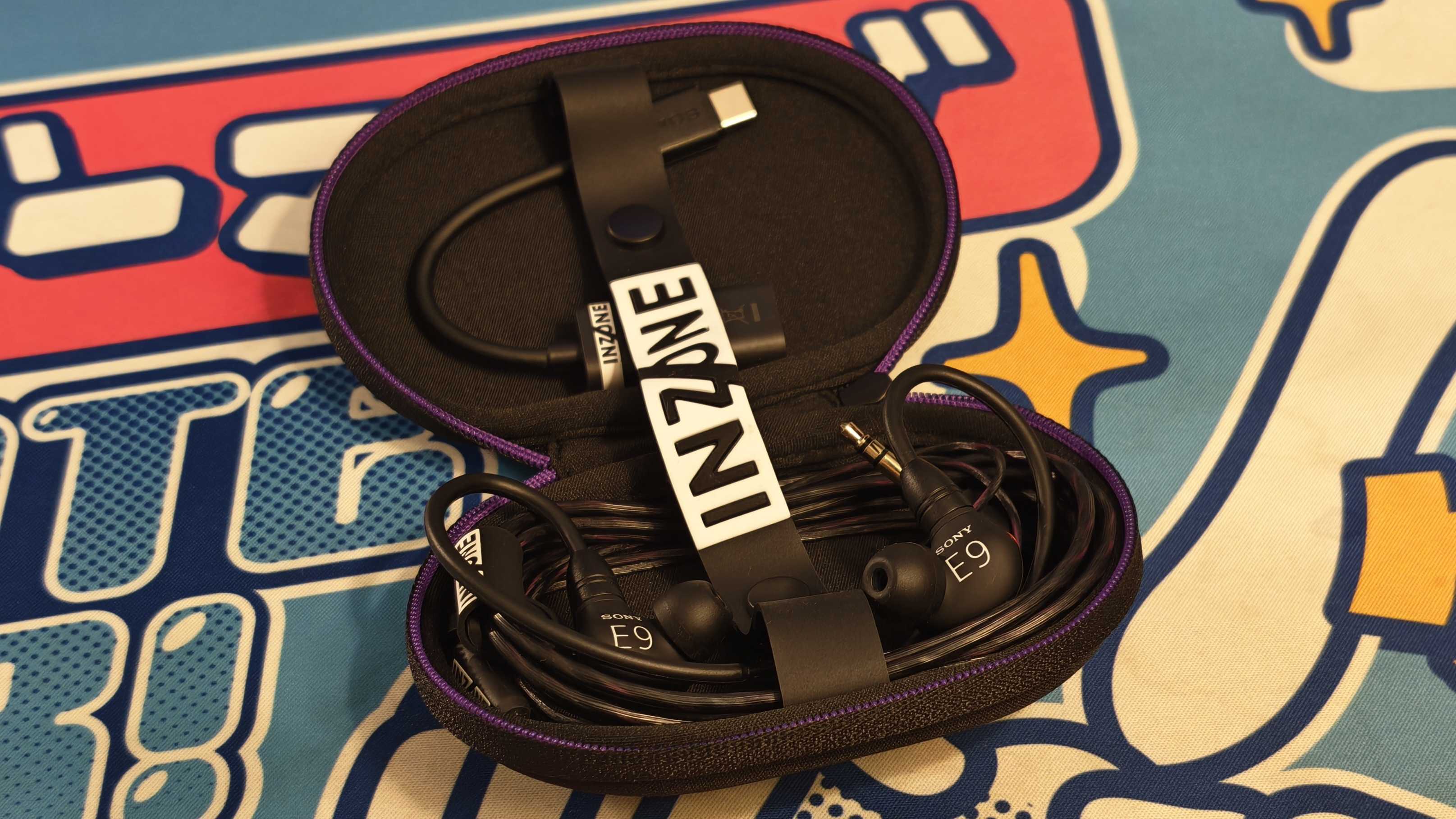
Between uses, you can store everything in the included carrying case that benefits from a surprisingly unique design. It’s divided into two compartments (one for the earbuds and the other for the audio box) joined together by a springy rubberized strip.
The underside of the strip has little magnetic buttons, clipping down to keep everything in place. It might be a bit hard to imagine, but it works really well and is much more practical than the cheap pouches included with most earbuds these days.
You also get a little Inzone-branded cable tidy, which is a neat bonus.
Sony Inzone E9 review: Performance
- Clear sound
- Highly tuned for FPS games
- Underwhelming with other genres
The Sony Inzone E9 in-ear gaming headphones have quite a flat sound profile out of the box, though this is presumably intentional. There’s not a lot of bass leading to quite an unexciting sound. Playing through some Metal Gear Solid Delta: Snake Eater and Assassin’s Creed Shadows on PS5, key story moments felt a tad muted with the backing music missing the punch needed to really drive the emotion home.
You can address this somewhat by tweaking the EQ settings in the compatible Inzone Hub software, but there’s only so much that you can do to increase the bass on hardware that’s not designed for it. For story-focused games, the results were never punchier than what you get out of the box with the SteelSeries Arctis GameBuds and far less effective than even cheap wired over-ear sets like the Corsair HS50.
This lack of bass makes a lot more sense when you jump into a competitive shooter like Counter-Strike 2. Flashbangs and grenades are no longer overwhelming and don’t threaten to deafen you if you’re playing at higher volumes. Gunfire is more subdued, helping you stay focused in firefights.
The sound is crystal clear too, with an impressive level of directionality that makes it easy to track enemy movements using key sounds like footsteps. It’s very impressive, especially given how well the effect holds up in more frantic situations. Diving into an explosive match of Nuketown in Black Ops 7, I was able to accurately hear where nearby opponents were moving, even against the constant barrage of explosions conjured by grenades and killstreaks.
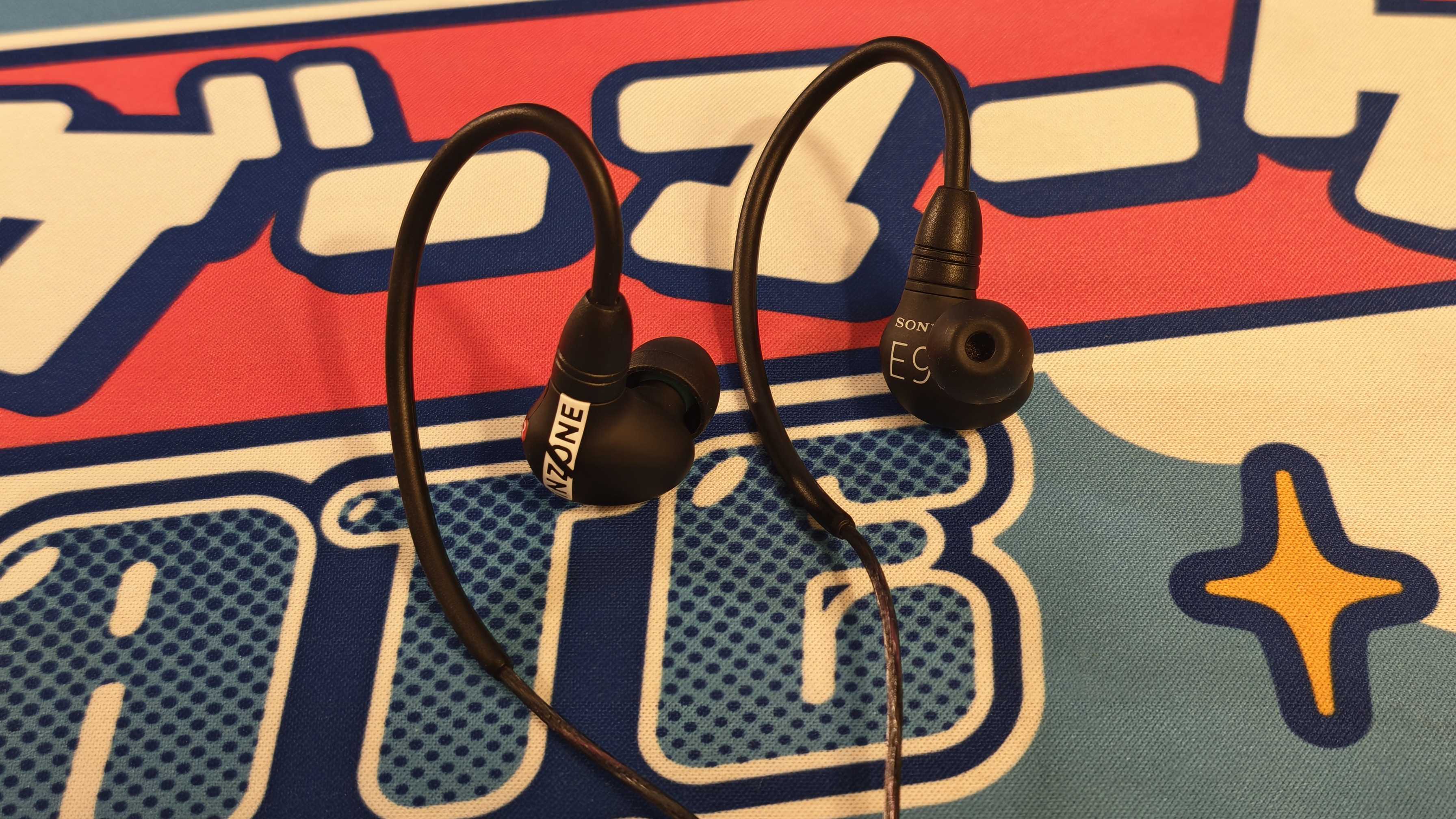
The detail is excellent, which is borderline essential in tense extraction shooters such as Escape From Tarkov, where being able to discern the subtle snapping of a twig can often mean the difference between life and death. If you’re currently one of the many people devoting every waking moment to Arc Raiders, I could see the Sony Inzone E9 in-ear gaming headphones being worth the asking price on this fact alone.
Despite offering no active noise cancellation (ANC), the Sony Inzone E9 in-ear gaming headphones do a commendable job of blocking out background noise by virtue of the strong seal of their fit. No, it’s not as effective as the ANC of the SteelSeries Arctis GameBuds, but it is good enough to drown out household sounds and conversations with the volume set at a decent level.
Although very uncommon in the IEM market, I’m also a little disappointed that the Sony Inzone E9 in-ear gaming headphones don’t come with a small built-in microphone. It’s not a dealbreaker by any means, but it did mean that I had to reach for my Final VR2000 gaming earbuds when I wanted to chat with a friend while playing an Xbox Series X game.
Should I buy the Sony Inzone E9 in-ear gaming headphones?
Buy it if...
You’re a die-hard FPS fan
If you’re an FPS-head shopping for a pair of earbuds that you want to use exclusively to play the latest shooters, then the Sony Inzone E9 in-ear gaming headphones could be a very worthwhile investment.
You want every possible advantage
The directionality offered by the Sony Inzone E9 in-ear gaming headphones is excellent and could mean the difference between a win and a loss in a competitive gaming setting. Pick up a pair if you want to ensure you have every possible advantage.
Don't buy it if...
You want a general use pair
The flat sound profile of the Sony Inzone E9 in-ear gaming headphones means that they’re not ideal for general use. At this price, there are loads of strong alternatives if you want something designed for a wider selection of genres with a microphone to help you chat with friends.
Also consider...
Not sure whether the Sony Inzone E9 in-ear gaming headphones are worth it for you? Check out these two compelling alternatives.
Swipe to scroll horizontally
| Row 0 - Cell 0 | Sony Inzone E9 | SteelSeries Arctis GameBuds | Sony Inzone Buds |
Price | $149.99 / £129 / AU$209 | $159.99 / £159.99 / AU$359 | $199 / £179.99 / AU$249 |
Weight | 0.16oz / 4.7g | 0.19oz / 5.3g (each bud); 1.7oz / 48.7g (case) | 0.2oz / 6.8g |
Compatibility | PC, Xbox Series X and Series S, Xbox One, PS5, PS4, Nintendo Switch, Nintendo Switch 2, Mobile | GameBuds for PlayStation: PS5, PS4, Nintendo Switch, PC, Mac, Meta Quest 2/3, mobile; GameBuds for Xbox: Xbox Series X|S, Xbox One, PS5, PS4, Nintendo Switch, PC, Mac, Meta Quest 2/3 | PS5, PS4, PC, Nintendo Switch, Mobile |
Connection type | Wired (3.5mm / USB-C with audio box) | 2.4Ghz (via USB-C), Bluetooth 5.3 (mobile) | 2.4GHz wireless (via dongle), Bluetooth 5.3 |
Battery life | N/A | Up to 40 hours (buds 10 hours; case 30 hours) | Up to 24 hours (buds 12 hours; case 12 hours) |
Features | USB-C audio box, spatial audio | 360° Spatial Audio, Qi Wireless Charging Case, 6mm neodymium drivers, four-mic ANC, transparency mode, in-ear detection/sensor, IP55 rating, fast charge, companion app with more than 100 presets | 360 spatial sound, optimization for your ear, tap controls. 8.4mm drivers, IPX4 waterproof |
Software | Inzone Hub (PC) | Arctis Companion App (mobile), SteelSeries Sonar (PC) | Inzone Hub (PC) |
SteelSeries Arctis GameBuds
The SteelSeries Arctis GameBuds are a brilliant all-rounder. They’re wireless, compatible with most platforms, and offer superb sound that can be fully customized to your liking. They have microphones for chatting, plus effective ANC built in.
For more information, check out our full SteelSeries Arctis GameBuds review
Sony Inzone Buds
If you’re shopping for something specifically in the Inzone product line but don’t care about competitive FPS games, then the more general Inzone Buds are a better pick. They offer spatial sound, ANC, and a low-latency wireless connection.
For more information, check out our full Sony Inzone Buds review
How I tested the Sony Inzone E9 in-ear gaming headphones
- Tested for nearly three months
- Used with a wide range of platforms
- Compared to lots of other products
I tested the Sony Inzone E9 in-ear gaming headphones over a period of roughly two and a half months. During that time, they were my primary gaming earbuds across all of my usual platforms. This included PS5, Xbox Series X, and PC.
I tried the earbuds with a wide selection of games, ranging from story-based titles such as Assassin’s Creed Shadows and Metal Gear Solid: Snake Eater to some of the most popular FPS games like Call of Duty: Black Ops 6, Black Ops 7, Valorant, and Counter-Strike 2.
Throughout my time with the earbuds, I compared their performance to my hands-on testing of a wide range of other gaming audio devices across the price spectrum.
First reviewed December-January 2026




 English (US) ·