
 3 weeks ago
80
3 weeks ago
80

Published Aug 10, 2026, 6:00 AM EDT
A dazzling anime that finds humanity inside its most bizarre ideas
 Image: Flint Sugar/Bilibili
Some anime announce themselves through spectacle, arriving with explosive animation and ideas so strange they immediately demand attention. But the best of them understand that spectacle alone is only a starting point; beneath the chaos, the most memorable series are the ones that find something deeply human to say.
That's what makes False Memory (also known as Memory Management Bureau) such a remarkable surprise. I watch a ton of anime on a weekly basis — this show stands out.
Across its first three episodes, the series channels the manic energy and visual freedom of 2000s anime classics like FLCL while exploring similar themes presented in shows like Frieren: Beyond Journey’s End and Sonny Boy. Still, False Memory carves out its own identity with visuals that carry the imperfect but deeply human process of holding onto the people that shape us.
The latest series out of Flint Sugar might at first feel like the kind of anime that could disappear into pure chaos. Directors Li Shuyu and Liu Wenyu built a world bursting with bizarre imagery, unexpected shifts in tone, and a visual style that constantly keeps you guessing. Yet underneath that wonderfully unpredictable exterior is a thoughtful exploration of what memories actually mean to us. The series understands that memories aren't simply recordings of the past; they're living, evolving pieces of ourselves, shaped as much by emotion as they are by reality.
The story follows Guan Chao (Moling Mo), a young man desperate to use a mysterious device called the Time Gun to return to the past. His search for the rare Burning Stone needed to power the weapon instead drags him into the Memory Management Bureau, a strange organization responsible for maintaining the different layers of human memory. At first apprehensive, Guan eventually collaborates with Bureau administrators Fang Tang (Dahou) and Bai Zhong (Ran Tu) to track down BUGs, odd manifestations capable of disrupting the memories they inhabit. What begins as an attempt to escape into the past quickly becomes heart-wrenching, as Guan Chao confronts what each memory means to the people who created it.
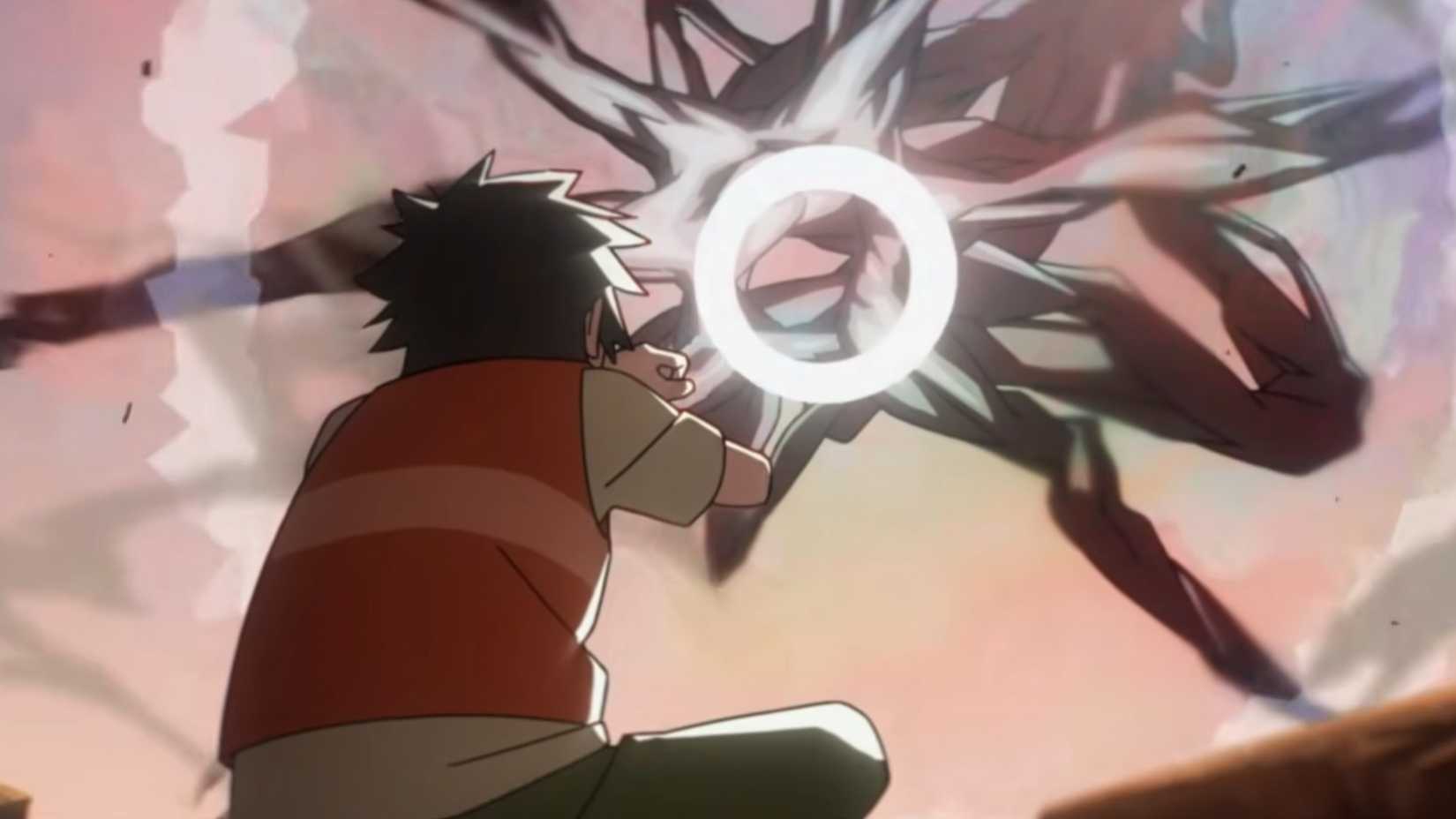 Image: Flint Sugar/Bilibili
Rather than using memory as a simple mystery to solve, False Memory treats it as something fragile and precious. The second episode offers perhaps its clearest example, following a student whose memories have been warped around a series of promises from his neglectful father. In his altered memory, the rewards he was promised — a toy, a game console, even a trip — actually exist. When that false memory is stripped away, the truth is considerably uglier, leaving him with little reason to keep chasing the future his father once promised him. It's a devastating reminder that memories don't have to be true to have meaning. Sometimes, the things we remember are valuable precisely because they give us something reality couldn't.
That theme would not land nearly as effectively without a cast of characters who feel just as carefully crafted. Each brings their own history, personality, and emotional baggage to the story, allowing False Memory to examine the capacity of memory from wildly different perspectives. Guan Chao's growing dynamic with Fang Tang and Bai Zhong is especially important here. Guan enters the Memory Management Bureau with a single-minded fixation on reaching the past, but his interactions with the two Bureau administrators gradually begin to pull him back toward the present. Their banter and contrasting personalities give the otherwise bizarre Bureau a sense of lived-in warmth, while Guan Chao's determination to find the Burning Stone makes clear just how much he's willing to sacrifice for the memories he's chasing. Even when the series gets weird — and it gets very weird — its characters remain the emotional core holding everything together.
 Image: Flint Sugar/Bilibili
The animation is also on another level. It’s written directly into the intro alone, where surreal imagery and inventive compositions come to life using visual transitions that feel pulled directly from the subconscious. It’s a powerful bit of animation laid to the poetic Wangji Le Ye Meiguanxi (“It’s Okay to Forget”) by Doudou. Even exposition dumps, like the explanation of BUGs in the second episode, are played out to reality-warped scenes that keep you glued to the screen. Environments transform, images bleed into one another, and emotions become something the viewer can actually see. The series isn't simply using wild animation techniques to look cool or flex — it's using those moments to draw out the underlying themes of its story.
That creative confidence makes False Memory feel like a genuine love letter to anime’s endless potential. It has the anarchic spirit of some of the medium’s most beloved experimental works, but it also understands why those works endure: because beneath all the visual madness is genuine emotional sincerity. It isn't strange just for the sake of being strange. Its wildest ideas exist to make something deeply human feel larger than life.
After only three episodes, False Memory already feels like a standout series that every anime fan needs to watch. It's visually extraordinary, emotionally resonant, and overflowing with the kind of creative ambition that makes animation so special. It also understands that remembering isn't about holding onto the past, but about understanding why we hold onto the past in the first place. And in doing so, False Memory has created something that feels less like another new anime (or even a mere interpretation of FLCL) and more like an instant classic in the making.
False Memory is streaming on Bilibili every Sunday at 12 PM CST and every Tuesday on YouTube



 English (US) ·