
Lately, I've noticed a growing number of celebrities and influencers are talking about AI. Some seem to be partnering with tech companies. Others have positioned themselves as AI evangelists, encouraging their audiences to embrace the technology before they get left behind.
Among those who have generated significant attention are Reese Witherspoon, Mel Robbins, Sandra Bullock and Matthew McConaughey. Their messages do all differ, but they tend to orbit the same idea, which is that AI is here, it's important and you'd better get on board fast.
The thing is, the more a celebrity tells me I need to use AI, the less I want to. And judging by public sentiment, I'm really not alone.
I don't think everyone talking positively about AI is acting in bad faith. Some may genuinely believe it will improve people's lives. Others may have investments, partnerships or financial incentives tied to the industry's success. (And that's hardly unusual — celebrity endorsements have always existed.) Some may simply be repeating the dominant narrative without stopping to consider how influential they are.
But rather than try to understand their personal motivations, what interests me more is the growing gap between the way AI is being promoted and the way many people actually feel about it.
Because while some public figures seem convinced that widespread AI adoption is inevitable, public trust in the technology remains surprisingly low. Survey after survey finds that many people are cautious, sceptical or actively worried about AI. And it's not difficult to understand why.
A growing disconnect
Conversations about AI have moved really quickly over the past year. We now find ourselves debating copyright, creative labor, deepfakes, misinformation, surveillance, environmental costs, job displacement and the growing concern that outsourcing too much thinking to machines may come with cognitive consequences of its own. On the morning I'm writing this, there are fresh headlines about the grim realities of data centre expansion.
At this point, there are so many legitimate concerns surrounding AI that it's difficult to keep track of them all.
Meanwhile, some of the companies that initially appeared determined to replace workers with AI have been rowing back their plans. We've seen reports of AI-generated content requiring extensive human correction, customer service experiments failing to meet expectations and organizations discovering that replacing people is a lot harder than they first imagined.
That's why I find the celebrity enthusiasm so fascinating. Because while some public figures are urging people to embrace AI before they get left behind, many people seem to be moving in the opposite direction.
The comments beneath posts promoting AI are often filled with scepticism. Articles about AI backlash are becoming increasingly common. And when I asked my own social media audience how they felt about celebrity AI endorsements, many expressed similar concerns.
Becky Hughes told me: "All of this makes me more reticent than ever to use social media or adopt new technologies, because the safest option seems to be not to engage at all."
Jay Vera Summer said: "When I see celebrities do things like this, I wish I knew more about their stock portfolio. Especially when it's coming from people who usually don't give financial or career advice."
Whether or not all of our suspicions are fair, I think they suggest something really important is happening here, which is a growing trust gap.
At least from where I’m sitting, it seems people no longer automatically assume that enthusiasm for AI is neutral. They're increasingly wanting to know who benefits from the pro-AI messages, who profits and whose interests are being served when the technology is being promoted so aggressively.
Fear over specificity
If you actually look at what much of the celebrity messaging amounts to, it's surprisingly hollow. Learn AI. Use AI. Don't get left behind. It’s inevitable.
And what fascinates me is how little specificity there tends to be alongside it. What exactly should people be using AI for? Which tools? In what contexts? For what benefit? What are the trade-offs? What are the risks?
I haven't seen many celebrities get into any of that. To be fair, even many of the people building, investing in and advocating for AI rarely spend much time on the details. Instead, the conversation often just gravitates towards fear.
The fear of becoming obsolete. The fear of missing out. The fear of being left behind by a future that everyone else supposedly understands. As someone who has spent years covering technology, that kind of rhetoric always makes me uneasy.
And that's not because I think AI won't have a place in the future. I think it almost certainly will, for better and for worse. But because "you'll get left behind" isn't really an argument. It's an appeal to our anxieties so that you’ll act fast without thinking. And it’s encouraging adoption without fully engaging with the reasons people might be hesitant in the first place.
AI as a feminist issue
I find this particularly interesting when AI is framed as a feminist issue. Earlier this year, The Cut described this phenomenon as the "girlbossification" of AI, giving a name to the growing trend of influential women encouraging other women to embrace the technology or risk falling behind.
Several prominent women have made versions of this argument. And they’re sort of right. In some studies, women have adopted generative AI more slowly than men. But the gap appears to be driven partly by risk, ethics, and workplace factors, not just technical ability. And women have plenty of reason to be concerned about the risks.
We know that women and girls have been disproportionately affected by some of AI’s most disturbing uses, including deepfake pornography, AI-generated image abuse, and sextortion. In one UN estimate, up to 95% of online deepfakes are non-consensual pornographic images and 99% of those targeted are women. I know this isn't theoretical because I've experienced a version of it myself.
Against that backdrop, telling women they simply need to embrace AI can feel completely disconnected from reality. It risks treating healthy scepticism as ignorance when, in many cases, it seems to me that it’s a response to genuine concerns and lived experience.
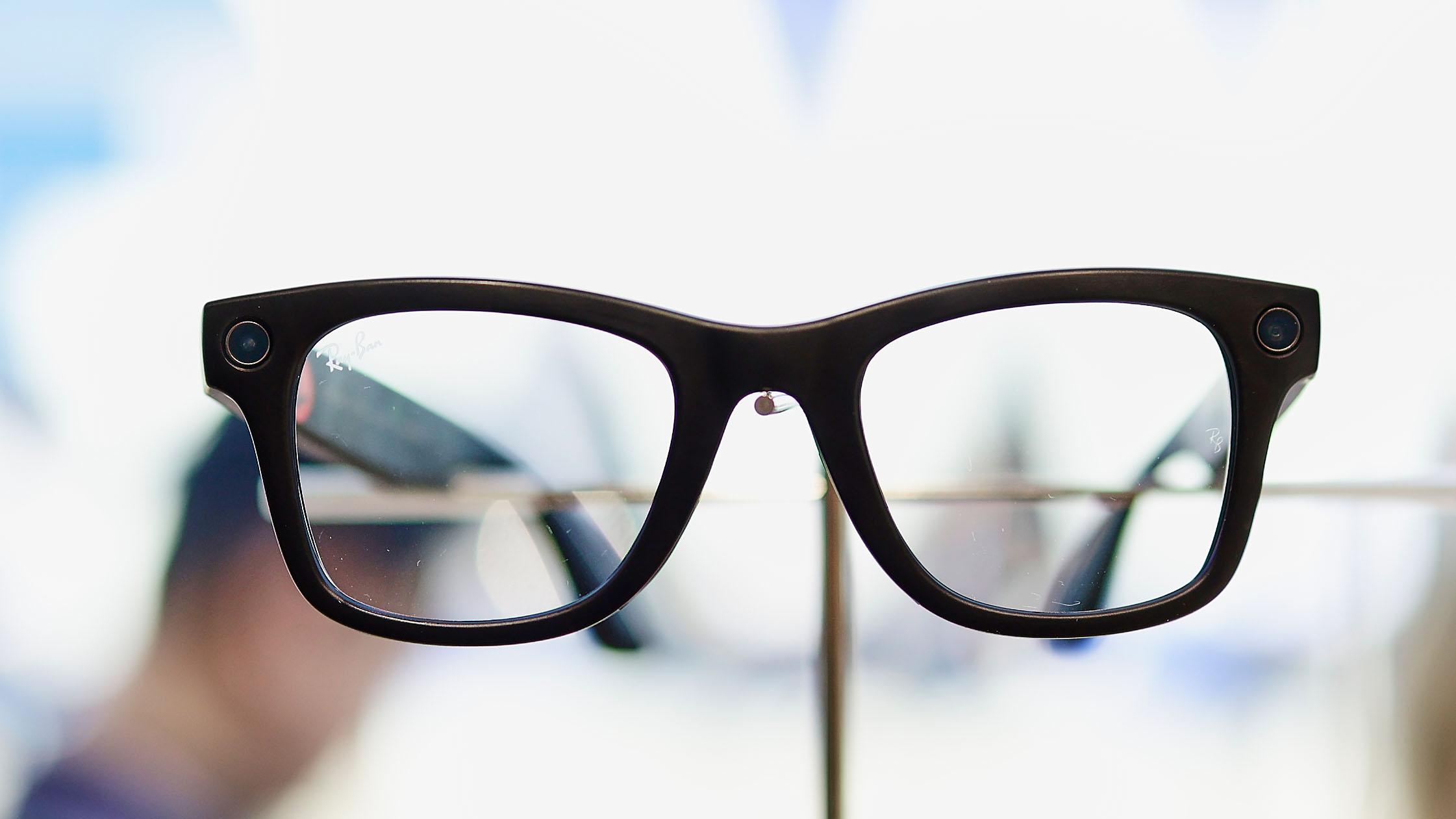
The recent partnership between Kylie Jenner and Meta feels particularly relevant here. The campaign positions AI-powered glasses as fashionable, desirable and aspirational. And in some ways that's exactly what celebrity endorsements have always done, take a technology and make it feel culturally normal.
But that's exactly why these messages deserve scrutiny. At the same time women are being encouraged to embrace AI-powered devices, there have already been multiple stories of women being unknowingly recorded by smart glasses. Which to me highlights the very real concerns around privacy, consent and surveillance that often get overlooked in conversations about the latest cool new tech on the block.
More informed than you think
I've seen some people online brush all of this conversation off and argue that we shouldn't be taking celebrities seriously anyway. But like it or not, they do help shape public narratives. They influence what people pay attention to, which questions get asked and which concerns get ignored.
And right now, many of those narratives seem to be built around this strange assumption that resistance to AI exists because people don't understand it. Well, I've spent the past year talking to people about AI, and I suspect the opposite is often true.
Many people understand enough to have concerns. They've tried the tools. They've seen both the benefits and the downsides. They're making conscious decisions about how much of their work, creativity, relationships and attention they're willing to hand over to AI systems.
That's why I find so much of the celebrity messaging unconvincing. The more people tell me I have to use AI, the more I want to pause and ask: okay why? And I know I'm not alone.
And that’s not because people are afraid of the technology. If anything, that framing completely misses the point. What I see instead is caution, scepticism and a willingness to actually ask the difficult questions about where this technology is taking us.
Because I think whenever someone insists a certain future is inevitable, our alarm bells should start ringing. That's when we need to ask: okay, whose version of the future are you trying to sell?
Follow TechRadar on Google News and add us as a preferred source to get our expert news, reviews, and opinion in your feeds.




 English (US) ·