
Serving tech enthusiasts for over 25 years.
TechSpot means tech analysis and advice you can trust.
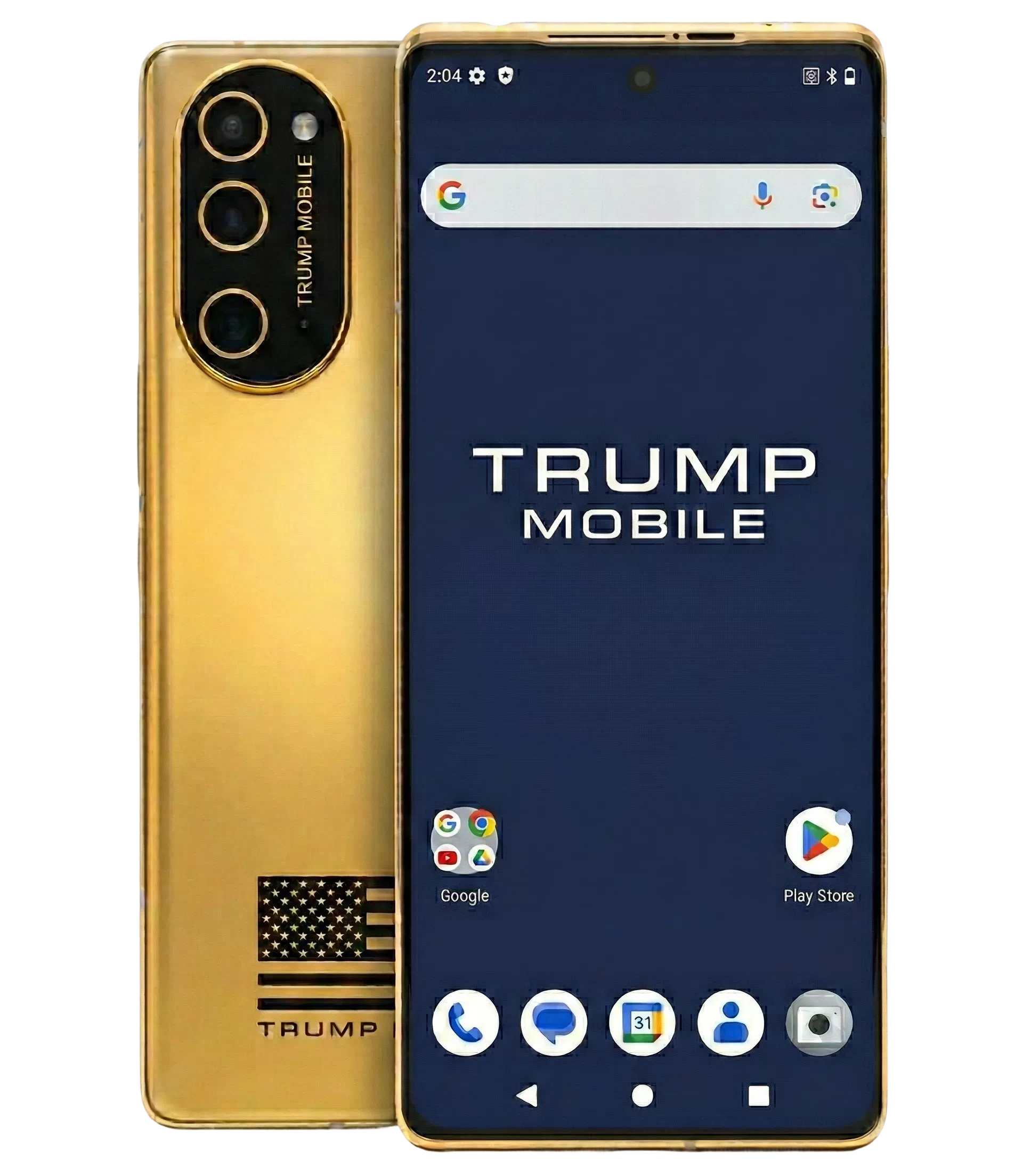
Facepalm: Claims that Trump Mobile could deliver a "Made in America" smartphone within months sounded dubious when the T1 was initially unveiled a year ago. The ensuing mockups suspiciously resembled existing foreign designs, and a recent teardown confirms the device is nearly identical to one from Taiwan-based HTC.
iFixit's teardown of the Trump Mobile T1 confirms that the phone is essentially an HTC U24 Pro with a few minor cosmetic changes. The findings settle suspicions that had been circulating since earlier this year and undercut Trump Mobile's original claim that the device would be American-manufactured.
The T1's listed specs: a 6.78-inch 120Hz AMOLED display, a Snapdragon processor, a 50MP main camera, a 50MP telephoto, and an 8MP ultrawide – closely mirror what HTC publishes for the U24 Pro. When NBC brought a unit to iFixit, the repair team disassembled it using the same techniques that had worked on the U24.
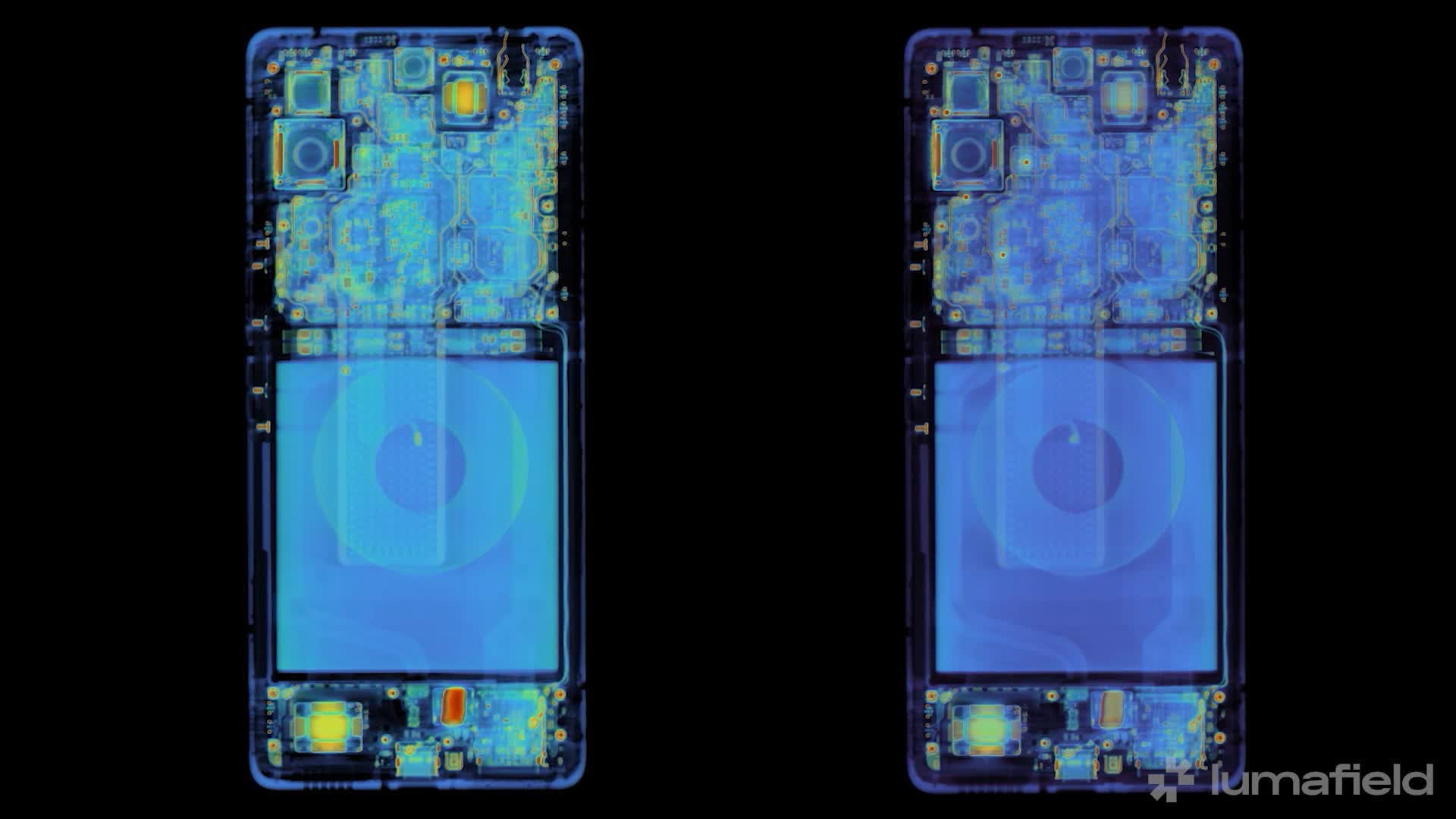
HTC U24 Pro (left) and Trump Mobile T1 (right). Source: iFixit
Scans revealed nearly identical internal layouts and component placement, and iFixit successfully booted the T1 using a motherboard taken from the HTC device. The LPDDR5 RAM was sourced from Micron rather than SK Hynix, a difference iFixit attributes to supply chain variability rather than any meaningful design divergence.
Other changes are cosmetic or minor: a gold chassis (with the American flag rendered with 11 stripes instead of 13), re-drilled speaker holes, a different camera shell, a repositioned flash, and a larger battery. That battery grows from 4,600mAh to 5,000mAh, though charging speed drops from 60W to 30W.
When Trump Mobile unveiled the T1 alongside its carrier service exactly one year ago, the company claimed the phone would be "designed and built in the United States," but walked that back quickly. Subsequent language described the device as "designed with American principles in mind," and the website now simply calls it "Proudly American."
The earliest mockups depicted a vague design that sparked doubts about whether a real product existed, while later images mirrored a repainted Samsung Galaxy Ultra. When the actual phone leaked in February, observers immediately recognized HTC's design.
Trump Mobile executives have said the company aims to rely as little as possible on Chinese parts and labor, but Taiwan's National Communications Commission database lists Guangdong Yuanchang Electronics Co., Ltd., a China-based manufacturer, as the producer of the HTC U24 Pro, and some U24 Pro retail boxes carry a "Made in China" label. Furthermore, when Google acquired a significant portion of HTC's hardware engineering team in 2017 for $1.1 billion, it left the company with a considerably reduced capacity to design its own handsets. iFixit suspects HTC contracted a Guangdong company to both manufacture and design the U24 in the first place.
President Trump, like Obama before him, has pressured companies including Apple and Samsung to explain why smartphone manufacturing cannot be revived domestically. Supply chain analyst Kevin O'Marah has estimated that a fully domestic smartphone production timeline would span roughly a decade, requiring a phone designed from scratch around automated US production lines and manufacturing equipment that doesn't currently exist in the country – making it unsurprising that Trump Mobile couldn't accomplish the feat in a single year.
That said, final assembly of the T1 occurs in Miami, which could represent a first step toward a more domestically produced device. The persistent obstacle is the cost of US labor, and if domestic companies can gradually master the supply chain, fully automated US factories might eventually make it viable, though not for years. Pre-orders for the T1 are open at a promotional price of $499, slightly undercutting the U24 Pro's $579 MSRP. A successor, the T1 Ultra, is planned.


 English (US) ·