
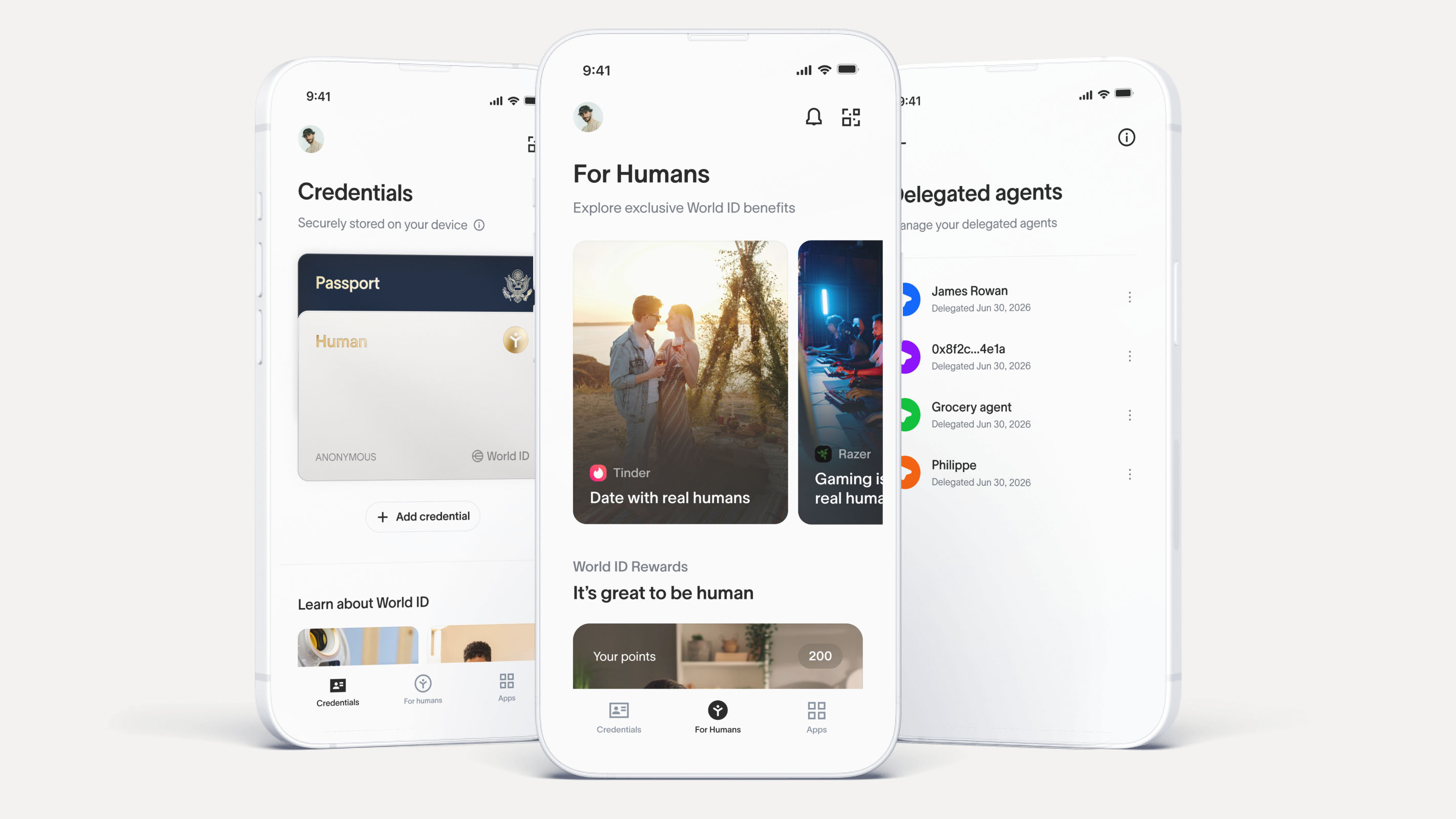
Facial recognition has become one of the default ways we prove who we are online, from unlocking our phones to logging into banking apps. But according to a senior figure at a Sam Altman-backed startup, that entire system may not hold for much longer, thanks to AI.
“Over time the AI is going to get so powerful that really, the face thing is probably going to break,” says Tiago Sanda, Chief Product Officer for Tools for Humanity, as I catch up with him to discuss the latest upgrade to its World ID system.
Article continues below
How the Orb works
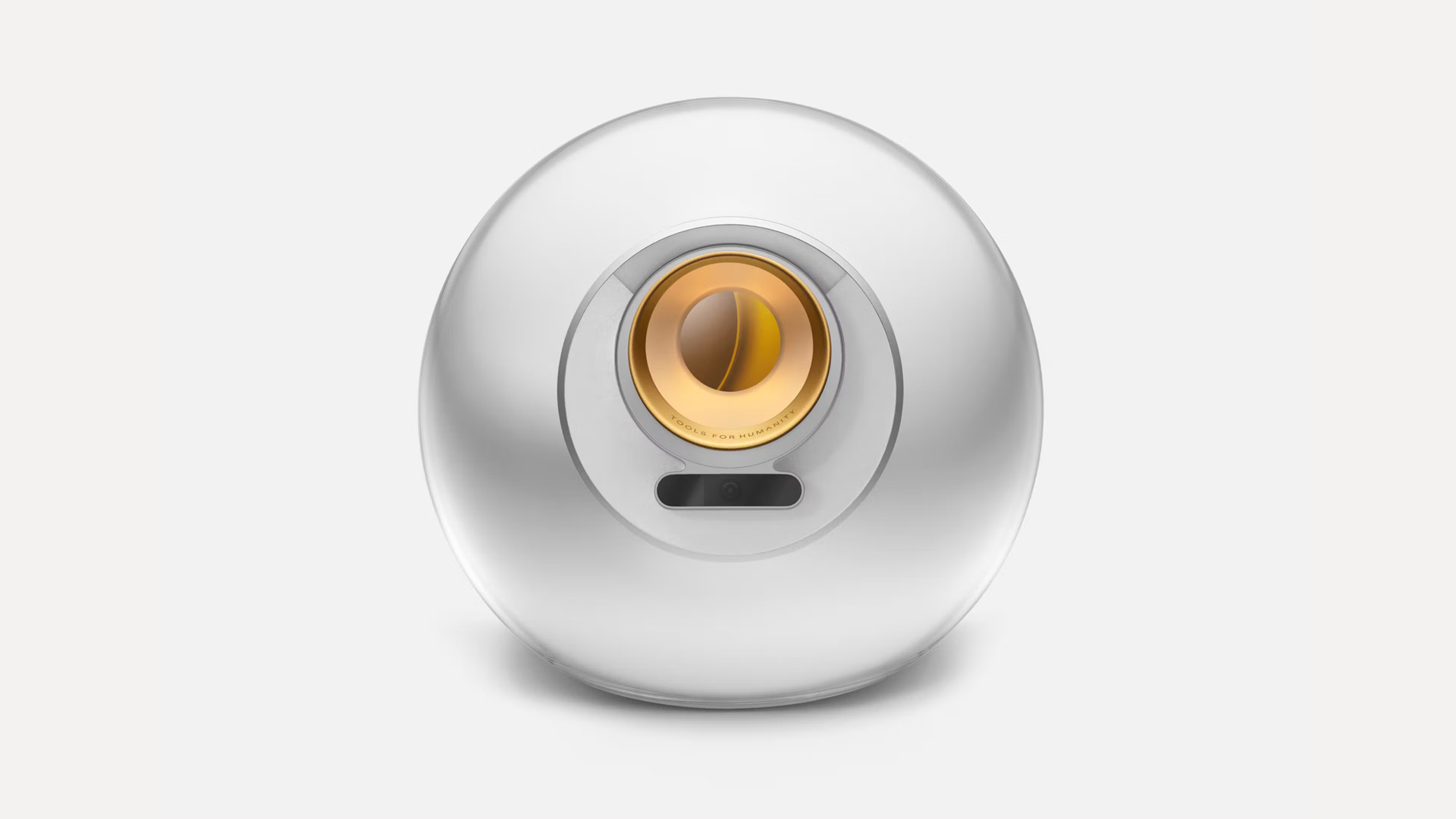
If you cast your mind back to about a year ago you’ll remember the Orb — essentially it was a fancy camera inside a round case — that could verify that you were human and give you a World ID to prove it.
The Orb has a bunch of sensors inside. Some of them are similar to what’s inside your iPhone, like near- and far-spectrum infrared, but it also has cameras and a very powerful Nvidia chip inside it. So, it's able to look at you and figure out if it is a real person that it's looking at, right now. Rather than own an Orb, you simply locate your nearest one in a mall or coffee shop and visit it to get verified. Your World ID then lives on your phone, and lasts a few years, like a driving licence.
The problem was, there wasn't much you could do with it — but from today that's starting to change. World ID has had a “protocol upgrade”, so it's capable of more and there are a bunch of new partnerships launching, so that you can finally use it to prove you’re human and restore trust in a lot of the apps you use on a daily basis.
Tinder, Reddit and Zoom
“Last year we started piloting with Tinder in Japan, and the pilot has done really well, so they’re going to be announcing a global rollout of human verification on Tinder to prevent catfishing”, says Tiago.
“Reddit also recently announced that they’re starting to test World ID for proof of humanity. And we’re going to introduce a new product called Concert Kit, that is a tool that artists can use to reserve some of the tickets for their concerts for verified humans, to protect them from scalping bots.”
Concert Kit will be compatible with all the major ticketing platforms, including Ticketmaster, Eventbrite, Fixr and others. Artists such as Thirty Seconds to Mars will be using it as part of their next European tour, and it will roll out during the Bruno Mars World Tour featuring DJ Pee Wee (aka Anderson .Paak), where verified humans will have exclusive access to VIP suite experiences at select stops.
Businesses can also benefit from World ID integrations — DocuSign is introducing it so you know it’s a human signing your documents, while Zoom will be using its deep fake protection system called World ID Deep Face to prove you’re talking to a human, not a deep fake.
Tools for Humanity is even introducing a set of products called Agent Kit for AI agents, so that it can verify they’re acting on behalf of a real human when they do whatever you’ve asked them to.
Why face recognition might not be enough
One of the key questions is why systems such as Face ID aren’t already sufficient? If Face ID on your iPhone is good enough for online banking apps, why do you need to go further?
“Face ID is really good for authentication, but not for verification. If you try hard enough, you’re going to be able to break that with AI or a mask, or something like that”, Tiago replies. “Over time the AI is going to get so powerful that really, the face thing is probably going to break.”
While somebody wearing a Mission Impossible-style mask of your face to break your facial recognition software is unlikely to be a problem the average person will face, we are all at risk of AI’s ability to generate entirely believable digital humans at scale.
But what about people who don’t want to be part of a system like World ID? Are we moving towards a future where people will be forced to prove they are human?
“No, so we definitely think that it’s something that should be optional. Rather than gating the product, our partners use it to boost the experience. So, for example, Tinder, gives you five extra boosts if you're a verified human, because they know they can trust you, right? But you can certainly continue using Tinder without that. I think that's what we see across all of our, all of our partners.”
What it means for the future
That answer gives me some comfort about the dangers of a dystopian future where a whole population needs to be catalogued and verified to function in society.
OpenAI’s CEO, Sam Altman, is one of the backers for Tools for Humanity, which puts him in the unusual position of helping to fund both the rapid advancement of AI and a system designed to defend against its consequences. Regardless, the problem of AI deep fakes is only going to get worse; there’s an entire industry pushing forward at speed.
At first glance, the Orb looks like something out of a Pixar movie. But its appearance obscures its critical usefulness to society. The Orb might look like a gimmick, but if the “face thing” really does start to break, systems like it could become far more relevant than they first appear.
While I was initially skeptical of the need for a futuristic object to verify me as human, after talking to Tiago I’m starting to think that it’s something we’re all going to have to take seriously in the future.

Follow TechRadar on Google News and add us as a preferred source to get our expert news, reviews, and opinion in your feeds.
!['We can lose three [computers] and still ride through’: Inside the 8-CPU brain of NASA’s Artemis II that ‘votes’ on every move](https://cdn.mos.cms.futurecdn.net/3sMmsgSFFZtnv3EyJycGbC-1200-80.png)

![Disney Store's New Star Wars Day 2026 Merch Pits Rebels Vs Imperials And Celebrates Trilogies [Exclusive]](https://www.slashfilm.com/img/gallery/star-wars-day-2026-disney-store-rebels-imperials-trilogy-jerseys-merchandise/l-intro-1776373503.jpg)


 English (US) ·