
 2 hours ago
2
2 hours ago
2
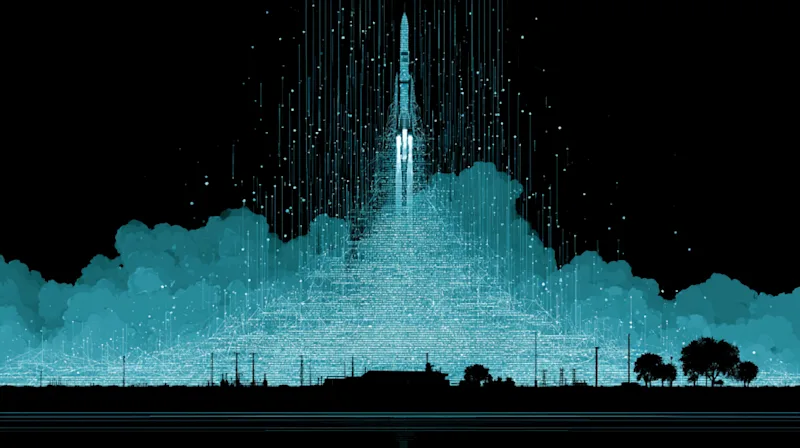
I was really looking forward to July 4, and not just because I love a poolside barbecue. This year the American holiday also marked a big symbolic deadline for US nuclear power.
Last year the Trump administration set a goal to see three new microreactors achieve criticality, a technical milestone establishing that a reactor can sustain a chain reaction, by the nation’s 250th birthday. And just in time, not just three, but four reactors did so.
It’s a positive sign for nuclear technologies at a time of increasing need for electricity and emissions-free energy sources. But achieving criticality doesn’t mean a reactor is ready to provide electricity for the grid (or at all, for that matter).
This story is from The Spark, our weekly climate tech newsletter. Sign up to receive it in your inbox every Wednesday.
The must-reads
I’ve combed the internet to find you today’s most fun/important/scary/fascinating stories about technology.
1 China plans to let its top AI firms buy Nvidia H200 chips
Alibaba, ByteDance, and DeepSeek are set to get permission. (Information $)
+ China had previously withheld approval despite US authorization. (Reuters $)
2 NATO is building a network to stop Russian attackers in their tracks
It will use sensors, drones, satellites, and AI to detect them. (Business Insider)
+ Troops are donning odd camouflage to elude drones. (Economist $)
+ The US wants cheaper drones as Iran's wrecking its Reapers. (Ars Technica)
3 Researchers have a new idea to fight future El Niños: dimming the sun
Deflecting solar energy could cool the ocean and mitigate the risks. (Wired $)
+ But there could be unexpected consequences. (New Scientist $)
+ And geoengineering as a field is getting a reality check. (MIT Technology Review)
4 Meta is patenting an AI device that records users to analyse emotions
It ostensibly aims to tailor workout plans to the user’s mood. (404 Media)
+ AI memory is privacy’s next frontier. (MIT Technology Review)
5 Chipmakers are going vertical as Moore’s Law slows
They’re stacking transistors to keep chips advancing. (Economist $)
+ IBM is betting on the technique. (MIT Technology Review)
6 Ivy League students suspected of AI cheating saw scores fall in person
From 96% all the way down to 48%. (Ars Technica)
+ AI giants want to take over the classroom. (MIT Technology Review)
7 A new study says parents’ phone addictions damage bonds with kids
It can exacerbate “insecure attachment” for life. (Bloomberg $)
+ And make children more anxious and avoidant. (Gizmodo)
8 A judge approved Musk’s $1.5 million Twitter settlement with the SEC
Despite what she called “serious misgivings” and “red flags.” (Reuters $)
+ Musk was accused of skirting stock disclosure rules. (Fortune)
9 Shoebox-sized “detector satellites” could find nuclear bombs in space
Cubesats carrying the detector could sense a bomb’s radiation. (Space)
+ Russia is suspected of developing space-based nukes. (Reuters $)
10 A World Cup match drove Google Search traffic to a new record
The milestone came after Argentina’s comeback against Egypt. (CNBC)
Quote of the day
“I talk about it on Tic Tac.”
—President Donald Trump tells the public where to find his insights on the dangers of communism, Gizmodo reports.
One More Thing

Robots are bringing new life to extinct species
Paleontologists aren’t easily deterred by evolutionary dead ends or a sparse fossil record. And in the last few years, they’ve developed a new trick for turning back time and studying prehistoric animals: building experimental robotic models of them.
In the absence of a living specimen, an ambling, flying, swimming, or slithering automaton is the next best thing for studying the behavior of extinct organisms. Learning more about how they moved can in turn shed light on their lives, such as their historic ranges and feeding habits. Scientists can simply sit back and observe their behavior in different environments.
—Shi En Kim
We can still have nice things
A place for comfort, fun, and distraction to brighten up your day. (Got any ideas? Drop me a line.)
+ Georgia Hill’s monochrome artworks are filled with visual harmony.
+ AI has salvaged text from a papyrus scroll burned to a crisp when Mount Vesuvius erupted 2,000 years ago.
+ Rare images taken by a Japanese space probe show a near-Earth asteroid resembling a cuddly snowman.
+ “Another One Bites the Bee Gees” smoothly merges two classic tracks with a 4/4 time signature into the perfect song for applying CPR.





 English (US) ·