
 9 hours ago
2
9 hours ago
2
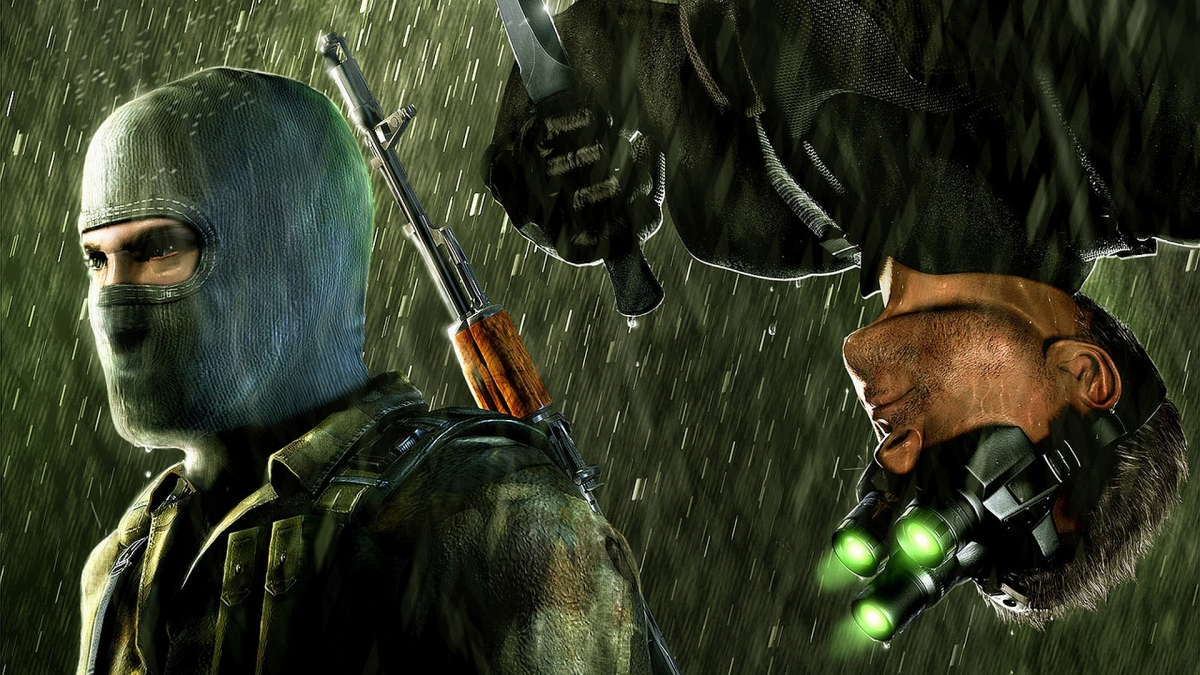
I love a good game about skulking through the shadows, but it isn't an activity I get to do much in virtual worlds anymore. Even within the already sparse genre of stealth games, most modern sneak 'em ups are based around lines of sight rather than levels of light.
I always figured this was because such an approach is simpler for players to parse—especially given most games that feature stealth are not exclusively stealth games. But according to Clint Hocking, director of the second-best stealth game ever made—Splinter Cell: Chaos Theory—it might have something to do with the nature of virtual shadows themselves.
Speaking to FRVR, Hocking explained that the shift from baked lighting and dynamic lights with hard edges, to softer shadows and ray-tracing lighting models, may have had an impact on players' ability to assess their own stealthiness.
"I actually think one of the difficulties with modern stealth games is the sophistication in the rendering has made lighting so much more realistic," Hocking told FRVR. While this sophistication results in a more authentic-looking scene, it makes the play space for a stealth game "so much harder to read" than in the days of Chaos Theory and the Thief series.
"When you think about those old school stealth games because of their baked lighting, the lighting is very clean and readable and very understandable for the player," Hocking elaborates. "But once you get into this diffuse and ambient occlusion and all of the stuff that comes with it, it gets very hard to tell what's light, what's shadow, what's dark, what's safe, what's dangerous and all of that stuff."
I can certainly see why this added nuance would make a light-based stealth game more challenging to make. But it's also fair to say that nobody has really tried. As I mentioned, stealth generally forms part of a broader experience rather than the fundamental core of games these days, and those stealth mechanics tend to be very simple so players can shift in and out of stealth easily.
Because of this, Hocking reckons that making a fully-fledged stealth game with modern graphics techniques would involve some challenges. "I think there would be some learning if we wanted to really use these modern lighting techniques to have a really pure stealth experience," he added. "And people who go ahead and make that game, I think, need to do some really deep thinking."
While I'd certainly be interested to see a modern stealth game that went all in on shadow tech (and brought back noisy floors, while we're at it), the smattering of stealth games we've seen recently have been more interested in other forms of experimentation. Thief VR: Legacy of Shadow—the first game in the series in over a decade—sought to bring the venerable larceny simulator into true 3D with fair to middling results. And only this week saw the launch of Thick as Thieves, which has some promise as a cooperative stealth game despite launching in a stripped down package.







 English (US) ·