

Published Feb 21, 2026, 3:35 PM EST
Dyah (pronounced Dee-yah) is a Senior Author at Collider, responsible for both writing and transcription duties. She joined the website in 2022 as a Resource Writer before stepping into her current role in April 2023. As a Senior Author, she writes Features and Lists covering TV, music, and movies, making her a true Jill of all trades. In addition to her writing, Dyah also serves as an interview transcriber, primarily for events such as San Diego Comic-Con, the Toronto International Film Festival, and the Sundance Film Festival.
Dyah graduated from Satya Wacana Christian University in October 2019 with a Bachelor's degree in English Literature, concentrating on Creative Writing. She is currently completing her Master's degree in English Literature Studies, with a thesis on intersectionality in postcolonial-feminist studies in Asian literary works, and is expected to graduate in 2026.
Born and raised between Indonesia and Singapore, Dyah is no stranger to different cultures. She now resides in the small town of Kendal with her husband and four cats, where she spends her free time cooking or cycling.
David Bowie once said, "We can be heroes, just for one day." But long before the extraterrestrial Ziggy Stardust grabbed the world's attention with "Heroes," Bowie was just a kid born and raised in Brixton, shaped by London's jazz scene and mod culture. With big ideas and a love for mixing genres, his musicality initially didn't translate well into the industry. Everything changed in 1969, when Space Oddity climbed the charts and reached number five in the UK.
That success came with its own problems. Bowie had already struggled with substance abuse in his younger years. As his fame grew, those issues followed him into his career. Wanting distance from the excess and hedonism of the music world, he sought refuge on the other side of the world. That escape led to some of his most revealing work. Detached from his fictional persona, this 1977 song showed Bowie at his most reckless, self-sabotaging, and yet, honest.
"Always Crashing in the Same Car" Is Based on David Bowie's Real-Life Experience
"Always Crashing in the Same Car," the fifth track on Bowie's 1977 album Low, brings listeners to the passenger's seat for a ride they won't forget. Reckless driving isn't something meant to be romanticized, but only Bowie could make a bittersweet tune out of it. "Always Crashing in the Same Car" was inspired by a real-life confrontation Bowie had with a cocaine dealer he believed had wronged him. The singer recounted that in the '70s, he was driving a 1954 Mercedes when he encountered a man, nicknamed Johan, on the Kurfürstendamm. With no hesitation, Bowie repeatedly rammed him for nearly ten minutes, while no one else stopped him. Just like the song's lyrics, Bowie proceeded to a hotel garage where he started going around and around with his car.
"That night everything came to a kind of a spiritual impasse, you know? And I really was down in a hotel garage, and I started going round and round, just like a movie I’d seen. I thought, ‘Oh, this is so Kirk Douglas in that film [Two Weeks In Another Town] where he lets go of the steering wheel.’ [laughs] You can tell what kind of condition I was in. Or what condition my condition was in. So I started going round and round, faster and faster. And then I let go. And as I let go I ran out of petrol. I just slowly came to a stop! I thought, ‘Oh God, this is the story of my life.’ As it happens, things picked up after that!"

Related
David Bowie Tried to Quit Substance Abuse During the Production of "Low"
Bowie was no stranger to substance abuse, with his earliest experimentation dating back to the 1960s. He first tried pills at just thirteen and went on to experiment with everything from cannabis to LSD, eventually spiraling into cocaine. The 1970s marked the height of his "crash and burn" period. Fans may recall his infamous December 1974 appearance on The Dick Cavett Show, where he looked visibly thin and affected by drug use, fidgeting, and answering erratically. However, the production of Low would later become a catalyst for breaking his drug habit.
In 1976, Bowie moved to Berlin after growing tired of life in Los Angeles. Part of the reason for the move was to get clean — a difficult task given the easy access to heroin in Berlin. His son, Zowie Bowie, ultimately became his motivation to quit. Recording sessions for Low began in September 1976 in Hérouville. Just like "Always Crashing in the Same Car," the entirety of Low became a cathartic release for Bowie to vent out his struggles, ranging from his addiction, to financial and legal troubles at the time.
Related
"Always Crashing in the Same Car" Originally Had a Bob Dylan Reference
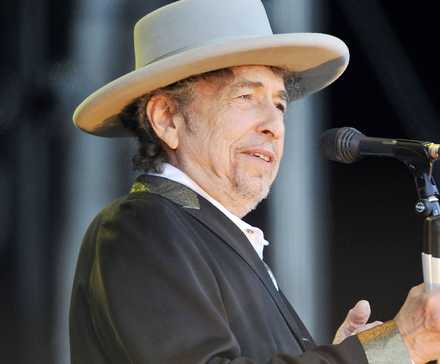
Bowie had always harbored a fascination with Bob Dylan, an admiration he immortalized in his 1971 track "Song for Bob Dylan." In keeping with the folk singer's spirit, Bowie even considered adding a third verse to "Always Crashing in the Same Car." Producer Tony Visconti recalled that Bowie had initially wanted to perform it in a Dylan-like style, done on a whim. However, they ultimately scrapped the idea for fear it might be in poor taste, especially since Dylan himself had been involved in a motorcycle accident back in 1966.
Although Low received little promotion, it became a crucial album that marked the beginning of Bowie's Berlin Trilogy. Low served as the predecessor to one of his most acclaimed albums, Heroes. While Low explored themes of isolation, Heroes sought hope amid chaos, drawing inspiration from the divided city of Berlin. The success of Heroes — peaking at number three in the UK and number 35 in the US — would not have been possible had it not been for Bowie putting his vices and vulnerabilities out for the world to see.








 English (US) ·