
 1 hour ago
6
1 hour ago
6
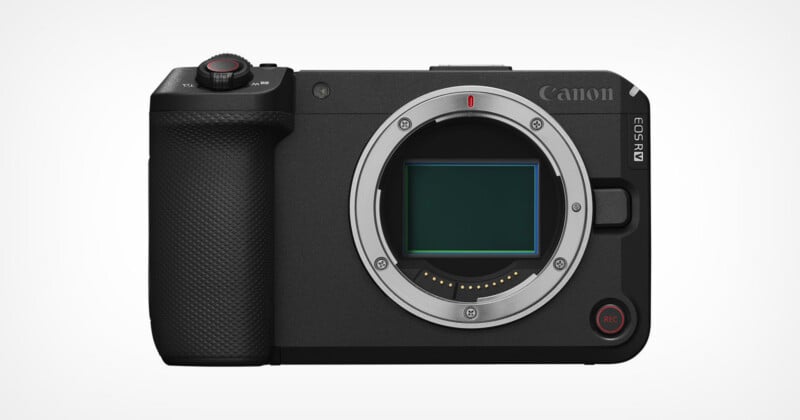
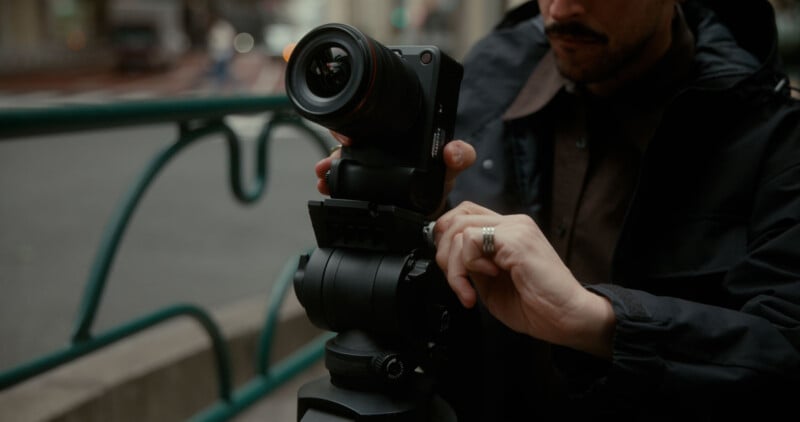
After a pair of teasers, Canon has finally unveiled its latest camera, the Canon EOS R6 V.
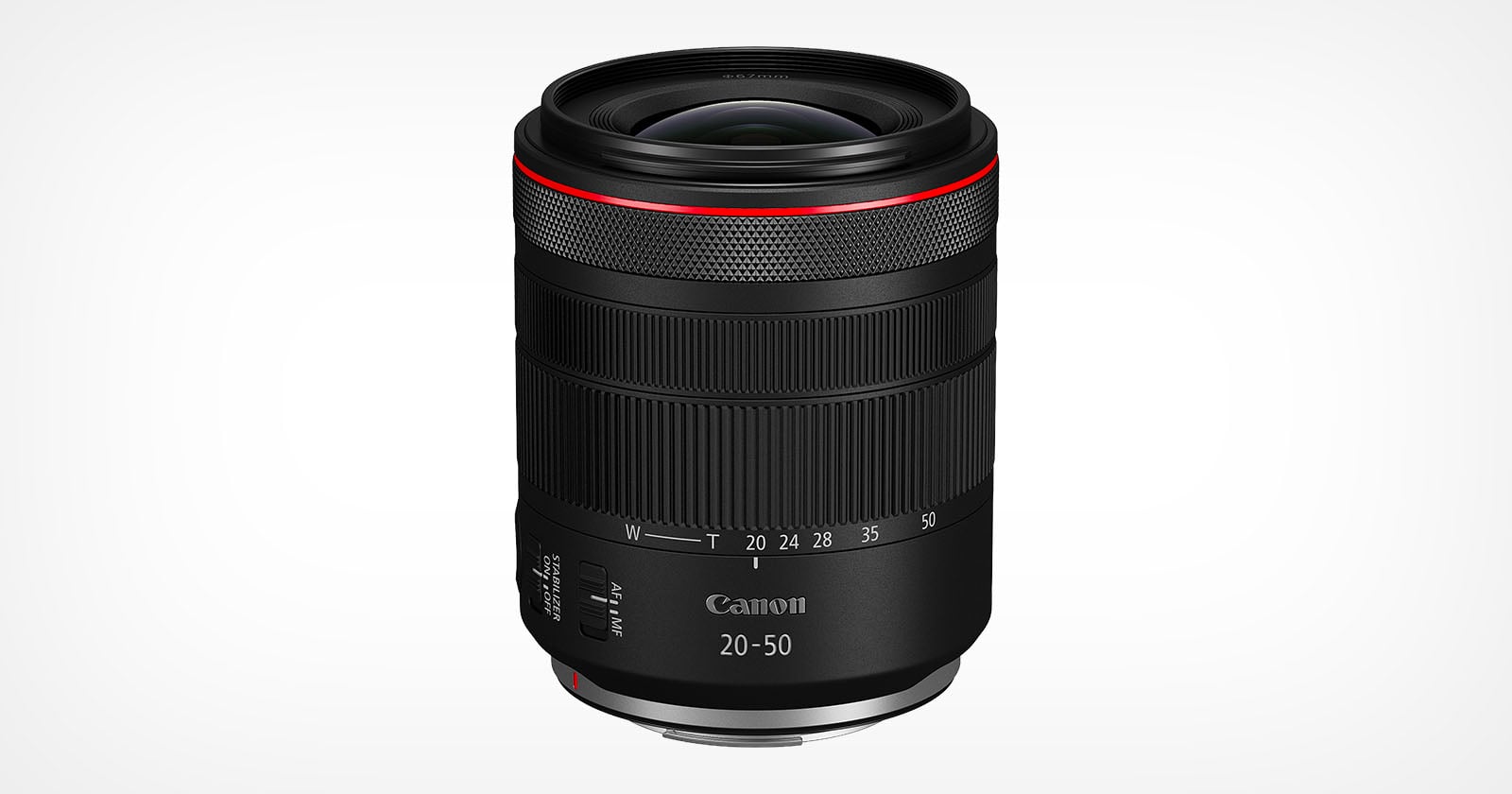
Unveiled alongside the new RF 20-50mm f/4 L IS USM PZ lens and an array of new hybrid creator-centric accessories, the Canon EOS R6 V offers many very familiar features. At its core is the same 32.5-megapixel full-frame CMOS sensor that first appeared in the Canon EOS C50 last year and then the EOS R6 Mark III, PetaPixel‘s Camera of the Year 2025.
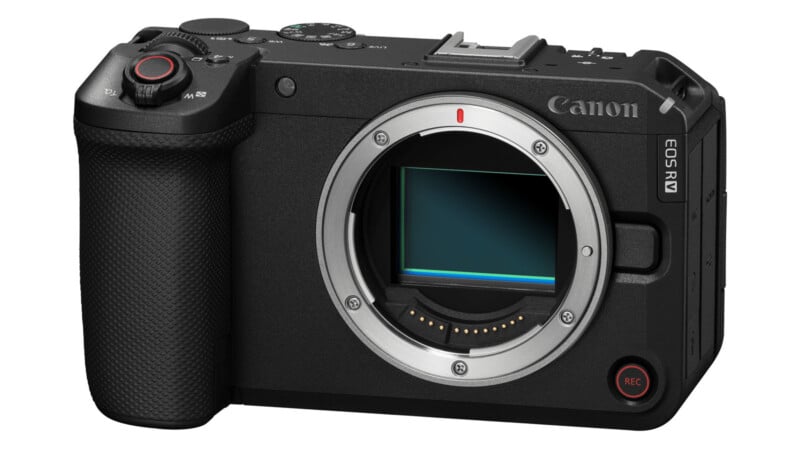 The Canon EOS R6 V is a bit smaller than the R6 III, thanks to the removal of the EVF.
The R6 V is much closer to the R6 III than it is to the C50, thanks to its non-cinema user interface and menu system, in-body image stabilization, and a generally SLR-inspired design. However, unlike the R6 III, the R6 V lacks an electronic viewfinder (EVF), so users must rely on the rear display for all composing needs.
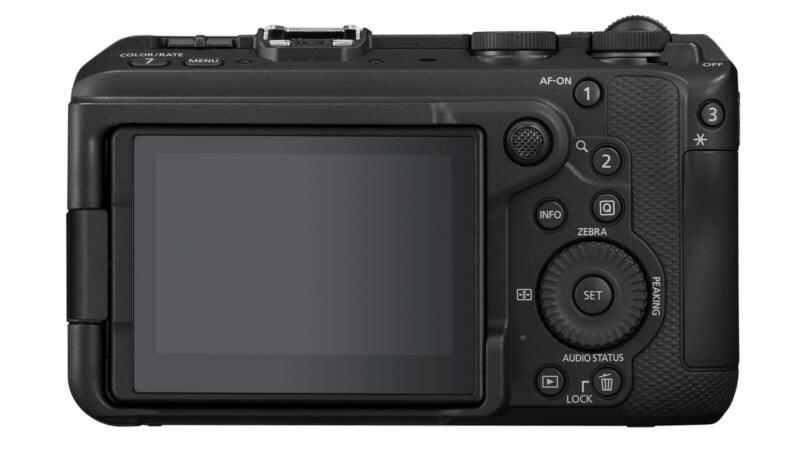
While that may limit the R6 V’s appeal for photographers and stills-focused hybrid creators, the camera’s video features promise to make it a compelling option for video-centric users. The camera can record 7Kp60 RAW Light, 7Kp30 Open Gate, slow- and fast-motion videos, oversampled 4Kp60, and 4Kp120. It has the same autofocus system as the R6 III, which is good news.
The R6 V also has some features the R6 III lacks, including an internal cooling fan to enable extended recording times, a zoom lever (which works with the new RF 20-50mm f/4 L IS USM PZ lens), front-mounted secondary movie record button, an instant live stream button, and a second tripod mount for vertical shooting.
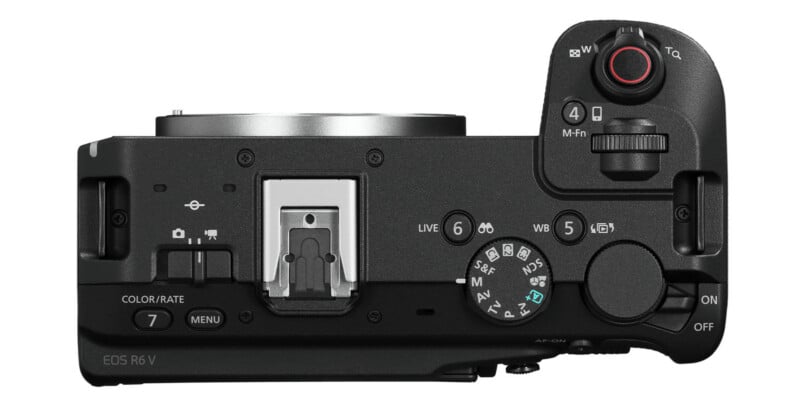
Per Canon, the R6 V should be able to record 4Kp60 video at room temperature for two hours, a roughly fourfold increase compared to the fanless R6 III. As for 7Kp30 Open Gate recording, that has increased from 33 minutes to as long as there is sufficient power to keep the camera running. These are really significant gains.
Although decidedly not a photo-first camera, Canon hasn’t stripped the R6 III’s key features away from the video-centric R6 V. It has the same imaging pipeline as the R6 III, which means it can shoot full-resolution photos at up to 40 frames per second using its electronic shutter, which is the only shutter in this camera, and offers pre-continuous shooting. It boasts high performance, though the lack of an EVF could conceivably limit the R6 V’s utility for action photography. The lack of a mechanical shutter also hurts the R6 V’s practicality in broader situations, as it means photographers are giving up some dynamic range compared to the R6 III with its mechanical shutter.


Canon’s creator-focused lineup is getting quite crowded. The R6 V sits at the top of the “V” series pyramid now, offering more advanced features and higher performance than the APS-C Canon EOS R50 V and way more performance than the PowerShot V1. On the other hand, the R6 V lacks the Cinema EOS chops of the C50.
Pricing and Availability
The Canon EOS R6 V will be available in late June for $2,499. There will also be a new kit with the new RF 20-50mm f/4 L IS USM PZ lens for $3,699.
Image credits: Canon






 English (US) ·