
The Blood of Dawnwalker is Rebel Wolves' debut release, and it's no secret that the studio is composed of several developers who previously worked on The Witcher 3: Wild Hunt. As such, many players may go into the experience thinking this is just The Witcher with vampires, but Dawnwalker wastes no time distinguishing itself from its spiritual predecessor while also carrying over many familiar qualities that made CD Projekt Red's iconic title special.
The Blood of Dawnwalker is a beautifully written and truly original vampire RPG set in a world packed with mystery, lore, and macabre horror. Though it struggles at times to find its bearings, it stands out as one of the most unique vampire concepts on offer, both in terms of narrative and gameplay mechanics, such as the well-implemented day/night cycle, its 30-day countdown that makes each decision feel significant, and traversal methods such as planeshift and shadowstep.
Blood of Dawnwalker's Story Perfectly Balances Horror & Heartbreak

The Blood of Dawnwalker stands out among vampire RPGs particularly when it comes to its spectacular storytelling and immersive world-building, set against the backdrop of the Black Plague in 14th Century Europe. Playing the role of Coen as he tries to save his family from a group of bloodthirsty Vrakiri who have taken over the region of Vale Sangora somewhere in the Carpathian Mountains. The game establishes the stakes immediately while simultaneously introducing players to its unique structure.
The prologue itself gives players a sense of how the narrative sandbox and timeline work, with several quest options that move time forward slightly, forcing you to choose which quests to pursue and which to ignore, at least during this playthrough. By the end, we're introduced to the Vrakiri and start to understand their true nature, while also learning about Coen's own struggles with his family.
What unfolds over the next 30 days in The Blood of Dawnwalker is a surprisingly fresh and incredibly deep tale that will differ for every player depending on which quests they decide to take on and how they decide to complete them, though there are narrative beats that must be hit regardless of your decisions, of course.
Players will have the choice to track down each of the key Vrakiri vampire leaders, as well as embark on side quests with unique and distinct characters, such as Anca, one of Coen's lifelong friends who potentially becomes a romantic interest, assuming you don't succumb to your demons and drain her blood. The Blood of Dawnwalker delivers on its promise of being a story-driven RPG, rarely disappointing and not shying away from macabre or taboo subjects.
The Blood Of Dawnwalker Reinvents The Vampire RPG
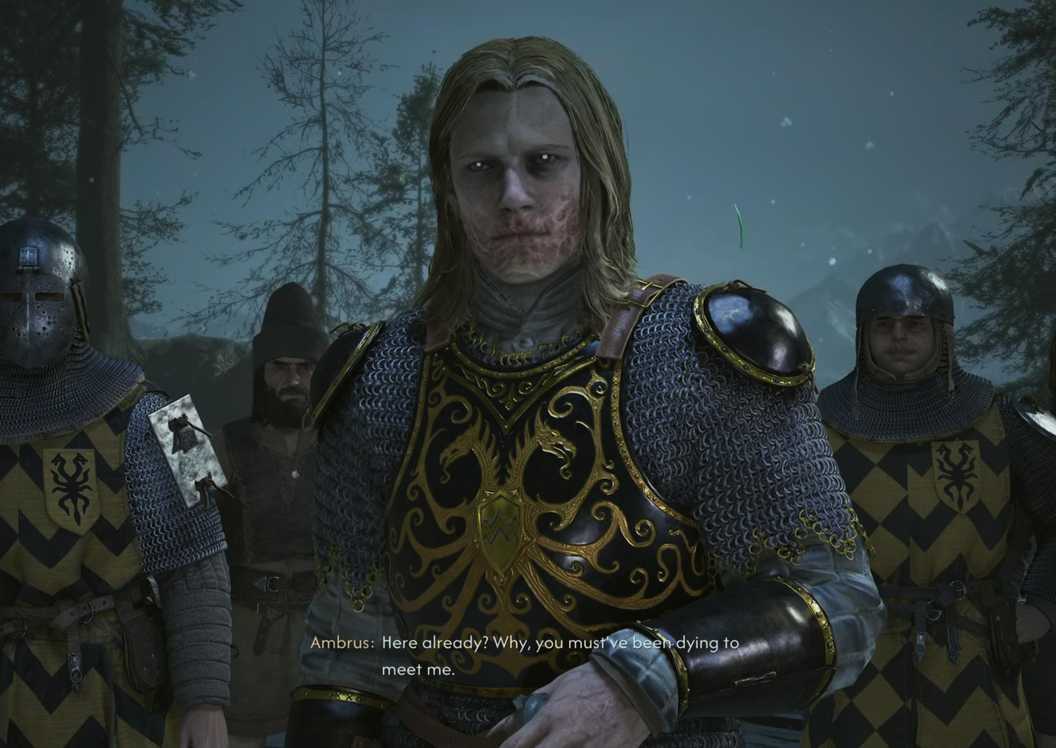
Dawnwalker has several distinct mechanics with clear intent, though not all are perfectly implemented. For starters, the 30-day timeline cycle is an effective way to push players to think more carefully about their quest choices. However, it isn't always immediately clear how "important" any given quest actually is, and occasionally players may feel they have wasted their time on something inconsequential.
Time is described as a resource in Dawnwalker, and nearly everything you do will move the clock forward in some way, including upgrading your skills and learning new powers. Dawnwalker does a great job of incentivizing gameplay during both day and night cycles, with a nice balance between the witch-based daytime powers and nighttime vampire abilities, as well as the neutral skill tree that buffs players' general sword-fighting abilities, stamina, etc.
The game's unique "Planeshifting" mechanic lets players walk up walls, while "Haste" is essentially the game's alternative to a mount that lets you get around faster. While fun in theory, both of these features could use some refinement. Walking around corners is clunky and doesn't feel natural, while speed-running across rough terrain often results in getting caught up on rocks or invisible edges.
Additionally, the game suffers from a clearly implemented stealth system, making features like the "Death from Above" attack feel useless. This was one of my biggest disappointments during my initial playthrough, and with a game that features Assassin's Creed-style elements such as tower-climbing, elimination targets in the Court menu, etc., it's an area I hope gets some refinement in future updates.
That said, the game's shadowstep and claw-riding features are pure fun and give you a real sense of having supernatural vampiric powers. Further, features such as Compel Soul, Astral Communion, Blood Drinking/Craving, and Voracious Bite are satisfyingly immersive, each with its own distinct purpose in building the game's lore and developing Coen as a protagonist.
Combat Lacks Variety & Depth, But Isn't A Dealbreaker
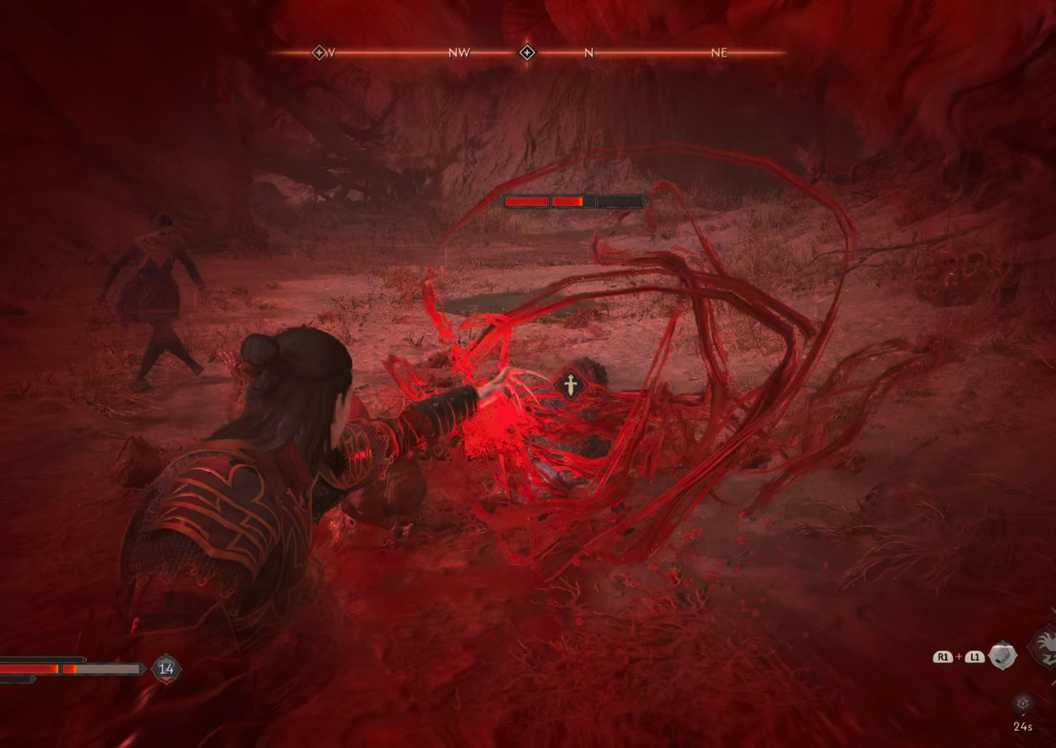
If there's a weak spot in The Blood of Dawnwalker, it lies in the game's larger combat system. Playing on the base PS5, I didn't find the lack of a higher-FPS Performance mode to be much of an issue during gameplay, though there were notable moments in cutscenes and dialogue sequences where clipping and frame rate drops became more apparent. Instead, the Directional Block vs. Omniblock systems don't add nearly enough depth to combat, and overall, encounters tend to become a bit repetitive over the course of the game.
Bosses add a bit of variety to the experience, but ultimately are limited to just a few unique moves, and parrying, dodging, etc., are not all that challenging to master even at higher difficulty settings. Further, enemy variety is somewhat lacking. While there are dozens of "different" enemies, they are essentially reskinned versions of the same type, with nearly identical and repetitive attacks. For instance, there are about 4–5 different dog-type enemies that are indistinguishable except for different names and aesthetics.
The redeeming aspect of combat is certainly in the unique Vampiric and Witchcraft abilities, and to a lesser extent, Swordmastery—the three main skill trees in the game. Players essentially have ten different passive/active abilities to choose from within each tree, but are only able to equip four active abilities at any given time, choosing between Witchcraft/Swordmastery abilities during the day and Vampiric/Swordmastery abilities at night.
While the setup can feel a bit limiting at times, many of these abilities are satisfying in practice, such as Blood Surge, which explodes enemies in a gory and bloody mass and deals AoE damage to boot. Equipment can add variety to the mix as well, giving you different weapon and claw arts, though there don't appear to be any gear set bonuses or anything along those lines, which was a missed opportunity and would've been an easy win for developers.
Dawnwalker Doesn't Completely Shed Its Witcher Skin, For Better And Worse
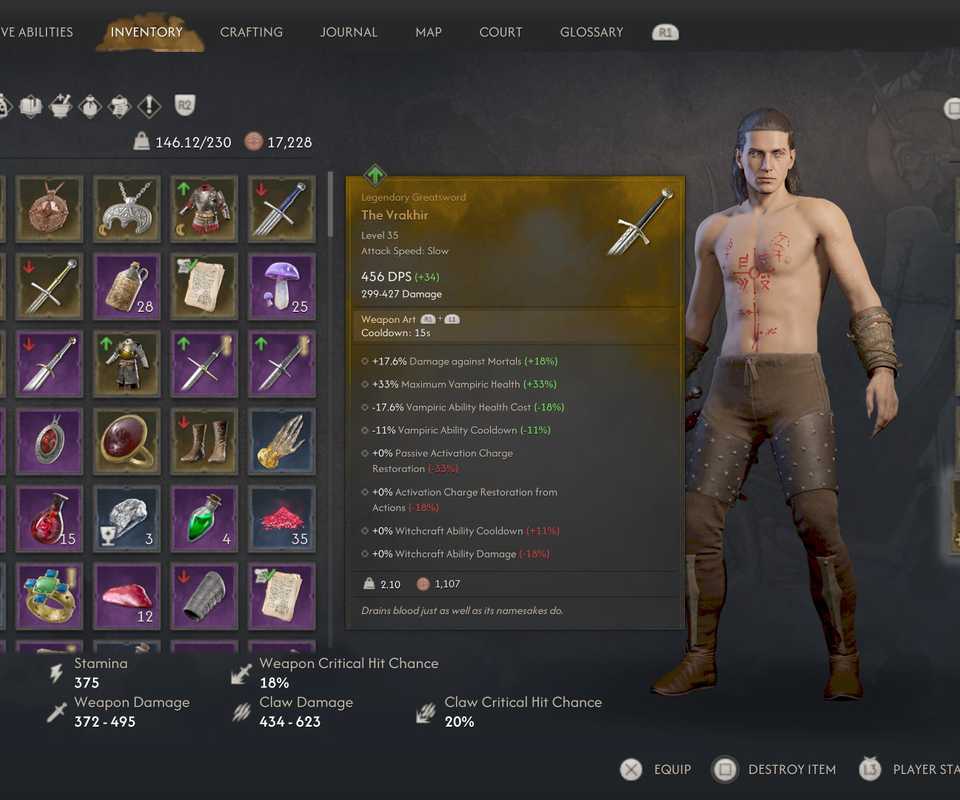
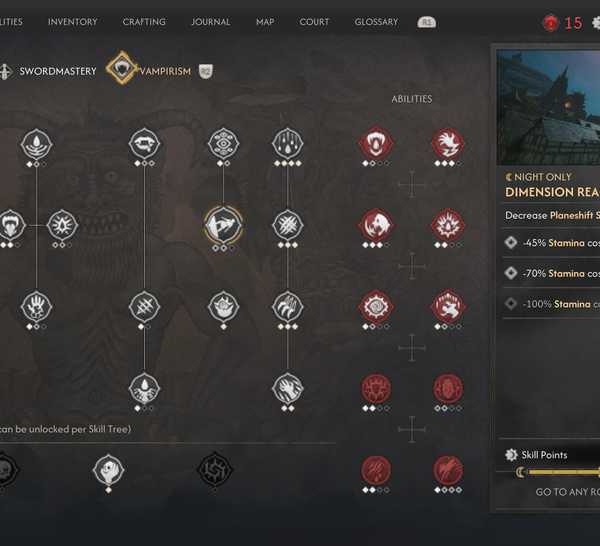
Let's deal with the elephant in the room now, which is that you can't make a game that feels and plays like The Witcher 3 and expect it not to be compared to The Witcher 3. In many ways, Dawnwalker struggles to escape the shadow of The Witcher. Many systems/issues from The Witcher 3 that were heavily criticized made their way into this game when they shouldn't have: inventory management, clunky movement, repetitive combat, excessive crafting components, useless consumables, and repetitive open-world activities, to name a few.
Further, there were various components from The Witcher 3 that arguably should have been carried over but weren't, such as a potion/oil equivalent, unique gear and equipment sets, some sort of Gwent-style mini-game, etc. While I don't think it's necessarily fair to judge the game strictly against The Witcher 3, certain gameplay elements make it impossible to ignore the similarities.
This works in the game's favor at times too, and we shouldn't forget that The Witcher 3 is one of the great fantasy RPGs for a reason. Dawnwalker utilizes Coen's Focus Mode in a very Geralt-Witcher-Senses style that makes quests interesting without being overly hand-holdy, though just as they were overused at times in TW3, they become a bit predictable in Dawnwalker as well. Players also have multiple dialogue options that shape Coen's development and how events play out long-term, sometimes with limited time to make choices.
That said, The Blood of Dawnwalker distinguishes itself from The Witcher 3 in important ways and cannot be generalized as a simple "The Witcher 3 with vampires." Coen is no Geralt, but he is a fascinating and complex protagonist in his own right, and The Blood of Dawnwalker's world is packed with well-developed characters and locations that will keep players invested and excited for another playthrough.

Systems

Released September 3, 2026
ESRB Mature 17+ / Blood and Gore, Intense Violence, Nudity, Strong Language, Strong Sexual Content
Developer(s) Rebel Wolves
Publisher(s) Bandai Namco Studios
Engine Unreal Engine 5






 English (US) ·