
 1 hour ago
11
1 hour ago
11

Published Jun 28, 2026, 9:00 AM EDT
Link's double adventure was something special
 Image: Capcom/Nintendo
In the late 1990s, Nintendo wanted more Zelda games — a lot more — but wasn't sure how to balance new releases alongside making sure younger and newer players could still get hold of the classics. In stepped Capcom screenwriter Yoshiki Okamoto, who led the studio's then-new screenwriting subsidiary Flagship, with a pitch for series creator Shigeru Miyamoto. It was something that resembled classic Zelda while expanding the scope of what the series could be. In 2001, after a couple years of development struggles and trimming back the scope, the pitch transformed into Oracle of Ages and Oracle of Seasons for Game Boy Color, the most inventive and memorable of the series' 2D games.
The gist of the games is this. Link, fresh off some other Hylian adventure, gets a dream call from the Triforce. Distant lands are in trouble — Labrynna, if you played Ages, and Holodrum if Seasons was your choice. He had to stop the forces of darkness before it was too late, but of course, it was already too late. An evil witch possesses the Oracle of Ages and gains control of time, while a general with a pointy hat kidnaps the Oracle of Seasons and sends nature tumbling into chaos.
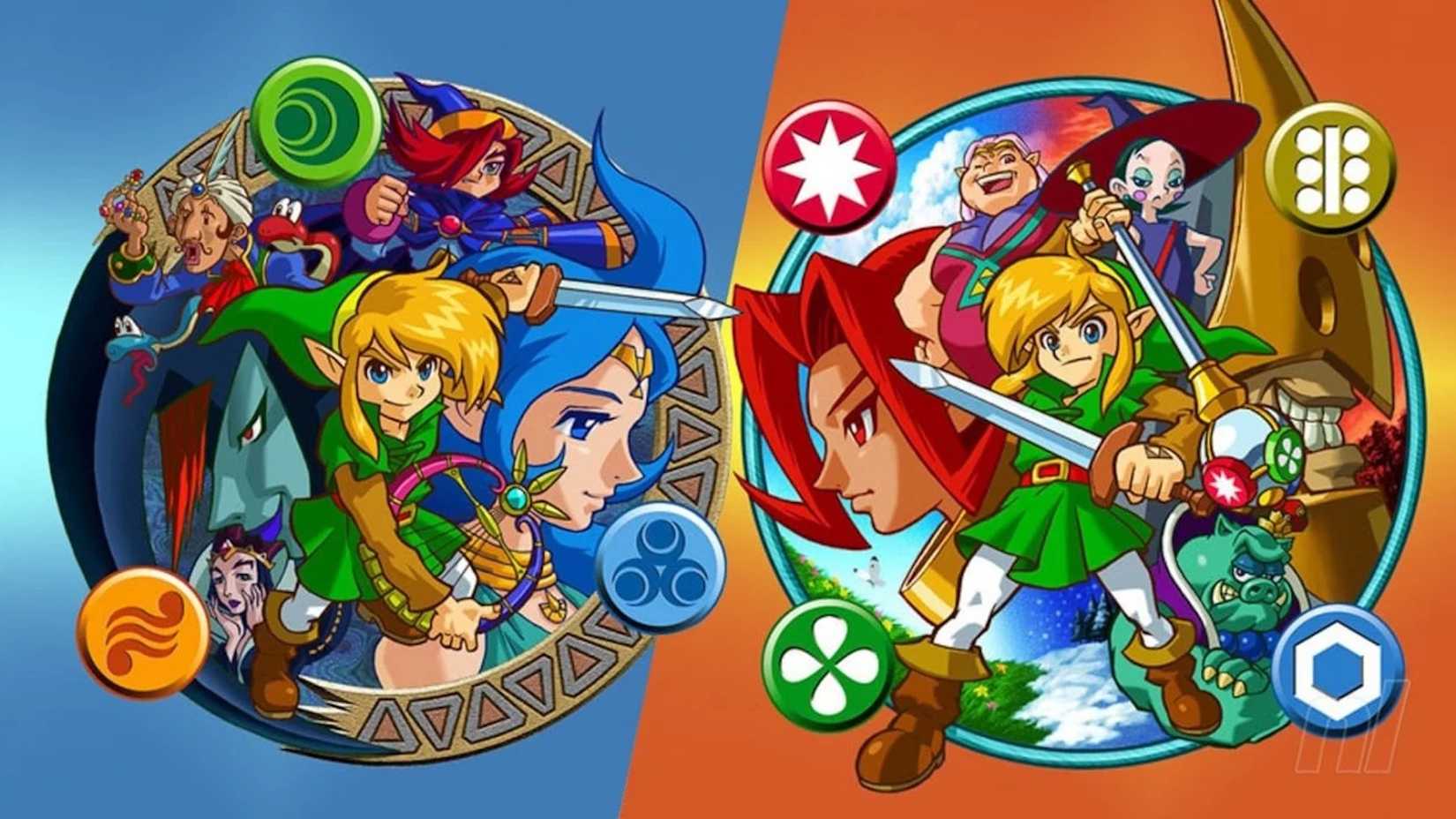 Image: Capcom/Nintendo
On the surface, there’s a lot of common ground with A Link to the Past and Link's Awakening (though without the latter's first three prologue-style dungeons). You fight through eight dungeons, get new tools to solve more puzzles, trounce a bunch of bosses, and play delivery elf-boy passing parcels all around the land until you end up with a really cool weapon at the end of it all. It was classic, as Capcom intended, but there was a lot more going on, too.
Holodrum and Labyrnna felt like bustling fantasy realms, with distinct cultures dotted around the map. These lands felt more integrated, part of a colorful society, instead of just occupying their prescribed zones on a map. Goron live in the hills, but they aren't unheard of elsewhere. Talking animals are an accepted thing — not just confined to dreams like in Link's Awakening. Moblins have their own subculture and even build fortresses. There's a bunch of weird thieving lizards on an island in Ages and an underground city full of dance-mad hooded folks in Seasons. Pirates, witches, desolate farming villages, best boy Tingle, museums, palaces, queens, magic seeds, a thriving jewelry trade — Capcom crammed these games with so much life. That's not even getting into special scenes you'd get by linking the games together, things like watching a child you named grow up or unlocking secret endings.
I realize now that the Oracle games are a hybrid of Majora's Mask with traditional Zelda, fusing the magic of what feels like everyday life in a foreign land with the usual dungeon busting-and-monster bashing of older games. Granted, the dungeon busting isn't always great. I can't say I remember any of them with particular fondness or excitement, unlike Link to the Past's dungeons. But I do remember everything else leading up to those.
Manipulating the seasons in Seasons comes close to feeling like a gimmick at times, but the sprite work for each quarter is absolutely gorgeous. The map designs are quite memorable as well, even if they aren't all that complex. Ages deserves its reputation as the better of the two, though. The puzzles built around swapping between past and future make excellent use of cause-and-effect as you manipulate the maps. And those maps and puzzles get rather complex, even early in the game, like when you have to navigate the barter culture of weird lizards to get your tools back and move forward.
There's a refreshing sense of normalcy about the way these games treat Link, too. Yes, the Triforce calls him out of Hyrule to these distant lands, and yes, in the linked ending, only he can defeat Ganon and save the princess. But the rest of the story? Any old hero would do. No weighty sense of destiny hangs over proceedings here. Link helps out because he's in the right place (watching a witch possess a singer and seeing a creep kidnap a dancer) at the right time. Capcom's injection of completely fresh, new storytelling ideas helps build that sense of something distinct, too. Nintendo's iterations of Hyrule could hardly be called stale, even at the series' least imaginative points. But here's a set of worlds operating on their own rules, without goddesses and magic triangles and big red-haired men making their expected appearances.
 Related
Zelda didn't survive for 40 years by accident
Zelda's ability to endure over decades is a miracle






 English (US) ·