

Published Feb 8, 2026, 10:42 PM EST
Nicolas Ayala is a Senior Writer for the Comics team at ScreenRant, with over five years of experience writing about Superhero media, action movies, and TV shows.
Despite their shared purpose, the Avengers have a clear tendency to break up in often catastrophic ways. Earth's Mightiest Heroes bring together gods, soldiers, scientists, spies, and magicians under a single banner, to protect the world and the universe. No single threat can overwhelm them because someone on the team is always equipped to respond. The Avengers represent the ideal that cooperation across differences can achieve what no individual ever could.
At the same time, the Avengers' wildly different members make the team too volatile. Deep ideological rifts and clashing personalities routinely push the team to its breaking point. The Avengers often implode because their members genuinely disagree on what lines should never be crossed. These fractures lead to some of Marvel’s most dramatic breakups.
Civil War II
(2016)

Civil War II splits the superhero community apart a second time after the original Civil War thanks to Ulysses Cain, an Inhuman whose visions predict possible futures. When Captain Marvel embraces the idea of preemptive justice based on these visions, Iron Man becomes her staunchest opponent, arguing that punishing people for crimes they haven’t committed yet violates free will and due process. The ideological divide leads to a brutal confrontation and the deaths of major characters.
The aftermath of Civil War II leaves the Avengers emotionally and structurally broken. Trust between teammates is shattered, particularly due to Captain Marvel’s aggressive leadership style. Tony Stark’s absence creates a leadership vacuum, while heroes like Captain America, Black Panther, and others are forced to reassess what the Avengers are supposed to stand for. The Avengers eventually reunite, but the event serves as a cautionary tale about absolutism and unchecked authority.
Secret Empire
(2017)

Secret Empire sees the Avengers torn apart by the rise of Hydra Cap, Steve Rogers himself, rewritten into a lifelong Hydra loyalist through Kobik’s reality-altering powers. Unlike most Avengers schisms, this one doesn’t stem from an ideological disagreement between heroes, but from the total subversion of the Avengers’ moral center. With the Avengers scattered, imprisoned, or on the run, Hydra Cap dismantles Earth’s defenses and attempts a total takeover.
Although the true Captain America is eventually restored when Kobik recreates the original Steve Rogers, the damage is done. The Avengers, and the world at large, are left grappling with the fact that their greatest symbol was used to enforce fascist rule. Steve himself carries immense guilt despite not being responsible, while other heroes struggle to reconcile their faith in symbols and leadership. The team eventually reforms, but Secret Empire permanently alters how heroes view authority and teaches them that no symbol, no matter how pure, should ever go unquestioned.
Fear Itself
(2011)

Fear Itself fractures the Avengers when the Serpent, Asgardian God of Fear, awakens and amplifies the heroes' darkest emotions. Several heroes and allies, including the Hulk, succumb to this corruption, forcing the Avengers into the unthinkable position of fighting their own. The crisis escalates rapidly as morale collapses, and even the strongest Avengers prove powerless against fear itself. The breaking point comes with Thor's apparent death, whose sacrifice against the Serpent leaves the team emotionally shattered.
Although Thor is later revealed to have survived, the Avengers are forced to confront how easily fear dismantles their unity and exposes their emotional vulnerabilities. Tony Stark’s decision to use Uru to create new weapons for the Avengers backfires, costing him his reputation and memory, while Odin’s cold detachment further alienates Earth from Asgard. Unlike other breakups driven by belief systems, Fear Itself proves that the Avengers can be torn apart simply by the emotions that bind them together.
Operation Galactic Storm
(1992)

Operation: Galactic Storm sees the Avengers caught in a brutal conflict between the Kree and the Shi’ar, which forces the heroes to split up. Iron Man leads a group of Avengers in a preemptive strike that results in the execution of Supreme Intelligence of the Kree. While the decision is made to end a devastating war, it immediately divides the Avengers between those who see the act as necessary and those who view it as an unforgivable moral failure.
Captain America openly condemns Iron Man’s actions, while other Avengers quietly leave the team. Iron Man resigns in disgrace, and the Avengers splinter into smaller units, which marks the end of an era of unquestioned trust. Though the Avengers eventually regroup, their dynamic is permanently altered, with deeper scrutiny over leadership and accountability.
Time Runs Out
(2015)

Set during Jonathan Hickman’s Avengers run, Tim Runs Out follows the team as they confront multiversal incursions that threaten Earth's very existence. As the crisis escalates, the Avengers fracture over how far they’re willing to go to survive. The central divide forms when more than one group decides that destroying other universes may be the only way to save their own.
Time Runs Out leaves the Avengers broken and scattered. Heroes like Iron Man become pragmatic architects of survival at any cost, and Namor fully embraces villainy, setting the stage for his role in Secret Wars. The Avengers don’t truly heal before the universe ends; all the opposite, their unresolved conflict flows directly into Doom’s rise as God Emperor. Unlike other breakups, Time Runs Out offers no immediate reconciliation, only the sobering realization that the end is inevitable.
Avengers Disassembled
(2004)

Avengers Disassembled is the modern template for every major Avengers breakup that followed. Written by Brian Michael Bendis, the storyline reveals that the team’s collapse is orchestrated from within, as the Scarlet Witch suffers a catastrophic breakdown triggered by the resurfacing trauma of her erased children. Wanda's uncontrolled reality-warping powers lead to a sudden chain of disasters: Vision is killed, Hawkeye sacrifices himself, She-Hulk goes on a destructive rampage, and the Avengers Mansion is destroyed.
The Avengers officially disband and the Marvel Universe enters a period of fragmentation that directly leads into House of M and Civil War. Trust within the team is broken, particularly around Wanda. When the Avengers eventually reform as the New Avengers, it’s with a radically different roster and philosophy.
Civil War
(2006)

Civil War is by far the Avengers' most famous and consequential break-up in Marvel history. The conflict erupts after a superhuman disaster leads to the proposed Superhuman Registration Act. Iron Man leads the pro-registration side, believing accountability is necessary to preserve public trust, while Captain America opposes it on moral grounds, viewing the act as an assault on personal freedom.
Civil War leaves scars that take years to heal. Captain America surrenders only to be assassinated shortly afterward, while Iron Man becomes a deeply controversial figure as the face of enforced registration. The Avengers continue to exist in splintered forms, but the ideological divide introduced by Civil War never fully disappears, permanently reshaping how the Avengers and the public view superheroes.
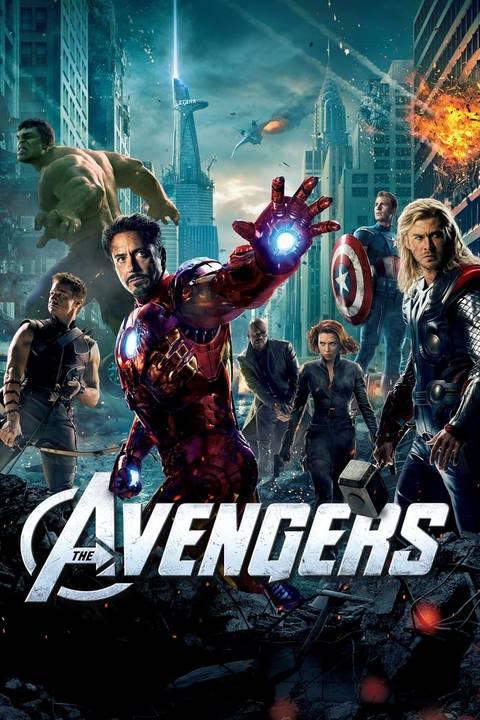
Release Date May 4, 2012
Runtime 143 minutes
-

Steve Rogers / Captain America
-






:quality(85):upscale()/2026/02/02/940/n/1922153/tmp_2bS324_5518251436641b44_Photo_Grid_3_Up_-_Burgundy_Green-2-Photo_Grid_4up_Main_-_Green_Burgundy_1_.jpeg)
 English (US) ·