
Few movie genres have had so much staying power as adventure. Since the early days of cinema, audiences have been utterly transfixed by movies about grand, dangerous, and thrilling adventures in far-off lands, filled with daring heroes, handsome rogues, spirited damsels, and wicked villains. Adventure movies have had a long and storied journey on the big screen, from the early days of The Thief of Bagdad all the way to the Indiana Jones movies of the '80s.
In the 21st century, the genre endures as a prime source of entertainment, even if its popularity isn't exactly what it once was. Indeed, the genre's inherent, old-fashioned sensibilities might seem a tad outdated by today's standards, but audiences will still run to the theater for the right kind of adventure movie. Over the last 25 years, a few adventure movies have raised the bar and set new standards, becoming greatly influential not only within the genre but in cinema as a whole.
The Lord of the Rings Trilogy (2001-2003)
No movie—or in this case, movies—are more foundational to 21st-century filmmaking than The Lord of the Rings trilogy. Sir Peter Jackson's adaptation of J. R. R. Tolkien's equally seminal novel is the pillar upon which all of this century's blockbusters rise. The trilogy tells the story of the hobbit Frodo Baggins (Elijah Wood) as he and a fellowship of allies carry the One Ring to the fires of Mount Doom as the Dark Lord Sauron assembles an army to take over Middle-earth.
The Lord of the Rings revived the fantasy genre and proved that blockbuster filmmaking could perfectly balance commercialism with artistry. It accrued a total of 30 Oscar nominations, winning a whopping 17 statuettes, including Best Picture for The Lord of the Rings: The Return of the King. The films launched a new wave of fantasy and adventure movies based on literary IPs, with every studio wanting to replicate Jackson's success, if not critically, then at least commercially. It wasn't an easy task, as not even Jackson could do it with the subsequent Hobbit trilogy. The Lord of the Rings' legacy remains untouched, though; if anything, it has only kept increasing over the years, now standing as certified masterpieces of cinema as a whole.
'Pirates of the Caribbean: The Curse of the Black Pearl' (2003)
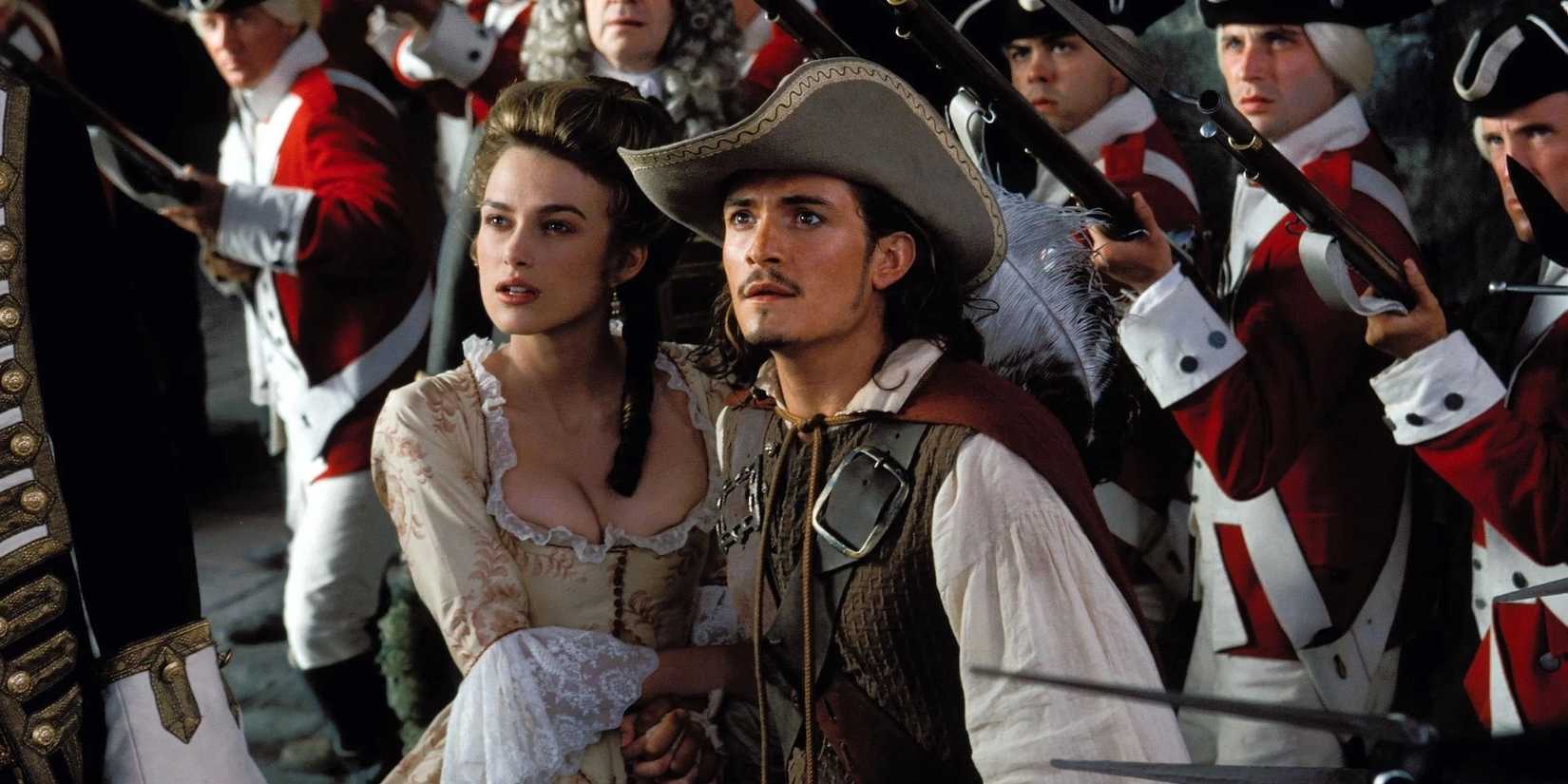 Image via Walt Disney Studios Motion Pictures
In 2003, Disney took a huge gamble by making a movie out of a theme park ride, one that wasn't particularly popular. Pirates of the Caribbean: The Curse of the Black Pearl also had the daunting task of reviving the pirate and swashbuckling genre, which was all but killed eight years earlier, when the disaster that was Cutthroat Island put a knife through its heart and bankrupted Carolco Pictures in the process. The risk paid off, alas, and The Curse of the Black Pearl became a sensation.
The film not only launched an incredibly successful franchise, including two sequels that rank among the biggest cultural phenomenons of the 2000s. However, it also signaled a shift in the industry: suddenly, studios didn't need to stick to books, shows, or movies for inspiration, as theme park rides and even board games were all game. Disney would make multiple attempts at replicating Pirates' success, tackling other theme park rides like Haunted Mansion and Tomorrowland; none were as successful. Similarly, competitor studios went all in on the whimsical, adventure vibe of the movie, leading to multiple movies with varying degrees of success, from solid performers that went on to become cult classics, like Stardust, to outright disasters that are best left forgotten, like Prince of Persia: The Sands of Time.
'Sherlock Holmes' (2009)
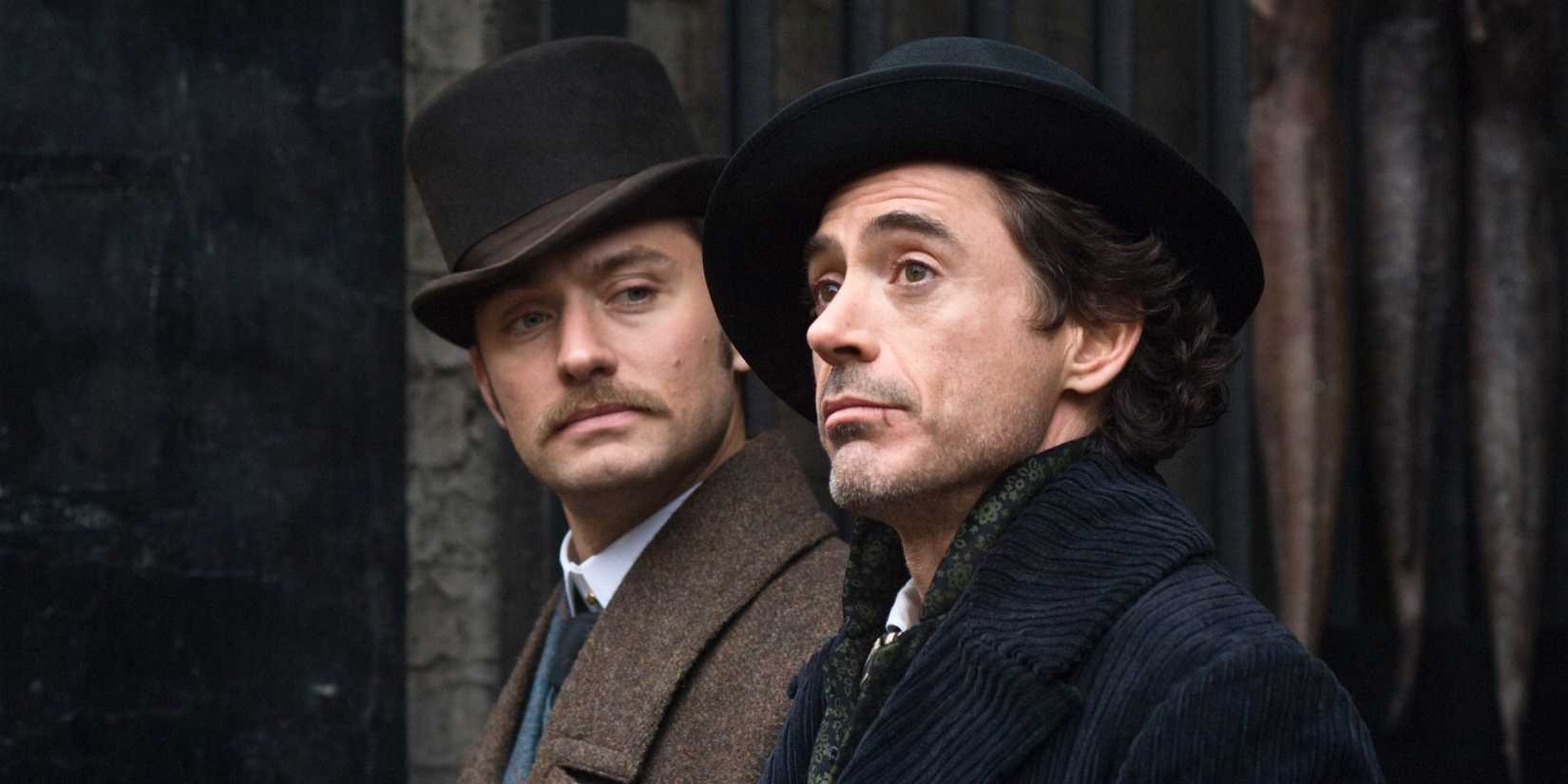 Image via Warner Bros.
The '80s showed that action heroes can come from the most unlikely of places. However, that idea took a whole new form in the late 2000s, when studios got the idea to turn classic literary characters into men of action, if not necessarily action stars per se. Perhaps the most influential of these new heroes was Guy Ritchie's take on Sherlock Holmes, played by Robert Downey Jr. in the middle of his post-Iron Man career resurgence.
2009's Sherlock Holmes was an action-comedy-mystery hybrid that greatly benefited from Downey Jr.'s witty, physical, and curiously charming performance, which even earned him the Golden Globe. The film's hectic, highly modernized approach also inspired a new wave of movies taking classic properties and translating them to a modern audience, from 2011's The Three Musketeers to Abraham Lincoln: Vampire Hunter, none of which were particularly successful. The film also launched a new wave of Sherlock Holmes adaptations, most notably the BBC serial starring Benedict Cumberbatch in an Emmy-winning performance. A third entry in Ritchie's Holmes series has been long-discussed, but nothing has materialized, and fifteen years after 2011's Sherlock Holmes: A Game of Shadows, we're still waiting.
'Alice in Wonderland' (2010)
 Image via Walt Disney Studios Motion Pictures
Not every movie that was influential was strictly "good"; take Tim Burton's fantasy Alice in Wonderland, which might very well be one of the weakest entries into his filmography. The film acts as a sequel to the classic Disney movie and sees Alice (Mia Wasikowska) returning to "Underland," which has been overtaken by the Red Queen (Helena Bonham-Carter). With the help of many of the classic characters from Lewis Carroll's tale, Alice launches a revolution to put the White Queen (Anne Hathaway) back on the throne.
The wave of Disney live-action adaptations that dominated the 2010s, and keep popping up to this day, can be traced back to Burton's Alice in Wonderland. The film was an overwhelming success, surpassing a billion at the box office and making Disney salivate at the prospect of repackaging their timeless classics in live-action. Along with James Cameron's Avatar, Alice in Wonderland was also instrumental in popularizing 3D, with many movies post-2010 quickly scrambling to turn themselves into 3D, hoping to replicate Burton and Cameron's successes. Indeed, few movies of the early 21st century were as influential as this one, believe it or not.
'Snow White and the Huntsman' (2012)
 Image via Universal Pictures
And speaking of mid movies that had a profound impact on the industry, we have Snow White and the Huntsman. A dark retelling of the classic tale of Snow White, the film sees the evil queen Ravenna (Charlize Theron) taking over Snow White's (Kristen Stewart) kingdom and locking her in a tower. Years later, Snow White escapes into the Dark Forest, and Ravenna sends the huntsman Eric (Chris Hemsworth) to bring her back.
Snow White and the Huntsman is a curious case: it wasn't exactly acclaimed by critics or audiences, yet its impact on filmmaking is undeniable, launching countless dark retellings of classic fairy tales in the years to come. Everything, from failed efforts like Hansel & Gretel: Witch Hunters and Jack the Giant Slayer, to criminally underrated grimdark gems like Tale of Tales, to even Disney's own Maleficent and Into the Woods, can be traced back to Stewart and Theron's fantasy adventure. The trend was short-lived, though, because who doesn't want to see fairy tale figures in grimy, oppressive landscapes because the story isn't actually how we know it? By the time The Huntsman: Winter's War (the long-awaited sequel that didn't feature Stewart's Snow White) came out, the industry had ended its venture into fairy tale territory.
'Barbie' (2023)
 Image via Warner Bros. Pictures
Now, first things first: Barbie is a fantasy comedy with heavy adventure elements rather than a strictly pure adventure movie. However, considering the adventure takes the entire middle act of the movie and is the main driver in Barbie's (Margot Robbie) story, it's eligible for this list. The movie sees Barbie and Ken (Ryan Gosling) going on an adventure from Barbieland into the human world after she starts having dangerous thoughts that are directly tied to the girl playing with her in the real world.
Barbie was a proper cultural phenomenon, not only as one-half of the Barbenheimer phenomenon, but in and of itself. It was the highest-grossing movie of 2023 and earned eight Oscar nominations, including Best Picture—infamously, both Robbie and Greta Gerwig were snubbed in the Best Actress and Best Director categories. As expected, the film's massive success provoked an instant reaction in the industry, not with studios actively searching for more female-centric, female-driven movies about distinct female-oriented issues, but by green-lighting more movies based on toys. Thus far, we've had new adaptations of Masters of the Universe, and there are active plans to make movies about Polly Pocket and, believe it or not, even Barney.
Collider Exclusive · Oscar Best Picture Quiz
Which Oscar Best Picture
Is Your Perfect Movie?
Parasite · Everything Everywhere · Oppenheimer · Birdman · No Country
Five Oscar Best Picture winners. Five completely different visions of what cinema can be — and what it can do to you. One of them is the film that was made for the way your mind works. Ten questions will figure out which one.
🪜Parasite
🌀Everything Everywhere
☢️Oppenheimer
🐦Birdman
🪙No Country for Old Men
FIND YOUR FILM →
01
What kind of film experience do you actually want? The best movies don't just entertain — they leave something behind.
ASomething that pulls the rug out — that makes me think I'm watching one kind of film and then reveals I'm watching another entirely. BSomething overwhelming — funny, sad, absurd, and genuinely moving, all at once. CSomething grand and weighty — a film that makes me feel the full scale of what I'm watching. DSomething formally daring — a film that pushes what cinema can even do. ESomething lean and relentless — pure tension with no wasted frame.
NEXT QUESTION →
02
Which idea grabs you most in a film? Great films are driven by a central obsession. What's yours?
AClass, inequality, and what people are willing to do when desperation meets opportunity. BIdentity, family, and the chaos of trying to hold your life together when everything is falling apart. CGenius, moral responsibility, and the catastrophic weight of a decision you can never take back. DEgo, legacy, and the terror of becoming irrelevant while you're still alive to watch it happen. EEvil, chance, and whether moral order actually exists or if we just tell ourselves it does.
NEXT QUESTION →
03
How do you like your story told? Form is content. The way a story is shaped changes what it means.
AGenre-twisting — I want it to start in one lane and migrate into something completely different. BMaximalist and genre-blending — comedy, action, drama, sci-fi, all in one ride. CEpic and non-linear — cutting between timelines, building a mosaic of cause and consequence. DA single unbroken flow — I want to feel like I'm living it in real time, no cuts to safety. ESpare and precise — every scene doing exactly what it needs to do and nothing more.
NEXT QUESTION →
04
What makes a truly great antagonist? The opposition defines the protagonist. What kind of opposition fascinates you?
AA system — invisible, structural, and almost impossible to fight because it has no single face. BThe self — the ways we sabotage, abandon, and fail the people we love most. CHistory — the unstoppable momentum of events that no single person can stop or redirect. DThe industry — the machinery of culture that chews up talent and spits out irrelevance. EPure, implacable evil — a force so certain of itself it becomes almost philosophical.
NEXT QUESTION →
05
What do you want from a film's ending? The final note is the one that lingers. What do you want it to sound like?
AShock and inevitability — a conclusion that recontextualises everything that came before it. BEarned emotion — I want to cry, laugh, and feel genuinely hopeful, even if the world is a mess. CDevastation and grandeur — an ending that makes me sit in silence for a few minutes after. DAmbiguity — something that leaves enough open that I'm still thinking about it days later. EBleakness — an honest refusal to pretend the world is tidier than it actually is.
NEXT QUESTION →
06
Which setting pulls you in most? Where a film takes place shapes everything — mood, stakes, what's even possible.
AA gleaming modern city with a hidden underside — beauty masking rot, wealth masking desperation. BA collapsing suburban life that opens onto something infinite — the multiverse of a single ordinary person. CThe corridors of power and science at a world-historical turning point — where decisions echo for decades. DThe grimy, alive chaos of New York and Hollywood — fame as both destination and trap. EVast, indifferent landscape — desert and highway where violence arrives without warning or reason.
NEXT QUESTION →
07
What cinematic craft impresses you most? Every great film has a signature — a technical or artistic element that makes it unmistakable.
AProduction design and mise-en-scène — every frame composed to carry meaning beneath the surface. BEditing and tonal control — the ability to move between registers without losing the audience. CScore and sound design — music that becomes inseparable from the dread and awe of what you're watching. DCinematography as performance — the camera not recording events but participating in them. ESilence and restraint — what's left unsaid and unshown doing more work than any dialogue could.
NEXT QUESTION →
08
What kind of main character do you root for? The protagonist is the lens. Who you choose to follow says something about you.
ASomeone smart and resourceful who makes increasingly dangerous decisions under pressure. BSomeone overwhelmed and ordinary who turns out to be capable of something extraordinary. CA brilliant, tortured figure whose gifts and flaws are inseparable from each other. DA self-destructive artist whose ego is both their superpower and their undoing. EA quiet, principled person trying to make sense of a world that has stopped making sense.
NEXT QUESTION →
09
How do you feel about a film that takes its time? Pace is a choice. Some films sprint; others let tension accumulate slowly, deliberately.
AI love a slow build when I know the payoff is going to be seismic — patience for a devastating reveal. BGive me relentless momentum — I want to feel breathless and emotionally spent by the end. CEpic runtime doesn't scare me — if the material demands three hours, give me three hours. DI want it to feel propulsive even when nothing is technically happening — restless energy throughout. EDeliberate and unhurried — I want dread to accumulate in the spaces between the action.
NEXT QUESTION →
10
What do you want to feel walking out of the cinema? The best films leave a mark. What kind of mark do you want?
AUnsettled — like I've just seen something I can't fully explain but can't stop thinking about. BMoved and energised — like the film reminded me what actually matters and gave me something to hold onto. CHumbled — like I've been in the presence of something genuinely important and overwhelming. DExhilarated — like I've just seen cinema doing something it's never quite done before. EHaunted — like a cold, quiet dread that stays with me for days.
REVEAL MY FILM →
The Academy Has Decided Your Perfect Film Is…
Your answers have pointed to one Oscar Best Picture winner above all others. This is the film that was made for the way your mind works.
Parasite
You are drawn to films that operate on multiple levels simultaneously — that begin in one genre and quietly, brilliantly migrate into another. Bong Joon-ho's Parasite is a film about class, desire, and the architecture of inequality that manages to be darkly funny, deeply suspenseful, and genuinely shocking across a single extraordinary running time. Your instinct is for cinema that hides its true intentions until the moment it's ready to reveal them. Parasite is exactly that — a film that rewards close attention and punishes assumptions, right up to its devastating final image.
Everything Everywhere All at Once
You want it all — and this film gives you all of it. The Daniels' Everything Everywhere All at Once is one of the most maximalist films ever made: action comedy, multiverse sci-fi, family drama, existential crisis, and a genuinely earned emotional core that sneaks up on you amid the chaos. You are someone who responds to ambition, who doesn't want cinema to choose between being entertaining and being meaningful. This film refuses that choice entirely. It is overwhelming by design, and its overwhelming nature is precisely the point — because the feeling of being crushed by infinite possibility is exactly what it's about.
Oppenheimer
You are drawn to cinema on a grand scale — films that understand history not as a backdrop but as a force, and that place their characters inside that force and watch what happens. Christopher Nolan's Oppenheimer is a film about the terrifying gap between what we can do and what we should do, told with the full weight of one of the most consequential moments in human history behind it. You want your films to feel important without feeling self-important — to earn their ambition through sheer craft and the gravity of their subject. Oppenheimer does exactly that. It is enormous, complicated, and refuses easy comfort.
Birdman
You are drawn to films that foreground their own construction — that make the how of the filmmaking part of the what it's about. Alejandro González Iñárritu's Birdman, shot to appear as a single continuous take, is cinema examining itself through the cracked mirror of a fading actor's ego. You respond to formal daring, to the feeling that a film is doing something that probably shouldn't be possible. Michael Keaton's performance and Emmanuel Lubezki's restless camera create something genuinely unlike anything else — a film that is simultaneously about creativity, relevance, self-destruction, and the impossibility of ever truly knowing if your work means anything at all.
No Country for Old Men
You are drawn to cinema that trusts silence, that refuses to explain itself, and that treats dread as a form of meaning. The Coen Brothers' No Country for Old Men is a film about the arrival of a new kind of evil — implacable, arbitrary, and utterly indifferent to the moral frameworks we use to make sense of the world. It is one of the most formally controlled films ever made, and its controlled restraint is what makes it so terrifying. You want your films to haunt you, not comfort you. You are not interested in resolution if resolution would be dishonest. No Country for Old Men is honest in a way that most cinema never dares to be.
↻ RETAKE THE QUIZ
'The Odyssey' (2026)
 Image via Universal Pictures
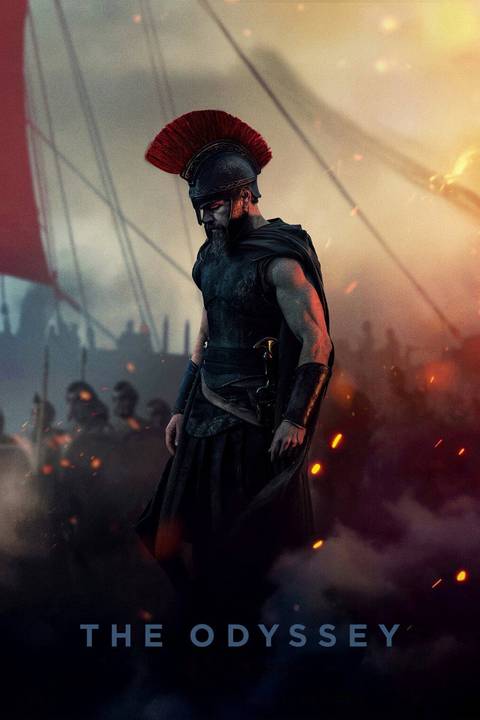
It might be cheating to include Christopher Nolan's The Odyssey in this list, considering it's literally still in movie theaters. However, the impact it's already had on the industry is perceivable, and considering Nolan's reputation and the film's performance, it's easy to conclude it will go all the way to become one of the all-time greats. Matt Damon stars in this adaptation of Homer's epic about Odysseus' 10-year-journey back to Ithaca.
The Odyssey has already become Nolan's highest-grossing movie, and the dollars just keep coming. Awards predictors have it as a top contender in multiple categories at the Oscars, including Matt Damon in Best Actor. Just like Gladiator did for the sword-and-sandal genre, The Odyssey is bound to inspire a new wave of large-scale, character-driven epics. Whether they come from Greek classics or not remains to be seen, but don't be surprised if new movies based on the Trojan War and the arguably less-widely-known epic Aeneid are announced in the following months—perhaps we'll finally get the long-awaited adaptation of Madeline Miller's The Song of Achilles. How many of those will actually reach the heights of Nolan's Odyssey? Well, that's a different matter altogether.
The Odyssey
Release Date July 15, 2026
Runtime 173 minutes





 English (US) ·