Liam Gaughan is a film and TV writer at Collider. He has been writing film reviews and news coverage for ten years. Between relentlessly adding new titles to his watchlist and attending as many screenings as he can, Liam is always watching new movies and television shows.
In addition to reviewing, writing, and commentating on both new and old releases, Liam has interviewed talent such as Mark Wahlberg, Jesse Plemons, Sam Mendes, Billy Eichner, Dylan O'Brien, Luke Wilson, and B.J. Novak. Liam aims to get his spec scripts produced and currently writes short films and stage plays. He lives in Allentown, PA.
Entertainment value is a subjective quality among different audiences, and the biggest discrepancy between fans and cinephiles is what constitutes “fun.” Although the term “fun” can be used in an almost disparaging way to describe or defend lazy blockbuster or franchise films that exist only to satisfy Internet commenters, cinema was created as a form of entertainment as much as it was a form of art, and there is no shame in making something that is unabashedly entertaining. The aftermath of the COVID-19 pandemic and the consequences that it had on the global box office has ensured that pure escapism is more desired than ever before, especially when audiences are seeking escapism. Although the box office has taken some significant hits in recent years due to factors that are beyond the control of any one studio, there does seem to be a conscious desire from audiences to turn cinemagoing into a communal experience once more.
There is a difference between films that are “fun” and “funny,” as there’s entertainment value in crowd pleasers that don’t necessarily need to be treated as outright comedies; this is of course complicated by the fact that Hollywood doesn’t frequently churn out midbudget comedies anymore, as they are more common to become streaming shows. At the same time, the industry has oddly begun to treat its blockbusters less like escapist entertainment and more like important pieces of narrative franchise building. When every film is simply a building block that is intended to tease whatever comes next in a cinematic universe, it can be harder to enjoy them as individual sections. There’s no rhyme or reason that describes what a “fun” film could be, but a discerning cinephile can usually point it out when they see it.
6
‘Licorice Pizza’ (2021)
Image via United Artists
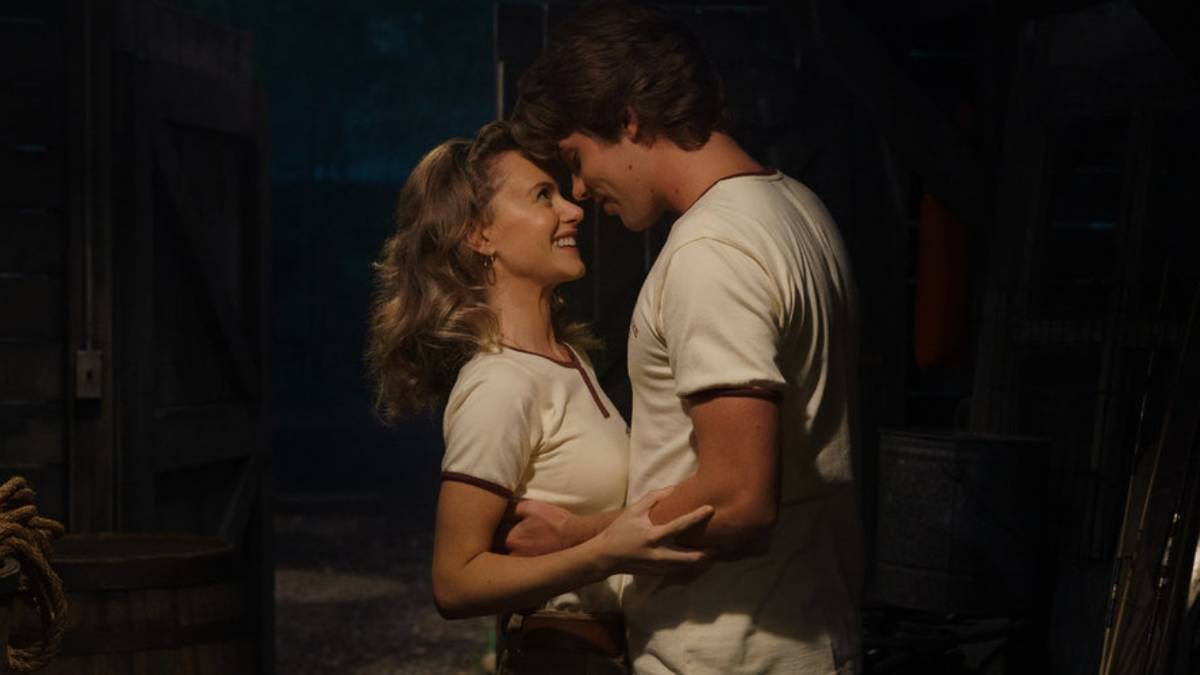
Licorice Pizzais a throwback to the San Fernando Valley-set dark comedies that Paul Thomas Anderson made early on within his career, but it's not nearly as emotionally crushing as Boogie Nights or Magnolia. Anderson has always understood how to write irascible, energetic young people who dream farther than they can see, and Licorice Pizza is an uproarious romantic comedy that uses Los Angeles of the ‘70s as a playground to explore multiple avenues of popular culture. It’s one of the more unusual romantic comedies of the past 25 years, but it’s also one of the most honest and sincere; Anderson is unparalleled in his ability to take note of up-and-coming talent and give them opportunities, and the discovery of Cooper Hoffman and Alana Haim made Licorice Pizza far more entertaining than it would have been with two established actors cast.
Licorice Pizza plays out like a series of memories, and the segmented, free-flowing progression of events makes for a wonderful string of anecdotes that capture all the highs and lows of a single summer. Although there are a number of great cameos and brief appearances by more established names, Bradley Cooper’s role as Jon Peters is arguably the funniest that he has been since The Hangover.
5
‘Hit Man’ (2024)
Image via Netflix
Hit Manis a deviation for Richard Linklaterbecause it was the first time he was working in the espionage dark comedy subgenre, even if it was based on a Texas Monthly article in the same way that his underrated 2011 film Bernie was. Hit Man works because it is a film about audience expectations that explores how silly the fundamentals of cinema would be if they were taken seriously; Glen Powell stars as a geeky college professor who goes undercover as various fake assassins in order to help law enforcement catch those who would hire a hit man, but he ends up getting in too deep when he falls for a woman (Adria Arjona) who wants to actually have her abusive husband killed. It’s a startling effective romantic-comedy that doubles as a subversive noir, with Arjona perfectly embodying the persona of a modern femme fatale.
Hit Man signified that Powell was a true talent on the rise who was interested in transforming himself physically in order to wear different disguises, which is something that he would do once again in Chad Powers and The Running Man. It’s nonetheless an impressive achievement on Linklater’s part that Hit Man retains the “hangout” sensibilities of his best work, all whilst taking some dark twists.
4
‘Challengers’ (2024)
Image via Amazon MGM Studios
Challengersexists within several genres that Hollywood has declined to thoughtfully develop in recent years, as it’s a gripping sports film, a twisty erotic thriller, and a hilarious romantic comedy about three highly motivated, competitive people who can’t help but be drawn to one another. Luca Guadagnino has certainly made films that are more existentialist and weird, but Challengers is an unabashed work of populist entertainment that features better craftsmanship than anything else this decade. Between the absorbing camerawork, the hypnotic editing, and the instantly iconic musical score, Challengers is a burst of momentum that crashes competing ambitions into one another.
Challengers is a perfect sports film that doesn’t require existing knowledge of tennis to be enjoyed, but does show enough nuance in its exploration of the sport to suggest that Guadagnino did his research. It’s also the rare love triangle film where there isn’t an obviously misplaced party in play, as there is reason to equally invest in the performances by Zendaya, Josh O’Connor, and Mike Faist.
Collider Exclusive · Oscar Best Picture QuizWhich Oscar Best Picture Is Your Perfect Movie?Parasite · Everything Everywhere · Oppenheimer · Birdman · No Country
Five Oscar Best Picture winners. Five completely different visions of what cinema can be — and what it can do to you. One of them is the film that was made for the way your mind works. Ten questions will figure out which one.
🪜Parasite
🌀Everything Everywhere
☢️Oppenheimer
🐦Birdman
🪙No Country for Old Men
FIND YOUR FILM →
01
What kind of film experience do you actually want?The best movies don't just entertain — they leave something behind.
ASomething that pulls the rug out — that makes me think I'm watching one kind of film and then reveals I'm watching another entirely.
BSomething overwhelming — funny, sad, absurd, and genuinely moving, all at once.
CSomething grand and weighty — a film that makes me feel the full scale of what I'm watching.
DSomething formally daring — a film that pushes what cinema can even do.
ESomething lean and relentless — pure tension with no wasted frame.
NEXT QUESTION →
02
Which idea grabs you most in a film?Great films are driven by a central obsession. What's yours?
AClass, inequality, and what people are willing to do when desperation meets opportunity.
BIdentity, family, and the chaos of trying to hold your life together when everything is falling apart.
CGenius, moral responsibility, and the catastrophic weight of a decision you can never take back.
DEgo, legacy, and the terror of becoming irrelevant while you're still alive to watch it happen.
EEvil, chance, and whether moral order actually exists or if we just tell ourselves it does.
NEXT QUESTION →
03
How do you like your story told?Form is content. The way a story is shaped changes what it means.
AGenre-twisting — I want it to start in one lane and migrate into something completely different.
BMaximalist and genre-blending — comedy, action, drama, sci-fi, all in one ride.
CEpic and non-linear — cutting between timelines, building a mosaic of cause and consequence.
DA single unbroken flow — I want to feel like I'm living it in real time, no cuts to safety.
ESpare and precise — every scene doing exactly what it needs to do and nothing more.
NEXT QUESTION →
04
What makes a truly great antagonist?The opposition defines the protagonist. What kind of opposition fascinates you?
AA system — invisible, structural, and almost impossible to fight because it has no single face.
BThe self — the ways we sabotage, abandon, and fail the people we love most.
CHistory — the unstoppable momentum of events that no single person can stop or redirect.
DThe industry — the machinery of culture that chews up talent and spits out irrelevance.
EPure, implacable evil — a force so certain of itself it becomes almost philosophical.
NEXT QUESTION →
05
What do you want from a film's ending?The final note is the one that lingers. What do you want it to sound like?
AShock and inevitability — a conclusion that recontextualises everything that came before it.
BEarned emotion — I want to cry, laugh, and feel genuinely hopeful, even if the world is a mess.
CDevastation and grandeur — an ending that makes me sit in silence for a few minutes after.
DAmbiguity — something that leaves enough open that I'm still thinking about it days later.
EBleakness — an honest refusal to pretend the world is tidier than it actually is.
NEXT QUESTION →
06
Which setting pulls you in most?Where a film takes place shapes everything — mood, stakes, what's even possible.
AA gleaming modern city with a hidden underside — beauty masking rot, wealth masking desperation.
BA collapsing suburban life that opens onto something infinite — the multiverse of a single ordinary person.
CThe corridors of power and science at a world-historical turning point — where decisions echo for decades.
DThe grimy, alive chaos of New York and Hollywood — fame as both destination and trap.
EVast, indifferent landscape — desert and highway where violence arrives without warning or reason.
NEXT QUESTION →
07
What cinematic craft impresses you most?Every great film has a signature — a technical or artistic element that makes it unmistakable.
AProduction design and mise-en-scène — every frame composed to carry meaning beneath the surface.
BEditing and tonal control — the ability to move between registers without losing the audience.
CScore and sound design — music that becomes inseparable from the dread and awe of what you're watching.
DCinematography as performance — the camera not recording events but participating in them.
ESilence and restraint — what's left unsaid and unshown doing more work than any dialogue could.
NEXT QUESTION →
08
What kind of main character do you root for?The protagonist is the lens. Who you choose to follow says something about you.
ASomeone smart and resourceful who makes increasingly dangerous decisions under pressure.
BSomeone overwhelmed and ordinary who turns out to be capable of something extraordinary.
CA brilliant, tortured figure whose gifts and flaws are inseparable from each other.
DA self-destructive artist whose ego is both their superpower and their undoing.
EA quiet, principled person trying to make sense of a world that has stopped making sense.
NEXT QUESTION →
09
How do you feel about a film that takes its time?Pace is a choice. Some films sprint; others let tension accumulate slowly, deliberately.
AI love a slow build when I know the payoff is going to be seismic — patience for a devastating reveal.
BGive me relentless momentum — I want to feel breathless and emotionally spent by the end.
CEpic runtime doesn't scare me — if the material demands three hours, give me three hours.
DI want it to feel propulsive even when nothing is technically happening — restless energy throughout.
EDeliberate and unhurried — I want dread to accumulate in the spaces between the action.
NEXT QUESTION →
10
What do you want to feel walking out of the cinema?The best films leave a mark. What kind of mark do you want?
AUnsettled — like I've just seen something I can't fully explain but can't stop thinking about.
BMoved and energised — like the film reminded me what actually matters and gave me something to hold onto.
CHumbled — like I've been in the presence of something genuinely important and overwhelming.
DExhilarated — like I've just seen cinema doing something it's never quite done before.
EHaunted — like a cold, quiet dread that stays with me for days.
REVEAL MY FILM →
The Academy Has DecidedYour Perfect Film Is…
Your answers have pointed to one Oscar Best Picture winner above all others. This is the film that was made for the way your mind works.
Parasite
You are drawn to films that operate on multiple levels simultaneously — that begin in one genre and quietly, brilliantly migrate into another. Bong Joon-ho's Parasite is a film about class, desire, and the architecture of inequality that manages to be darkly funny, deeply suspenseful, and genuinely shocking across a single extraordinary running time. Your instinct is for cinema that hides its true intentions until the moment it's ready to reveal them. Parasite is exactly that — a film that rewards close attention and punishes assumptions, right up to its devastating final image.
Everything Everywhere All at Once
You want it all — and this film gives you all of it. The Daniels' Everything Everywhere All at Once is one of the most maximalist films ever made: action comedy, multiverse sci-fi, family drama, existential crisis, and a genuinely earned emotional core that sneaks up on you amid the chaos. You are someone who responds to ambition, who doesn't want cinema to choose between being entertaining and being meaningful. This film refuses that choice entirely. It is overwhelming by design, and its overwhelming nature is precisely the point — because the feeling of being crushed by infinite possibility is exactly what it's about.
Oppenheimer
You are drawn to cinema on a grand scale — films that understand history not as a backdrop but as a force, and that place their characters inside that force and watch what happens. Christopher Nolan's Oppenheimer is a film about the terrifying gap between what we can do and what we should do, told with the full weight of one of the most consequential moments in human history behind it. You want your films to feel important without feeling self-important — to earn their ambition through sheer craft and the gravity of their subject. Oppenheimer does exactly that. It is enormous, complicated, and refuses easy comfort.
Birdman
You are drawn to films that foreground their own construction — that make the how of the filmmaking part of the what it's about. Alejandro González Iñárritu's Birdman, shot to appear as a single continuous take, is cinema examining itself through the cracked mirror of a fading actor's ego. You respond to formal daring, to the feeling that a film is doing something that probably shouldn't be possible. Michael Keaton's performance and Emmanuel Lubezki's restless camera create something genuinely unlike anything else — a film that is simultaneously about creativity, relevance, self-destruction, and the impossibility of ever truly knowing if your work means anything at all.
No Country for Old Men
You are drawn to cinema that trusts silence, that refuses to explain itself, and that treats dread as a form of meaning. The Coen Brothers' No Country for Old Men is a film about the arrival of a new kind of evil — implacable, arbitrary, and utterly indifferent to the moral frameworks we use to make sense of the world. It is one of the most formally controlled films ever made, and its controlled restraint is what makes it so terrifying. You want your films to haunt you, not comfort you. You are not interested in resolution if resolution would be dishonest. No Country for Old Men is honest in a way that most cinema never dares to be.
↻ RETAKE THE QUIZ
3
‘Top Gun: Maverick’ (2022)
Image via Paramount Pictures
Top Gun: Maverickis the sequel that seemed like it would never be madebecause of the decades of rumors and tragic passing of original director Tony Scott, which seemed to rule out the possibility of Tom Cruise ever returning to reprise his role as Pete Mitchcell. Although it would have been very easy for Top Gun: Maverick to fall into the same trap that had doomed several other legacy sequels that essentially just played out as lazy recreations, Joseph Kosinski molded a perfect reboot because it saw Maverick transitioning into become a mentor figure to the group of young pilots, including Rooster (Miles Teller), the son of his former best friend Goose (Anthony Edwards).
Cruise proves again why he is one of the best movie stars of all-time, but Top Gun: Maverick also managed to identify some of the other rising talents out there, including Powell, Monica Barbaro, and Lewis Pullman.
2
‘Project Hail Mary’ (2026)
Image via Amazon MGM Studios
Project Hail Maryis a perfect modern take on the space opera adventurebecause it is, ironically enough, a film about humanity where the main character is isolated from the rest of Earth on a mission to deep space. Although science fiction has become a genre in which there is far more “doom and gloom” than optimism about what the future can hold, Project Hail Mary takes an appropriate approach of recognizing the problems that mankind faces and telling an inspirational story about people of different backgrounds coming together to do something for the collective good of life itself. It’s a perfect companion piece to The Martian, another film based on a sci-fi novel from author Andy Weir that was adapted by Drew Goddard. It’s one of the many recent films that truly demands the scope of IMAX projection, showing that a film of this size can still contain a tremendous amount of artistry.
The key to the success of Project Hail Mary is the sincere connection between its two leads, as Ryan Gosling makes for an empathetic, funny teacher-turned-astronaut, and James Ortiz created one of the greatest modern puppet characters with Rocky. That such a big film is staked on such a simple and sincere connection is tremendously brave, but it’s a reminder of just how sharp writer/directors Phil Lord and Chris Miller can be (and begs the question of what their version of Solo: A Star Wars Story would have looked like). Although Project Hail Mary isn’t a spoof, as it includes some deeply emotional and harrowing moments, it’s nearly impossible to get to the end of the film without breaking out into a smile.
1
‘Splitsville’ (2025)
Image via Neon
Splitsvilleis one of the most audacious and uproarious original comedies of the decade because it unleashed the potential of the writer/director team of Michael Angelo Covino and Kyle Marvin, who also co-star in the film as best friends who become involved in the others’ respective spouses, played by Adria Arjona and Dakota Johnson. What begins as a hilarious look at male insecurity becomes an increasingly absurdist farce that involves sabotage, scandal, and one of the most surprisingly well-staged fight scenes there has been in a comedy film in quite some time.
Splitsville is equally sympathetic and searing with its characters, as it thoroughly understands the complexities of a longstanding relationship where certain truths become questioned. Although neither character ends up looking particularly good, Splitsville revels in the fact that the characters are sincerely emotional and not bottled up. Thanks to creative needle drops and some brilliant staging of setpieces, Splitsville is a European-styled comedy that examines the absurdity of the modern American social hierarchy.

 Image via Netflix
 Image via United Artists
 Image via Netflix
 Image via Amazon MGM Studios
 Image via Paramount Pictures
 Image via Amazon MGM Studios
 Image via Neon




 English (US) ·