Andrea M. Ciriaco is a long-time script reader and former entertainment editor who specializes in classic movies and Hollywood history. She was a student film critic at Kent State University for three years and worked at Warner Bros Studio in Burbank and The Safran Company for several years. Based on her vast taste and range of knowledge, many consider Andrea to be a walking IMDb who knows dozens of underrated movies and is a vital assesst to any trivia night. While movies are her expertise, Andrea is also a diehard fan of iconic shows including The Sopranos, Boardwalk Empire, Rod Serling's The Twilight Zone, Will & Grace and South Park. Some of her favorite filmmakers are Walt Disney,John Huston, Fritz Lang, Alfred Hitchcock, John Ford, Mel Brooks, Quentin Tarantino, Martin Scorsese and Howard Hawks.
The 1960s marked a seismic transformation in cinema, and few genres reflected this cultural evolution as intensely as the film noir genre. While retaining the cynicism, moral ambiguity, and psychological dread of its classic predecessor, the neo-noir genre dragged its antiheroes out of the night and into broad daylight, turning classic noir’s shadowy alleyways and fedoras into something sharper, colder, and distinctly modern.
Through revolutionary editing, vibrant Technicolor, avant-garde sound design, and an unprecedented wave of gritty realism, directors of the decade such as Don Siegel and J. Lee Thompson radically redefined crime cinema. Out of all the noir movies released during the 1960s, including Cape Fear, The Manchurian Candidate, and Bullitt, these are six masterpieces that shattered classical genre boundaries, challenged moral certainty, and set the stage for neo-noir.
6
'Mirage' (1965)
Image via Universal Pictures
Edward Dmytryk’s Mirageis an unsung masterpiece of 1965 neo-noir, brilliantly channeling Hitchcockian suspense with the stark psychological themes of identity loss and corporate menace. Gregory Peck stars as David Stillwell, a cost accountant who discovers he has total amnesia covering the past two years of his life, beginning during a mysterious power blackout in a New York skyscraper. As he attempts to piece together his forgotten identity, he finds himself pursued by ruthless hitmen working for a shadowy figure known as "Major Crawford."
Mirage features a tight, labyrinthine narrative crafted by screenwriter Peter Stone,where truth is constantly shifting but never loses its grip on the audience's attention. Visually, Dmytryk relies on his expertise in the noir genre and uses crisp black-and-white photography, disorienting montage sequences, and sharp urban framing to reflect Stillwell’s fractured psyche. The film captures the mid-1960s anxiety surrounding corporate power, moral responsibility, and technological escalation, setting it apart from other neo-noirs of its time. By framing memory loss as a metaphorical struggle against dehumanizing corporate forces, Mirage achieves a perfect synthesis of classical noir paranoia and modern neo-noir narrative sophistication.
5
'The Killers' (1964)
Image via Universal Pictures
Adapted from Ernest Hemingway's short story, Don Siegel’s The Killers is a vibrant, color-drenched neo-noir and a remake of the 1946 film of the same name starring Burt Lancaster and Ava Gardner. The film flips the traditional detective structure and follows two hitmen, Charlie (Lee Marvin) and Lee (Clu Gulager), who execute a former racecar driver (John Cassavetes) who accepts his death without resisting. Intrigued by his lack of struggle and the promise of stolen money, Charlie investigates the victim’s past and uncovers a complex web of heist betrayals involving a ruthless crime boss (Ronald Reagan) and a seductive femme fatale (Angie Dickinson).
The Killers bridged the tropes of classic noir with the explicit violence and moral ambiguity of New Hollywood, making it a landmark neo-noir. Siegel’s direction is lean, violent, and uncompromisingly modern, and his use of harsh, bright sunlight and vivid Technicolor highlights the film's brutal world, creating an unusual but alluring contrast. Marvin delivers an underrated performance as a coolly pragmatic hitman who serves as the ultimate neo-noir investigator; cynical, aging, and bound by his own code of criminal conduct, making him the main attraction of this signature 1960s neo-noir.
4
'Point Blank' (1967)
John Boorman’s stylish 1960s classic Point Blank revolutionized neo-noir by fusing traditional hard-boiled revenge tropes with French New Wave stylistics and avant-garde surrealism, and is credited as one of the most innovative and influential neo-noir films ever made. Lee Marvin stars as Walker, a relentless criminal betrayed and left for dead in an abandoned Alcatraz by his wife and best friend. Emerging like a specter, Walker relentlessly pursues his stolen money up a corporate criminal ladder known as "The Organization."
Through jarring temporal cuts, hypnotic sound design, and expressive color coding, Point Blank blurs the line between reality and phantom memory, transforming a straightforward crime narrative into a dreamlike, fragmented study of existential alienation. Marvin delivers a terrifyingly taciturn performance, functioning less as a conventional protagonist and more as an unstoppable force of nature or a ghost seeking retribution. Point Blank stands out because it replaces the smoky alleyways of classic noir with the cold, sterile glass-and-concrete architecture of modern corporate Los Angeles, suggesting that organized crime never went away but simply evolved into higher places.
Collider Exclusive · 8 Questions · 2 MinutesWhich Coen Brothers Movie Would You Thrive In?Lebowski · O Brother · Fargo · No Country
Nobody writes people like the Coen brothers. The decent ones. The talkers. The ones who stopped trying years ago. And the ones who can already see how bad this is going to get. Four films, four completely different ways of handling trouble. Eight questions decide which one you would actually walk out of.
🎳Lebowski(1998)
🎸O Brother(2000)
❄️Fargo(1996)
🪙No Country(2007)
FIND YOUR FILM →
01
A bag of money lands in your lap. What happens next?Every Coen film starts roughly here. It never goes smoothly.
AI do not overthink it. Rent is paid, evening is free.
BI have a plan for this. It involves other people.
CI hand it in. Somebody is looking for this.
DI am gone before anyone knows I have it.
NEXT QUESTION →
02
Somebody is being completely unreasonable with you. How does it go?Coen dialogue is mostly people failing to understand each other.
AI let it go. It is not worth the energy.
BI talk. At length. Until they are on my side.
CI stay polite and repeat myself until they hear me.
DI stop talking. Talking has not been working.
NEXT QUESTION →
03
What is your actual relationship with work?Everyone in these films is either working far too hard or not at all.
AI have arranged things so I do as little as possible.
BI would rather chase one big idea than hold a steady job.
CI do it properly, including the boring parts.
DIt pays. I do not need it to mean anything.
NEXT QUESTION →
04
Long drive, bad weather, nobody else on the road. How are you?There is always a drive in these films. It is never a good drive.
AMusic on, in no hurry, perfectly content.
BTalking the whole way, whether anybody answers or not.
CBoth hands on the wheel, checking everyone is warm enough.
DQuiet, watching the mirrors.
NEXT QUESTION →
05
You are offered a shortcut that is not quite legal.This is the moment where the Coens find out who you really are.
ANo, but not on principle. It sounds like effort.
BYes, and I will make it sound like a great idea.
CNo. And I would probably say something about it.
DOnly if I am certain nobody finds out.
NEXT QUESTION →
06
The plan has fallen apart completely. What is your move?In a Coen film the plan always falls apart. That is the genre.
AOrder a drink and let things settle down.
BImprovise loudly and hope momentum carries it.
CStart again from the beginning and do it right.
DCut my losses and leave before it gets worse.
NEXT QUESTION →
07
Which of these sounds most like something you would say?Nobody writes a line quite like the Coens. Which one is yours?
AIt is really not that serious.
BTrust me, I have thought about this.
CI just think we could all be a bit kinder.
DThat was always going to happen.
NEXT QUESTION →
08
How does your film end?Eight questions in, this is the one that decides your movie.
ANothing is resolved and I am completely fine with it.
BA ridiculous piece of luck saves everybody.
CQuietly, at home, with somebody I love.
DSomebody older admits they no longer understand the world.
REVEAL MY FILM →
The Verdict Is InYour Coen Film Is…
Four films, four completely different ways of handling money, trouble
and other people. This is the one you would survive, why it suits you, and what it would cost you to
be there.
The Big Lebowski
You have quietly arranged your life so that very little can get
to you, and a surprising number of people find that infuriating. You would be completely at
home here.
The Dude is the only person in the film with no ambition, and the only one who comes out
the other side undamaged. That is not an accident.
You do not chase things. You let situations arrive and you deal with them at your own
pace, which is a genuine skill however lazy it looks.
This is a full crime plot happening around a man who mostly wants his rug back, and that
is exactly the energy you would bring to it.
Everything goes wrong. You abide. The film ends.
O Brother
You talk your way through life and it works far more often than
it should. Give you a bad situation and an audience and you will find a way out of both at
once.
Everett never has a plan that survives contact with reality. He has something better,
which is the ability to keep talking until a new one turns up.
You are the optimist in the group, the one who makes a ridiculous idea sound reasonable
at two in the morning.
This is the warmest film the Coens have made. It is a chase, a comedy and a musical at
once, and nobody in it is quite beyond saving.
You would end up famous entirely by accident, and act like you planned it all along.
Fargo
You would survive Fargo because you are the only kind of person
who does: patient, decent, and completely unimpressed by anybody trying to be clever.
Marge Gunderson solves the whole case by being polite, thorough and unhurried while
everybody around her panics. That is the entire argument of the film.
You do the boring parts of the job, which is precisely why you would notice the thing
everyone else walked straight past.
Fargo is about ordinary greed causing enormous damage, and about one person who simply
refuses to be corrupted by any of it.
You would go home at the end of it, have dinner, and sleep perfectly well.
No Country
You do not expect the world to be fair and you stopped being
surprised about it a long time ago. That clear-eyed quality is exactly what this film asks
for.
No Country is the Coens at their coldest: a film where being smart, fast and careful
might still not be anywhere near enough.
You plan for the worst, you keep your own counsel, and some part of you is already
working out the exit.
Llewelyn Moss is competent, prepared and resourceful, and the film is honest about
whether any of that is ever sufficient.
You would see it coming. Whether that helps is the one question the film refuses to
answer.
↻ RETAKE THE QUIZ
3
'The Manchurian Candidate' (1962)
Image via United Artists
John Frankenheimer’s The Manchurian Candidate is one of the most paranoid movies of all time that stands as a masterwork of political neo-noir thriller, merging Cold War anxieties with noir’s signature psychological trauma and visual expressionism. The film follows Bennett Marco (Frank Sinatra), a Korean War veteran haunted by recurring nightmares after his unit is captured and brainwashed. He eventually discovers that his fellow soldier, Raymond Shaw (Laurence Harvey), has been conditioned as a sleeper assassin controlled by a treasonous political conspiracy.
Frankenheimer employs an array of classic noir tropes to visually externalize the psychological instability of its characters, making The Manchurian Candidate a unique entry in the neo-noir genre. Angela Lansbury delivers a chilling performance as Shaw’s manipulative mother, embodying the ultimate femme fatale redefined through the lens of political monstrousness. What elevates the film to the pinnacle of neo-noir is its pervasive sense of institutional powerlessness; the threat is no longer contained to crime-ridden streets, but has penetrated the highest levels of American government. The Manchurian Candidate captures the collective dread of its era and effectively demonstrates how brainwashing and systemic paranoia could turn a traditional detective noir into an existential neo-noir nightmare.
2
'Bullitt' (1968)
Image via Warner Bros.-Seven Arts
Peter Yates’ Bullitt is an adaptation of Robert L. Fish's 1963 novel, Mute Witness, that redefined the crime thriller by infusing classical noir fatalism with late-1960s countercultural cool, gritty realism, and modern cinematic style. Steve McQueen stars as a stoic San Francisco police detective, Frank Bullitt, who is tasked with protecting a high-profile mob informant for an ambitious, corrupt politician (Robert Vaughn). When the witness is assassinated, Bullitt navigates a complicated system of political deception, police cynicism, and ruthless hitmen to unearth the truth.
The film's brilliance lies in its taciturn storytelling, relying on visual economy, realistic procedural detail, and atmosphere rather than heavy exposition. Lalo Schifrin’s iconic jazz score complements the film's urban alienation, while San Francisco’s steep hills serve as a stark, sunlit backdrop for systemic corruption. Beyond its groundbreaking 10-minute car chase, which set the gold standard for action cinema, Bullitt functions as a quintessential neo-noir through its cynical worldview and is a must-see for any fans of the genre. The film’s melancholy final moments reflect a signature neo-noir realization: the case may be closed, but the overarching moral rot remains entirely unpunished and intact.
1
'Cape Fear' (1962)
Image via Universal Pictures
Based on the novel The Executioners, written by John D. MacDonald, J. Lee Thompson's1962 classic Cape Fear served as a crucial transitional bridge between classic 1940s film noir and the harsher neo-noir movement of the late 1960s, deeming it to be one of the greatest neo-noirs of the decade. The film centers on Sam Bowden (Gregory Peck), a principled lawyer whose family is systematically terrorized by Max Cady (Robert Mitchum), a vengeful ex-convict recently released from prison. What establishes Cape Fear as an essential entry in neo-noir is its subversion of traditional institutional authority and its suffocating psychological tension.
Unlike classical noir, where the threat often emerges from the shadows of an underworld, Cady operates openly within the limits of the law, exploiting legal safeguards to torment his victim, proving that the darkest monsters can walk openly in the light of day. While Peck gives an exceptional performance as the law-abiding Bowden, Mitchum’s performance is legendary, conveying a terrifying embodiment of psychopathic malevolence, physical intimidation, and raw malice. Bernard Herrmann’s ominous, brass-heavy score reinforces the constant sense of dread, while Sam Leavitt’s high-contrast black-and-white cinematography captures the sweat, tension, and impending doom without missing a beat.

 Image via Universal-International
 Image via Universal Pictures
 Image via Universal Pictures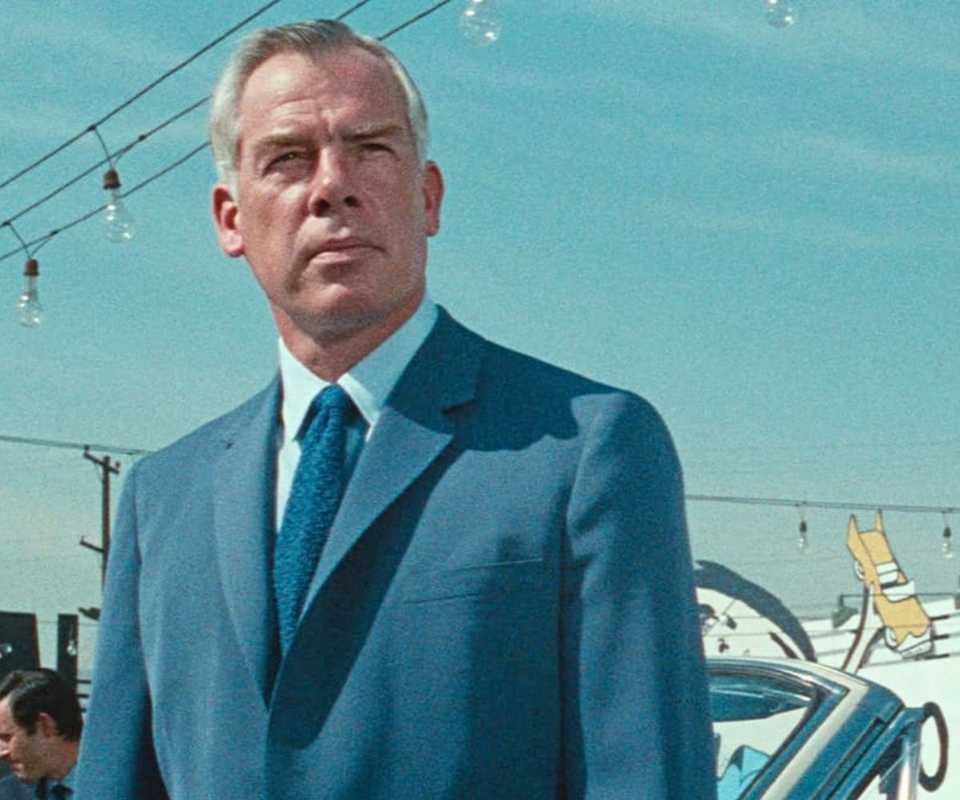
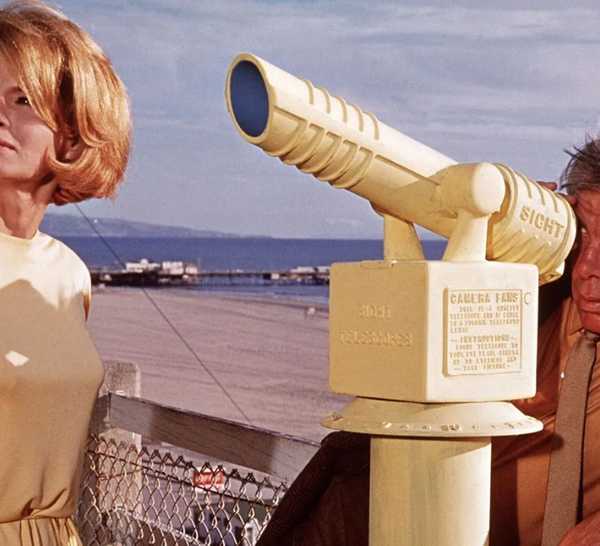
 Image via United Artists
 Image via Warner Bros.-Seven Arts
 Image via Universal Pictures






 English (US) ·