
 Image via Paramount Pictures

Published Oct 24, 2026, 2:53 PM EDT
Jeremy has more than 2800 published articles on Collider to his name, and has been writing for the site since February 2022. He's an omnivore when it comes to his movie-watching diet, so will gladly watch and write about almost anything, from old Godzilla films to gangster flicks to samurai movies to classic musicals to the French New Wave to the MCU... well, maybe not the Disney+ shows.
His favorite directors include Martin Scorsese, Sergio Leone, Akira Kurosawa, Quentin Tarantino, Werner Herzog, John Woo, Bob Fosse, Fritz Lang, Guillermo del Toro, and Yoji Yamada. He's also very proud of the fact that he's seen every single Nicolas Cage movie released before 2022, even though doing so often felt like a tremendous waste of time. He's plagued by the question of whether or not The Room is genuinely terrible or some kind of accidental masterpiece, and has been for more than 12 years (and a similar number of viewings).
When he's not writing lists - and the occasional feature article - for Collider, he also likes to upload film reviews to his Letterboxd profile (username: Jeremy Urquhart) and Instagram account.
He has achieved his 2025 goal of reading all 13,467 novels written by Stephen King, and plans to spend the next year or two getting through the author's 82,756 short stories and 105,433 novellas.
Sign in to your Collider account
Al Pacino might have won an Oscar for a movie that didn’t have anything to do with organized crime (Scent of a Woman, somehow, if you were wondering), but it’s that kind of movie he’s most often associated with, and for good reason. Actually, a little more broadly, he’s been in a ton of crime movies, not all of them really being gangster films, necessarily, because Heat is more of a heist movie than a gangster one, and the same goes for Dog Day Afternoon (though in the former, he’s trying to stop a bank robbery, while in the latter, he’s struggling to pull one off).
To focus on those gangster movies, though, the ones below are the best Al Pacino has starred in to date. There are a few good ones that aren’t mentioned, and maybe another topic for another time would be to try and rank every single gangster movie he’s been in… but for now, here are the best ones, with it being impressive how spread out all these movies are, with a couple coming out in the first few years of Pacino’s film acting career, and then one being as recent as 2019.
6 'Carlito's Way' (1993)
 Image via Universal Pictures
Al Pacino was more bombastic in another Brian De Palma-directed film released more than a decade before Carlito's Way, and that is also the better movie overall, so it'll be mentioned a little bit further down this ranking, but Carlito’s Way is still worthy of a mention. It’s a very different kind of gangster movie, even if it would make for a good double feature with that other movie, maybe more for the ways they contrast, with Carlito’s Way being about redemption and an ex-gangster (of sorts) trying to reform after being let out of prison.
Without a doubt, it’s a more reserved crime movie for De Palma and Pacino, and seeing the two try to make something reserved together is kind of interesting, given De Palma’s known for his bombastic direction and Pacino is often revered for his, uh, “theatrical” acting. But Carlito’s Way gets at least a little big when it needs to, and is a pretty solid look at the struggles of trying to readjust to society after a period of imprisonment, being a bit of an anti-gangster movie in that regard. Or maybe it’s a post-gangster movie, still tied enough to that sort of genre to qualify here.
5 'Donnie Brasco' (1997)
 Image via TriStar Pictures
While the premise of Donnie Brasco might sound a bit familiar, it’s still worth watching because of what it does with that premise, and also for the quality of the various performances found throughout. As for the simple premise, it concerns an FBI agent going undercover to befriend and then ultimately take down members of the mob, but then, as expected, he feels conflicted about all that once he gets to know some of those mob members.
Johnny Depp is the agent, and Al Pacino is the mobster he gets to know the most, with their dynamic – and the whole “fish out of water” thing that comes with the infiltrating business – making Donnie Brasco hold up as pretty engaging throughout. If Pacino’s character here does count as a villain, it’s probably one of his more compelling and endearing ones, and yeah, even if you’ve seen this kind of “these two sides aren’t actually so different” thing before, it’s okay, because Donnie Brasco does it well.
4 'The Irishman' (2019)
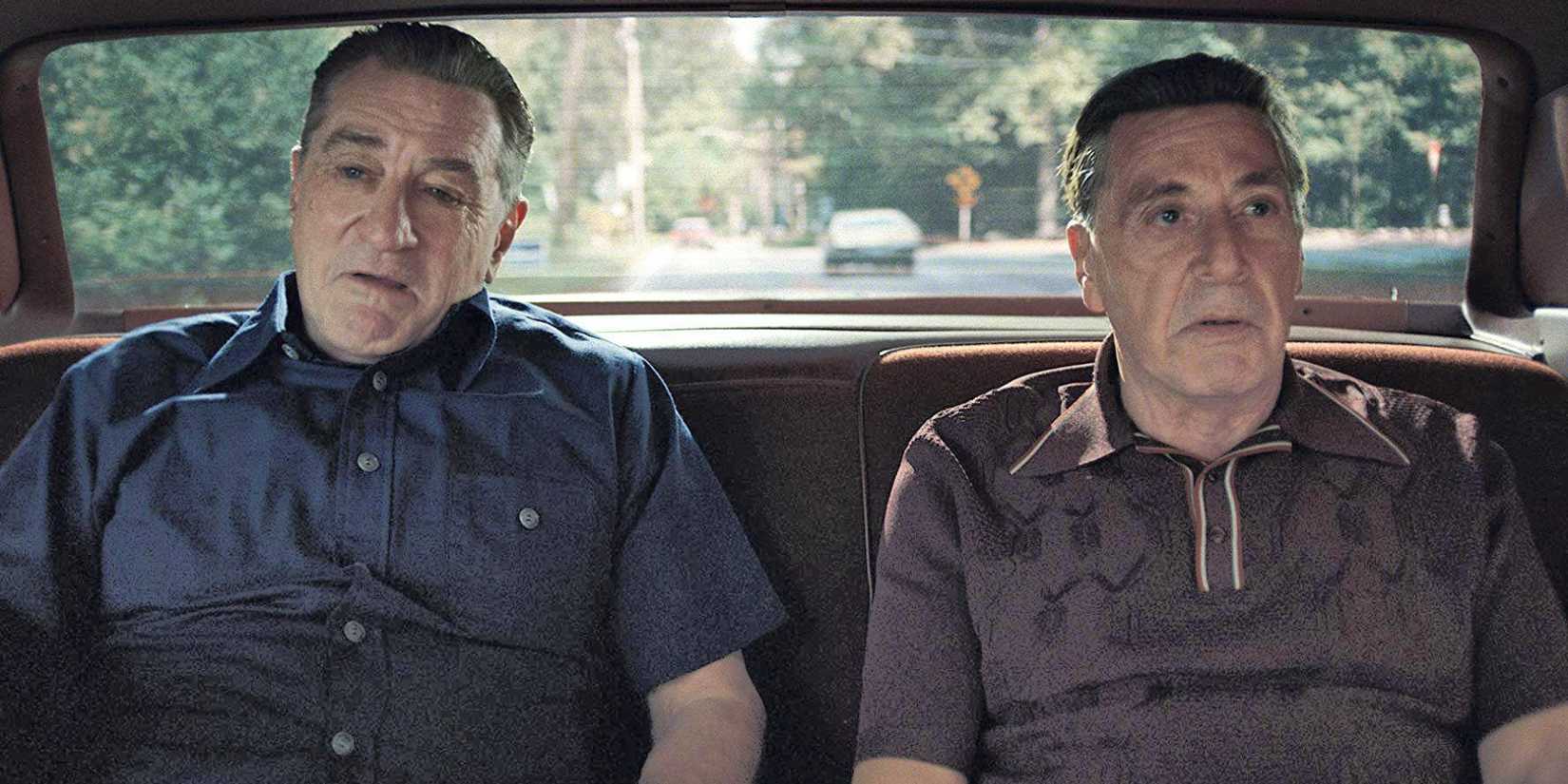 Image via Netflix
While The Irishman is incredibly long, it can be praised within a fairly short amount of time… like, a paragraph or two, as per usual. It’s not the most loved of Martin Scorsese’s gangster movies, but it’s one that time will probably be kind to, especially since so much of it’s focused on the passage of time and getting older. For better or worse, it could be the kind of thing that feels more powerful if you watch it as an older person versus being young, though the film itself does admittedly stretch itself a little by having older actors portray younger versions of their characters.
It does that the most with Robert De Niro, as Frank Sheeran, including a scene early on where Joe Pesci (who’s also supposed to be a few decades younger than he actually was during production) calls him "kid." And then there’s the infamous bit where you have to believe De Niro’s Sheeran isn't elderly and can actually beat up a shopkeeper all on his own. But moving past those small stumbles, The Irishman is pretty masterful, and powerful as a look at mortality, regret, and the ceaseless passage of time. Al Pacino isn't de-aged as drastically, but does get to play Jimmy Hoffa over at least a few years. And sure, Hoffa’s tied to gangsters without being as much of a gangster in the traditional sense, but those gangster elements are still at the forefront of The Irishman, making the film a gangster movie starring Pacino where he doesn’t necessarily play a straightforward or typical gangster.
3 'Scarface' (1983)
 Image via Universal Pictures
Scarface has value for lots of reasons, with maybe the clearest of them being the way it so captures a heightened (and even ridiculous) version of the 1980s, without necessarily a focus on capturing how it might've actually felt, but that’s not the point. This is the 1980s at its most hyper and stylish, and it’s cool that it feels that way while also coming out in that decade. That stuff’s more interesting to talk about than the plot, since Scarface is really just a rise-and-fall sort of narrative in an old-school way. It’s appropriate, considering the original Scarface was an old-school gangster movie made in the 1930s.
Al Pacino is also going for broke and then some in the lead role, which is obviously a delight to watch, with his energy as an actor matched by everyone else involved in the production of this movie.
Stylistically, Scarface (1983) pushes things further and indeed feels more like an epic, almost doubling the runtime and feeling a lot more extravagant in other ways, too. Al Pacino is also going for broke and then some in the lead role, which is obviously a delight to watch, with his energy as an actor matched by everyone else involved in the production of this movie (namely, Brian De Palma as director, Oliver Stone as writer, and Giorgio Moroder as the composer).
2 'The Godfather' (1972)
Inevitably, here is The Godfather, which isn't just one of the best gangster movies of all time, but oftentimes a deserving candidate for consideration when talking about the best films of all time more generally (not just those with some kind of focus on organized crime). Pacino’s in this as Michael Corleone, and while he might not seem like the protagonist at first, if you're familiar with the whole trilogy, you'll know that he does become incredibly important by the first film’s second half and then beyond.
You're really spoiled for good acting here, though, because Marlon Brando does get to be the central character for much of The Godfather, and he’s incredible, of course, while Robert Duvall, James Caan, and Diane Keaton all turn in pretty great performances, too. Focusing on Pacino, though, his incredibly complex and always compelling arc does kick off here and then so much of what Michael goes through is clearly important for the other two movies. Well, important for the second, more so than The Godfather Part III, with that trilogy-capper being at least decent, albeit a bit inessential. But on the topic of the second movie…
1 'The Godfather Part II' (1974)
 Image via Paramount Pictures
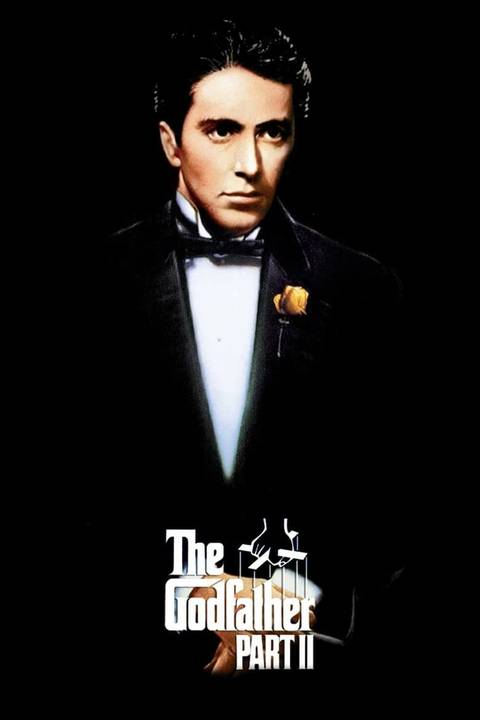
If there’s an epic-length gangster movie that possibly tops The Godfather, it’s The Godfather Part II. Or, for present purposes, it’s worth acknowledging that even if you don’t feel like the second one is better, it might be if you're talking about Al Pacino and what he does, since he gets a bit more to do here. Michael is the head of the family here for the entire movie, and much of The Godfather Part II is about him trying to further the whole family empire while various other things crumble all around him.
Brando’s character, Vito Corleone (Michael’s father), is still present in the story, but through flashbacks, here played by Robert De Niro, making the first crime film both he and Pacino starred in, though they don’t get to share the screen here. That would come later, for just a couple of scenes (and only one real main scene) in Heat and then in quite a lot of The Irishman (Righteous Kill doesn’t count, because that one kind sucks). Anyway, Pacino gets to be nuanced and truly complicated here, and The Godfather Part II might well be the best demonstration out of any of his movies that he’s just as good at being quiet and intense as he is at being loud and intense (see, of course, Scarface for the gangster movie that most ideally shows off that side of Pacino).
The Godfather Part II
Release Date December 20, 1974
Runtime 202 minutes
Director Francis Ford Coppola
Writers Francis Ford Coppola, Mario Puzo
-

Al Pacino
Don Michael Corleone
-





 English (US) ·