Imagine missing a crucial episode of your favorite television story because you weren't home on Tuesday night. No streaming service, no convenient replay, and certainly no guarantee that your friends would keep quiet about what happened. Network television once expected millions of people to arrange their evenings around a single story, and the astonishing thing is that some of those stories genuinely deserved the inconvenience. Families gathered around their televisions, strangers discussed characters at work, and fictional tragedies became national conversations.
I find something incredibly romantic about that era. These productions were enormous gambles, sometimes asking audiences to spend entire weeks confronting difficult histories or becoming attached to people whose lives stretched across decades. Their costumes and production techniques may have aged, but the best performances haven't lost an ounce of their emotional force. I would happily sacrifice several evenings to experience any of these five for the first time again.
5
'The Thorn Birds' (1983)
Image via ABC
Growing up on the Australian sheep station Drogheda, Meggie Cleary (Rachel Ward) develops a profound attachment to Father Ralph de Bricassart (Richard Chamberlain), a Catholic priest whose ambitions within the Church become increasingly difficult to reconcile with his feelings for her. Adapted from Colleen McCullough's novel, The Thorn Birds follows their relationship across decades of separation, longing, and decisions neither can comfortably undo. Their circumstances are complicated further by Meggie's formidable aunt Mary Carson (Barbara Stanwyck), whose wealth offers Ralph a particularly cruel temptation.
I get genuinely angry watching Ralph convince himself that his religious ambitions somehow excuse the pain he causes Meggie. Chamberlain makes his indecision infuriating because the affection is unmistakable. He simply cannot bring himself to sacrifice the future he imagines for himself. Ward, meanwhile, gives Meggie enough pride and stubbornness that her longing never becomes simple helplessness. The Australian landscapes are gorgeous, but the intimate exchanges are what stay with me. Two people keep finding each other at precisely the wrong moments, and every reunion carries the weight of the years they've wasted.
4
'Shōgun' (1980)
Image via NBC
John Blackthorne (Richard Chamberlain) arrives in feudal Japan after his Dutch trading ship runs aground, finding himself imprisoned in a society whose language, customs, and political conflicts he barely understands. Shōgun follows his growing involvement with the powerful Lord Toranaga (Toshiro Mifune), who recognizes the English navigator's usefulness in his struggle against rival warlords. Blackthorne's relationship with the intelligent, duty-bound Mariko (Yoko Shimada) gradually makes his new surroundings considerably more personal.
Here's a wonderfully bold decision from the original NBC production. Much of the Japanese dialogue was presented without English subtitles, leaving American viewers almost as confused as Blackthorne himself. I love that. His ignorance becomes our ignorance, and every conversation with Mariko feels precious because she's helping him understand a world that could destroy him for one careless mistake. Mifune is magnificent as Toranaga, whose composure makes even a quiet political exchange threatening. But Shimada absolutely steals my heart. Mariko understands obligations Blackthorne can barely comprehend, and watching affection collide with those obligations becomes increasingly painful. Jerry London's direction gives this extraordinary culture clash the scale and patience it deserves.
3
'War and Remembrance' (1988–1989)
Image Courtesy of ABC
The attack on Pearl Harbor brings America fully into World War II, placing naval officer Victor “Pug” Henry (Robert Mitchum) and his family amid the conflict's increasingly devastating events. Continuing the story begun in The Winds of War, War and Remembrance follows Pug's military responsibilities while his son Byron (Hart Bochner) desperately struggles with the separation from his wife Natalie (Jane Seymour), a Jewish American trapped in Nazi-controlled Europe with their young son. Their experiences intertwine personal relationships with the catastrophic realities of the war and the Holocaust.
I find Natalie's storyline extraordinarily difficult to watch. She and her uncle Aaron Jastrow (John Gielgud) understand the danger surrounding them, yet knowledge offers precious little protection against a system designed to strip people of their humanity. Producer-director Dan Curtis filmed portions of the drama at Auschwitz itself, an extraordinary production decision that adds a profoundly disturbing weight to its depiction of Nazi atrocities. Some of the broader military storytelling can feel almost impossibly ambitious, but the contrast is devastating. While governments calculate strategies and armies move across continents, a family is desperately trying to remain together. That human perspective gives this enormous production its emotional power.
2
'Lonesome Dove' (1989)
Image via CBS
Augustus McCrae (Robert Duvall) and Woodrow Call (Tommy Lee Jones) are retired Texas Rangers who decide to lead a cattle drive from the dusty border town of Lonesome Dove to Montana. Their company includes loyal scout Joshua Deets (Danny Glover), young cowboy Newt Dobbs (Ricky Schroder), and several other travelers whose dreams gradually collide with the brutal realities of the frontier. Based on Larry McMurtry's novel, Lonesome Dove offers an enormous Western adventure built around two old friends who understand each other remarkably well while agreeing on almost nothing.
God, I love Gus. He complains, jokes, flirts, and talks enough for three people, while Call seems determined to keep every recognizable emotion securely locked away. Duvall and Jones are so convincing together that you can imagine the countless arguments these men had long before the story began. And then there's Newt, who desperately wants Call to acknowledge the bond between them. His longing becomes increasingly painful because Call is capable of tremendous loyalty yet struggles to express affection. Simon Wincer directed the four-part adaptation, balancing grand Western spectacle with these wonderfully intimate relationships.
1
'Roots' (1977)
Image via ABC
Young Kunta Kinte (LeVar Burton) grows up in eighteenth-century Gambia before being abducted, transported across the Atlantic, and sold into slavery in America. Roots follows his struggle to preserve his identity and traces the experiences of his descendants across generations, including his daughter Kizzy (Leslie Uggams) and grandson Chicken George (Ben Vereen). Adapted from Alex Haley's book, the ABC miniseries examines American slavery through the experiences of a family repeatedly subjected to separation, violence, and attempts to erase their history.
Burton is extraordinary as Kunta, particularly when enslavers attempt to force him to accept the name Toby. They can punish his body, but his refusal communicates something far more important than simple defiance. Later, John Amos portrays the older Kunta, whose determination to preserve his African identity becomes part of what he passes to Kizzy. I find that continuity deeply moving. Even when family members are separated, the knowledge of who they are survives through stories and names. And Vereen brings tremendous charisma to Chicken George without diminishing the terrible circumstances shaping his life. The series aired across eight consecutive nights in January 1977, becoming an extraordinary national television event.

 Image via CBS

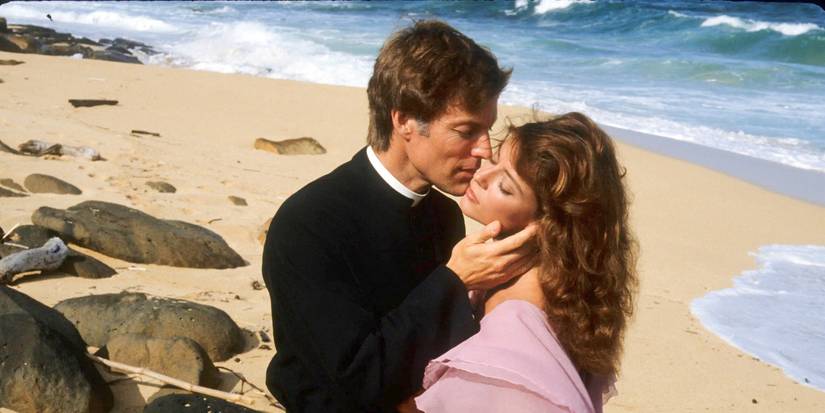 Image via ABC
 Image via NBC
 Image Courtesy of ABC
 Image via CBS
 Image via ABC






 English (US) ·