
 Image via A24
Updated Jul 22, 2026, 5:24 AM EDT
Liam Gaughan is a film and TV writer at Collider. He has been writing film reviews and news coverage for ten years. Between relentlessly adding new titles to his watchlist and attending as many screenings as he can, Liam is always watching new movies and television shows.
In addition to reviewing, writing, and commentating on both new and old releases, Liam has interviewed talent such as Mark Wahlberg, Jesse Plemons, Sam Mendes, Billy Eichner, Dylan O'Brien, Luke Wilson, and B.J. Novak. Liam aims to get his spec scripts produced and currently writes short films and stage plays. He lives in Allentown, PA.
Sign in to your Collider account
Technology has evolved radically throughout cinematic history, as advances in computers and communication have changed significantly since the Golden Age of Hollywood. Considering that Hollywood is itself often at the forefront of pushing technology forward in order to embrace new techniques of making movies, it is not surprising that there are many great thrillers that focus on the use of emerging tech. Many of the great advances in the medium have come when filmmakers have been willing to push the boundaries of what is possible on screen.
The best techno-thrillers are products of their time, as it would be unfeasible to imagine that films from decades earlier would hold up given today’s standards for the way that technology has evolved. Just because the technology is dated does not mean that a film can’t be thrilling and well-executed. Here are the best techno-thrillers, ranked.
15 'Sneakers' (1992)
 Image via Universal Studios
Sneakers is one of the most rewatchable films of the ‘90s, and served as a great transitional project for Robert Redford as he proved he was still one of the most charismatic movie stars on the planet. Given that Redford starred in many great political thrillers in the 1970s that addressed the ongoing concerns about conspiracies and corruption, it made sense for him to return to the genre two decades later to make a film about the surveillance state and the power of tech corporations.
Sneakers has a nostalgic depiction of what hacking was perceived to be in the ‘90s, and has aged quite well because it now serves as an instructive period piece for younger generations that weren’t born when it first came out. The film has a terrific ensemble, including one of the last performances from River Phoenix before his tragic death.
14 'Tron' (1982)
 Image via Walt Disney Studios Motion Pictures
Tron was one of the many legendary science fiction thrillers released in the summer of 1982, and it's also become notably prescient in its exploration of the popularity of video games. Video game technology and its immersive capabilities would age in a way that would justify the hard sci-fi concepts in the original Tron, and the idea of an independent programmer fighting for creative integrity against a powerful corporation is more relevant than ever.
Tron looked at how video game strategy and combat originated, and offered some clues as to how it would evolve. Although last year’s Tron: Ares was a complete disaster that didn’t understand the original film’s cultural significance, the 2010 legacy sequel Tron: Legacy is rather underrated, and deserves to be remembered as a cult classic in the same way that the original 1982 film is now.
13 'Upgrade' (2018)
 Image via Universal Pictures
Upgrade is a terrific work of original science fiction storytelling that explored the dangers of the technological overreach of the future, all whilst serving as a satisfying revenge thriller in the vein of John Wick. Logan Marshall-Green gives a true breakout performance as a tech-phobic mechanic who is forced to wear a synthetically infused exoskeleton after he is critically injured by criminals who kill his wife; after merging with the tech to become a lethal fighting machine, he goes on a path of vengeance.
Upgrade is surprisingly nuanced in its exploration of the possibilities of tech application as both a medical practice and a source of technology, and it shows how inventive low-budget sci-fi can be. There sadly haven’t been any updates on what the planned Upgrade television spinoff will be, but the film still deserves to be remembered as one of Blumhouse’s best efforts.
12 'Deja Vu' (2006)
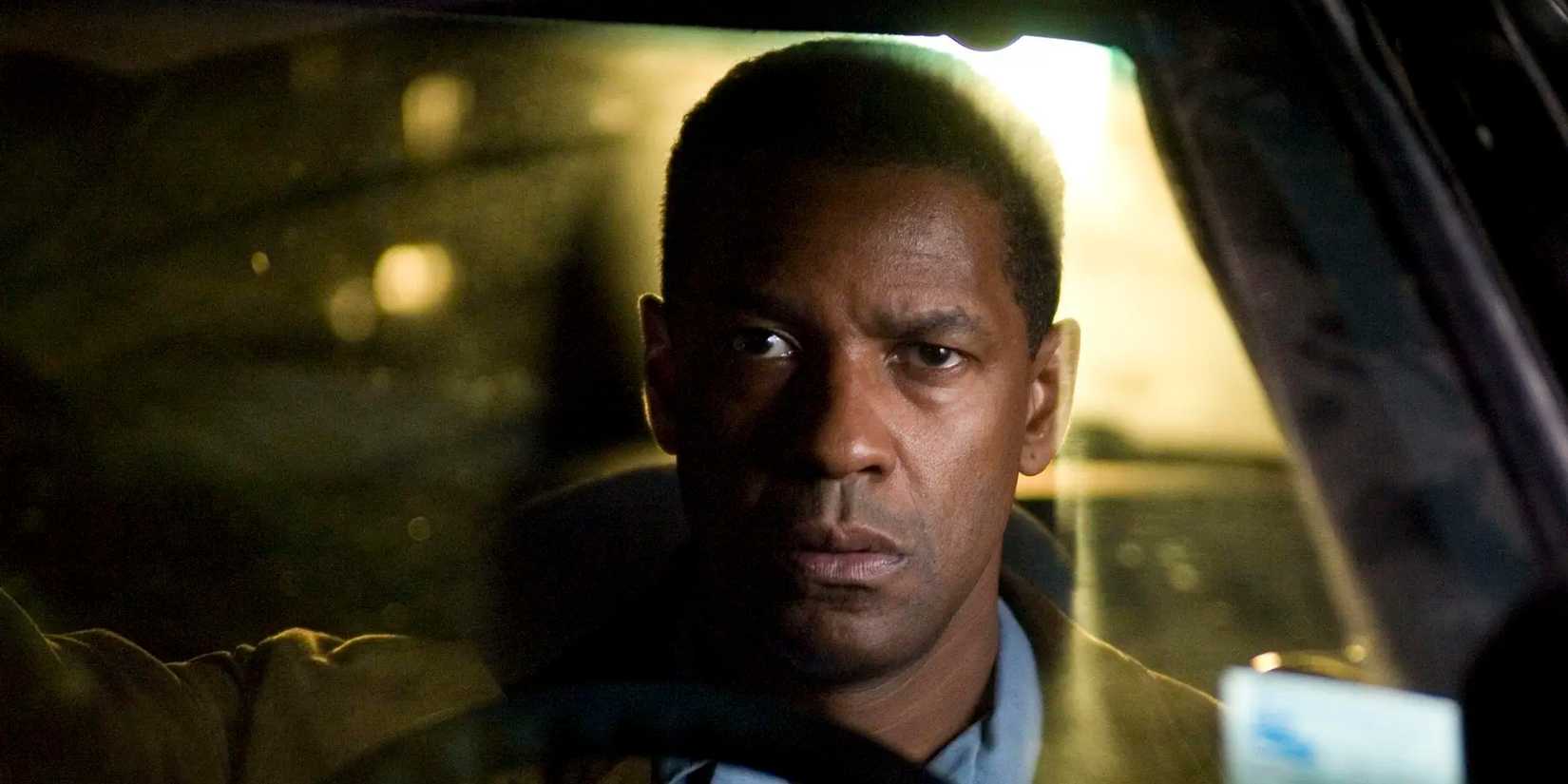 Image via Buena Vista
Deja Vu was one of the many great collaborations between Denzel Washington and Tony Scott, a duo who knew how to make compelling blockbuster films that still had a heart and soul. Deja Vu begins as a straightforward science fiction thriller about authorities looking into a terrorist attack, but it becomes a more high-concept techno film as advanced computer systems are used to predict and potentially prevent the tragedy from happening.
Deja Vu has a tactile grittiness that is common within Scott’s work, making it feel more realistic than many of the other films of the same era that made predictions about futuristic technology. It was also a notable film that was shot and set in New Orleans, Louisiana in the aftermath of Hurricane Katrina, and helped both celebrate the city’s virtues while offering jobs to the local filmmaking community.
11 'Hackers' (1995)
 Image via MGM
Hackers has become a cult classic for a reason, as the film’s depiction of the early Internet communities is fairly laughable by today’s standards. While it has become obvious that much of the terminology and gadgets that are used in the film have no semblance to the actual ways that the Internet would evolve in the late 1990s, Hackers does skate by thanks to the chemistry between the two stars.
Angelina Jolie and Jonny Lee Miller make for very interesting heroes who blend early Internet nerdiness with the sort of affluent charisma that was common in teen adventure films at the time. Hackers is a great time capsule for the era in which it was created, and it’s hard to think of many other techno-thrillers that have managed to summarize an entire period in popular culture history quite as sufficiently.
10 'Eye in the Sky' (2016)
 Image via Bleecker Street Media
Eye in the Sky is one of the most inventive war films in recent memory, as it examines the moral, strategic, and practical issues that are involved with making a drone strike. The film focuses on the decision-making process that a drone pilot (Aaron Paul) makes when his General (Helen Mirren) commands him to launch a missile in order to kill a terrorist, even though there may be civilian casualties.
Eye in the Sky is a gripping watch, as it raises questions about whether the ends justify the means when it comes to preventing a larger threat from breaking out and harming other people. Although the film does not offer any easy solutions, it is the late great Alan Rickman who delivers the gutting line: “never tell a soldier that he does not know the cost of war.”
9 'Blackhat' (2015)
 Image via Universal
Blackhat is one of the more underrated political thrillers in recent years, as Michael Mann’s profound 2015 examination of the tech crisis did not deserve the divisive reviews and box office underperformance that it was initially met with. In a chilling parallel to a very plausible situation, Blackhat centers on a rogue hacker (Chris Hemsworth) who is released from prison in order to prevent a cyberterrorist from destroying the world’s financial institutions.
Blackhat puts a spotlight on how easy it would be to throw the world into chaos by disrupting the international markets. It features the signature digital camerawork that Mann has been utilizing so well since he first started experimenting with the technology in the 2006 reboot of Miami Vice, another very underrated crime thriller that was well ahead of its time, and has since earned a cult fandom among select cinephiles.
Collider Exclusive · Sci-Fi Survival Quiz Which Sci-Fi World Would You Survive? The Matrix · Mad Max · Blade Runner · Dune · Star Wars
Five universes. Five completely different ways the future went wrong — or sideways, or up in flames. Only one of them is the world your instincts were built for. Eight questions will figure out which dystopia, galaxy, or desert wasteland you'd actually make it out of alive.
💊The Matrix
🔥Mad Max
🌧️Blade Runner
🏜️Dune
🚀Star Wars
TEST YOUR SURVIVAL →
01
You sense something is deeply wrong with the world around you. What do you do? The first instinct is often the truest one.
APull on every thread until I understand the system — then figure out how to break it. BStop asking questions and start stockpiling — food, fuel, weapons. Questions don't keep you alive. CKeep my head down, observe carefully, and trust no one until I know who's pulling the strings. DStudy the patterns. Every system has a rhythm — learn it, and you learn how to survive it. EFind the people fighting back and join them. You can't fix a broken galaxy alone.
NEXT QUESTION →
02
In a world of scarcity, what resource do you guard most fiercely? What we protect reveals what we believe survival actually requires.
AKnowledge. If you understand the system, you don't need resources — you can generate them. BFuel. Everything else — movement, power, escape — runs on it. CTrust. In a world of fakes and informants, a truly reliable ally is rarer than any commodity. DWater. And after water, information — the two things empires are truly built on. EShips and credits. The galaxy is big — you survive it by being able to move through it freely.
NEXT QUESTION →
03
What kind of threat keeps you up at night? Fear is useful data — if you're honest about what you're actually afraid of.
AThat reality itself is a lie — that everything I experience has been constructed to keep me compliant. BA raid. No warning, no mercy — just the roar of engines and then nothing left. CBeing identified. Once someone with power decides you're a problem, you're already out of time. DBeing outmanoeuvred — losing a political game I didn't even know I was playing. EThe Empire tightening its grip until there's nowhere left to run.
NEXT QUESTION →
04
How do you deal with authority you don't trust? Every dystopia has a power structure. Your approach to it determines everything.
ASubvert it from the inside — learn its rules well enough to weaponise them against it. BIgnore it and stay out of its reach. The further from any power structure, the better. CAppear to comply while doing exactly what I need to do. Visibility is the enemy. DManoeuvre within it carefully. You can't beat a system you refuse to understand. EResist openly when I have to. Some things are worth the risk of being seen.
NEXT QUESTION →
05
Which environment could you actually endure long-term? Survival isn't just tactical — it's physical, psychological, and very much about where you are.
AUnderground bunkers and server rooms — cramped, artificial, but with access to everything that matters. BOpen wasteland — brutal sun, no shelter, constant movement. At least the threat is honest. CA dense, rain-soaked city where you can disappear into the crowd and nobody asks questions. DMerciless desert — extreme heat, no water, and something enormous living beneath the sand. EThe fringe — backwater planets and busy spaceports where the Empire's attention rarely reaches.
NEXT QUESTION →
06
Who do you want in your corner when things fall apart? The company you keep is the clearest signal of who you actually are.
AA tight crew of believers who've seen behind the curtain and have nothing left to lose. BOne or two people I'd trust with my life. Any more than that and someone talks. CNobody, ideally. Alliances are liabilities. I work alone unless I have no choice. DA community bound by shared hardship and mutual survival — people who need each other to last. EA ragtag team with wildly different skills and total commitment when it counts.
NEXT QUESTION →
07
Where do you draw the line — if you draw one at all? Every survivor eventually faces a moment that tests what they're actually made of.
AI won't harm the innocent — even the ones who'd report me without hesitation. BI do what I have to to protect the people I've chosen. Everything else is negotiable. CThe line shifts depending on who's asking and what's at stake. DI draw a long-term line — nothing that compromises my people's future, even if it'd help now. ESome lines, once crossed, can't be uncrossed. I know which ones they are.
NEXT QUESTION →
08
What would actually make survival worth it? Staying alive is one thing. Having a reason to is another.
AWaking others up — dismantling the illusion so no one else has to live inside it. BFinding somewhere — or someone — worth protecting. A reason to keep moving. CAnswers. Understanding what I am, what any of this means, before time runs out. DLegacy — shaping the future in a way that outlasts me by generations. EFreedom — for myself, for others, for every world still living under someone else's boot.
REVEAL MY WORLD →
Your Fate Has Been Calculated You'd Survive In…
Your answers point to the world your instincts were built for. This is the universe your temperament, your survival instincts, and your particular brand of stubbornness were made for.
The Matrix
You took the red pill a long time ago — probably before anyone offered it to you. You're a systems thinker who can't help but notice the seams in things.
- You're drawn to understanding how the system works before figuring out how to break it.
- You'd find the Resistance, or it would find you — your instinct for spotting constructed realities is the machines' worst nightmare.
- You function best when you have access to information and the freedom to act on it.
- The Matrix built an airtight prison. You'd be the one probing the walls for the door.
Mad Max
The wasteland doesn't reward the clever or the well-connected — it rewards those who are hard to kill and harder to break. That's you.
- You don't need comfort, community, or a cause larger than the next horizon.
- You need a vehicle, a clear threat, and enough fuel to outrun it — and you're good at all three.
- You are unsentimental enough to survive that world, and decent enough — just barely — to be something more than another raider.
- In the wasteland, that distinction is everything.
Blade Runner
You'd survive here because you know how to exist in moral grey areas without losing yourself completely.
- You read people accurately, keep your circle small, and ask the questions others prefer not to answer.
- In a city where humanity is a legal designation rather than a feeling, you hold onto something that keeps you functional.
- You're not a hero. But you're not lost, either.
- In Blade Runner's world, that distinction is everything.
Dune
Arrakis is the most hostile environment in the known universe — and you are precisely the kind of person it rewards.
- Patience, discipline, and political awareness are your core strengths — and on Arrakis, they're survival tools.
- You understand that the long game matters more than any single victory.
- Others come to Dune and are consumed by it. You'd learn its logic and earn its respect.
- In time, you wouldn't just survive Arrakis — you'd begin to reshape it.
Star Wars
The galaxy far, far away is vast, loud, and in a constant state of violent political upheaval — and you wouldn't have it any other way.
- You find meaning in being part of something larger than yourself — a cause, a crew, a rebellion.
- You'd gravitate toward the Rebellion, or the fringes, or whatever pocket of the galaxy still believes the Empire's grip can be broken.
- You fight — not because you have to, but because standing aside isn't something you're capable of.
- In Star Wars, that willingness is what makes all the difference.
↻ RETAKE THE QUIZ
8 'Enemy of the State' (1998)
 Image via Buena Vista Pictures Distribution
Enemy of the State was a great modern take on the surveillance state that charts the team-up between an aging computer expert (Gene Hackman) and a hotshot lawyer (Will Smith) who find themselves embroiled in a conspiracy involving murder. As with many of the best hacker movies, Enemy of the State looks at how dangerous it can be when the fate of a critical case or prosecution is left on a disk that can easily be intercepted by villainous parties.
Enemy of the State has a lot to say about legal cover-ups and government conspiracies and gets surprisingly political for a mainstream star vehicle released in the 1990s. Even though there are a few somewhat cheesy moments, as one would expect from a Tony Scott film, the great chemistry between Hackman and Smith makes even the slower scenes completely engaging.
7 'Source Code' (2011)
 Image via Summit Entertainment
Source Code is perhaps the most exciting use of the “time loop” concept since Groundhog Day, as it used its technological mythology to create a scenario in which problems can be solved by repeating the same moment over and over. Jake Gyllenhaal stars as a deceased veteran whose consciousness is placed in the simulation of a train that was bombed by a terrorist; his job is to play through an alternate reality and find out who the responsible detonator was.
Source Code takes a complex topic and manages to condense it into a palatable story, and has a lot of fun with the concept of reliving the same experience. While the technology that director Duncan Jones created for the film is obviously fictitious, the notion of simulated realities and artificial intelligence is just realistic enough to be believable in the context of the story.
6 'Body of Lies' (2008)
 Image via Warner Bros. Pictures
Body of Lies is one of the most underrated films of Ridley Scott’s career, as it was able to examine modern warfare by showing the dynamic between those in the field and the analysts sitting at their computer desks far away from where the action is taking place. Leonardo DiCaprio stars as a CIA agent dispatched to Jordan, who must communicate with a drone operator (Russell Crowe) to take down a terrorist cell.
Body of Lies explores the tactile nature of modern combat and shows how frustrating it can be for field agents who head into enemy territory without knowledge of the larger repercussions of their mission. It’s timely, at times quite shocking, and just as well-shot as one would expect from Scott, a filmmaker who has never failed to deliver when it comes to spectacle, even at his worst.
![Alan Ritchson Officially Reveals Jack Reacher’s Real Superpower [Exclusive]](https://static0.colliderimages.com/wordpress/wp-content/uploads/2026/07/reacher-season-4-trailer-1.jpg?w=1600&h=900&fit=crop)





 English (US) ·