


Published Aug 27, 2026, 7:12 PM EDT
David is a Senior Editor at Collider focused primarily on Lists. His professional journey began in the mid-2010s as a Marketing specialist before embarking on his writing career in the 2020s. At Collider, David started as a Senior Writer in late 2022 and has been a Senior Editor since mid-2023. He is in charge of ideating compelling and engaging List articles by working closely with writers, both Senior and Junior, as well as other editors. Occasionally, David also reviews movies and TV shows and writes episode recaps. Currently, David is also writing his second novel, a psychological horror satire that will, hopefully, be picked up for publication sometime next year.
Sign in to your Collider account
Science fiction went into something of a slump throughout the '90s. Sci-fi was far from prolific during the decade, joining fantasy as one of the formerly glorious genres that fell from grace, with things looking bleak until the late arrival of the game-changing and revolutionary The Matrix.
However, sci-fi wasn't entirely asleep during the '90s. In fact, the genre had several worthwhile pictures that flew under the radar. And while some became cult classics in the noughties, others remain underappreciated and are due for a reevaluation, especially as modern audiences look back at underrated content from the '90s.
10 'Johnny Mnemonic' (1995)

Keanu Reeves has enough sci-fi projects in his resumé to cement his place as the genre's king. However, 1995's Johnny Mnemonic isn't one of his best-received efforts. The film follows the titular character as he attempts to extract a stash of information from his mind before it kills him in 48 hours.
Infamous for its overblown and outright silly tone, Johnny Mnemonic ranks as one of Reeves' most reviled sci-fi outings. However, this daring project has plenty to admire; its reach far exceeds its grasp. It is laughable for considerable portions of its length, but Johnny Mnemonic is endlessly entertaining, a mind-bending cyberpunk movie, and a testament to the genre's inherent eccentricity.
9 'The City of Lost Children' (1995)
.jpg?q=49&fit=crop&w=825&dpr=2) Image via Sony Pictures Classics
Image via Sony Pictures ClassicsSteampunk remains a niche subgenre, with few big-screen adaptations attracting acclaim or commercial success. 1995's The City of Lost Children follows a deranged doctor who kidnaps children to steal their dreams in a misguided attempt to survive. However, the father of one of the victims embarks on a quest to defeat the doctor and his army of clones.
Bizarre but brilliant, The City of Lost Children is disturbing in parts but impressive throughout, a dark fantasy fairytale that perfectly incorporates its science fiction elements. Like best sci-fi films, The City of Lost Children hides deeper reflections underneath its superficial layer, presenting a rich, eerie, yet thought-provoking plot that cements its cult status.
8 'Fortress' (1992)
 Image via Miramax Films
1992's Fortress stars Christopher Lambert and Loryn Locklin as a married couple sent to prison for violating their dystopian world's one-child-only policy. Kurtwood Smith and Clifton Collis Jr. star in key supporting roles.
Equal parts escape movie and sci-fi dystopia, Fortress perfectly combines themes and styles. The film is an insightful exploration of political and social unrest, showcasing most of dystopia's most common ideas and updating them under a decidedly '90s outlook. Grim, stylish, and fun, Fortress is a great sci-fi that might not push the envelope but remains thoroughly entertaining and rewatchable.
7 'Strange Days' (1995)
 Image via 20th Century Studios
Academy Award nominees Angela Bassett, Ralph Fiennes, and Juliette Lewis star in Oscar-winning director Kathryn Bigelow's 1995 sci-fi film Strange Days. Set in the last days of 1999, the film centers on a police-turned-illegal trader who enlists the help of a bodyguard to uncover a murder plot in Los Angeles.
Strange Days was a notorious flop when it came out in 1995, derailing Bigelow's career and suggesting a bleak future for sci-fi. However, the film is a great entry into the cyberpunk sub-genre, benefitting from standout performances and an engrossing world that falls short of being everything it can be but remains fascinating throughout its 145-minute length.
6 'Coneheads' (1993)
 Image via Paramount Pictures
Dan Aykroyd and Jane Curtin star in Steve Barron's 1993 sci-fi comedy Coneheads. The film tells the story of the Conehead family, aliens forced to stay on Earth after a retcon mission goes wrong. When their home planet reaches out with sinister orders, the family must decide where their allegiances lie.
Hilarious, subversive, and satirical, Coneheads is a brilliant piece of social criticism and a clever take on the immigrant experience. The film's comedy will not be for everyone, so audiences should approach it open-mindedly.
Collider Exclusive · Sci-Fi Survival Quiz Which Sci-Fi World Would You Survive? The Matrix · Mad Max · Blade Runner · Dune · Star Wars
Five universes. Five completely different ways the future went wrong — or sideways, or up in flames. Only one of them is the world your instincts were built for. Eight questions will figure out which dystopia, galaxy, or desert wasteland you'd actually make it out of alive.
💊The Matrix
🔥Mad Max
🌧️Blade Runner
🏜️Dune
🚀Star Wars
TEST YOUR SURVIVAL →
01
You sense something is deeply wrong with the world around you. What do you do? The first instinct is often the truest one.
APull on every thread until I understand the system — then figure out how to break it. BStop asking questions and start stockpiling — food, fuel, weapons. Questions don't keep you alive. CKeep my head down, observe carefully, and trust no one until I know who's pulling the strings. DStudy the patterns. Every system has a rhythm — learn it, and you learn how to survive it. EFind the people fighting back and join them. You can't fix a broken galaxy alone.
NEXT QUESTION →
02
In a world of scarcity, what resource do you guard most fiercely? What we protect reveals what we believe survival actually requires.
AKnowledge. If you understand the system, you don't need resources — you can generate them. BFuel. Everything else — movement, power, escape — runs on it. CTrust. In a world of fakes and informants, a truly reliable ally is rarer than any commodity. DWater. And after water, information — the two things empires are truly built on. EShips and credits. The galaxy is big — you survive it by being able to move through it freely.
NEXT QUESTION →
03
What kind of threat keeps you up at night? Fear is useful data — if you're honest about what you're actually afraid of.
AThat reality itself is a lie — that everything I experience has been constructed to keep me compliant. BA raid. No warning, no mercy — just the roar of engines and then nothing left. CBeing identified. Once someone with power decides you're a problem, you're already out of time. DBeing outmanoeuvred — losing a political game I didn't even know I was playing. EThe Empire tightening its grip until there's nowhere left to run.
NEXT QUESTION →
04
How do you deal with authority you don't trust? Every dystopia has a power structure. Your approach to it determines everything.
ASubvert it from the inside — learn its rules well enough to weaponise them against it. BIgnore it and stay out of its reach. The further from any power structure, the better. CAppear to comply while doing exactly what I need to do. Visibility is the enemy. DManoeuvre within it carefully. You can't beat a system you refuse to understand. EResist openly when I have to. Some things are worth the risk of being seen.
NEXT QUESTION →
05
Which environment could you actually endure long-term? Survival isn't just tactical — it's physical, psychological, and very much about where you are.
AUnderground bunkers and server rooms — cramped, artificial, but with access to everything that matters. BOpen wasteland — brutal sun, no shelter, constant movement. At least the threat is honest. CA dense, rain-soaked city where you can disappear into the crowd and nobody asks questions. DMerciless desert — extreme heat, no water, and something enormous living beneath the sand. EThe fringe — backwater planets and busy spaceports where the Empire's attention rarely reaches.
NEXT QUESTION →
06
Who do you want in your corner when things fall apart? The company you keep is the clearest signal of who you actually are.
AA tight crew of believers who've seen behind the curtain and have nothing left to lose. BOne or two people I'd trust with my life. Any more than that and someone talks. CNobody, ideally. Alliances are liabilities. I work alone unless I have no choice. DA community bound by shared hardship and mutual survival — people who need each other to last. EA ragtag team with wildly different skills and total commitment when it counts.
NEXT QUESTION →
07
Where do you draw the line — if you draw one at all? Every survivor eventually faces a moment that tests what they're actually made of.
AI won't harm the innocent — even the ones who'd report me without hesitation. BI do what I have to to protect the people I've chosen. Everything else is negotiable. CThe line shifts depending on who's asking and what's at stake. DI draw a long-term line — nothing that compromises my people's future, even if it'd help now. ESome lines, once crossed, can't be uncrossed. I know which ones they are.
NEXT QUESTION →
08
What would actually make survival worth it? Staying alive is one thing. Having a reason to is another.
AWaking others up — dismantling the illusion so no one else has to live inside it. BFinding somewhere — or someone — worth protecting. A reason to keep moving. CAnswers. Understanding what I am, what any of this means, before time runs out. DLegacy — shaping the future in a way that outlasts me by generations. EFreedom — for myself, for others, for every world still living under someone else's boot.
REVEAL MY WORLD →
Your Fate Has Been Calculated You'd Survive In…
Your answers point to the world your instincts were built for. This is the universe your temperament, your survival instincts, and your particular brand of stubbornness were made for.
The Matrix
You took the red pill a long time ago — probably before anyone offered it to you. You're a systems thinker who can't help but notice the seams in things.
- You're drawn to understanding how the system works before figuring out how to break it.
- You'd find the Resistance, or it would find you — your instinct for spotting constructed realities is the machines' worst nightmare.
- You function best when you have access to information and the freedom to act on it.
- The Matrix built an airtight prison. You'd be the one probing the walls for the door.
Mad Max
The wasteland doesn't reward the clever or the well-connected — it rewards those who are hard to kill and harder to break. That's you.
- You don't need comfort, community, or a cause larger than the next horizon.
- You need a vehicle, a clear threat, and enough fuel to outrun it — and you're good at all three.
- You are unsentimental enough to survive that world, and decent enough — just barely — to be something more than another raider.
- In the wasteland, that distinction is everything.
Blade Runner
You'd survive here because you know how to exist in moral grey areas without losing yourself completely.
- You read people accurately, keep your circle small, and ask the questions others prefer not to answer.
- In a city where humanity is a legal designation rather than a feeling, you hold onto something that keeps you functional.
- You're not a hero. But you're not lost, either.
- In Blade Runner's world, that distinction is everything.
Dune
Arrakis is the most hostile environment in the known universe — and you are precisely the kind of person it rewards.
- Patience, discipline, and political awareness are your core strengths — and on Arrakis, they're survival tools.
- You understand that the long game matters more than any single victory.
- Others come to Dune and are consumed by it. You'd learn its logic and earn its respect.
- In time, you wouldn't just survive Arrakis — you'd begin to reshape it.
Star Wars
The galaxy far, far away is vast, loud, and in a constant state of violent political upheaval — and you wouldn't have it any other way.
- You find meaning in being part of something larger than yourself — a cause, a crew, a rebellion.
- You'd gravitate toward the Rebellion, or the fringes, or whatever pocket of the galaxy still believes the Empire's grip can be broken.
- You fight — not because you have to, but because standing aside isn't something you're capable of.
- In Star Wars, that willingness is what makes all the difference.
↻ RETAKE THE QUIZ
5 'Existenz' (1999)
 image via Alliance
David Cronenberg is the master of weird, body horror movies. His films are daring, gross, and often shocking, featuring disturbing visuals and equally harrowing themes that make for discomforting but rewarding viewing experiences.
Cronenberg's 1999 sci-fi film Existenz features a unique combination of body horror and sci-fi to create a film ahead of its time. Oscar nominees Jennifer Jason Leigh and Jude Law star in the film, which revolves around a VR designer targeted by assassins. Visually original and thematically resonant, Existenz is an unfairly overlooked film in Cronenberg's filmography and a perfect example of a sci-fi gem from the late 90s.
4 'Gattaca' (1997)
 Image via Sony Pictures Releasing
Oscar nominees Ethan Hawke and Uma Thurman join Jude Law in Andrew Niccol's 1997 sci-fi movie Gattaca. The film presents a future where children are engineered by eugenics and follows Vincent Freeman, a man born outside the program, who faces decimation and obstacles on his quest to travel into space.
Gattaca is a thought-provoking and visually striking sci-fi exploration of society's obsession with perfection. The film's portrayal of genetics is a tad superficial, but Gattaca remains a worthwhile and insightful film with several layers hiding underneath its beautiful facade.
3 'Dark City' (1998)
 Image via New Line Cinema
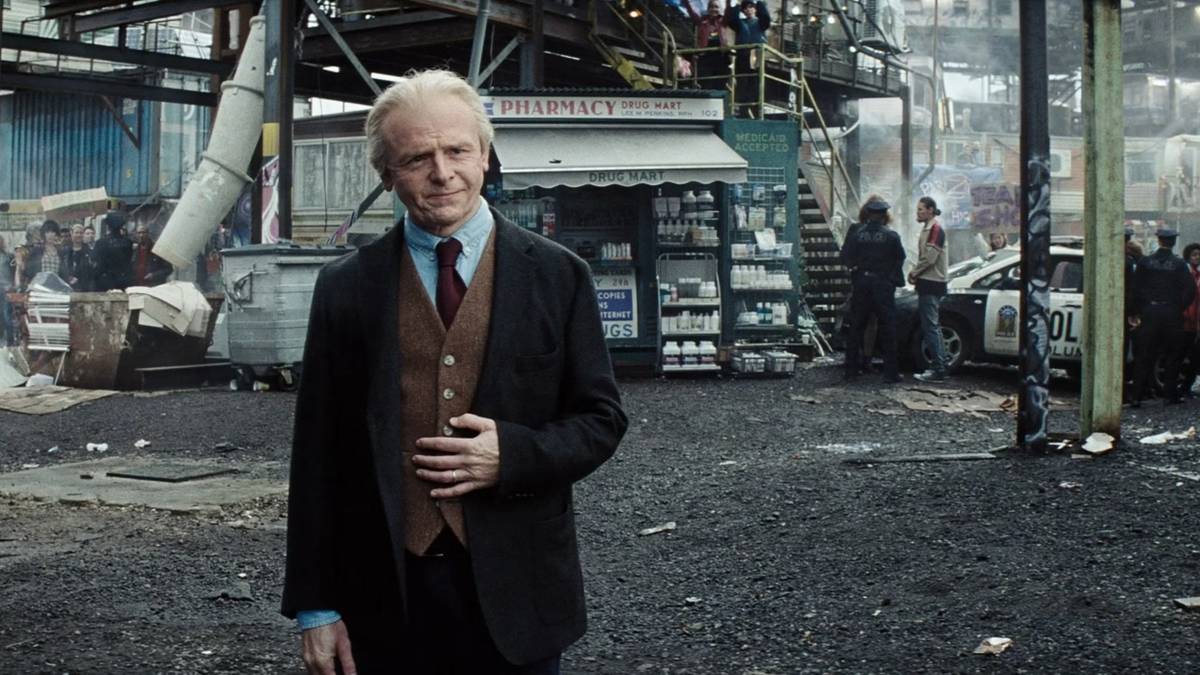
Rufus Sewell stars opposite future Oscar winner Jennifer Connelly and future Emmy winner Kiefer Sutherland in Alex Proyas' 1998 neo-noir sci-fi Dark City. The plot revolves around John, an amnesiac accused of murder, who sets out to clear his name and recover his memories while being hunted by a dangerous group known as the "Strangers."
With its striking visual style, neo-noir narrative, and incredible cast, Dark City is a brilliant piece of science fiction. The film creates such a distinctive and rich world, the kind that only a few sci-fi properties can come up with. Furthermore, Dark City is a brilliant mystery, a neo-noir masterpiece that proves how perfectly the two genres blend.
2 'Open Your Eyes' (1997)

Spanish sci-fi film Open Your Eyes stars Eduardo Noriega as a rich and carefree playboy whose life drastically changes after a car accident. Penélope Cruz co-stars in this brilliant and daring film, co-written and directed by acclaimed filmmaker Alejandro Amenábar.
Open Your Eyes is a mind-bending and thrilling exploration of the human mind and the nature of desire. The film employs a brilliant narrative full of surprises, leading to an emotionally poignant climax that ranks as one of the most surprising endings in 90s cinema. Vanilla Sky, a lesser Hollywood remake directed by Cameron Crowe and starring Tom Cruise, came out in 2001 but couldn't measure up to the original.
1 'Cube' (1997)
 Image via Cube Libre
Cube is among the most elusive and overlooked horror sci-fi movies. The film stars an ensemble and features a group of mysterious and unrelated characters trapped in a mysterious and deadly cube-shaped construction.
Tense, often shocking, and gripping, Cube is the rare horror film that features a cerebral plotline to enhance its thrills. The film's limitations prevent it from fully exploring its fascinating premise, but Cube is still a superior example of horror sci-fi. There aren't enough worthy entries of this genre combination, surprising considering how well they go together.

Cube
Release Date September 11, 1998
Runtime 90 minutes
Director Vincenzo Natali
Writers Vincenzo Natali, Graeme Manson, André Bijelic





 English (US) ·