
 Image via Random House

Published Oct 22, 2026, 5:46 PM EDT
Luc Haasbroek is a writer and videographer from Durban, South Africa. He has been writing professionally about pop culture for eight years. Luc's areas of interest are broad: he's just as passionate about psychology and history as he is about movies and TV. He's especially drawn to the places where these topics overlap.
Luc is also an avid producer of video essays and looks forward to expanding his writing career. When not writing, he can be found hiking, playing Dungeons & Dragons, hanging out with his cats, and doing deep dives on whatever topic happens to have captured his interest that week.
Sign in to your Collider account
The label "grimdark" refers to the fantasy subgenre defined by bleakness and moral ambiguity, deeply flawed protagonists, and a generally cynical mood that rebukes the conventions of high fantasy. These are amoral tales of brutality, political intrigue, destructive magic, and antiheroic characters forced to choose between several equally terrible options.
Grimdark exploded in popularity over the last few decades, but its roots stretch much further back. Indeed, several books published long before anyone was using the term contain much of the pessimism and violence now associated with it. Here are the darkest gems in the fantasy, the ones that built grimdark as a subgenre, setting its parameters and establishing its major tropes and thematic concerns.
10 'Beyond Redemption' (2015)
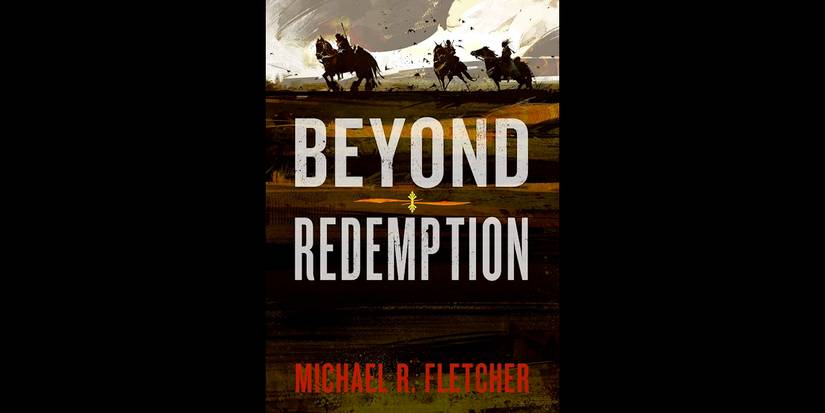 Image via Harper Voyager
“I was sane once. It was horrible.” Beyond Redemption takes place in a world where belief can literally reshape reality. Unfortunately, the people capable of wielding this power are not wise old wizards or virtuous heroes. They're the delusional, with mental illness manifesting itself as supernatural abilities that become stronger as their grip on reality deteriorates. Author Michael R. Fletcher commits to that twisted premise with admirable enthusiasm.
For instance, he comes up with a ton of memorable ideas, like Kleptics, who can steal the reflection of a mirror, and narcissists who become literally impossible to look away from. The plot revolves around a trio of thoroughly unpleasant characters who become entangled in a scheme involving a boy whom a powerful High Priest hopes to transform into a god. The resulting tale is violent, grotesque, frequently funny, and almost aggressively cynical. Yet the book's boundless imagination prevents the bleakness from becoming monotonous.
9 'The Poppy War' (2018)
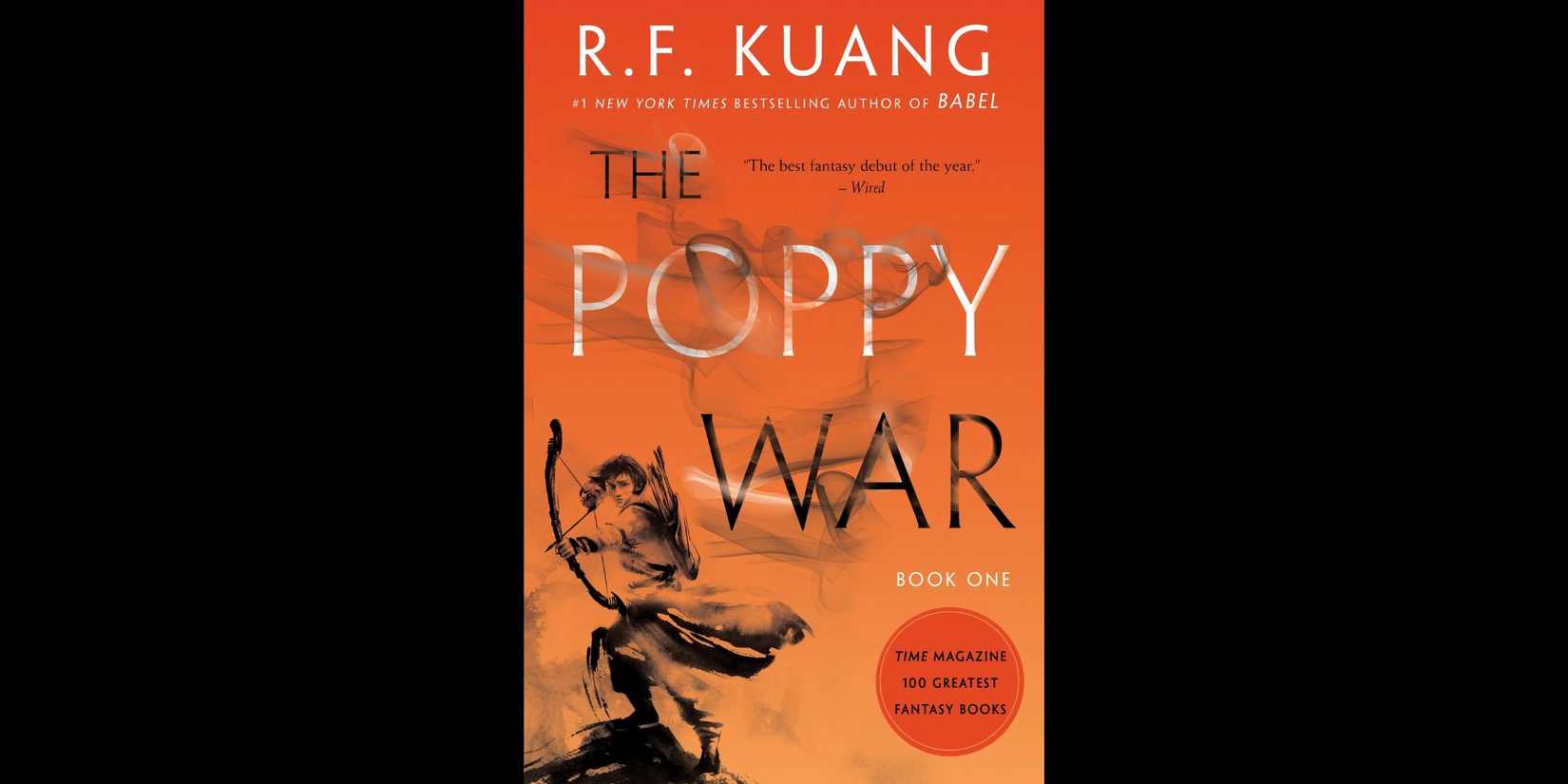 Image via HarperCollins
“War doesn't determine who's right. War determines who remains.” The Poppy War was the breakout novel by R.F. Kuang, who would go on to write other bangers like Babel and Katabasis. The story begins with Rin, a war orphan who escapes an arranged marriage by earning admission to an elite military academy. From here, the relatively contained cruelties of school give way to war on a horrifying scale, with Kuang drawing heavily from 20th-century Chinese history and particularly the Second Sino-Japanese War.
The Poppy War's central idea is that war leaves no good people behind. The conflicts here are messy, and even the "good" characters are damaged and morally compromised. Even the magic system reflects this tragic sensibility. To commune with the gods and channel their cataclysmic powers, shamans must use opium and other heavily addictive substances to alter their consciousness. That's certainly a far cry from Hogwarts.
8 'Priest of Bones' (2018)
 Image via Penguin Publishing Group
“We were no heroes, and we were outnumbered, and exhausted and hurt.” Priest of Bones is kind of like a filthier, bloodier, fantasy version of Peaky Blinders. At the center of it is Tomas Piety: soldier, priest, gangster, businessman, and one of the more immediately compelling antiheroes modern grimdark has produced. He returns from war to Ellinburg and discovers that his old criminal empire has largely been taken from him. Naturally, he wants it back.
As with The Poppy War, the story is populated by a host of characters shattered by battle, including returned warriors with PTSD. Likewise, in a subversion of typical high fantasy, magic in this series is a rare, frightening, and mostly back-alley occurrence. Instead of majestic wizards casting spells, sorcery takes the form of the Cunning, a type of dangerous mental manipulation. Because magic is scarce, when it is unleashed, it carries real weight.
7 'The Darkness That Comes Before' (2003)
 Image via The Overlook Press
“Faith is the truth of passion.” This is one of the most philosophically bleak books in all of grimdark, which is saying something. Writer R. Scott Bakker fills The Darkness That Comes Before with war, religious fanaticism, political manipulation, endless cruelty, and characters whose understanding of their own motivations is often questionable at best. Instead of a classic battle between good and evil, we get a multi-layered existential nightmare.
All this unfolds against preparations for a Holy War, bringing together an enormous cast of warriors, sorcerers, nobles, spiritual leaders, and the unnervingly intelligent Anasûrimbor Kellhus. He's an icy-cold protagonist totally lacking in empathy, a monk trained to view human emotion as nothing more than levers to be pulled. Bakker's prose hammers the dark tone home. The writing style is dense and poetic, drawing on classical histories and apocalyptic theology.
Collider Exclusive · 8 Questions · 2 Minutes What Fantasy World Do You Belong To? Middle-earth · Grand Line · The Continent · Camp Half-Blood
Pick your magic, your crew, where you want to wake up and who you would rather be fighting, and we will tell you which world you actually belong in. Four are open to you: an ancient kingdom living through its last good age, an endless sea full of pirates, a continent that pays people to kill monsters, and a summer camp where the Greek gods are extremely real and mostly a nuisance.
💍Middle-earth(Rings of Power)
👒Grand Line(One Piece)
🐺The Continent(The Witcher)
🔱Camp Half-Blood(Percy Jackson)
FIND YOUR WORLD →
01
What kind of power do you want? Every one of these worlds runs on a completely different sort of magic.
ASomething ancient and half forgotten that came down through my family. BSomething completely ridiculous that works in a fight and gets a laugh. CNo magic at all, just training, potions and a very sharp sword. DSomething I inherited from a parent I have barely met.
NEXT QUESTION →
02
Who is travelling with you? Nobody gets through any of these stories entirely on their own.
AA fellowship drawn from every corner of the world who barely trust each other. BA crew I picked up one at a time, all of whom would die for me. CTwo or three people I would never describe out loud as friends. DTwo mates from school who are exactly as out of their depth as I am.
NEXT QUESTION →
03
Where do you want to wake up tomorrow? The best fantasy is usually just somewhere you would genuinely like to live.
AA high city of white stone with the sea somewhere far below. BA ship under sail, with an island ahead that nobody has mapped. CA rented room over a tavern, in a town I am leaving in the morning. DA cabin at a summer camp with everybody else already awake outside.
NEXT QUESTION →
04
How are you making a living out there? Even in fantasy somebody has to pay for the horse.
AI am not, because somebody far older than me decided this was my duty. BTreasure, and I am not always careful about whose it used to be. CI take contracts, since people will pay well for what they will not touch. DI am fifteen and this is all technically a school trip.
NEXT QUESTION →
05
There is something in the woods. What do you do about it? All four of these worlds keep something unpleasant out there in the dark.
ASend word to somebody who has seen this before, then hold the line. BWalk straight in, because it is interesting and possibly edible. CAsk what it has been eating and what the village is willing to pay. DWork out which myth it escaped from, then improvise very badly.
NEXT QUESTION →
06
Who is the villain of your story? The enemy tells you far more about a world than the hero ever does.
AAn ancient evil that has been patient for several thousand years. BA government that has spent a long time calling itself the good guys. CA man who turns out to be far worse than anything I hunt for money. DA god, or possibly my own family, and quite likely both at once.
NEXT QUESTION →
07
What do you actually believe in out there? Every world hands its heroes one rule and asks them to hold onto it.
ASome things are worth defending even when the odds are hopeless. BNobody gets to tell me where I can go or what I am allowed to want. CPick the lesser evil, and never pretend afterwards that it was not evil. DMy friends come before anything a prophecy has to say about it.
NEXT QUESTION →
08
A thousand years from now, how are you remembered? Eight questions in, this is the one that decides your world.
AIn a song, in a language hardly anybody still speaks. BAs the one who got there first and proved the whole thing was possible. CBarely, and mostly wrongly, in ballads I would absolutely hate. DOn a plaque at a camp, read by kids about to do the same thing.
REVEAL MY WORLD →
The Map Is Drawn Your World Is…
Four worlds and four completely different ideas of what a good life looks like. This is where you belong, what it would ask of you, and what you would get back in return.
Middle-earth
You belong somewhere old enough that the mountains have names and somebody can still tell you who gave them. Middle-earth is for people who think the right thing is worth doing even when it will not be finished in their lifetime.
- This is the only world on the list where doing good is understood as a very long defeat, fought anyway, by people who will never see how it ends.
- You are drawn to grandeur, to white cities and deep forges and the sense that almost everything you touch is older than your entire family line.
- The Rings of Power is set in the last good age before it all goes wrong, which gives every quiet scene in it a slightly unbearable weight.
- You would take the hard road, and you would take it on foot.
The Grand Line
You want the sea, a crew, and absolutely nobody telling you where you are allowed to go. The Grand Line is the world for people whose main ambition in life is finding out what is over there.
- One Piece has run for decades on one very simple engine, which is a group of people who each want something impossible and have decided to go and get it together.
- You collect people. Your ideal crew is a set of misfits who were each written off somewhere else before you turned up and offered them a better idea.
- The world is enormous and deliberately ridiculous, and the emotional gut punches land harder because of that rather than in spite of it.
- You would set sail knowing the map runs out, which is more or less the entire point of it.
The Continent
You would rather be feared and useful than liked and useless. The Continent is a world where the monsters are the straightforward part of the job and the people are where it all gets complicated.
- Witchers get paid to do what nobody else will and resented for existing at all, which is a trade most people would refuse and you would probably accept.
- You have no real illusions about which side is the good one, largely because on the Continent that question tends to have a disappointing answer.
- The best of these stories are not about the fighting. They are about somebody with a rigid code being repeatedly cornered into caring about people.
- You would take the coin, finish the job properly, and be out of town before the story got told wrong.
Camp Half-Blood
You want the myths to be real and loose in the actual world, and you want to find out at about thirteen that you were never anywhere near as ordinary as everybody kept telling you.
- Percy Jackson takes the oldest stories we have and drops them into car parks and diners, which makes the gods considerably funnier and a great deal worse.
- You would be the kid every school gave up on, who turns out to have been built for something nobody thought to test for.
- The series is genuinely about friendship rather than destiny, and it says so out loud every time a prophecy tries to get in the way.
- Camp Half-Blood is the real fantasy here: a place where the thing that made you difficult everywhere else is the thing that makes you belong.
↻ RETAKE THE QUIZ
6 'Last Argument of Kings' (2008)
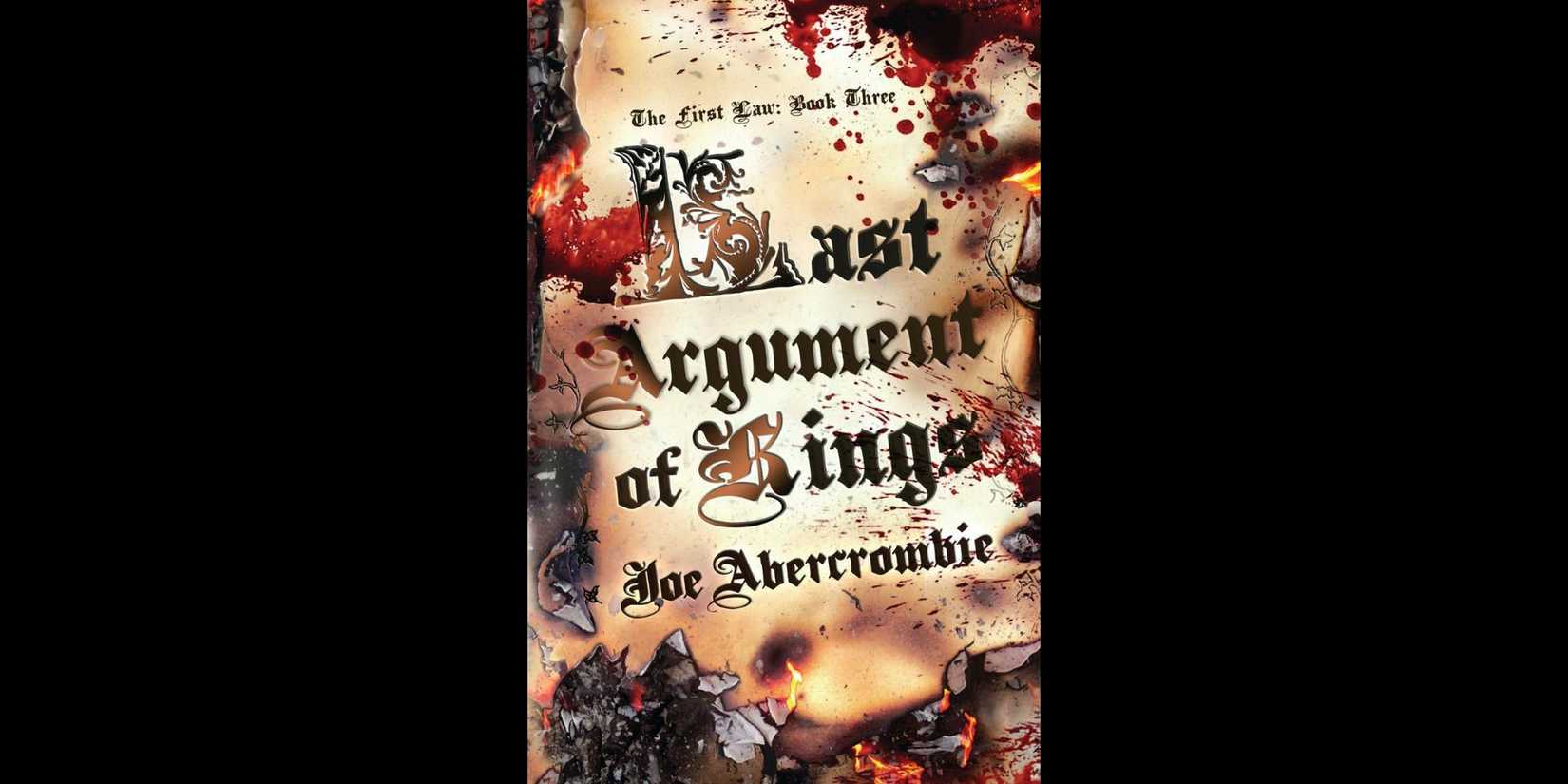 Image via Gollancz
“Rules are for children. This is war, and in war the only crime is to lose.” The title here refers to military force, the final resort after diplomacy fails, and the violent story lives up to that namesake. The first two First Law novels laid a strong foundation, and Last Argument of Kings is the fitting payoff. There's action aplenty, but also real character development.
In particular, we get a lot of insight into the inner struggles of Northman warrior Logen Ninefingers, who wants to be a better man but is frequently overcome, Hulk-like, by his berserker alter ego. Likewise, the torturer Glokta continues navigating a political system in which cruelty is practically a professional qualification, while the noble Jezal discovers that power and freedom aren't remotely the same thing. Not to mention, the battle scenes are strong, too, throwing the reader into the mud, blood, and panic of raids and sieges.
5 'The Dragonbone Chair' (1988)
 Image via DAW
“Beware the false messenger.” The Dragonbone Chair was a crucial step in fantasy's evolution, serving as a bridge between classics like The Lord of the Rings and the grittier modern stuff like A Song of Ice and Fire. It took many familiar genre ingredients and made them feel considerably messier, harsher, and more politically complicated. Our hero Simon begins the story as an immature kitchen boy dreaming about adventures, only to discover that actual adventure involves hunger, exhaustion, terror, death, and an awful lot of uncertainty.
The world here is beautiful but hardly romanticized. Political rivalries tear kingdoms apart, religious and cultural divisions run deep, and even the apparent conflict between good and evil becomes trickier and trickier as Simon learns more about the world around him. All in all, while not as unrelentingly cynical as some of the titles on this list, The Dragonbone Chair deserves credit for sowing some of grimdark's seeds.
4 'A Game of Thrones' (1996)
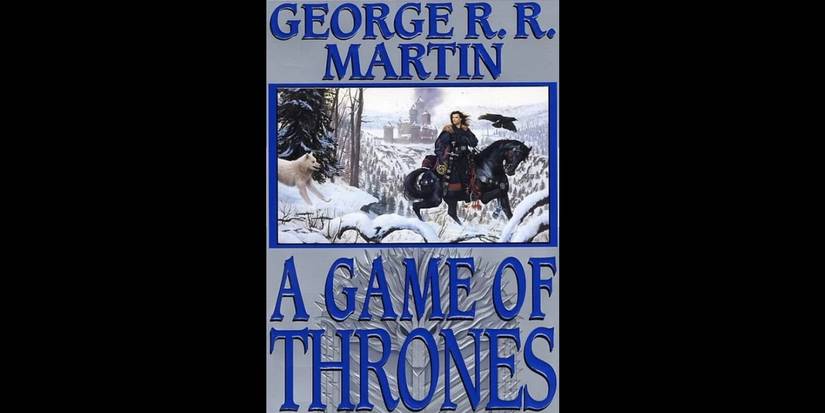 Image via Bantam Spectra
“When you play the game of thrones, you win, or you die. There is no middle ground.” Speaking of Game of Thrones, no list of influential grimdark novels would be complete without shouting out George R.R. Martin's political, unpredictable phenomenon. Although its twists and shocking moments are now world-famous, the first book in the series was very subversive on release, upending many of fantasy's core assumptions. It starts off looking fairly conventional, then veers into startling territory.
Indeed, Ned Stark looks every inch the traditional fantasy protagonist: honorable, courageous, powerful, and determined to uncover the truth. Unfortunately, Westeros doesn't reward any of those qualities by default. Power depends upon understanding other people's interests, making compromises, lying convincingly, and occasionally doing horrible things before somebody else does them to you. And, crucially, no one here has plot armor. As the saying goes: all men must die.
3 'Gardens of the Moon' (1999)
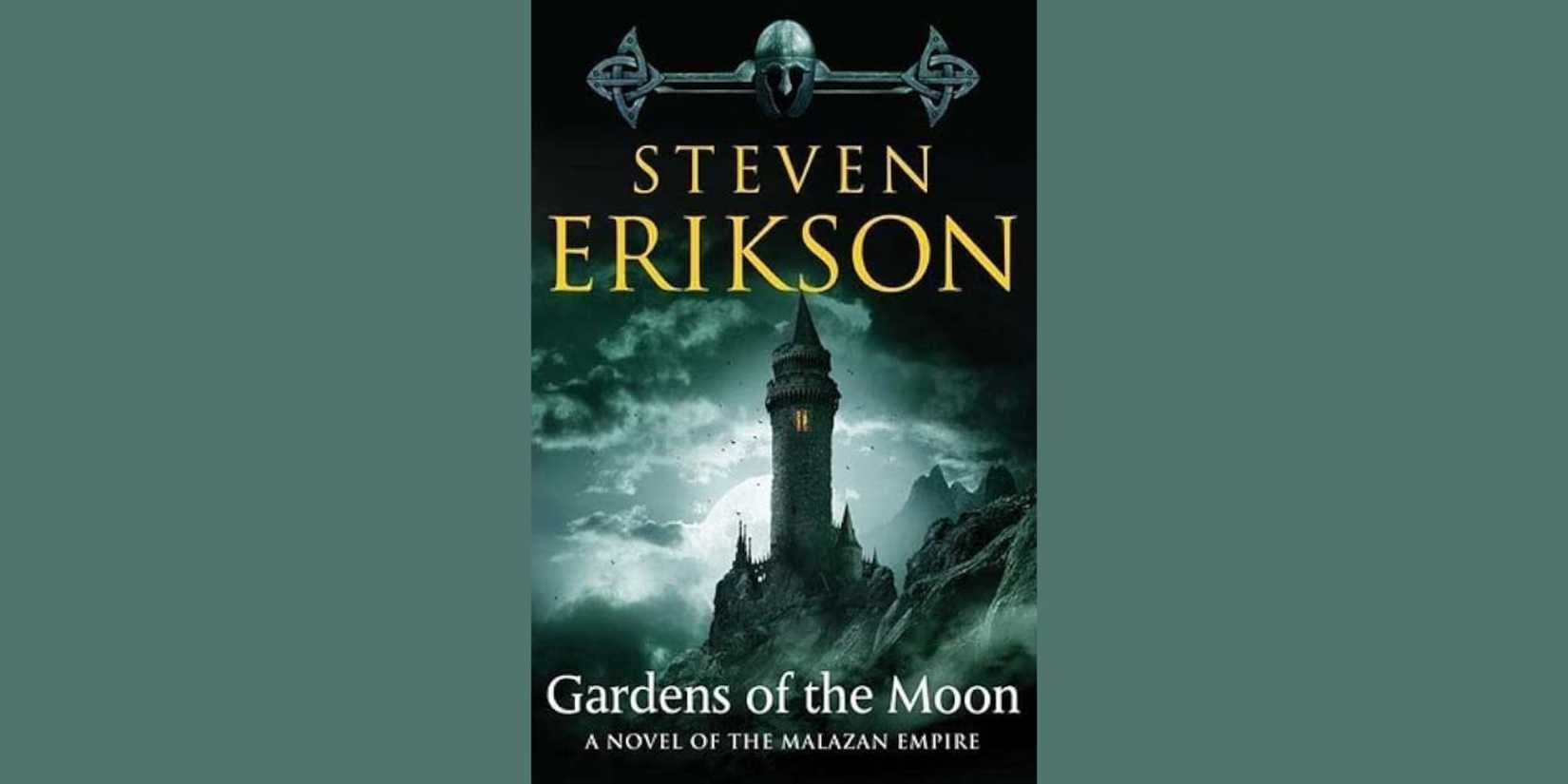 Image via Tor Fantasy
“Every decision you make can change the world.” This is the opening entry in the truly epic Malazan Book of the Fallen series, which spans millennia of fictional history and adds up to over 11,000 pages across ten volumes. Gardens of the Moon drops the reader into the middle of an enormous imperial conflict, provides relatively little explanation, and trusts you to figure things out by yourself. Gods interfere in mortal affairs, ancient creatures walk the earth, assassins battle on rooftops, armies are sacrificed for political objectives, and ordinary soldiers are caught in the teeth of vast, vast schemes.
Refreshingly, the novel is morally ambiguous without reducing everyone to interchangeable psychopaths. Soldiers joke, form friendships, grieve, and show compassion even while participating in horrifying campaigns. That complexity is more than a little intimidating, meaning Gardens of the Moon is definitely not entry-level fantasy reading, but it's also why the book (and the whole series) is so rewarding.
2 'The Black Company' (1984)
 Image via MidWorld Press
“Evil is relative. You can't hang a sign on it.” Modern grimdark owes an enormous debt to The Black Company — in many ways, it's the subgenre's center of gravity. With it, author Glen Cook broke significant ground by telling an epic story from the perspective of professional soldiers who weren't especially interested in determining whether the people paying them were the good guys. Plot-wise, the book follows the titular mercenary company as they enter the service of the tyrannical Lady and become involved in a war against the rebels.
The Black Company aren't shining knights riding toward destiny; they're working fighters concerned with completing jobs and staying alive. That ground-level viewpoint makes the enormous supernatural forces surrounding them feel even more intimidating. While sorcerers and ancient evils attempt to decide the fate of nations, the characters merely march through the mud, one foot after the other.
1 'The Worm Ouroboros' (1922)
 Image via Jonathan Cape
“Surely time is no mystery, but a thing plain and of easy understanding.” At over 100 years old, The Worm Ouroboros predates not only the term "grimdark," but The Lord of the Rings itself. Nevertheless, this book has earned a spot in the history books because it pioneered a version of epic fantasy defined by warfare, ambition, cruelty, and heroic violence. It chronicles a titanic conflict between Demonland and Witchland, written in deliberately archaic prose that gives the story the quality of some half-forgotten myth.
The morality here is sort of neo-pagan. Rather than fighting for justice or to protect the innocent, the main characters purely pursue personal glory, power, and the thrill of combat. Peace is not really their goal; amoral self-fulfillment is. The heroes' longing for renewed conflict gives the novel a cyclical, almost nihilistic quality: struggle itself becomes the thing that gives their existence meaning.


 English (US) ·