
The 2010s represented a marked change in crime cinema. For the most part, crime films of the '90s and 2000s explored simpler themes of good versus evil and examined the procedural aspects of crime and investigation. While those elements still dominate crime films, the rise of streaming and the increased visibility of low-budget and international films means that audiences have a much wider selection at their fingertips.
This newfound openness to different stories has allowed for a diverse array of films to exist and succeed all at once. Success stories from the decade include grungy comic book adaptations like Dredd, foreign language martial-arts extravaganzas like The Raid, and utterly ruthless exercises in hyper-violence like Brawl in Cell Block 99 to find their audiences. Diversity in storytelling has also influenced more mainstream and critically acclaimed films from recent years, including the following, which represent some of the best crime films of their decade.
10 'Prisoners' (2013)
 Image via Summit Entertainment
The Dover and Birch families have been close for some time, but their bond changes forever when the youngest daughters of each family are kidnapped on Thanksgiving from the quiet street the families both live in. Although Detective Loki (Jake Gyllenhaal) is dedicated to solving the case, his dogged approach isn't enough for Keller Dover (Hugh Jackman), who is desperate to have his daughter home safely. Keller takes matters into his own hands and begins a vigilante investigation into his daughter's disappearance.
It isn't an accident that Denis Villeneuve makes two appearances on this list. The director’s deft hand and eye for character are clear to anyone who watches Prisoners. The film's complex and sophisticated exploration of the modern culture surrounding police work and investigation makes it a defining film of its decade. Where other procedurals exist in a vacuum, Prisoners is acutely aware of the policing and cultural landscape it exists within. If these strengths weren't enough, the tense and icy thriller is also an effective edge-of-your-seat mystery utterly drowning in impeccable performances from a stacked cast which includes the likes of Viola Davis, Paul Dano and Melissa Leo.
9 'Gone Girl' (2014)
 Image via 20th Century Studios
Nick (Ben Affleck) and Amy (Rosamund Pike) seem to have a picture-perfect marriage. But cracks gradually form when the pair leave New York City to move to Nick's hometown in Missouri to care for his family. When Nick comes home one day to find that Amy is missing, his marriage and secrets are placed under a microscope by police. What they find leads them to turn their attention to Nick, who ultimately becomes a prime suspect in his wife's disappearance.
For every decade that David Fincher has been a filmmaker, he has redefined crime films. The grungy cynicism of Seven represents the best of what 90's procedurals had to offer. In the first decade of this century, Zodiac reflected on the cannibalistic obsession that an unsolved mystery can wreak upon the curious. And then, in the 2010s, Gone Girl arrived and gave audiences a complex and morally flexible portrait of the intersection of true crime, the power of media narratives, and the weight of gender roles. Of course, much of the praise for Gone Girl’s themes lies at the feet of Gillian Flynn, who adapted the screenplay from her own novel of the same name. Gone Girl’s status as one of the best crime films of its decade is clearly represented in the film's discourse, which continues to this day and divides audiences as much as it did upon its initial release. While the 2020s are not over, The Killer is this decade’s Fincher crime film, and it certainly continues the trend that Fincher has established for himself. That is, it is an entirely different yet relevant examination of what crime on film means during this decade.
8 'Widows' (2018)
 Image via 20th Century Fox
A two-million-dollar heist goes terribly wrong, and Harry (Liam Neeson) and his crew of thieves are killed when the police blow up their getaway car. The man Harry robbed is Jamal Manning (Brian Tyree Henry), a vicious and powerful crime boss who is also entangled in local politics in Chicago. Despite having paid the ultimate price for his actions, Jamal isn't satisfied with the deaths of the thieves, and demands that Harry’s widow, Veronica (Viola Davis), settle the debt. Veronica assembles the widows of the other men in Harry’s crew and begins to plan her own heist to pay back Jamal.
Gillian Flynn makes her second appearance on this list with Widows, a film she co-wrote with the film's director Steve McQueen. McQueen’s unbridled and undeniable talent as a filmmaker has been on display for almost two decades. Before directing Widows, McQueen directed IRA historical film Hunger, the sex-addiction drama Shame, and the Oscar-winning Solomon Northup biopic 12 Years a Slave. Not only do all of these films star Michael Fassbender, but they are also all excruciatingly poignant, desperate, and heart-wrenching. While Widows is no walk in the park, its action set pieces and heist-based premise made it a much more commercially promising film compared to McQueen’s prior work. The mainstream appeal and A-list cast only strengthened McQueen’s voice as a storyteller. In addition to succeeding as a thrilling heist film and a gut-wrenching thriller, Widows has a lot to say about modern wealth disparity and the entrenchment of crime in politics.
7 'Hell or High Water' (2016)
 Image via Lionsgate
Brothers Toby (Chris Pine) and Tanner (Ben Foster) are struggling to save their family’s land from foreclosure. Their late mother's decision to place a reverse mortgage on the property has left the brothers desperate. To solve their financial woes and pay off the loan, Toby and Tanner plan and execute a series of bank robberies. At the same time, two Texas Rangers join the investigation and begin circling the brothers.
America has weathered many depressions and recessions, but few were as eye-opening and brazen as the 2008 global financial crisis. The GFC left a deep scar on the American psyche that continues to influence and tarnish the trust that Americans have in the economic systems around them. This trauma and unfulfilled rage are on full display in Hell or High Water. While the Westerns of old cast the gangs and outsiders as villains, the modern American West is oppressed by its own governments and corporations. The catharsis provided by Hell or High Water is equal to the film's sympathies for the ever-shrinking middle-class and increasingly impoverished working class. The reality of Hell or High Water’s themes is brought to bear by the complex performances from Chris Pine, Ben Foster and Jeff Bridges in the leading roles.
6 'You Were Never Really Here' (2017)
 Image via Amazon Studios
Joe (Joaquin Phoenix) is a hired gun with a troubled past. Still dealing with the traumas of his youth and his time in the military, Joe works to rescue people impacted by human trafficking. Joe's handler sends a go-between to deliver Joe his new assignment, which requires him to try and quietly rescue the kidnapped daughter of a senator. What begins as a simple mission quickly becomes wildly complicated when Joe realizes he may have stumbled into a widespread conspiracy.
Lynne Ramsay is renowned for her emotive, sophisticated and understated work. All of those factors are on display in You Were Never Really Here, a brutal film which pulls no punches and makes no apologies. Ramsay has never shied away from confronting themes, and handles them with a raw honesty that is as appropriate as it is unflinching. While her most widely known film is likely We Need to Talk About Kevin, You Were Never Really Here confidently demonstrates that it is also worthy of pride of place among Ramsay's work, as well as among Joaquin Phoenix's best performances.
Collider Exclusive · Oscar Best Picture Quiz
Which Oscar Best Picture
Is Your Perfect Movie?
Parasite · Everything Everywhere · Oppenheimer · Birdman · No Country
Five Oscar Best Picture winners. Five completely different visions of what cinema can be — and what it can do to you. One of them is the film that was made for the way your mind works. Ten questions will figure out which one.
🪜Parasite
🌀Everything Everywhere
☢️Oppenheimer
🐦Birdman
🪙No Country for Old Men
FIND YOUR FILM →
01
What kind of film experience do you actually want? The best movies don't just entertain — they leave something behind.
ASomething that pulls the rug out — that makes me think I'm watching one kind of film and then reveals I'm watching another entirely. BSomething overwhelming — funny, sad, absurd, and genuinely moving, all at once. CSomething grand and weighty — a film that makes me feel the full scale of what I'm watching. DSomething formally daring — a film that pushes what cinema can even do. ESomething lean and relentless — pure tension with no wasted frame.
NEXT QUESTION →
02
Which idea grabs you most in a film? Great films are driven by a central obsession. What's yours?
AClass, inequality, and what people are willing to do when desperation meets opportunity. BIdentity, family, and the chaos of trying to hold your life together when everything is falling apart. CGenius, moral responsibility, and the catastrophic weight of a decision you can never take back. DEgo, legacy, and the terror of becoming irrelevant while you're still alive to watch it happen. EEvil, chance, and whether moral order actually exists or if we just tell ourselves it does.
NEXT QUESTION →
03
How do you like your story told? Form is content. The way a story is shaped changes what it means.
AGenre-twisting — I want it to start in one lane and migrate into something completely different. BMaximalist and genre-blending — comedy, action, drama, sci-fi, all in one ride. CEpic and non-linear — cutting between timelines, building a mosaic of cause and consequence. DA single unbroken flow — I want to feel like I'm living it in real time, no cuts to safety. ESpare and precise — every scene doing exactly what it needs to do and nothing more.
NEXT QUESTION →
04
What makes a truly great antagonist? The opposition defines the protagonist. What kind of opposition fascinates you?
AA system — invisible, structural, and almost impossible to fight because it has no single face. BThe self — the ways we sabotage, abandon, and fail the people we love most. CHistory — the unstoppable momentum of events that no single person can stop or redirect. DThe industry — the machinery of culture that chews up talent and spits out irrelevance. EPure, implacable evil — a force so certain of itself it becomes almost philosophical.
NEXT QUESTION →
05
What do you want from a film's ending? The final note is the one that lingers. What do you want it to sound like?
AShock and inevitability — a conclusion that recontextualises everything that came before it. BEarned emotion — I want to cry, laugh, and feel genuinely hopeful, even if the world is a mess. CDevastation and grandeur — an ending that makes me sit in silence for a few minutes after. DAmbiguity — something that leaves enough open that I'm still thinking about it days later. EBleakness — an honest refusal to pretend the world is tidier than it actually is.
NEXT QUESTION →
06
Which setting pulls you in most? Where a film takes place shapes everything — mood, stakes, what's even possible.
AA gleaming modern city with a hidden underside — beauty masking rot, wealth masking desperation. BA collapsing suburban life that opens onto something infinite — the multiverse of a single ordinary person. CThe corridors of power and science at a world-historical turning point — where decisions echo for decades. DThe grimy, alive chaos of New York and Hollywood — fame as both destination and trap. EVast, indifferent landscape — desert and highway where violence arrives without warning or reason.
NEXT QUESTION →
07
What cinematic craft impresses you most? Every great film has a signature — a technical or artistic element that makes it unmistakable.
AProduction design and mise-en-scène — every frame composed to carry meaning beneath the surface. BEditing and tonal control — the ability to move between registers without losing the audience. CScore and sound design — music that becomes inseparable from the dread and awe of what you're watching. DCinematography as performance — the camera not recording events but participating in them. ESilence and restraint — what's left unsaid and unshown doing more work than any dialogue could.
NEXT QUESTION →
08
What kind of main character do you root for? The protagonist is the lens. Who you choose to follow says something about you.
ASomeone smart and resourceful who makes increasingly dangerous decisions under pressure. BSomeone overwhelmed and ordinary who turns out to be capable of something extraordinary. CA brilliant, tortured figure whose gifts and flaws are inseparable from each other. DA self-destructive artist whose ego is both their superpower and their undoing. EA quiet, principled person trying to make sense of a world that has stopped making sense.
NEXT QUESTION →
09
How do you feel about a film that takes its time? Pace is a choice. Some films sprint; others let tension accumulate slowly, deliberately.
AI love a slow build when I know the payoff is going to be seismic — patience for a devastating reveal. BGive me relentless momentum — I want to feel breathless and emotionally spent by the end. CEpic runtime doesn't scare me — if the material demands three hours, give me three hours. DI want it to feel propulsive even when nothing is technically happening — restless energy throughout. EDeliberate and unhurried — I want dread to accumulate in the spaces between the action.
NEXT QUESTION →
10
What do you want to feel walking out of the cinema? The best films leave a mark. What kind of mark do you want?
AUnsettled — like I've just seen something I can't fully explain but can't stop thinking about. BMoved and energised — like the film reminded me what actually matters and gave me something to hold onto. CHumbled — like I've been in the presence of something genuinely important and overwhelming. DExhilarated — like I've just seen cinema doing something it's never quite done before. EHaunted — like a cold, quiet dread that stays with me for days.
REVEAL MY FILM →
The Academy Has Decided Your Perfect Film Is…
Your answers have pointed to one Oscar Best Picture winner above all others. This is the film that was made for the way your mind works.
Parasite
You are drawn to films that operate on multiple levels simultaneously — that begin in one genre and quietly, brilliantly migrate into another. Bong Joon-ho's Parasite is a film about class, desire, and the architecture of inequality that manages to be darkly funny, deeply suspenseful, and genuinely shocking across a single extraordinary running time. Your instinct is for cinema that hides its true intentions until the moment it's ready to reveal them. Parasite is exactly that — a film that rewards close attention and punishes assumptions, right up to its devastating final image.
Everything Everywhere All at Once
You want it all — and this film gives you all of it. The Daniels' Everything Everywhere All at Once is one of the most maximalist films ever made: action comedy, multiverse sci-fi, family drama, existential crisis, and a genuinely earned emotional core that sneaks up on you amid the chaos. You are someone who responds to ambition, who doesn't want cinema to choose between being entertaining and being meaningful. This film refuses that choice entirely. It is overwhelming by design, and its overwhelming nature is precisely the point — because the feeling of being crushed by infinite possibility is exactly what it's about.
Oppenheimer
You are drawn to cinema on a grand scale — films that understand history not as a backdrop but as a force, and that place their characters inside that force and watch what happens. Christopher Nolan's Oppenheimer is a film about the terrifying gap between what we can do and what we should do, told with the full weight of one of the most consequential moments in human history behind it. You want your films to feel important without feeling self-important — to earn their ambition through sheer craft and the gravity of their subject. Oppenheimer does exactly that. It is enormous, complicated, and refuses easy comfort.
Birdman
You are drawn to films that foreground their own construction — that make the how of the filmmaking part of the what it's about. Alejandro González Iñárritu's Birdman, shot to appear as a single continuous take, is cinema examining itself through the cracked mirror of a fading actor's ego. You respond to formal daring, to the feeling that a film is doing something that probably shouldn't be possible. Michael Keaton's performance and Emmanuel Lubezki's restless camera create something genuinely unlike anything else — a film that is simultaneously about creativity, relevance, self-destruction, and the impossibility of ever truly knowing if your work means anything at all.
No Country for Old Men
You are drawn to cinema that trusts silence, that refuses to explain itself, and that treats dread as a form of meaning. The Coen Brothers' No Country for Old Men is a film about the arrival of a new kind of evil — implacable, arbitrary, and utterly indifferent to the moral frameworks we use to make sense of the world. It is one of the most formally controlled films ever made, and its controlled restraint is what makes it so terrifying. You want your films to haunt you, not comfort you. You are not interested in resolution if resolution would be dishonest. No Country for Old Men is honest in a way that most cinema never dares to be.
↻ RETAKE THE QUIZ
5 'Drive' (2011)
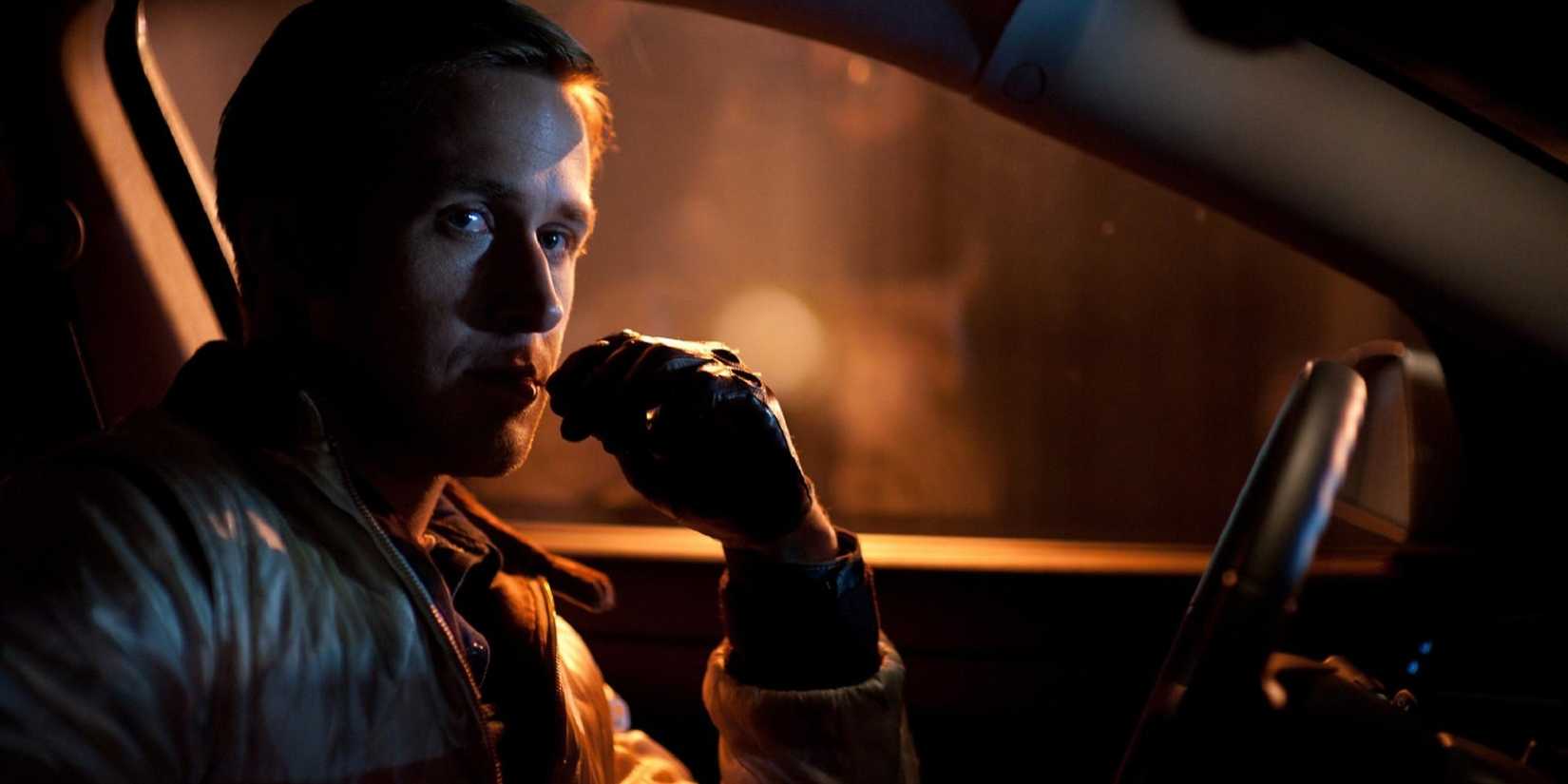 Image via FilmDistrict
A Hollywood stunt driver (Ryan Gosling) moonlights as a getaway driver for criminals throughout Los Angeles. Despite working at the fringes of California's criminal scene, the driver manages to keep his life separate from his work. This all changes when he meets his neighbor Irene (Carey Mulligan), and becomes entangled in her husband's reckless criminal activity.
It isn't every day that arthouse breaks through to the mainstream in such a spectacular fashion as Drive. The film from Danish director Nicolas Winding Refn is much more interested in vibes than story (although the film succeeds in both of these areas). Drive provided the blueprint for ‘cool’ for an entire decade, and the ripples of its synth pop soundtrack and neon-laden hyper-violence continue to flow through action cinema today. While the film is much more interested in mood than action, its action set pieces still stand above many of its peers from the decade. Refn’s love of style and unique eye for character were the driving factor for the magic of this 2011 film, the success of which is akin to catching lightning in a bottle.
4 'Sicario' (2015)
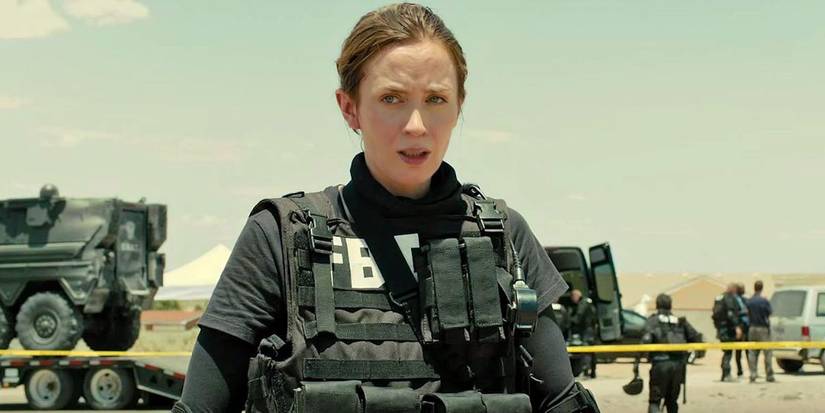 Image via Lionsgate
A routine FBI raid on a cartel safe house quickly turns into carnage. After dozens of bodies are found hidden in the walls, a booby trap is triggered and detonates a bomb, which kills two officers. In the aftermath, Special Agent Kate Mercer (Emily Blunt) is invited to join a special CIA Taskforce as an FBI liaison. Kate’s desire to get justice begins to dwindle when she learns more about what the CIA is doing to achieve its goals.
With Denis Villeneuve directing and a screenplay from Taylor Sheridan, it isn't a surprise that Sicario is one of the most raw and confronting crime films of its decade. Bygone decades had simpler outlooks on crime and punishment. While a simple film about good versus evil will always be welcomed by audiences, there is no denying that when government agencies, terrorist groups, and large sums of money are involved, things are not so simple. Sicario has a cynical and realistic image of the modern war on drugs and terror in America. Its harsh perspective is anchored and amplified by a strong and vulnerable performance from Emily Blunt, who serves as an audience surrogate in a hostile and immoral war.
3 'The Wolf of Wall Street' (2013)
 Image via Paramount Pictures
 In the '80s, young Jordan Belfort (Leonardo DiCaprio) develops a taste for the high-pressure and high-reward life of a stockbroker. Despite his success, Black Monday brings with it one of the largest stock market crashes in history, and Jordan loses his job. Starting from scratch again, Jordan begins to bend the rules to secure his success.
Martin Scorsese's duality and range as a filmmaker were on proud display in the 2010s. The decade saw the release of The Wolf of Wall Street, which used charismatic performances and heightened comedy to intoxicate audiences and indoctrinate them into the cult of money. Conversely, the 2010s also saw Scorsese release The Irishman, a pensive and introspective reflection on a life of crime and violence. While The Irishman may be the more earnest and thoughtful of the two films, The Wolf of Wall Street remains a relevant and stark portrait of life among the 1%. Furthermore, the film's controversy and resulting discourse continues to this day, proving that the themes and realities it explored continue to play on the minds of audiences and on their consciences.
2 'Uncut Gems' (2019)
 Image via A24
Howard (Adam Sandler) is a jeweler working in New York City's famous diamond district. He's also a reckless gambler with a substantial debt to his name. When basketball player Kevin Garnett visits Howard's office, he is taken by a gorgeous and valuable opal that Howard has on display. Garnett insists on borrowing the opal for the night, and Howard reluctantly agrees, taking Garnett’s NBA Championship ring as collateral. When Howard can't find Garnett the following day, he begins a wild and stressful operation to try and track down his opal.
Few films manage to capture the absolutely inescapable anxiety associated with a life lived at the edge of the law like Uncut Gems. The film from the Safdie brothers explores the mayhem of addiction and works as an excruciating character study of a man who is physically incapable of making a good decision. Stunt casting and curiosity may have gotten audiences interested (the film features NBA player Kevin Garnett and musician The Weeknd playing themselves, and Adam Sandler playing against type), but gimmicks don't create icons. The undeniable creative voice and vision of Josh and Benny Safdie solidified Uncut Gems as a modern crime classic.
1 'Knives Out' (2019)
 Image via Lionsgate
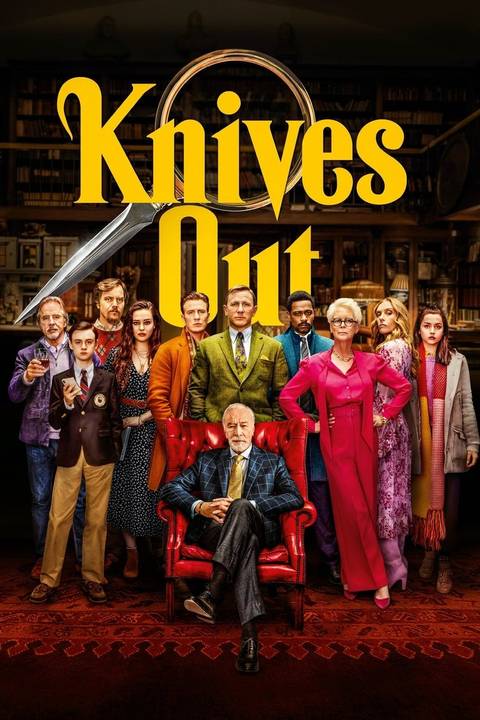
Internationally beloved mystery author Harlan Thrombey (Christopher Plummer) has built his empire from the ground up using only his talents as a writer and businessman. His children have benefited from their father's accomplishments and live a life of luxury due to Harlan’s works and their legacy. When Harlan dies under suspicious circumstances, the family and Harlan's devoted nurse, Marta (Ana de Armas), are all suspects. Not only are they being investigated by the police, but also by the mysterious and renowned private detective, Benoit Blanc (Daniel Craig).
Knives Out is a balancing act of contradictions that shouldn't work. The film from Rian Johnson revels in detective stereotypes while subverting them and explores old money attitudes in contrast with modern perspectives around wealth and immigration. These unconventional touches are a massive reason for the film's success. And the blending of vintage detective story beats with modern socio-economic discourse makes for a timeless yet modern murder mystery. As if these factors weren't enough, Knives Out also features one knockout performance after another. Classic characterizations, like Jamie Lee Curtis’ spin on the insincere neoliberal, butt up against more bombastic performances, like Daniel Craig’s rendition of an old-fashioned Kentucky-fried detective. The success of Knives Out, which had a sequel in 2022 and will have another in 2025, is emblematic of modern audiences and their desire for sophisticated and emotive storytelling.
Knives Out
Release Date November 27, 2019
Runtime 131 minutes
Director Rian Johnson
Writers Rian Johnson, Ram Bergman
-
-

Chris Evans
Ransom Drysdale






 English (US) ·