
Supernatural thrillers are a nebulous subgenre. Thrillers can often be precariously perched at the precipice of full-blown horror, and when supernatural elements are added into the mix, it becomes even harder to classify them. Some movies simply exist at the nexus of multiple genres. That makes this list even more subjective than most, but there's no doubting that the ten films listed below are both thrilling and supernatural. Ghosts, curses, vampires and even some very horny cat people feature prominently in the best supernatural thrillers of all time.
These movies might be scary sometimes or even action-packed, but they never fail to thrill. What makes a subgenre like this so much is how limited the list of films that technically qualify for it is. It means there are some movies highlighted here that might otherwise not get recognition in more traditional genre territory. Some of them are acclaimed classics in their shared genres, but they are also some of the best supernatural thrillers in film history.
10 'The Crow' (1994)
 Image via Miramax Films
Revenge thrillers are one of the most dramatically potent varieties of the genre. Violent vengeance may result in a pyrrhic victory, but it makes for thrilling viewing. There's a bloodthirsty catharsis in watching someone take justice into their own hands and right wrongs, even if they have to do it from beyond the grave. Often, these undead avengers take the form of antagonists in horror movies, but sometimes they get to be the anti-hero. The Crow, based on James O'Barr's comic book, is the most infamous example of this. It's a dark, supernatural action thriller with a 90s goth aesthetic that will be forever linked to its time period and the tragedy that occurred during its production.
The accidental death of Brandon Lee during production of The Crow gives the film a haunted quality. It's a tragedy that was wholly avoidable and unimaginable, but which undeniably lends even more weight to the film's narrative of resurrection and Lee's performance. So charismatic is he as Eric Draven, a rock musician who is murdered along with his fiancée and returns from the grave one year to exact bloody vengeance, that it seems impossible that the film wouldn't have accelerated his movie career. The Crow should have been the start of great new things for Lee, but instead serves as his dark swan song.
9 'The Dead Zone' (1983)
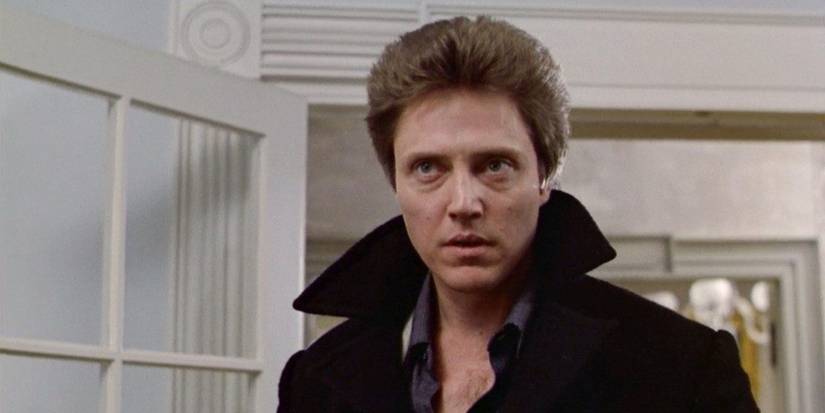
Image via Paramount Pictures
Stephen King may be known as a master of horror, but much of his work falls outside the genre, as do many of the best adaptations of it. The Shawshank Redemption and Stand By Me are both dramas without a hint of horror, while Misery is a near-perfect thriller of strictly human proportions. It would take another master of horror to make the best King adaptation that's also one of the best supernatural thrillers. David Cronenberg's adaptation of The Dead Zone was more mainstream than most of the Canadian auteur's more provocative previous films, but which still has his precise, methodical style and benefits from a haunted lead performance by Christopher Walken.
Walken plays Johnny Smith, a man who spends five years in a coma after a car accident and awakens with newfound psychic abilities. This gift turns out to be more of a curse, as Johnny grows physically weaker and also witnesses an apocalyptic vision of the future that compels him to act. The Dead Zone may not rank among the absolute best of either Cronenberg or King's careers, but it's an effective thriller made more compelling by the conversation between the two creator's unique sensibilities. It's also a rare lead showcase for Walken in the horror genre, and he is as committed as always.
8 'What Lies Beneath' (2000)
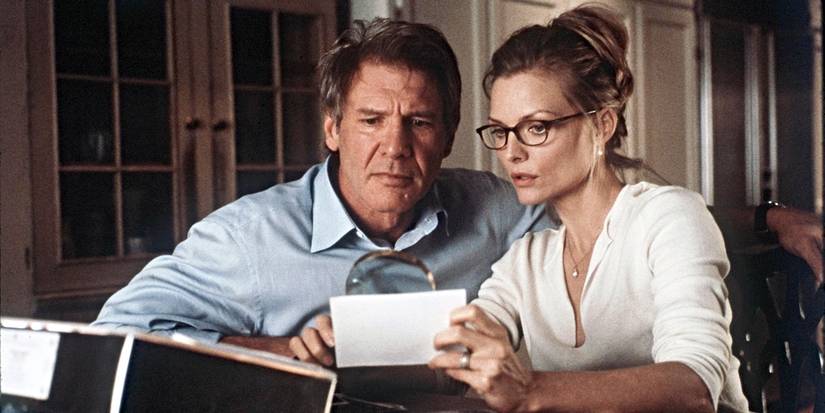 Image via DreamWorks Pictures
Despite having an A-list cast and director, the supernatural thriller What Lies Beneath came and went in 2000 without much fanfare, despite a decent box office performance. It remains a unique film in the careers of both director Robert Zemeckis and star Harrison Ford. For Zemeckis, who directed few true thrillers, the film is more akin to some of his work as a producer and on the cult classic horror series Tales From the Crypt. Ford is also cast against type, which benefits the film in its third act as it turns away from a haunting ghost story to a marital thriller.
Michelle Pfeiffer anchors the film as Claire, who is married to Ford's Norman. They are a couple of empty-nesters whose martial strain is exacerbated when Claire begins to experience some seemingly paranormal activity. The film uses slow-burn suspense, with Zemeckis taking a page out of Alfred Hitchcock's playbook, as Claire tries to uncover the truth behind their lakeside home's haunting and finds out there are darker shades to her marriage than she thought. There has been a minor reappraisal to What Lies Beneath in more recent years, and while is hasn't become a fult cult classic, it still has more than enough wicked thrills to recommend it for fans of thrillers of the paranormal persuasion.
7 'The Ring' (2002)
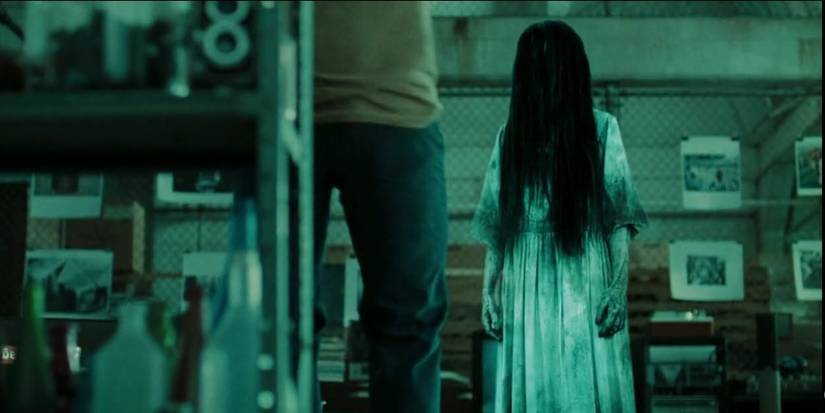 Image via DreamWorks Pictures
The Ring is undoubtedly a horror movie. It's a remake of the influential Japanese horror film Ringu and its success precipitated a slew of remakes of other J-horror movies. Unlike the original film, directed by Hideo Nakata, which is slower-paced and heavier in atmosphere, the remake, directed by Gore Verbinski, is more propulsive and pulpier. Ringu is a slow burn horror movie steeped in Japanese folklore, while The Ring is a faster-moving thriller that uses horror elements to propel it. Each film is its own beast, and personal preference will color how much a viewer enjoys either, but of the two, the American remake is the only one that fits firmly in the supernatural thriller category.
Naomi Watts plays Rachel, a journalist whose investigation into the death of her niece leads her to a videotape that supposedly causes anyone who views it to die seven days later. Rachel's investigation uncovers the vengeful spirit of a young murdered girl. Par for the course for 2000s horror, but Verbinski has always been a steady hand at genre material, and he keeps the film moving at a decent clip that keeps it engrossing. Even if its glossier visuals don't have the same impact as the lo-fi aesthetic of the original, and it has too heavy a reliance on jump scares, The Ring is a solid supernatural thrill ride.
6 'Cat People' (1982)
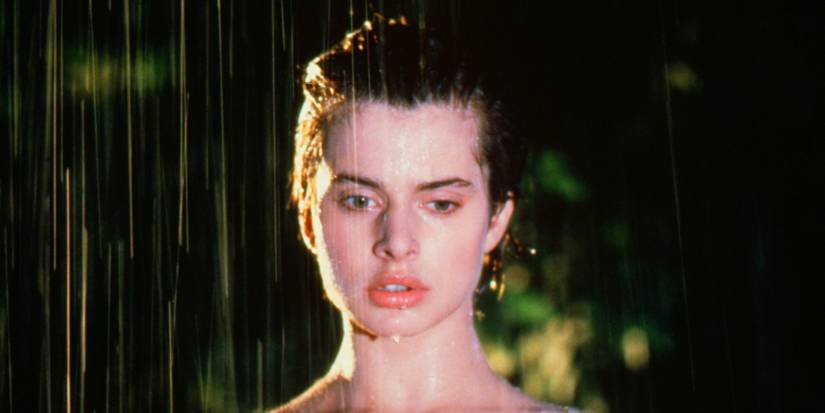 Image via Universal Pictures
The jump scare was first employed in Jacques Tourneur's supernatural horror film Cat People. That film was an atmospheric classic that transcended its B-movie intentions. The 1982 remake, directed by Paul Schrader, is a phantasmagorical erotic thriller that's completely lurid in the most entertaining way possible. Schrader, a director with a career defined by its peaks and valleys, was under the influence of cocaine while making the film, and never has that kind of coke-fueled energy been more apparent on screen. Cat People is an entire vibe of a movie that exists on its own wavelength, somewhere between the original film's atmospheric horror and the oversexed thrills of 80s erotic thrillers.
Nastassja Kinski and Malcolm McDowell play siblings Irena and Paul. Orphaned as children, Irena reconnects with Paul in New Orleans, where he reveals to her their distinct affliction that transforms them into werecats after sex. The film is filled with nudity and visceral violence, but it isn't so much scary as it is hypnotically alluring. It thrives on its visuals, its Giorgio Moroder score and its lurid content. It fits well within its era of steamy thrillers, but the added layer of the supernatural sets it apart.
5 'Saloum' (2021)
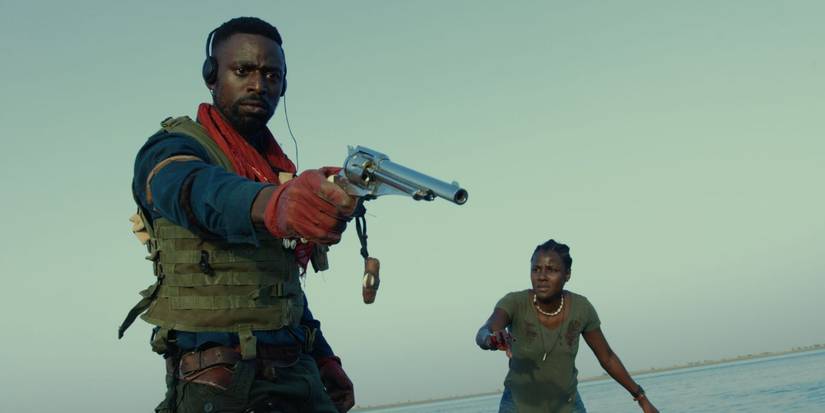
Saloum is a movie that defies easy classification. It throws horror, action, thriller, spaghetti Westerns and supernatural elements into a blender and sets it to purée. It could qualify in any number of lists of the best films, but it demands to be called out here for its reckless abandon and stylish thrills. Set in Senegal, and directed by Congolese filmmaker Jean Luc Herbulot, it's a sterling example of genre cinema from an area that's often overlooked on an international level. Widely available on streaming services, it's a film that even viewers who aren't fans of slippery subgenres should check out.
The Hyenas are a group of anti-hero mercenaries hired to extract a drug czar during a military coup. When they have to make an emergency landing in a remote area of Senegal, they take refuge at a resort where they come into conflict with locals and some vengeful spirits that are unwittingly unleashed. Saloum is wickedly entertaining but also informed by the violent history and folklore of its setting. It's so stuffed with wild ideas that it should buckle under its own weight, but everything, including the supernatural elements, is integrated together with such creativity that they enhance rather than reduce the others.
4 'Angel Heart' (1987)
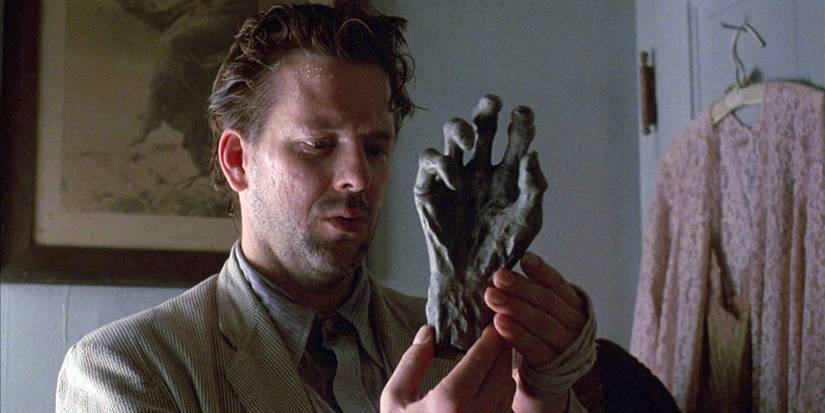 Image via TriStar Pictures.
Detective thrillers occupy a substantial subsection of the genre, while those that incorporate supernatural elements are less abundant but often even more intriguing. Lord of Illusions was Clive Barker's hardcore addition to hard-boiled fiction, The Exorcist III was William Peter Blatty's adaptation of his own sequel novel Legion, and Fallen applied some satanic panic to an otherwise standard procedural. Then there's Angel Heart, a period neo-noir thriller based on the novel Falling Angel by William Hjortsberg and directed by Alan Parker. It's a stylish, pulpy thriller featuring Louisiana Voodoo, occultism and deals with the Devil.
Mickey Rourke plays New York City-based private investigator Harry Angel, who's hired by the mysterious Louis Cyphre, played by Robert De Niro, to find a missing singer. Angel's investigation takes him all the way to New Orleans, where he discovers devilish secrets surrounding the missing man. Like many other 80s neo-noirs, Angel Heart features plenty of lurid kills and sweaty sex scenes, but its supernatural elements, 50s setting and the performances of Rourke and De Niro, elevate and set it distinctly apart.
3 'Frailty' (2001)
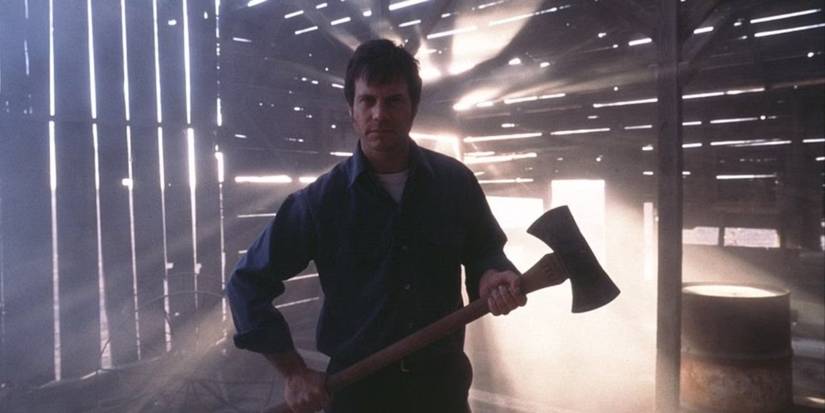 Image via 20th Century Studios
The directorial debut of actor Bill Paxton, Frailty is a Southern Gothic psychological thriller with a supernatural bent that shows the charismatic star could just as deftly manage tone behind the camera as he could with his own performances. While he is more remembered for his manic work in front of the camera, Paxton had an ability to recede into characters with a measured intensity that was chillingly effective. That's what makes him so compelling in the lead role of Frailty, as a father plagued by visions of demons and compelled by the will of God to destroy them.
Religion has often fueled a number of supernatural horror and thriller films. Demonic entities make for compelling imagery and motivation for psychotic killers, after all. While some films, like The Exorcist, are explicit in the physical existence of their demonic presences, others lean into a more psychological explanation for them, like in Strange Darling. Frailty walks a fine line between those extremes for most of its runtime, with Matthew McConaughey as the grown son of Paxton's character recounting his childhood to an FBI agent and how his father involved him and his brother in his crusade against evil. It's only in the film's climax that it comes down on a strictly supernatural side of the argument, and it's part of what makes the film such a bold, thrilling exploration of faith and violence.
2 'Near Dark' (1987)
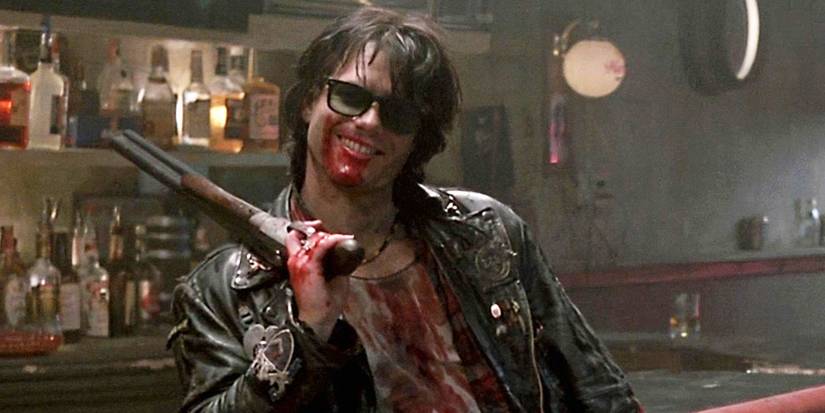 Image via De Laurentiis Entertainment Group
For anyone who wants to see Paxton go hog wild in a supernatural thriller, there's Kathryn Bigelow's neo-Western vampire movie Near Dark. Vampires are versatile monsters when it comes to building narratives around them. Beyond horror, they've been at the center of romances, comedies, kids movies and several stellar thrillers. From Dusk Till Dawn mixed and matched a crime thriller about bank robbers on the run with a vampire siege movie, 30 Days of Night is an Alaskan-set slaughterhouse of thrills, and Abigail is balletic bloodsucker fun. Near Dark outshines them all thanks to its Bigelow's stylish direction and the incredible performances by its vampire cast.
The film is an Aliens cast reunion, featuring Lance Henriksen, Jeannette Goldstein and Paxton as three members of a nomadic pack of vampires that wander America in a blacked-out van. The newest member of the pack is the reluctant Caleb, played by Adrian Pasdar, who's bitten by the pixieish Mae, played by Jenny Wright. Near Dark was Bigelow's solo directorial debut, and she stages the grungy vampire action with the same intensity that would come to define her career. The standout sequence where the vampires rip a biker bar and its patrons to shreds is a white-knuckle scene of true terror that measures up against the greatest sequences of any horror or thriller film.
1 'The Sixth Sense' (1999)
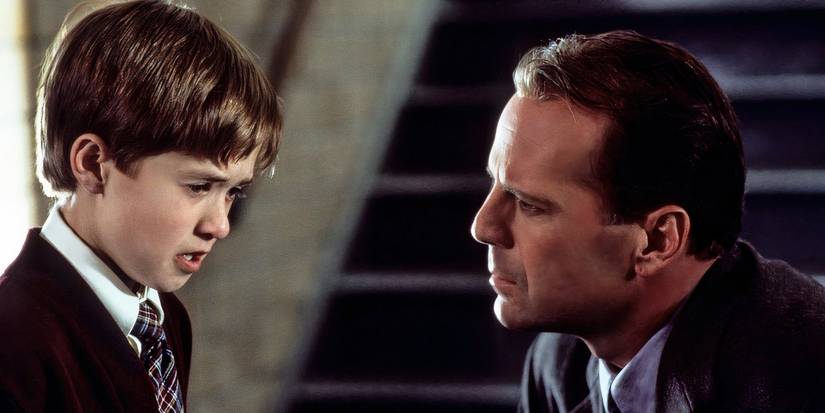 Image via Walt Disney Studios Motion Pictures
M. Night Shymalan's breakthrough supernatural psychological thriller The Sixth Sense was a monumental success that the director has been able to coast on ever since. Although he's made some great films since, with Unbreakable and Split particular highlights, the majority of Shymalan's career has been mediocre to outright embarrassing. It certainly isn't worthy of the promise shown by this film, which hasn't lost an ounce of effectiveness despite its infamous twist ending having become common pop culture knowledge. Like any great film with a twist ending, the knowledge of it doesn't ruin the film but rather enhances it.
Bruce Willis is child psychologist Malcolm Crowe, who is counseling young Cole Sear, played by Haley Joel Osment in one of the most impressive child performances ever given. Cole can see dead people and his hauntings have caused him emotional distress. While there are some thrilling elements to The Sixth Sense and some terrifying imagery, the film is at its most effective in exploring grief, trauma and reconciliation. It's a genuinely emotionally moving film, but that emotion is made all the more potent by its supernatural elements.





 English (US) ·