
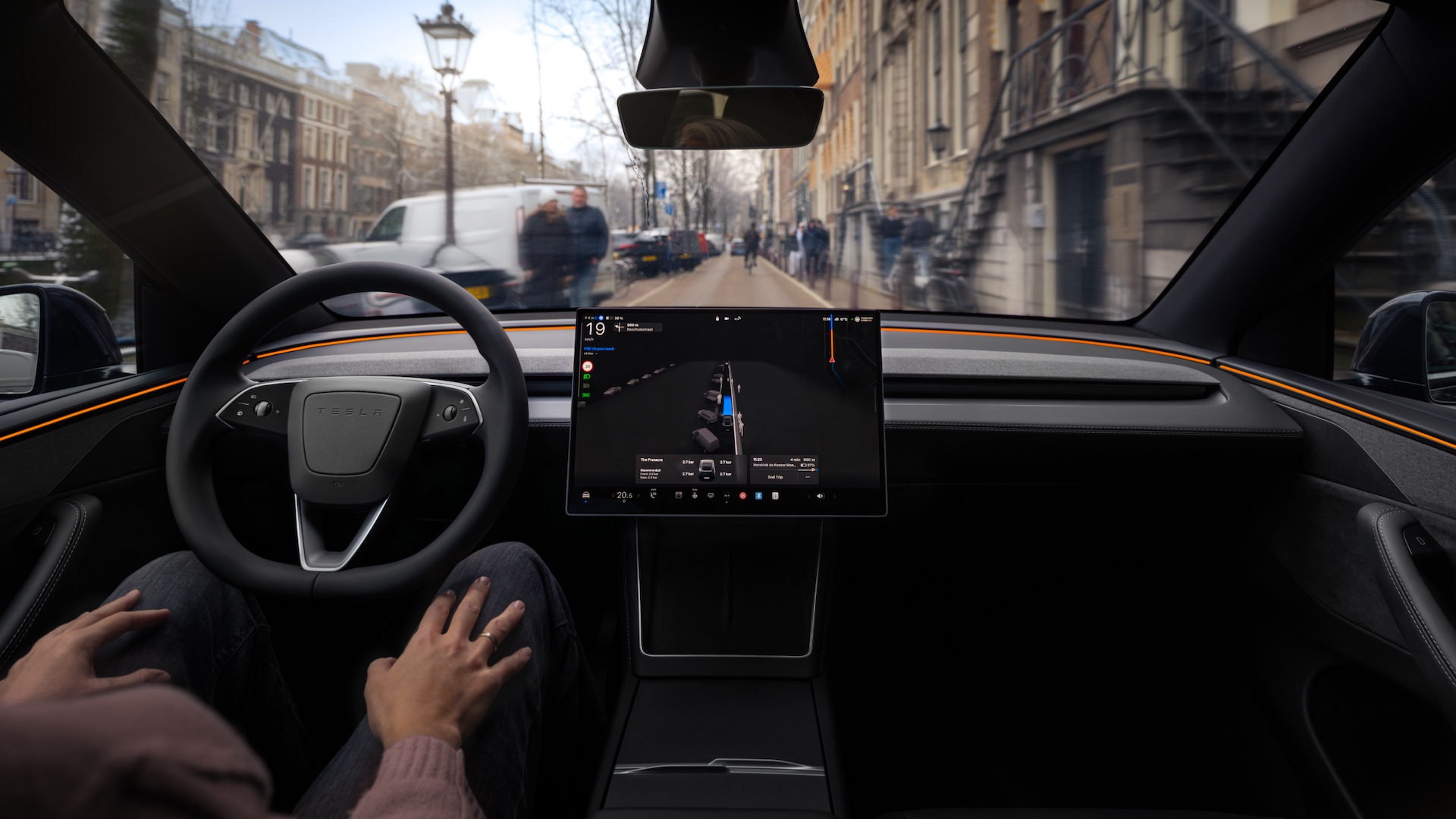
- Several fatal accidents have involved Tesla’s self-driving tech
- Two separate cases saw vehicles suddenly stop on major routes
- Electrek’s reporting has matched crash information with redacted Tesla reports
A recent series of reports by the website Electrek has linked a number of Tesla crashes to redacted reports that suggest a Level 2 driver-assist system was engaged within 30 seconds of impact.
In two separate incidents, a Tesla has stopped in the middle of a busy freeway, only to be hit by another vehicle, killing the drivers in both cases.
The first, which took place at 3am on October 31, 2025, in Mesa, Arizona, saw a Tesla sedan struck by a Ford F-350 pickup after it stopped in the middle of the freeway.
The second case, which took place at around 9:25pm, on October 6, 2025, in Seminole County, Florida, saw a 2020 Tesla Model 3 stop in the center eastbound lane of I-4, only for a semi to clip its rear and push it into the side of a second semi-truck, according to Electrek.
While the initial coverage of both crashes didn’t divulge the reasons behind them, reporting by Electrek has matched Tesla’s redacted accident reports to the incidents and, in both cases, Tesla’s automated driving technology was active.
Under a Standing General Order, automakers are now required to report crashes where a Level 2 driver-assist system was engaged within 30 seconds of impact. Tesla has to adhere to this.
In the Florida crash report, seen by Electrek, it listed the automated driving technology “Engagement Status” as “Verified Engaged” and stated the pre-crash movement as “Stopped,” with a speed of 0mph.
However, Tesla then redacts key information that could get to the bottom of why these vehicles suddenly stopped on extremely busy freeways.
In the documents, the crash narrative, the software version, and the field for whether the road was within the system’s approved operating area are all blacked out as “confidential business information”.
Due to this redaction of key information, it is impossible to tell whether the vehicles were using Autopilot or Tesla’s more advanced Full Self-Driving, as well as details leading up to the catastrophic events.
Analysis: Overconfidence in an imperfect technology
Electrek’s reporting understandably stops short of apportioning blame to Tesla’s autonomous driving systems, but the site suggests that previously-documented phantom-braking, which sees Autopilot brake hard for nonexistent obstacles, could be part of the issue.
That said, both of the incidents could simply be down to the fact that the drivers experienced a medical emergency or fell asleep behind the wheel, causing Tesla’s driver-assistance systems to bring the car to a stop.
But there have been a number of reported crashes that have occurred when Tesla’s driver-assist technology has been activated and the vehicle has sped up, such as a fatal incident that saw a Model 3 crash at 104mph and kill its driver in Clute, Texas, in May of this year.
Again, Tesla has redacted key information in its crash reporting that could help authorities piece the puzzle together and come to a concrete conclusion about the root cause.
Currently, Tesla is under investigation by the NHTSA over how it reports crashes involving its Level 2 driver-assistance systems, which it has been criticized for in the past after overhyping its capabilities.
But these recent incidents also point toward a worrying trend of overconfidence from drivers in the technology, expecting it to handle every conceivable situation on the road. Alas, the reality is that fully autonomous driving systems are still a long way from perfection.

Follow TechRadar on Google News and add us as a preferred source to get our expert news, reviews, and opinion in your feeds.








 English (US) ·