
 5 hours ago
8
5 hours ago
8
Tamron consistently creates zoom lenses that break the norm when it comes to focal length, offering alternatives to the classic patterns that most other manufacturers pursue. Even the more conventional Tamron 28-75mm f/2.8 and 70-180mm f/2.8 refuse to match the more common 24-70mm and 70-200mm formulae. However, the standout lens from Tamron in recent memory is the oddly effective 35-150mm f/2-2.8 lens, which proves to be an ideal event lens for almost any situation. If it could be faulted in any way, it would be due to its rather heavy weight and bulky size.
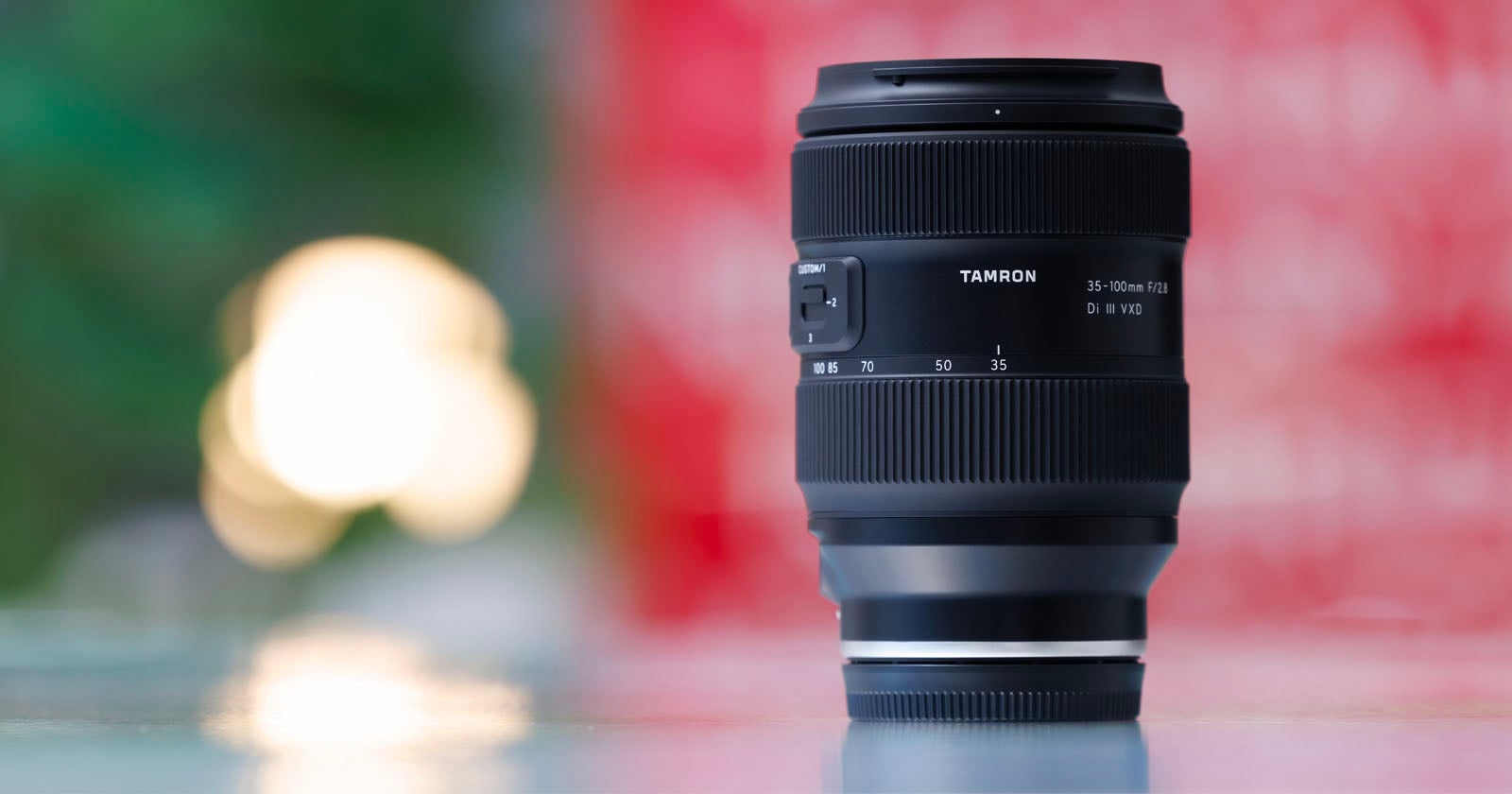
Looking to capitalize on the success of this excellent optic, Tamron has decided to create an alternative version with its latest $900 design. This new Tamron 35-100mm f/2.8 Di III VXD, available for both Sony E-mount and Nikon Z-mount, is a compromise between versatile focal range and compact size, but whether it can fill a needed void or simply overlaps existing designs was unclear. What better place than the wintry streets of New York City to find out the answer?
 Tamron continue to use odd focal ranges, but its lenses prove to be reliable and sharp.
Tamron 35-100mm f/2.8 VXD: How It Feels
The compactness of this lens is the key element of Tamron’s design here. The desire for a similarly-sized optic to the standard 28-75mm f/2.8 has been achieved as the new 35-150mm uses the same 67mm filter threads and is overall roughly the same dimensions. It weighs only slightly more at 19.9 ounces (565 grams) and comes with a host of handling features.
The manual focus ring and aperture ring turn smoothly and I’ve always appreciated the understated but handsome look and excellent build quality of the Tamron lenses. This particular lens ups the versatility game by offering a custom button with three possible settings. This can quickly be adjusted via a three-position switch and should please most event photographers.
 The Tamron 35-100mm lens is certainly smaller then it’s much bulkier cousin.
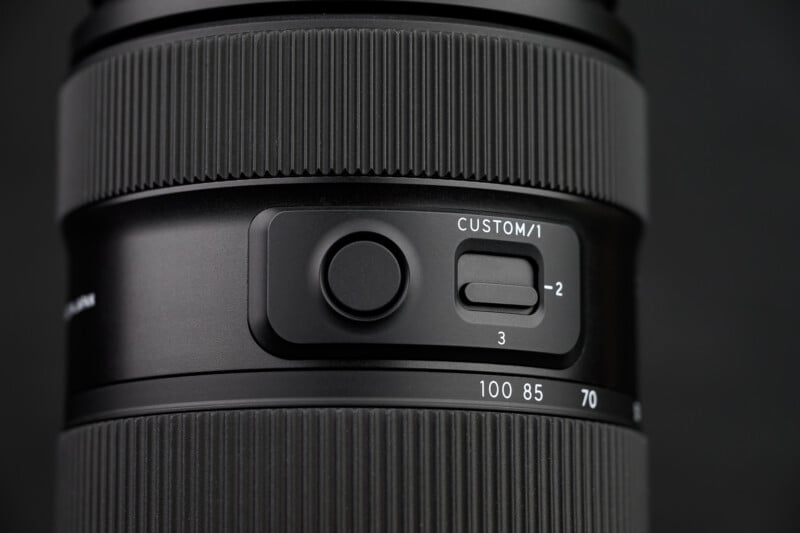 The customizable button now has a three-position switch to enhance its versatility.
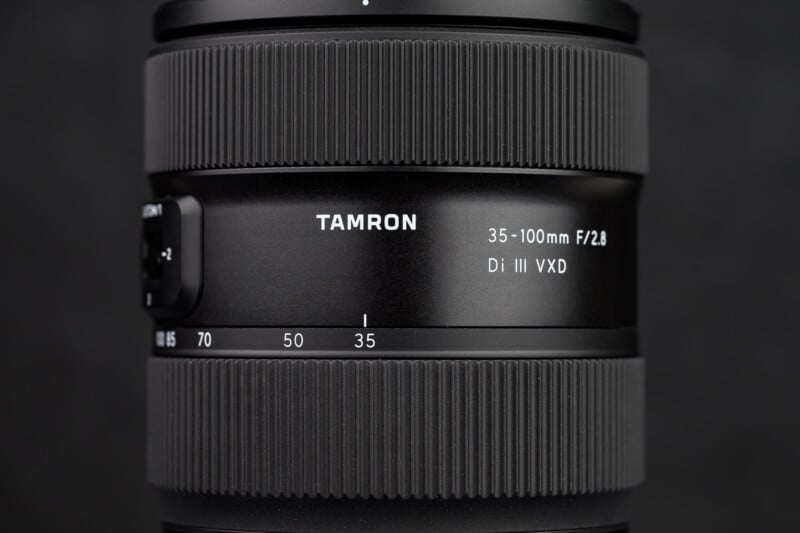 You get a constant f/2.8 maximum aperture, but you have to be okay with 35mm as your widest range.
I like that you can also connect the lens to through the the excellent Tamron lenses app via a built-in USB-C port, which allows you to adjust focusing direction, linear response, and more. There is a simple hood provided that bayonets into place, and the whole lens is sealed against most dust and moisture. Everything about this lens feels like a Tamron professional G2 series lens, although this lens does not carry the G2 moniker because of its novel lens formula. However, the lens feels so familiar with its size and weight to what has come before, that the only discerning feature left is the slightly different focal range of 35 to 100 millimeters.
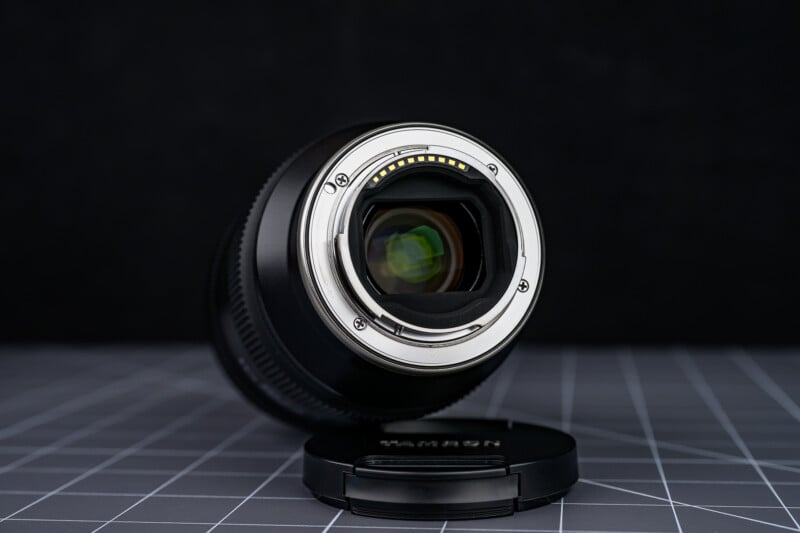 The back of the lens is ruggedized, and the lens is weather sealed.
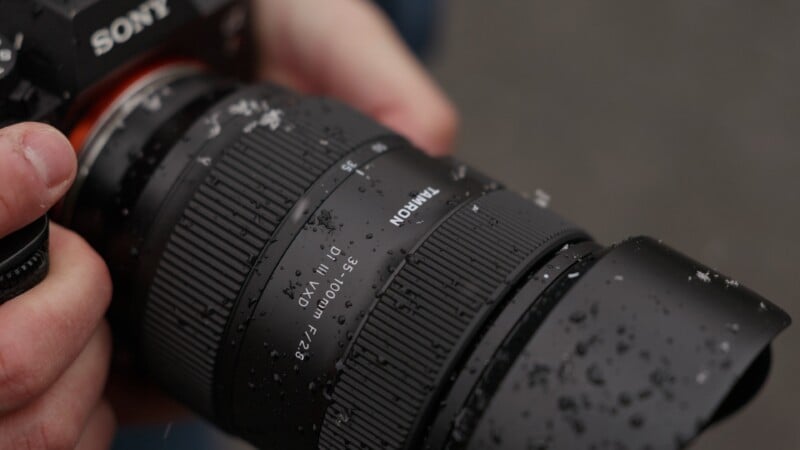 We certainly tested the limits of water resistance on our snowy shooting day.
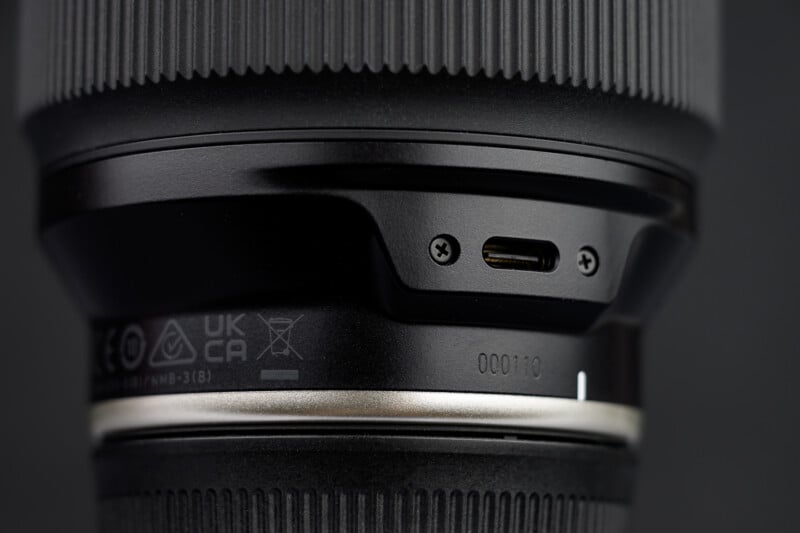 Tamron continues to have the ability to connect to its wonderful lens app.
Tamron 35-100mm f/2.8 VXD: How It Shoots
It is this overlapping of lens purpose versus Tamron’s existing line of options that stuck with me as I tested the lens out. Although the intention of Tamron is to provide an alternative to its larger 35-150mm f/2-2.8 lens, I couldn’t help but feel like the real comparison was against the 28-75mm f/2.8 G2 lens. Classically speaking, a pro photographer would have a three lens setup with a 16-35mm lens, the 28-75mm, and then a 70-180mm to finish the trio. The question you have to ask yourself is if you want this more traditional lens setup that goes to 180mm in the long end or is an ultra-wide 16-35mm lens coupled with this new 35-100mm range enough with just two lenses?
 The streets of NYC are always a rich testing ground for lenses.

The potential for an ultra-wide zoom lens paired with the larger 35-150mm lens makes more sense because you could cover a huge range with only two optics, and I was struggling to find that same versatility with this new lens. Perhaps, I thought, I needed to evaluate it on its own as a stand-alone range for street photography.
 Having a bright f/2.8 aperture is always handy for low-light shoots.

The busy streets of Manhattan thoroughly tested the autofocus performance of the Tamron lens and there I had zero issues. The same powerful VXD, or voice-coil linear drive, motors found in the other Tamron pro lenses made short work of quick street portraits and capturing subjects in lower light situations. Focusing is both swift and silent on the Tamron 35-100mm.
I also tried to do the occasional close-up shot but this lens is not very versatile in that regard. At the 35mm range it will provide a decent 1:3.3 reproduction ratio, but at the 100mm end where you get much better working distance, you only get 1:5.9.
 The winter conditions add a really nice atmosphere to street photos.

The bokeh is nice out of the Tamron 35-100mm lens. I would say that the specular highlights aren’t quite as clean looking as the 28-75mm G2 lens from Tamron, but the overall rendering of backgrounds is still pleasant. You get a nice cat’s eye swirl at f/2.8 and fairly round shapes when stopped down. Having the slightly longer 100mm range does suit portraits with soft backgrounds behind them and the overall look is really nice. There is some LoCA, or longitudinal chromatic aberration, present but it is quite minor and I don’t think it will present a problem in most situations.
 Bokeh is beautiful out of the Tamron for the most part. Backgrounds look smooth and soft.

Flare control was quite impressive with very minimal ghosting and no loss of contrast. Even in brighter conditions with the aperture stopped way down, I found only a slight amount of ghosting present. This is quite the achievement given that the optical formula is fairly complicated.
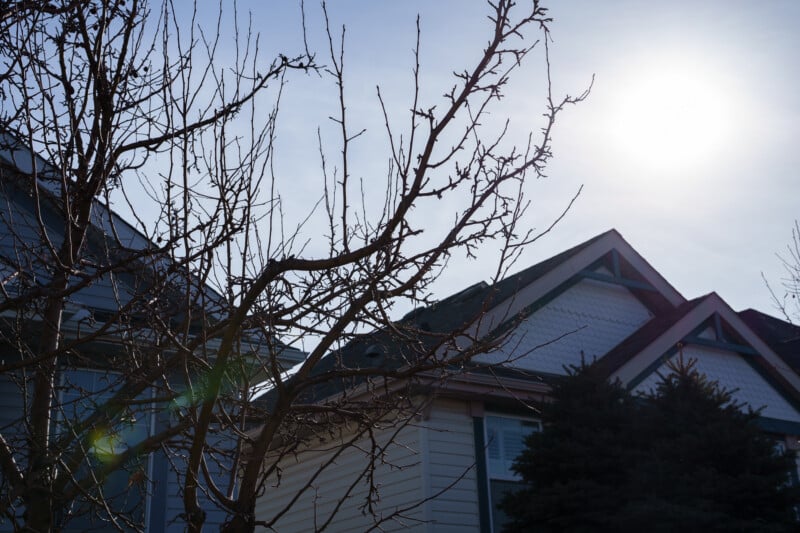 Flare is quite well controlled. Ghosting was not a major issue at all.


This lens is sharp. I was very impressed by the quality in the center of the image at both the 35mm and 100mm ends. The 35mm end especially shines wide open at f/2.8 with no improvement gained by stopping down. The corners are also quite good with slight improvement closing the aperture to f/5.6. The 100mm range is also good at f/2.8 but with a slight loss of contrast. At f/5.6, the quality improves and the corners also sharpen up nicely. Regardless of where you shoot this lens, the quality is excellent at f/2.8 and you’ll be happy with the detail that you receive.
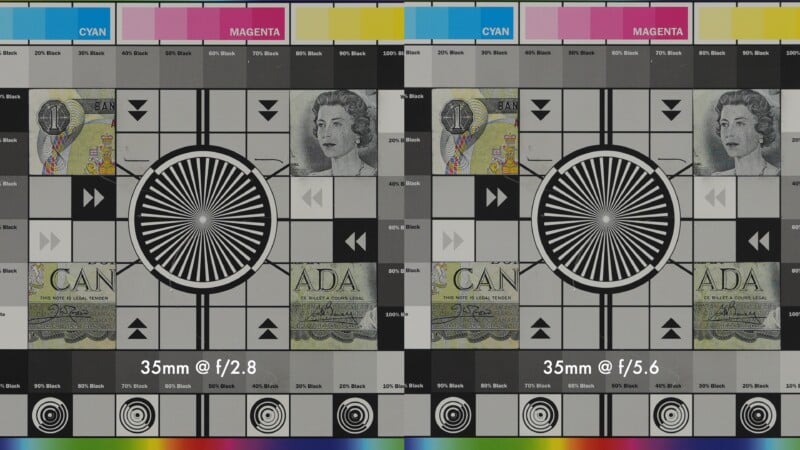 Detail is sharpest at the 35mm end.
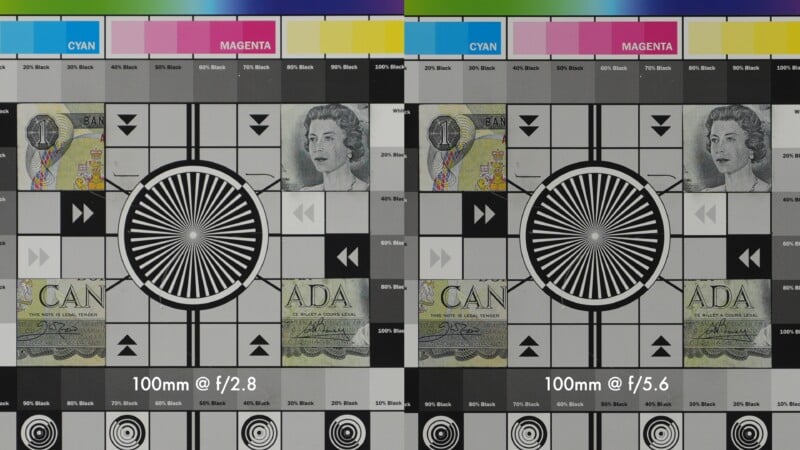 At the 100mm mark, the lens is still very good although contrast only improves at tighter apertures.
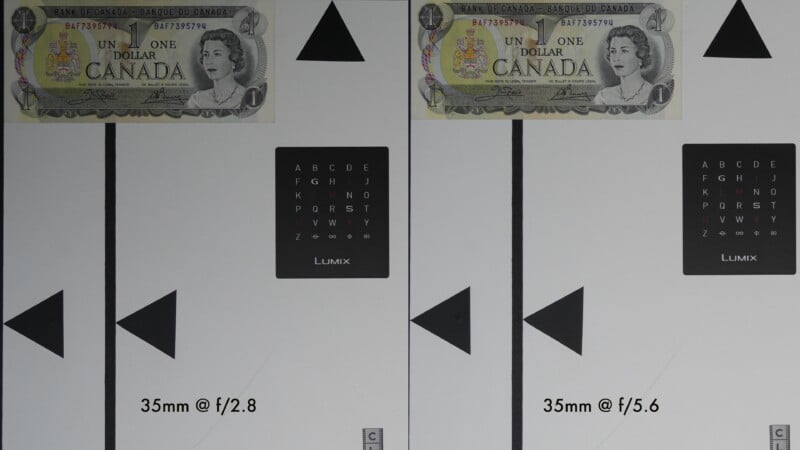 Corners are pretty good at wider apertures with a bit of vignetting present.
 This lens does a great job with street portraits thanks to its fast aperture and 100mm range.

Tamron 35-100mm f/2.8 VXD: Was This Lens Necessary?
I struggled to divine the purpose of this lens when I first tried it out as I don’t necessarily agree with the intention that this be a 35-150mm alternative. The extra zoom range and faster aperture is exactly what makes that lens useful, especially when coupled with an ultra-wide zoom. This combo makes a ton of sense when shooting a journalistic event such as a wedding or concert. The larger size of the 35-150mm lens is offset somewhat by only having to carry two optics.
 I loved this lens more as a solitary zoom to take on an adventure.
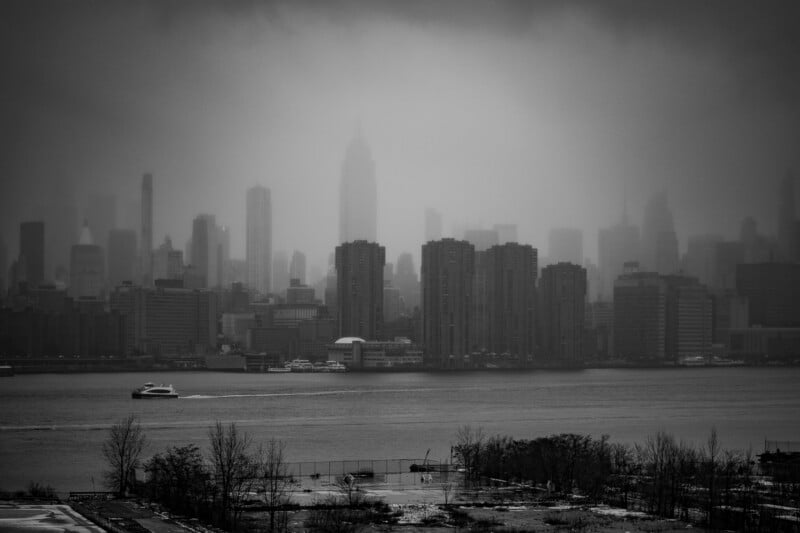
However, the 35-100mm just doesn’t have the same reach for me to be used in this way. I would still want a wider lens and a more serious telephoto to cover all my bases, unless I felt that I could be without anything wider than 35mm. I would also prefer to go with the Tamron 28-75mm f/2.8 and a longer lens like the 70-180mm to cover more scenarios if I wanted to stick to two lenses again.
 The versatility of this lens shines on the streets but I struggled to make it work with additional lenses.

Where I see real merit with this lens is as a stand-alone optic for something exactly like street photography. I found the classic 35mm range wide enough for most situations by simply backing up slightly. I very much enjoyed the 100mm though for portraits, given its shallow depth of field and ability to shoot from slightly farther away. This lens performs admirably at f/2.8, providing sharp and contrasty images, and I had zero issues with quick focusing.
Whether this lens will be appealing to prospective buyers is a tough call. If you already own the G2 version of the 28-75mm lens there is little reason to switch for this. If you are in a position to buy your first f/2.8 general zoom, this can be a versatile choice as long as you are ok with emphasis on a lens towards the more telephoto range, and the $900 price.
As a working professional, however, I would probably still shell out for the 35-150mm f/2-2.8 and deal with the extra weight.
 I really liked the shooting experience of having one single lens to cover as much as possible.
Are There Alternatives?
I think the above information spells out the other options, but we do have to give kudos to Tamron for thinking outside the box when it comes to focal range. If you really like the idea of a 35-100mm f/2.8 lens, you wont find many competitive alternatives other than the similar focal range options that I already mentioned Tamron provides, such as the 35-150mm f/2-2.8.
The only possible alternative to that that comes to mind is the Samyang 35-150mm f/2-2.8 AF, which is clearly a play on the Tamron original.
Should You Buy It?
Yes. If you like the idea of this unique lens range and largely want to stick to one optic, the Tamron is an interesting choice with good optical characteristics.






 English (US) ·