
 3 weeks ago
26
3 weeks ago
26
Having beaten Dishonored way back when without ever being detected, I learned I had a knack and love for stealth games. Fast forward many years and one ghost-like Metal Gear Solid V: The Phantom Pain playthrough, and I got the chance to play some Styx.
The third game in this conniving series, Styx: Blades of Greed continues the story of the eponymous goblin who slices and dices and sneaks his way to personal gain and glory. It has all the bells and whistles of a good stealth game, from open-ended missions and loads of ways to solve any problem to numerous items and abilities to enhance the experience.
The rather vertical levels are also a nice touch, adding a bit of parkour into the mix.
Styx: Blades of Greed, however, is also incredibly janky, with lackluster combat, movement that needed some more time in the oven, and an overall lack of polish that really starts to numb the mind after a while.
Skulking in the shadows
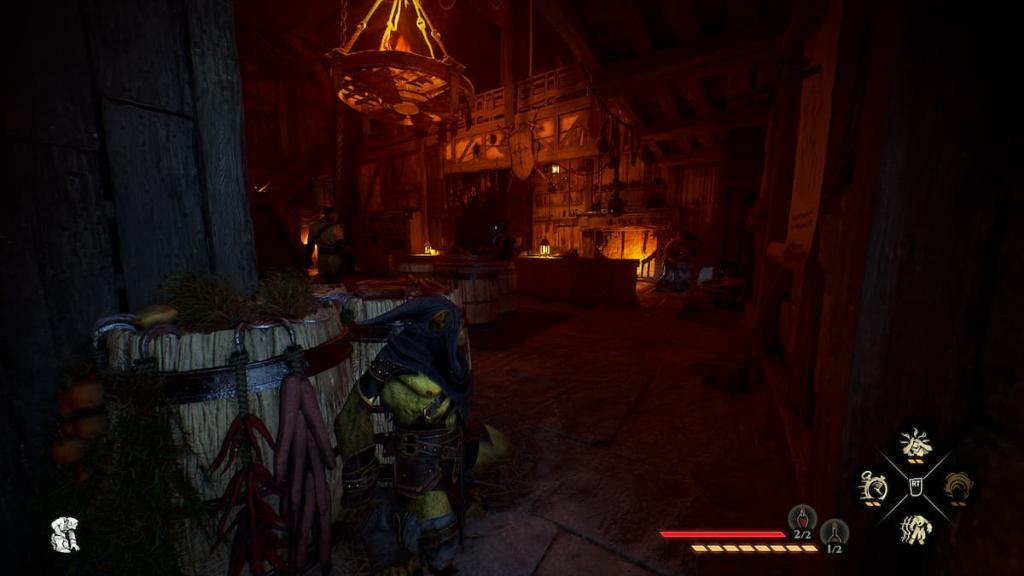 Styx can use the environment to his advantage, so keep careful watch of your surroundings at all times. Image via Nacon
Styx: Blades of Greed puts you in control of Styx, a goblin thief on the hunt for a mysterious material called Quartz. His literal cutthroat path to gaining immense power is one of sneaking, skulking, and performing assassinations without anyone ever noticing. Or, if they do notice, you’re to take care of them before they spread the word.
The game is set in a fantasy world with all your usual races making an appearance, but I’ve got to point out how cool and different this place felt. There is a lot of worldbuilding and lore that the previous games started and upon which Blades of Greed continues to build, and all the different cultures, locations, and environments help this series stand out as one of the more appealing modern fantasy worlds.
For example, Styx, being a goblin, is to be killed on sight by any human that spots him, because goblins caused a great calamity in history, and because there just exists a great stigma against all greenskins (orcs and goblins both included). This is a great way to justify the gameplay in the lore, since the whole shtick is to not get seen no matter the cost.
As for the actual gameplay, it is an open-zone design, with zones varying in breadth and height (literally) and each carrying more or less distinct locations. You can go basically anywhere in these zones and complete certain parts of the story at whatever pace you set, approaching each mission and assignment in your preferred way. On top of that, each zone has loads of side and bonus content as well as areas worthy of exploring, as the developers really wanted you to see what this breathtaking world has to offer.
Unfortunately, the traversal here is a bit lackluster, as the verticality of the game often creates situations where you have to backtrack through generic areas, easily losing track of where you actually are. The janky platforming and animations don’t help, either, even though the overall parkour experience is solid.
I didn’t bother much with exploring and completed my assignments only as asked, because using the objective marker was more or less the only thing that let me find my way through these maps. This is not a major grievance, however, as I don’t like games holding my hand either.
The developers should’ve made each area more distinct, with clearer paths (which would, I suppose, hamper the open-ended design, so make of that what you will).
Speaking of open-endedness, Styx: Blades of Greed offers a near-infinite number of solutions to any situation. If you have enemies blocking your path somewhere, dropping a chandelier would probably be a good idea. Or perhaps poisoning their food and water. Or maybe killing them one by one using decoys and blowdarts. Or someone might be close by so silently killing them instead of slashing at full sound is necessary.
The possibilities are endless, and the game reminded me of Hitman and similar franchises in how it deals with enemy placement and missions.
Jank and frustrations
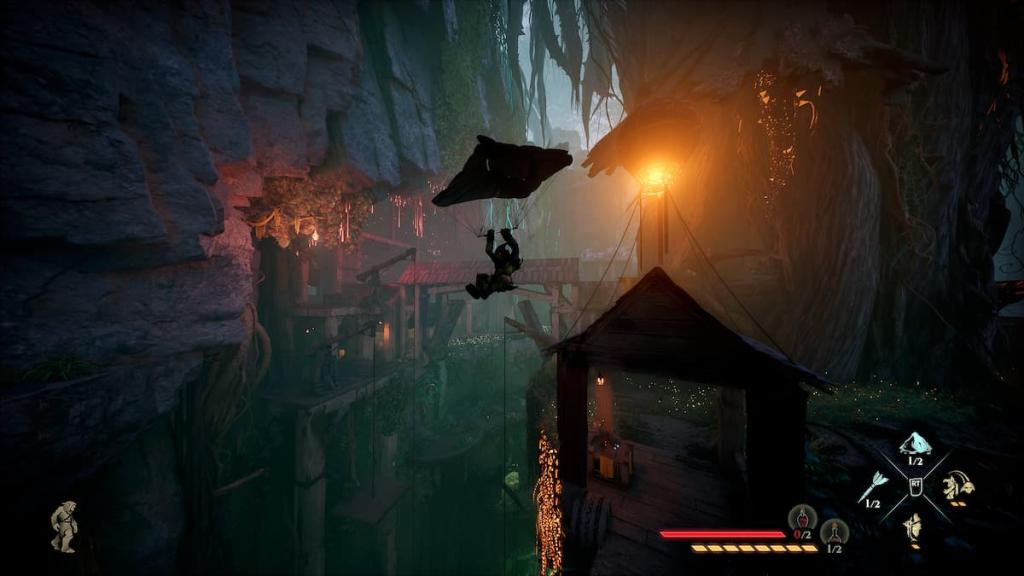 Gadgets tremendously improve traversal, but it takes some time to get them. Image via Nacon
Styx: Blades of Greed could have been an amazing game if it was left a bit more in the oven or perhaps polished over a couple more times before being prepped for publishing.
While the stealth is tremendous (and given that’s the core of the experience, I guess that’s more important), the combat itself is rarely good, and that would be completely fine if the game didn’t force combat encounters at you with some enemies. For example, most enemies can be stealthily assassinated, but others have to be fought or assassinated more than once to be fully killed.
The regular combat is basically dodging until you get a quick-time notification to deal massive damage or outright kill an enemy or just a series of dodge-attack-dodge-attack encounters. As I’ve said, this, too, would be fine if hitboxes, attacks, and dodges actually functioned the way they’re intended to.
And on top of that, approaching fights in your own way doesn’t often work out, as every single melee enemy (even those super tanks you have to fight for a long while) has ranged weapons that trace you and have pixel-perfect accuracy, making escape nigh-impossible once combat actually starts. They’ll sometimes randomly pull out these ranged weapons even when close, lunging three daggers that almost instantly kill you.
Being forced to utilize stuff at my disposal shouldn’t be the go-to in games like these, but you can avoid most of the combat by using abilities and items if you happen to alert the enemies.
Movement can sometimes be janky, and with the emphasis on verticality, I think the developers should have polished the animations and controls a bit more to make the whole experience much more satisfying. However, with the introduction of the grappling hook and other gadgets, the levels truly start to come into their own, and you begin to traverse terrain in what feels like the “default” mode.
However, in areas where no grappling hook can be used, or when traversing certain ledges, the jank can quickly catch up with you, resulting in deaths or unwarranted damage more often than not.
A good, crafty experience overall
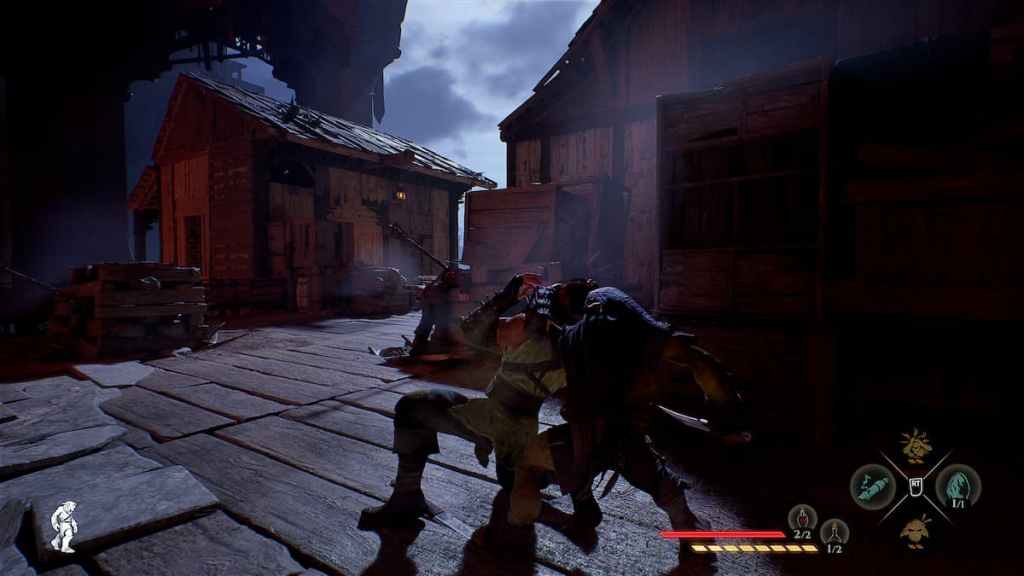 Nothing so satisfying as putting an enemy down, silently. Image via Nacon
 Despite the headache-inducing jankiness of the game, Styx: Blades of Greed remains a thoroughly good experience. The game’s missions and levels are breathtaking both in looks and in how they’re designed. Every single stealth playstyle under the sun feels represented and viable, and while open combat might be a particularly bad way to fight, every stealthy and sneaky aspect of Styx is more than fantastic.
The beautiful world, levels, and creative stealth allow Styx to provide fans of these kinds of games the opportunity to truly role-play as a thief and silent assassin, sticking to the darkness, barrels, and shadows and emerging only when need calls for it.
It’s a shame that every aspect of the game isn’t as polished as the stealth, and a better story, more engaging characters (not that Styx isn’t fun and funny), and a generally smoother and more satisfying movement and combat system would’ve made this game a real diamond in the rough. As it stands, Styx: Blades of Greed is a good but flawed game that maintains its core most of the time.








 English (US) ·