
Serving tech enthusiasts for over 25 years.
TechSpot means tech analysis and advice you can trust.
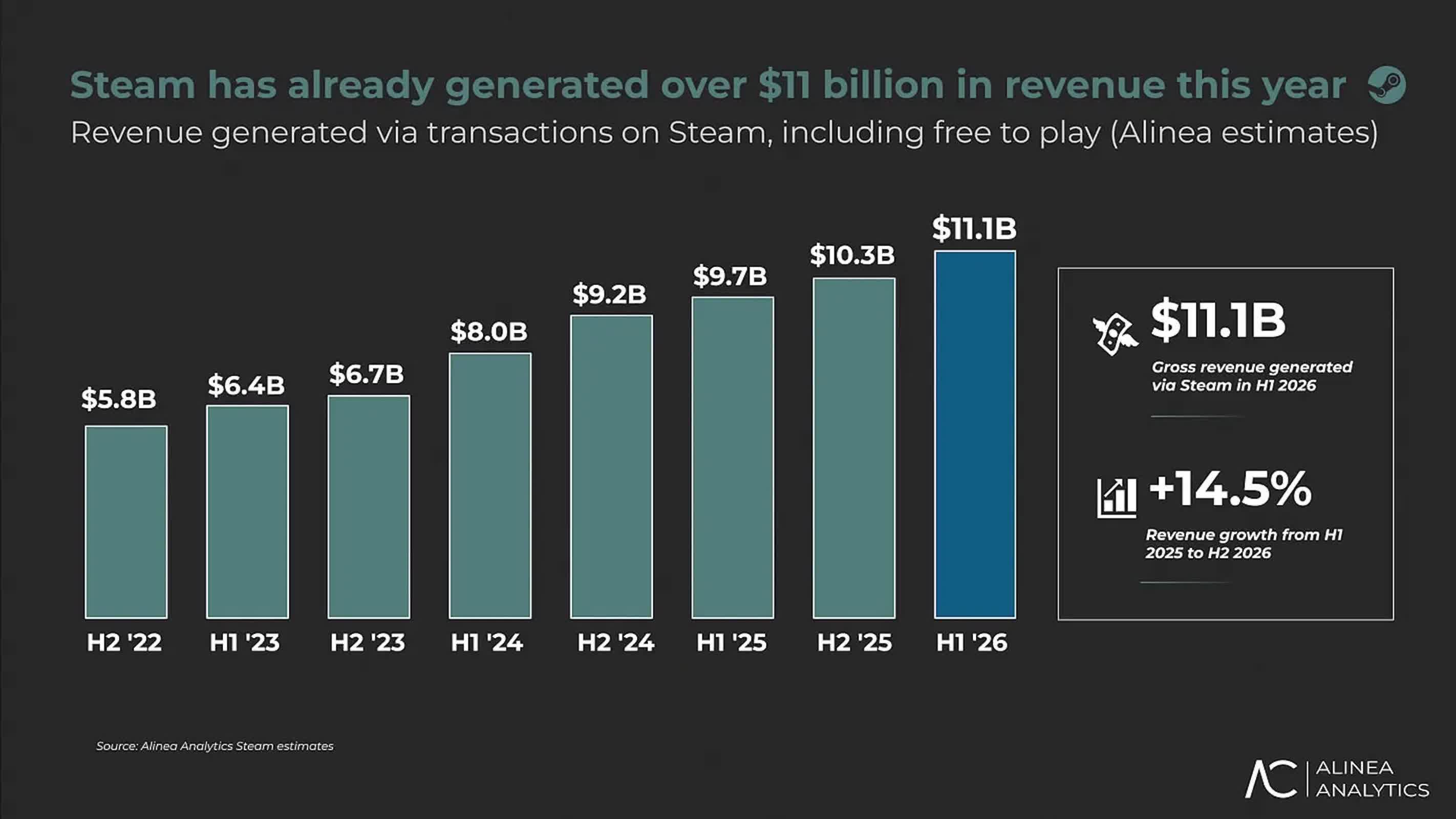
Bottom line: Steam just posted its strongest half-year ever. In the first six months of 2026, Alinea Analytics estimates that games sold through the platform generated $11.1 billion in gross revenue, a record haul for Valve's PC storefront. That figure is close to what Steam generated across all of 2021, a year boosted by pandemic lockdowns, and it comes even though only 21% of that revenue is from games released in 2026. The rest came from older titles in Steam's back catalog.
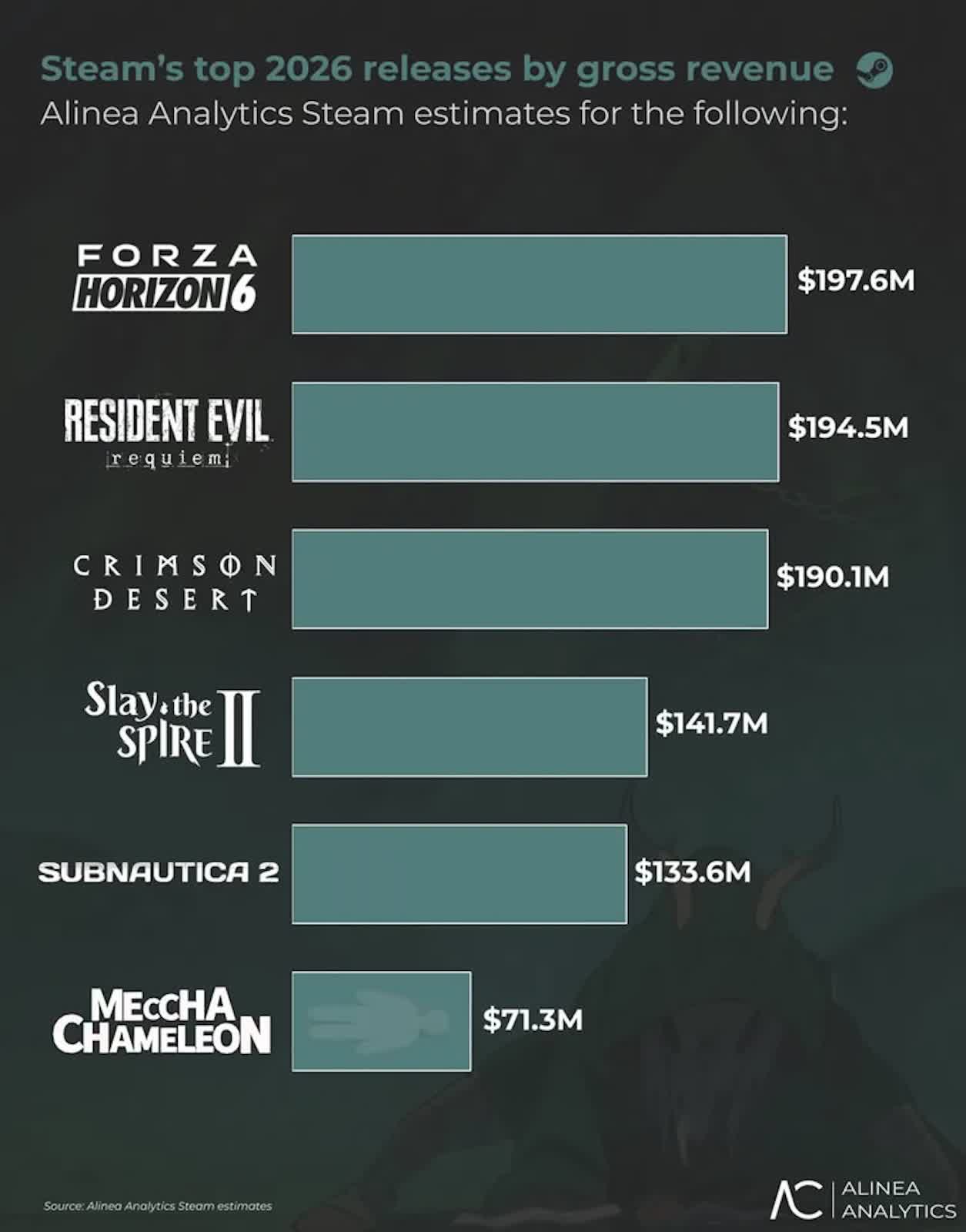
Alinea lists Forza Horizon 6 as the top-earning new game on Steam so far this year, with an estimated $197.7 million in revenue since launch. Resident Evil Requiem is close behind at $194.5 million, followed by Crimson Desert at $190.1 million. Those sales numbers highlight how a few big releases can drive a large share of the platform's revenue.
The report ties the revenue surge to a some clear trends. One is user growth in Asia, with China singled out as a major source of new players and spending. Another is higher prices: publishers are putting out more high-priced games and using big, attention-grabbing partnerships to help sell them.
At the same time, many publishers that tried to push users onto their own PC launchers have returned to Steam after gamers were reluctant to use them.
Steam has spent years building features that make it feel like a stable home base for PC libraries: backward compatibility, regional pricing, frequent sales, and reliable access to past purchases. Players can return to games they bought long ago without worrying much about changing hardware or operating systems.
Valve has also been investing in technologies that break Steam out of a pure Windows mold. SteamOS, Proton, and related compatibility layers are all aimed at running Windows-based PC games on other hardware and operating systems, from handheld devices to non-Windows platforms. That work is often invisible to end users, but the goal is to let people buy a game once and keep playing it across different devices.
Other storefronts have tried different approaches. Epic Games Store, for example, has given away free games to attract users. But former employees have said that many players show up to claim those free titles and then return to Steam for most of their play and spending.
Alinea's long-term estimates show how much Steam's position has changed over the past decade. The firm's modeling suggests Steam's annual revenue climbed from about $5.5 billion in 2017 to roughly $20 billion in 2025. With $11.1 billion already booked in the first half and spending on older games still robust, Valve's position in PC gaming keeps growing.







 English (US) ·