
 4 weeks ago
25
4 weeks ago
25
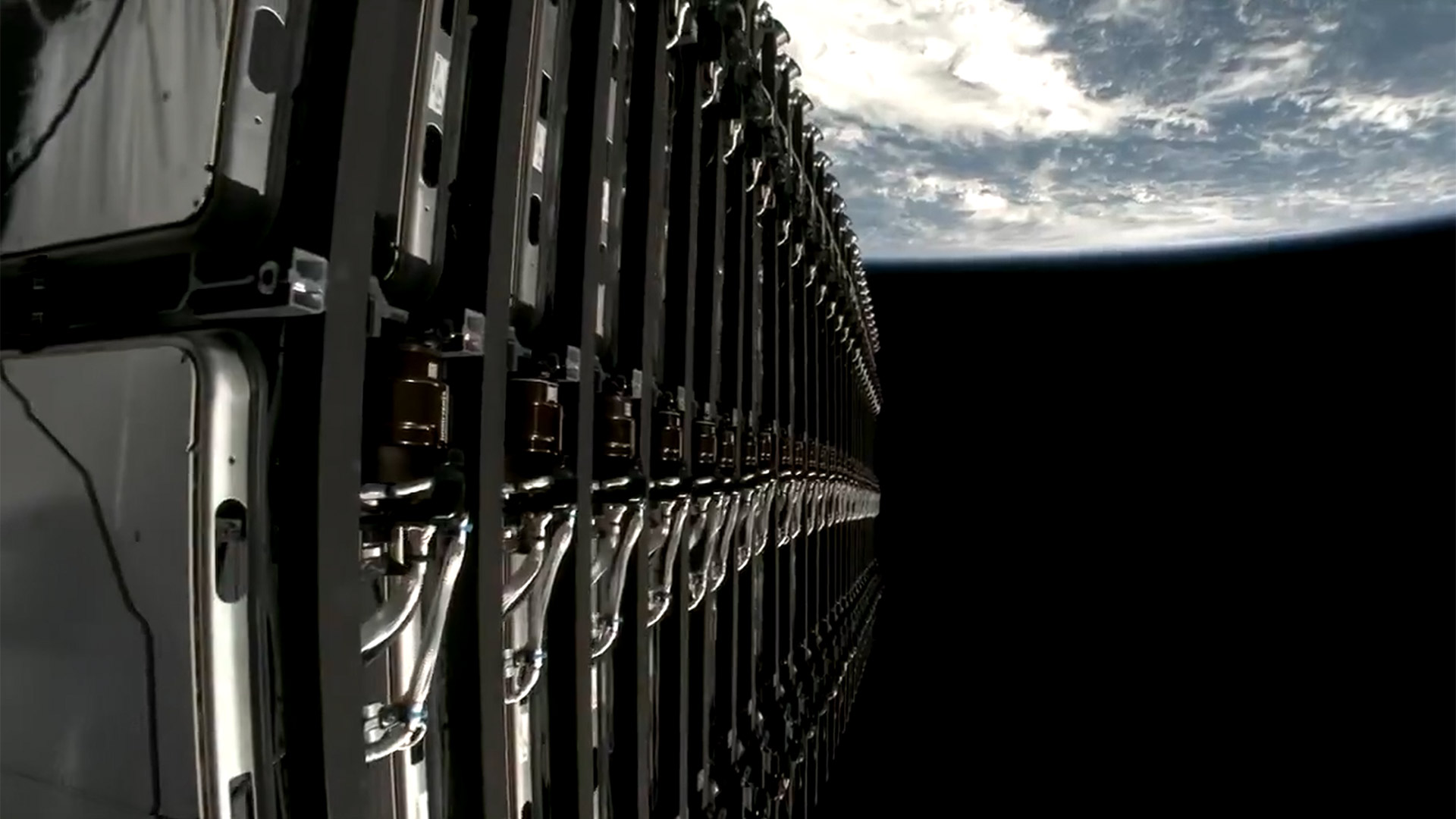
Starlink has posted an update on satellite 34343, which it lost communication with on Sunday. The SpaceX-owned global internet firm says that the satellite “experienced an anomaly” while it was in LEO at around 560 km above the Earth. It also used wording to play down any concerns about risk to the thousands of other man-made objects at a similar altitude. However, orbital intelligence agency LeoLabs is less coy and describes Sunday’s incident as a “fragment creation event.”
On Sunday, March 29, Starlink satellite 34343 experienced an anomaly on-orbit, resulting in loss of communications with the satellite at ~560 km above Earth.Latest analysis shows the event poses no new risk to the @Space_Station, its crew, or to the upcoming launch of NASA’s…March 30, 2026
Rapid Unplanned Disassembly
Following the anomaly on Sunday, Starlink’s official line (as above) was to play down any risks to the International Space Station, Monday’s Transporter-16 mission, or the upcoming launch of NASA’s Artemis II mission. It doesn’t go as far as admitting there is any post-rapid unplanned disassembly debris, but does say that it will “continue to monitor the satellite along with any trackable debris and coordinate with NASA and the U.S. Space Force.”
Naturally, SpaceX and Starlink teams are working to determine the cause of the anomaly and implement any changes necessary to prevent this from happening again. Sadly, the analysis of whatever happened towards the end of last year, when another Starlink satellite tumbled from space after an “anomaly,” didn’t stop this latest debris‑generation incident.
Article continues below
LeoLabs provides some further analysis regarding the fate of satellite 34343. Its radar system “immediately detected tens of objects in the vicinity of the satellite after the event.” Moreover, the independent space‑situational‑awareness (SSA) data provider reckons that the not-an-explosion was “likely caused by an internal energetic source rather than a collision with space debris” or another satellite.
On potential risks to other satellites and missions from the now-ex-satellite, LeoLabs doesn’t highlight any specific dangers. It reckons the fragments from the anomaly will probably de-orbit within a few weeks.
This was indeed a similar Starlink satellite incident to that which occurred last December, think the independent analysts. It goes on to recommend greater clarity to ensure safety in the operating environment.
SpaceX IPO
SpaceX is warming up Wall Street for what could be the largest IPO of all time. It reportedly wants to raise around $75 billion in its offer, which equates to a $1.75 trillion valuation.
It would be better for Elon Musk’s firm if fewer rapid unplanned disassembly incidents happened between now and the IPO, tipped to be this summer.
However, with FCC approval and plans for thousands more Starlink LEO satellites and even talk of a 1 million satellite Orbital Data Center System from SpaceX coming to light, one might assume that any unsolved anomalies become more frequent.

Follow Tom's Hardware on Google News, or add us as a preferred source, to get our latest news, analysis, & reviews in your feeds.







 English (US) ·