
 2 hours ago
19

Published Nov 15, 2026, 7:00 AM EST
The terrors of living together
The terrors of living together
 Image: Nippon Ichi Software/NIS America
I thought I knew what to expect from Village in the Shade after attending NIS America's pre-launch preview event in September. The villagers would be quirky but likeable, and things would probably get at least a little twisted, though nothing too terrible. Nippon Ichi Software's non-Disgaea games get pretty dark, as do the Labyrinth games and Yomawari. But they're dark on a small-scale, personal level, and rarely do they have something poignant to say. Village in the Shade tossed all my expectations out the window within the first few hours and, since then, has quickly rocketed up my list of the year's best games.
Village in the Shade starts with a child frolicking in the fields, running through dappled woods, skipping over rivers, and doing normal kid stuff. Then they fall down a hole and die, or so you'd think from the amount of blood on-screen, except they climb out and start walking again like nothing happened. Something did happen, though. The local carpenter and a hunter find the child, who happens to bear a striking resemblance to a kid who vanished years ago. Not that the idea brought anyone joy. They seem worried, actually, but Rin, the de facto mayor of Kagatsu Village, decides the child may be of use.
Rin initially seems like a Tom Nook caricature. She's fixated on profit and productivity, stuffs you in a ratty little hovel, charges you for it, and decides your value based on how much you do for the community. There's a bit of subtle commentary from her about min-maxing supposedly relaxing games to get the most out of them, and I thought this poke at established cozy staples would be the extent of Rin's personality. But NIS had something much more interesting in mind, which became evident the next in-game day when Rin threw a baby goat down the village well as an offering. One life out of the village in exchange for another life in. Balance must be maintained.
It likely comes as no surprise to hear this following a sentence that includes the words "threw a baby goat down the well," but Kagatsu Village is a weird place. A good quarter of the people who live there agree with that assessment. Even so, they don’t seem to have much of a choice but to stay and deal with it. Their families lived at the foot of this mountain for generations. Leaving would be tantamount to betrayal of everyone past and present, and who knows what might happen then?
Rin and Kagatsu Village under her rule are the epitome of toxic communalism. She's sincere in her dogged determination to put the village first — frighteningly so at times — but either overlooks or just plain doesn't understand the harm of ignoring the individual. Part of Kagatsu's code is that every favor must be met with appropriate compensation, which is great for people with mercenary dispositions. It’s less great if you just want to help a friend out with no strings attached. You're also not supposed to pry into anyone's affairs or share their secrets, no matter how upset they are or whether they're gathering poison as part of a murder plot. As long as the collective is intact and moving forward, every sacrifice is permissible. And mandatory.
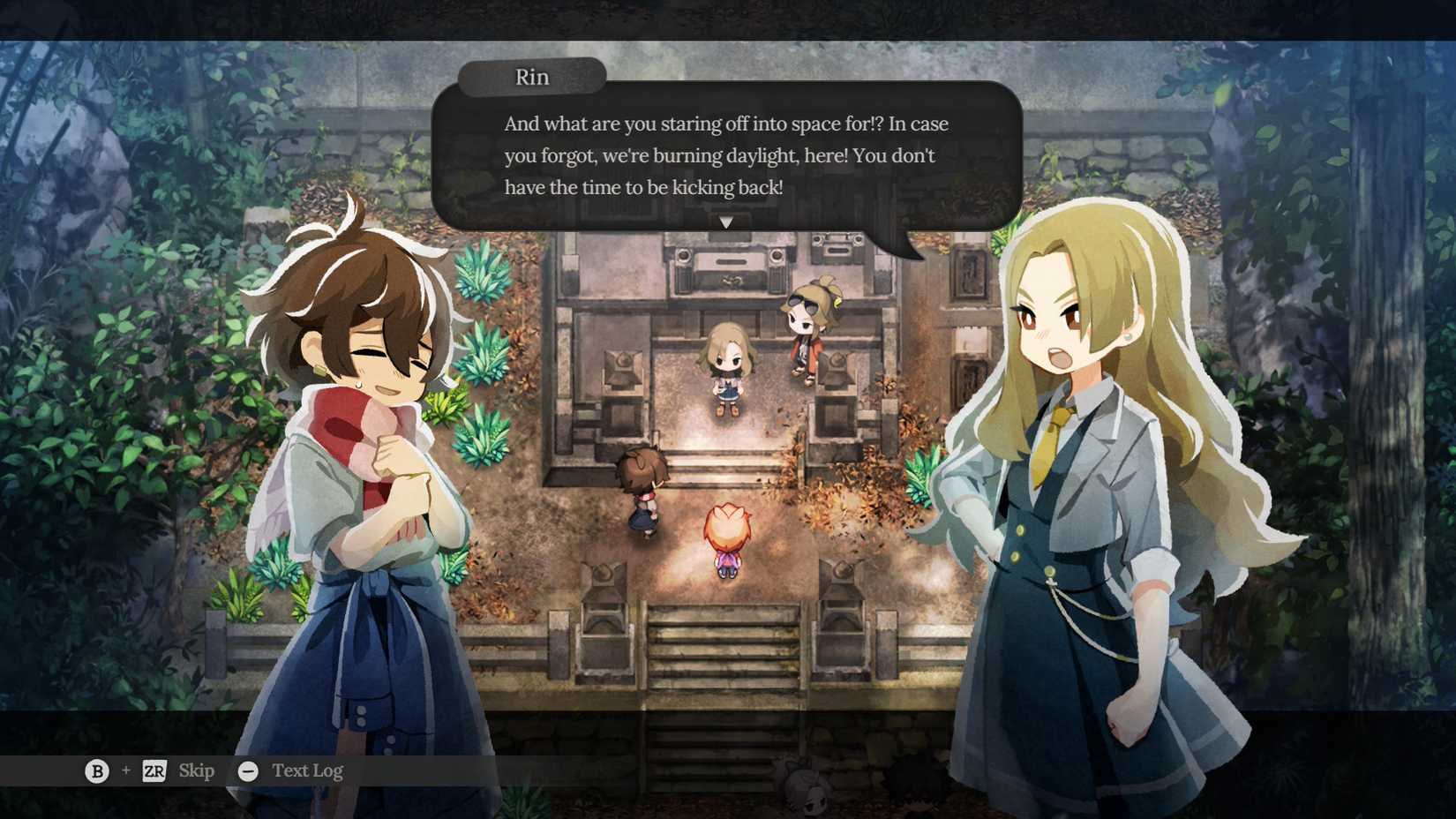 Image: NIS Software/NIS America via Polygon
The most common sacrifice is a monthly fee, like a tax, though to Rin's intense frustration, people tend to get around it. Some perform a service. Others give food or necessary items. Those with nothing to give, or who flat-out refuse to give anything, are taken to the local clinic where the doctor draws a rather alarming amount of blood. Blood figures quite prominently in Village in the Shade. There's the monthly offering, of course, along with a spate of serial killings 10 years in the past — around the time you disappeared from the village, in what's surely a totally normal coincidence. On some nights, one of the bridges leading to the center of town is covered in blood.
I'm a coward and haven't ventured beyond the bridge on those nights, so I don't know why the blood is there yet. Nighttime is dangerous in Kagatsu Village. Untold horrors slither down the mountain and haunt the streets and alleys, and dealing with them is much more nerve-wracking than I originally thought. The preview session showed the very first haunted incident, a linear segment where the ghost of an old man chases you through the village. It was pretty tame. The rest of the hauntings are not. Village in the Shade uses a drumming sound like a heartbeat and a tremor effect on the screen when danger approaches, and they increase in intensity the closer you get to the source of it. That, plus a general lack of defensive capabilities and places to hide, is enough to get the adrenaline going during evening wanderings. Stealth and bloody death were not on my bingo card when I started this game, and the intensity of these moments — plus just how at odds they are with the sedate daytime routine — make them standouts.
The "weird rural place with a terrible past" and its critiques on collectivism aren't entirely uncommon in Japanese media. Ryukishi07's Higurashi: When They Cry springs to mind as one of the stronger examples of it, and, more recently, there's The Summer Hikaru Died and even Nintendo's Emio — The Smiling Man. The concept is typically reserved for anime or visual novels, though, and I've yet to come across a good example of the storytelling style in more interactive media. Who'd have thought a farm-sim could make the perfect fit for it? Certainly not me.
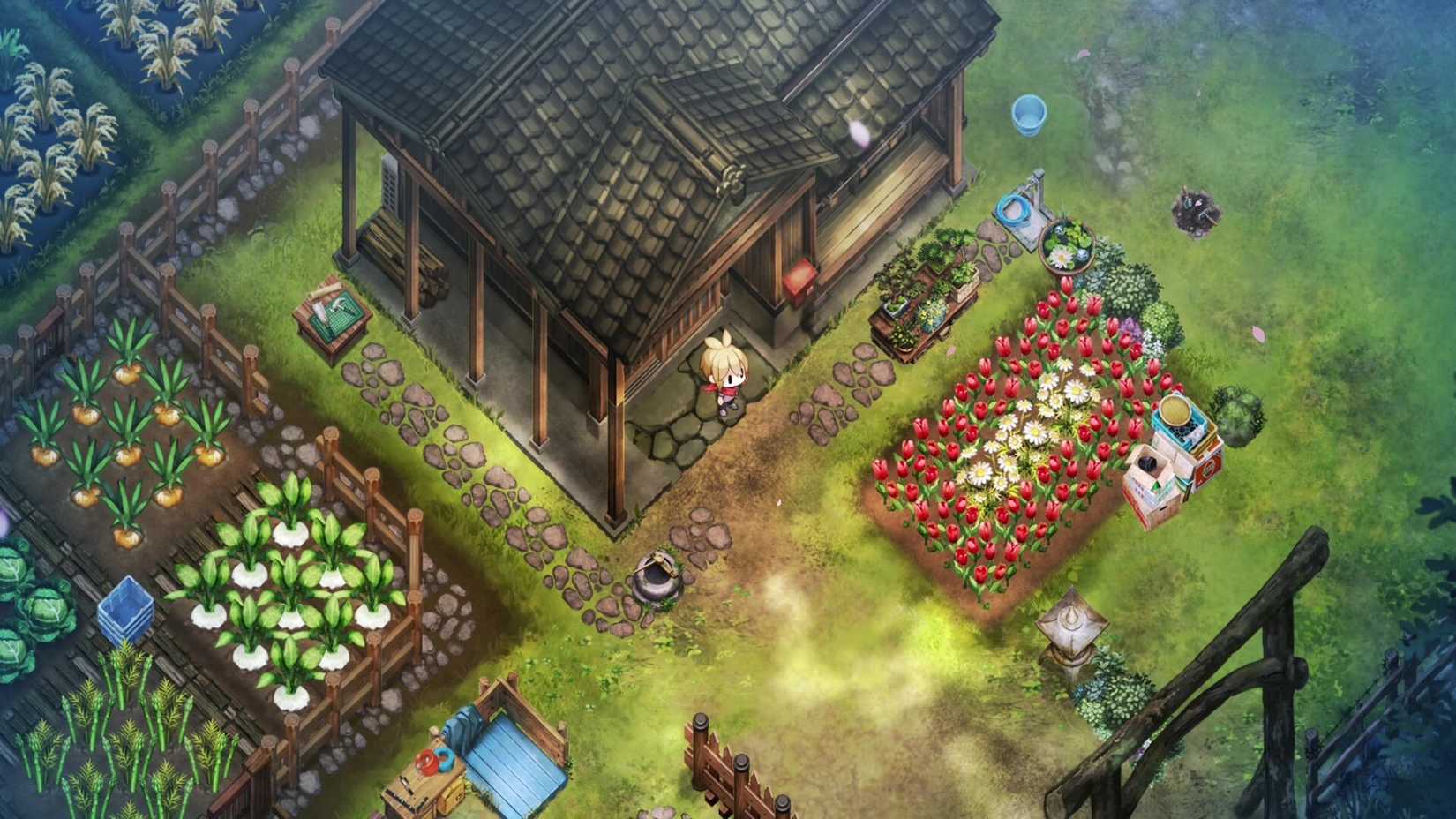 Image: Nippon Ichi Software/NIS America
But it does, and even the calm routine surprised me. Most farming games in the last decade have done very little to shake up the daily chores, and even Stardew Valley followed a pattern familiar from old Harvest Moon games. Village in the Shade holds little back at the start and throws a lot of crop variety, processing machines, and progress at you. I'd upgraded my tools once by the first summer, reached level 50 of the mine, and harvested enough spring crops to get them all to silver rank in quality.
It's not too easy, though, and NIS didn't skimp on the farming just to facilitate storytelling. In that first summer, I divided my fields (plural, as I bought a second one with my springtime earnings) into planned segments. There were flower fields for producing honey, flowers for selling, and a smaller plot for gift flowers. Crop-producing trees had a section all to themselves. The furrowed vegetables — Village in the Shade lets you alternate between tillage and furrows to encourage faster growth for some species — had a section all to themselves, just because uniformity looked nice.
 Free sign-up
Get Polygon’s Wishlister newsletter
A weekly cheat sheet to what you’ll eventually love to play. No buying, no commitment — just saving for later.
Sign up freeFree. Unsubscribe anytime.
While I hadn't created rice paddies yet, that didn't stop me from spending thousands of yen on seedlings while the store had them in stock, and I created a special bed of edamame beans that I'd let ripen into autumn for a soybean harvest. Meanwhile, at the other end of the homestead plot sat my beehives, smelters, smithing station, mayonnaise maker, and pickling barrels. I had full access to cows, ducks, chicken, horses, and sheep despite being early in the game, too.
And all of this is for the good of the village. With more crops, more money, and more goods, you can fulfill more requests and improve Kagatsu, giving it a better chance at surviving into the future. Well, assuming there's enough people left to live there when the future arrives. Regardless of how things play out, I'm frankly astonished at just how well Village in the Shade tells its story and wraps it around familiar farm-sim routines. As we head into the twilight of 2026, this one definitely deserves a spot on the lists of the year's best games.







 English (US) ·