
 2 hours ago
4
2 hours ago
4

Published Sep 22, 2026, 7:42 AM EDT
Aimee Hart is an Entertainment and Gaming staff writer here at Polygon. After watching the original trilogy at five, she decided to make Star Wars her entire personality and hasn't let go of the franchise since. Aimee also has a great love for Dungeons & Dragons and everything Critical Role. She has been a games, entertainment, tech, and culture reporter and critic for 10 years, with bylines at Inverse, Fanbyte, Rolling Stone, and many more.
With a limited budget and big ideas, will Ahsoka season 2 succeed?
 Photo: Suzanne Tenner/Lucasfilm
Ahsoka season 2 will answer major questions raised by its first season, which arrived on Disney Plus three years ago. One such question, which Lucasfilm co-CEO Dave Filoni hopes to answer for Star Wars fans on Jan. 20, 2027, is the arrival of the Mortis Gods and what it means for Ahsoka (Rosario Dawson) and her Mandalorian apprentice, Sabine Wren (Natasha Liu Bordizzo), who are both stranded on the planet Peridea in another galaxy.
Fans who watched the finale of Ahsoka’s first season will recall that the statues of the gods, the Father, the Son, and the Daughter, were carved into rock on Peridea, a strong hint that they would play a role in season 2. However, for those who weren’t convinced, Filoni recently confirmed in an interview with Empire that the Mortis Gods will appear — and bring a lot of challenges to Ahsoka season 2.
 Image: Lucasfilm Ltd.
“What we’re dealing with is: are you going to believe in this, or not? And what is the danger if it’s real? And how are you going to prioritize your goals here?” Filoni tells Empire, indicating that Ahsoka and her friends will be tested by the appearance of these Mortis Gods. “What would a Jedi do, versus what would a regular person do? Those things come up through the course of the season.”
Who are the Mortis Gods in Star Wars?
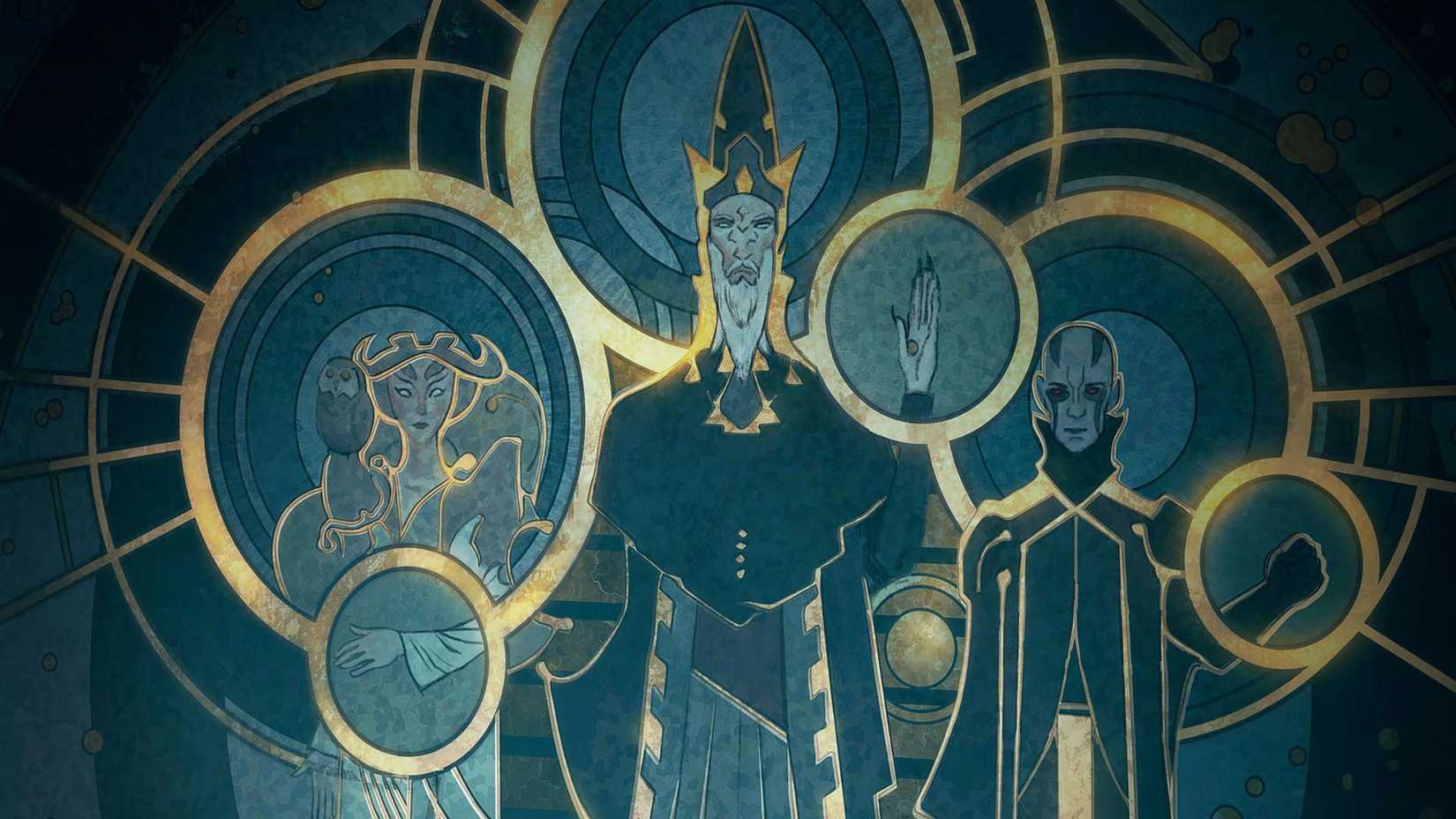 Image: Disney/Lucasfilm
The appearance of the Mortis Gods will challenge not only the narrative but also the production of Ahsoka’s second season. If you haven’t watched Filoni’s animated series, The Clone Wars, you may not know who the Mortis Gods are or why they are so significant. The Mortis Gods first appeared in 2011 during The Clone Wars season 3 in a three-part arc comprising episodes 15, 16, and 17, titled “Overlords,” “Altar of Mortis,” and "Ghosts of Mortis." It’s here that Anakin Skywalker (Matt Lanter), Ahsoka (Ashley Eckstein), and Obi-Wan Kenobi (James Arnold Taylor) discover a mystical plane featuring three mythological manifestations of the Force: The Son, who aligned with the dark side of the Force; the Daughter, who aligned with the light side of the Force; and the Father, who represented the balance between the two. To sum up, it is heavily implied the three of them are the originators of the Force as we know it.
The Mortis Gods arc is a lot to wrap your head around, even in animated form, so it’s no surprise Filoni admits that bringing the lofty concept to live-action will be difficult.
“It’s a challenge, I can tell you,” Filoni says to Empire. “It was so surprising when George [Lucas] created these archetype god characters. What were we examining there in Clone Wars? What was the metaphor? A lot of it is about power, and what you do with power, and how you wield power. For a Jedi, I think it's a natural story path to get into these questions.”
It’s undeniable that Filoni has struggled to adapt the animated series The Clone Wars and Rebels to live-action, with the biggest offender being Hera Syndulla, as well as the decision to title the series Ahsoka despite its heavy focus on the Rebels cast. Season 2 of Ahsoka has also faced difficulties from the get-go, including production delays.
But the biggest worry Star Wars fans have about the series is that season 2 has an even smaller budget than season 1. With imposing ideas like the Mortis Gods being introduced, the concern is that Ahsoka season 2 simply won’t have the tools necessary to tackle such big story elements. Whether that’s true or not will be answered in January, but we can only hope Lucasfilm’s co-CEO is up to the challenge.


 English (US) ·