


Published Nov 12, 2026, 6:00 PM EST
John Orquiola is a TV Editor, Senior Writer, and Interviewer with a special focus on Star Trek. John has over 5,000 published articles at SR, and he has interviewed the biggest names in Star Trek on the red carpet and VIP events, among other beloved shows, movies, and franchises.
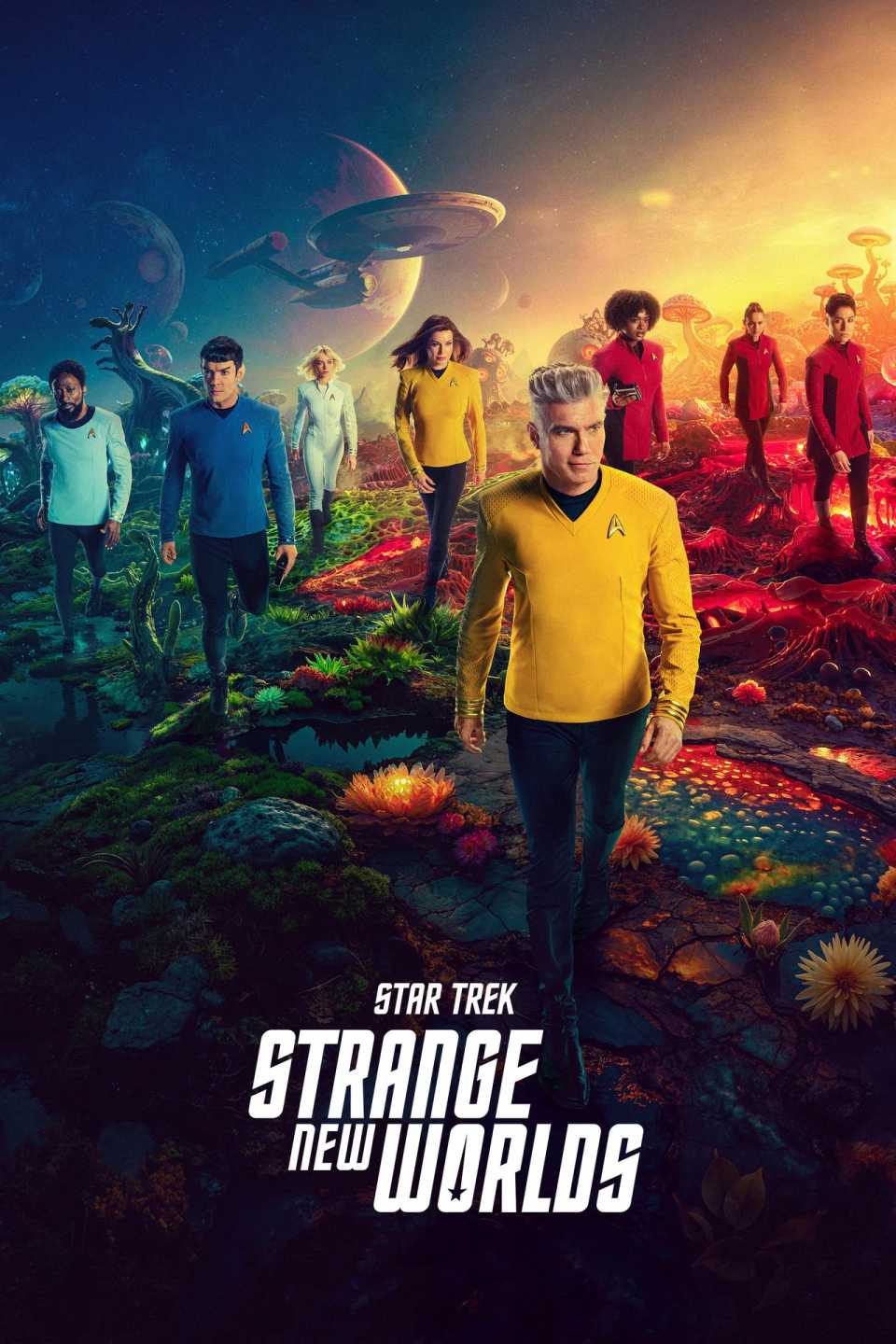
Star Trek: Strange New Worlds became the franchise's ultimate prequel in season 4, with Captain Christopher Pike (Anson Mount) and the USS Enterprise becoming the catalyst of human history. Directed by Chris Fisher and written by Akiva Goldsman and Henry Alonso Myers, Strange New Worlds season 4's premiere, "Valles Marineris," was the first and arguably the biggest of the season's 'big swings.'
For 25 years, prequels have largely dominated the Star Trek franchise. From 1966 to 2001, the saga of Star Trek was forward-moving. Star Trek: The Original Series started in the 23rd century, and Star Trek: The Next Generation began the canon's massive expansion in the 24th century. That ended with Star Trek: Enterprise, which launched in 2001 as Star Trek's first prequel series.
J.J. Abrams' Star Trek movies were a prequel trilogy set in the alternate Kelvin timeline. Star Trek's Paramount+ streaming era began with Star Trek: Discovery, which was also a prequel in its first two seasons. Star Trek: Picard, Star Trek: Lower Decks, and Star Trek: Prodigy finally moved the 24th century forward into the 25th, but Star Trek: Strange New Worlds went back to the 23rd century again.
Star Trek: Starfleet Academy is now the franchise's farthest point in the 32nd century, until Star Trek: Short Treks' "Calypso," which is set a thousand years later. Among Star Trek's four major prequel sagas, however, Strange New Worlds went back further and became more instrumental than any of them.
Strange New Worlds Season 4’s Premiere Changed Canon Forever

Star Trek: Strange New Worlds season 4's premiere turned the series into Star Trek's ultimate prequel. In "Valles Marineris," the Starship Enterprise time-traveled 65 million years into Earth's past. This led to two game-changing revelations: Mars had a space-faring society, and the Red Planet was at war with the fifth planet in the solar system occupied by an insect species called the Dol'drm.
"Valles Marineris" kept the bombshells coming, as the Martian Commander Cassell (Saffron Burrows) came aboard the Enterprise and stole a warp cell to make a doomsday weapon against the Dol'Drms. Instead of stopping the Martians, Pike allowed their genocide when he realized there was no fifth planet in Earth's solar system. Thus, the destroyed Dol'Drm planet became the Main Asteroid Belt between Earth and Mars, and a remnant became the Chicxulub impact meteor that wiped out Earth's dinosaurs 65 million years ago.
In turn, the Martians abandoned their doomed homeworld, which became barren of life. Meanwhile, Commander Una Chin-Riley (Rebecca Romijn), an Illyrian, becomes the second known alien to visit Cretaceous-era Earth, following a crashed Dol'Drm ship that Una, Lieutenant La'an Noonien-Singh (Christina Chong), and Lieutenant Erica Ortegas (Melissa Navia) discovered.
Most importantly, Captain Pike's choice not to prevent the Dol'Drms' genocide directly led to humans replacing dinosaurs as Earth's dominant species. Star Trek: Strange New Worlds not only sent the USS Enterprise to Earth's prehistoric past but made Pike and his crew responsible for all of human history to come. What more can Star Trek ask of a prequel?
Strange New Worlds Left Out An Important Part Of Star Trek: Voyager Canon

Star Trek: Voyager fans who watched Star Trek: Strange New Worlds season 4's premiere understandably wondered about the Voth. "Distant Origin," the 23rd episode of Star Trek: Voyager season 3, revealed that the Voth, a reptilian-humanoid species in the Delta Quadrant, were descended from Earth's hadrosaurs.
Over the last 65 million years, knowledge of the Voth's origins was lost and replaced by religious doctrine.
According to Voth paleontologist Professor Forra Gegen's (Henry Woronicz) 'Distant Origin Theory,' the Voth evolved on Earth and somehow survived the meteor that wiped out the dinosaurs. The Voth then developed space travel capabilities and left Earth, eventually arriving in the Delta Quadrant. Over the last 65 million years, knowledge of the Voth's origins was lost and replaced by religious doctrine.
Star Trek: Strange New Worlds' Starfleet Officers may have visited Cretaceous era Earth, but they only explored a tiny amount of ground. The Voth were likely on another land mass elsewhere on Earth, and may or may not have had the technology to detect the spaceflight-capable Martians, Dol'Drms, or the USS Enterprise. Even if they did, the Voth lost that knowledge in the succeeding 65 million years.
Star Trek: Strange New Worlds is streaming on Paramount+
Release Date 2022 - 2027-00-00
Network Paramount+
Showrunner Henry Alonso Myers, Akiva Goldsman
Writers Onitra Johnson







 English (US) ·